Author: Lee Bowen

  • UAE Employment Law Changes For 2023

    UAE Employment Law Changes For 2023

    UAE Employment Law Changes For 2023

    The Ministry of Human Resources & Emiratization has announced a revision to the Labour Law UAE with the introduction of Federal Decree-Law No. 33 of 2021, Regulating Labor Relations and its Executive Regulations, under Cabinet Resolution No. 1 of 2022, which went into effect on February 2, 2022.

    These updates are designed to modernise employment regulations, enhance job stability, and ensure compliance with evolving workplace standards. Employers need to review their policies and update HR systems to align with these new requirements.

    UAE EMPLOYMENT LAW 2023

    Fixed-term Contracts Only

    The new UAE labour law eliminates the idea of unlimited-term contracts and allows only fixed-term contracts (with a maximum duration of three years) to be issued. Businesses must transfer all current employees, who are on unlimited duration contracts, onto fixed term contracts by the 2nd of February 2023.

    This shift ensures greater clarity in employment agreements and allows companies to better manage workforce planning. Employees should review their new contracts to understand the terms, renewal conditions, and notice periods applicable under this updated framework.

    Further Reading: How HR Teams Can Improve Hiring & Compliance

    Notice during the Probation Period

    While the new law maintains the six-month limit for probationary periods, it now mandates that:

    •  Any party wishing to terminate employment during probation must give at least 14 days’ notice.
    • Where an employee is joining another UAE-based company, they must give at least 30 days’ notice. 
    • Additionally, employers have the right to demand payment from the new employer for the costs incurred in hiring the employee.

    This provision in the UAE and Dubai employment law aims to regulate job mobility and prevent frequent job-hopping. In doing so, it will ensure a more stable workforce while still allowing career growth opportunities.

    Further Reading: UAE Ministerial Resolution No. 279 of 2020: Employer Guidance

    Part-Time and Flexible Working Arrangements

    There are currently several new unconventional and flexible employment arrangements available in the UAE. These include:

    • Job-Sharing 
    • Flexible Work (where working hours and days can change depending on an employer’s demands)
    • Temporary Work (for particular project-based work) 
    • Part-Time Work (with benefits given on a pro-rata basis). 

    The Ministry of Human Resources & Emiratisation (MOHRE) provides specific details regarding the changes to these working arrangements here. Companies should start adapting HR policies to accommodate these options as soon as possible. With the growing demand for flexible employment, businesses offering these arrangements will likely see increased job satisfaction, employee retention, and profitability.

    Working Days and Hours

    Employers must give their workers at least one rest day on any day of the week. Fridays are now no longer the only day that must be designated as a mandatory rest day. However, there may be potential exceptions to these requirements under the Executive Regulations, which limit the working hours to no more than 56 hours a week. 

    The maximum working hours remain at eight hours per day/48 hours per week (on a six-day working week). This should be clearly communicated through the company’s policies and HR system. 

    Some industries are exempt from these restrictions, such as government and municipal workers, the armed forces, domestic servants, and agricultural workers. Employers operating in sectors with varying work schedules must ensure that any exceptions align with the official labour law regulations and are clearly outlined in employee contracts.

    Discrimination and Equal Pay

    The UAE employment law outlaws discrimination based on:

    • Race 
    • Colour
    • Sex
    • Religion
    • National Origin 
    • Socioeconomic Origin
    • Any handicap that would hinder an employee from obtaining employment and maintaining such employment. 

    Workers will now benefit from enhanced protection from discrimination in the workplace. 

    Employers must also ensure that hiring, promotions, and salary structures comply with these non-discrimination rules.

    Although maternity leave and/or pregnancy are not mentioned as protected characteristics, employers are not allowed to fire (or threaten to fire) a worker because she is expecting a child or is on maternity leave. The law reinforces job security for women during pregnancy, discouraging unfair dismissal practices.

    The new law also stipulates that men and women shall receive equal remuneration for the same work. An effective HR software in Dubai can help companies track employee benefits, ensuring that all staff are treated fairly. Businesses should conduct regular pay audits to identify and eliminate any gender pay gaps and remain compliant with these regulations.

    Termination of Employment

    Even though contracts are now fixed-term, the employment termination law in UAE allows for termination before contract completion under legitimate circumstances,  so long as the required amount of written notice, as stipulated under the employment contract, is given.

    It is now acceptable to terminate an employee with notice, for reasons other than those relating to performance or behaviour. Perhaps the most notable change is that the concept of redundancy is now specifically recognised as legitimate grounds for termination. Similarly, bankruptcy, insolvency, and other economic or extraordinary circumstances are now also permissible reasons to end an employee’s contract.

    Companies undergoing restructuring or financial difficulties can now rely on redundancy as a legally recognised reason for termination. This is hugely helpful for businesses trying to manage operational changes while maintaining compliance.

    It is worth noting that the arbitrary dismissal compensation scheme (under the previous law) has been considerably scaled back. Workers are now only potentially eligible for compensation in two particular termination scenarios.

    Employees should be aware of these changes when negotiating contracts and understanding their rights in the event of a termination. Employers should also ensure termination policies reflect the latest regulations to avoid legal disputes.

    FINAL THOUGHTS

    The revised UAE Labour Law introduces significant employment changes, particularly in contract structures, notice periods, discrimination protections, and termination rights. Businesses must ensure their employment policies and HR systems are updated to comply with these regulations. 

    As MOHRE continues to refine guidelines, employers should stay informed about any further clarifications or updates. Employees should also be aware of how these changes impact their contracts and workplace rights. Those seeking further clarification can refer to the MOHRE website.
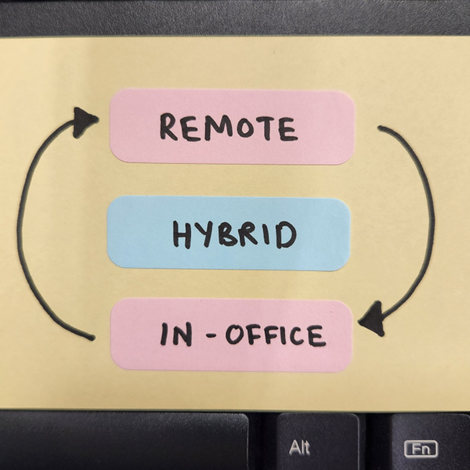
  • Reasons Why Hybrid Working Can Promote Diversity and Efficiency

    Reasons Why Hybrid Working Can Promote Diversity and Efficiency

    Reasons Why Hybrid Working Can Promote Diversity and Efficiency

    Millions of people and businesses worldwide have been forced into hybrid virtual work over the last two years, many of them for the first time. Numerous studies have demonstrated that employers strongly desire that their workers come back to the office as soon as feasible. Employees? Not really, for a variety of reasons, including work-life balance, family, and health. Now that coronavirus and its variants have been discovered, vaccines and treatments promise to return life to normal, but workers are holding greater sway in the huge discussion currently taking place about the future of workplace arrangements.

    Our most recent findings support the notion that hybrid work will be around. More than four out of five survey participants who had experience with hybrid models during the previous two years would like to continue using them in the future. Nowadays, a lot of employees want hybrid agreements that allow them to work remotely at least occasionally. There is proof that hybrid work arrangements can improve organisational performance by increasing employee engagement and decreasing attrition. However, a lot of corporate executives still have doubts about how effective hybrid working is. A sizable number of employers believe they will want full-time attendance from workers. This discussion’s current focal point is “employee quality of life versus corporate productivity.” This overlooks something crucial to harnessing the power and potential of a workforce, however: hybrid working can be a critical enabler of workplace Diversity, Equity and Inclusion (DE&I).

    Let us look at how this new work model benefits diversity and inclusivity in an organisation:

    Reason Why Hybrid Working Can Promote Diversity and Efficiency

    Elimination of Geographical Barriers

    In the past, most businesses favoured hiring individuals who resided close to their headquarters. Researchers found that candidates who lived merely 5–6 miles away from the recruiting firms got one-third fewer calls than those who lived closer to the location of employment. Companies were drawn to hire local people because it was more effective and less expensive.

    Unfortunately, concentrating only on a small geographic area makes it more difficult for recruiters to find high-talent and underrepresented prospects. You’ll be able to cast a broader net to identify underrepresented applicants from locations other than where your organisation is located by implementing a hybrid work environment.

    Alleviate Challenges Faced by Women with Primary Family Care Responsibilities

    Women with family responsibilities have always been difficult to draw in and retain. The crisis over Covid-19 made it worse. To address the special problem of juggling childcare schedules with commuting, many women express a particularly strong desire for flexible work arrangements. This is made worse for people who have additional care obligations, such as those who have elderly parents or disabled relatives.

    The hybrid approach helps working women with their particular lifestyle requirements. By removing and minimising obstacles that would otherwise hinder one’s career and/or quality of life, it effectively levels the playing field at work.

    Increased Support for People With Mental & Physical Disability

    For many of the millions of people with some sort of impairment, commuting is a substantial and frequently tangible barrier. For those whose houses have been modified to meet their needs, remote work can make it easier for them to contribute and integrate into the organisation. This does not negate the need for us to address the persistent issues with public transportation and office layout, but it can be beneficial for people who still have to deal with these issues on a daily basis.

    Additionally, it’s crucial to keep in mind that not all disabilities are physical: an anxiety condition has been diagnosed in 18% of Americans. Many of these people struggle to make it to work five days a week, especially if their journey is long, difficult, or involves congested public transportation. Modern office layouts now accommodate neurodiversity by providing quick access to private or quieter areas as needed, although many areas are still difficult for people with sensitive bodies.

    Support People with Economic Housing Limitation

    Even before the epidemic, commute times had been steadily rising longer, with an increasing number of “super commuters” travelling more than 90 minutes one way as a result of high housing costs in the areas near their workplaces.

    Because they cannot afford to reside within an acceptable commute distance to the office, many end up excluded from job prospects. This raises hiring difficulties for workers in various demographic groups, notably marginalised communities and minorities and makes one’s residence an implicit requirement for employment.

    How to Promote Diversity & Inclusivity in the Workplace in a Hybrid Work Model?

    Higher levels of flexibility, a better work-life balance, and a more specialised employee experience could all be provided via hybrid jobs. These can have a disproportionately favourable effect on performance and diversity, equity, and inclusion (DEI) initiatives as mentioned earlier. Hybrid work also has the potential to accentuate in-group versus out-group dynamics and create an unequal playing field, which might turn those advantages into liabilities. Adopting poorly thought-out hybrid work models could instead hasten employee exits, reduce inclusion, and degrade performance in organisations where it is difficult to attract, hire, and retain talent. Undoubtedly, it takes skill and finesse to reap the rewards of a hybrid workplace that is more inclusive. The following advice can help you put your hybrid workplace on the right track in terms of inclusivity and diversity:

    • Meetings should be moderated to prevent either group from feeling as if their opinions are not respected.
    • Utilise software like Asana to create novel collaborative strategies. The remote and in-office teams will need to work together well for them to coexist rather than compete.
    • Reiterate the value of remote work by encouraging employees to do so. This will prevent individuals who prefer to work remotely from feeling pressured to make the decision.
    • Make accommodating work schedules the norm for all personnel.

    Homeworking has been an alternative to flexible work practises for many years, but the recent pandemic has given them a significant boost. The stigma associated with persons who have alternate work schedules and the doubt surrounding “shirking from home” have mostly vanished. Managers now know how to successfully manage and direct remote teams. Because of the development and increased adoption of technology, hardware and software solutions that facilitate flexible working are now considered standard.

    Now, businesses must concentrate on how to accept these changes and seize the chance they present to advance their DE&I strategy. The ideal work environment can produce the work-life balance that employees seek, the high levels of engagement and productivity that the CEO demands, and a varied and equitable workforce that will foster the innovation and growth that are essential for achieving true competitive advantage. Hybrid working has the potential to be a truly win-win situation for all parties involved when implemented properly.

  • UAE To Offer Golden Visa For New Recruits In Key Roles

    UAE To Offer Golden Visa For New Recruits In Key Roles

    UAE To Offer Golden Visa For New Recruits In Key Roles

    Companies in the UAE now provide Golden Visas as a way to keep hold of current employees, they are also looking at the possibility of giving new senior personnel 10-year visas to draw in the top talent in the market. Companies are introducing this added benefit in addition to financial incentives in an effort to retain talented and highly qualified workers over the long term.

    High-net-worth individuals were the primary target of the Golden Visa in the past. At the moment, businesses are looking into the possibility of providing this as an extra perk for senior leadership personnel. Several influential figures in the medical and technology industries are driving this movement. This is being employed favourably to attract new talent and keep high-potential employees in important jobs. Client companies and applicants alike are pleased with the decision.

    This incentive also boosts the country’s talent density. The UAE will gain significantly from the changes taking effect in September in terms of luring talent over the long term. As part of a significant revision to its residence reforms programme, the United Arab Emirates will issue a number of new visas and entrance permits starting next month. Several changes to residency laws will go into force starting next month, including a greatly expanded Golden Visa programme, a new five-year Green residency, a multiple-entry tourist visa and entry permits for job seekers.

    Oil and foreign labour have been the UAE’s two primary cornerstones in recent years. Despite having some of the best oil reserves in the world (now at over 111 million barrels), foreign labour is becoming increasingly difficult to find due to increased worldwide competition for expertise. 8.92 million of the 10.08 million people living in the UAE are foreigners, according to statistics released by Global Media Insights in March 2022. As a result, there are about eight expatriate residents for every UAE national.

    In the business sector, the UAE’s reliance on foreign talent is even more obvious. According to a Gulf Research Center research from 2015, Emirati nationals made up just 0.5% of the private sector’s workforce in 2013. Of them, the top three migrant groups are composed of people from India, Pakistan and the Philippines.

    Many industries in the Gulf nation are facing increasing competition from other geographies to attract and retain migrant professionals, particularly in high-demand sectors like healthcare. As talent becomes the main input of production in sectors across the knowledge economy, the country has been forced to expand its visa programmes to remain competitive.

    UAE To Offer Golden Visa For New Recruits In Key Roles

    Competition for Expatriates

    There is a worldwide competition for expats. A shortfall of healthcare personnel, including nurses and doctors, was observed in 22 EU nations in the annual report on skill shortages and surpluses in 2020 published by the European Commission.

    There are labour shortages everywhere, not just in the healthcare industry. According to the most recent State of the Nation report from the British Computer Society, there were more than 64,000 IT job openings in the UK during the third quarter of 2021. This is an increase of 191% from the same time in 2020. The UAE believes that there is rivalry on a global scale that extends beyond the capital, which is now a plentiful resource. Talent is a limited resource on a global scale. The battle is for skill, not for money.

    The Golden Solution

    In response to this escalating competition, the UAE launched a “golden visa” programme in 2019. The visa gives a limited group of talented foreigners the chance to reside and work in the nation without the need for a sponsor for 10 years. Its eligibility requirements have changed numerous times since it was first introduced; most recently, in July 2022, nurses were added. The next review is scheduled for September 2022.

    The Esaad privilege card, which grants the holder discounts in industries like healthcare, education, hospitality, and entertainment, is one of the benefits available to visa holders. Additionally, access to specialised health insurance coverage is provided to visa holders. As more nations compete to entice employees from around the world, the UAE’s golden visa programme has set the stage. Following this, Saudi Arabia introduced a comparable Premium Residence programme for qualified expatriate workers, while Kuwait announced comparable plans to prolong the residency durations for immigrants in May 2022.

    Some companies in the UAE are recruiting for essential roles or certain abilities by providing 10-year Golden Visas in addition to pay and bonus packages. As competition for talent increases and more workers look for opportunities for extended residency in the nation, this may also apply to companies in other industries.

    By providing a new bonus for new hires of software/data engineers and those moving into leadership roles, the Dubai-based real estate web Property Finder is undoubtedly aiming for an early mover advantage.

    Businesses in the healthcare and tech industries are reportedly giving their newest hires this kind of choice, according to consultants that specialise in executive search. It is hoped that the new visa offerings will help retain this workforce, many of whom are foreign national, for longer durations. Previously it was the case that the 10-year residence was contingent upon making certain investments totalling Dh10 million or more. That entry-level criterion was recently reduced to Dh2 million and will be implemented in Dubai in September. Golden Visa has already been a part of recent off-plan launches from firms like Samana.

    It became a job-related incentive to retain talent when some corporations awarded Golden Visa status to long-serving workers last year. It is now used as a recruiting tool for talent.

    The announcement of the updated eligibility requirements for Golden Visa applications and approvals immediately sparked an unprecedented rush among real estate investors and the larger community. Investors, professionals and students, among others, can live and work in the UAE without being bound to a certain employer thanks to the Golden Visa. The eligibility requirements are expanding daily, allowing the holder to sponsor his or her spouse and children.

    Additionally, it provides an option for companies with 100% foreign ownership who could have trouble opening a labour and immigration file without an Emirati partner or sponsor. It follows that the increase in applications is not unexpected.

    Some industries have acted quickly to seize the benefits of giving the option to critical employees or those they intend to hire. In the long term, employers stand to gain advantages as well. While it still gives businesses great pride to have Golden Visa holders on staff, there are also long-term advantages in the shape of lower total expenditures for the company. Many other firms who may still have been debating applying for the visa for specific personnel will find that decision-making much simpler in light of the recent release of special insurance packages for Golden Visa holders.

  • What it means to be an ISO 27001-Certified HR & Payroll Provider

    What it means to be an ISO 27001-Certified HR & Payroll Provider

    What it means to be an ISO 27001-Certified HR & Payroll Provider

    ISO 27001 is a global standard for information security. It lays down the specifications of an information security management system (ISMS) according to the requirements given by the International Organization for Standardization (ISO) and the International Electrotechnical Commission (IEC) and specifies the criteria for the establishment, maintenance, and implementation of the same. The purpose of these standards is to ensure that data and internal records are secure.

    Nowadays, most organisations rely heavily on information security controls to protect their information assets and prevent unauthorised access to them same. Using ISMS, organisations are able to secure all sorts of information, whether paper-based or digital, through a set of technical and physical controls and procedures that preserve the three principles of information security: confidentiality (C), integrity (I), and availability (A).

    Seeing how it holistically secures the CIA of information assets, being an ISO 27001 certified HR and payroll software provider like Yomly, a company in Dubai, adds more assurance that the quality of the ISMS being used has been proven efficient through the stringent auditing standards of ISO.

    What it means to be an ISO 27001-Certified HR & Payroll Provider

    What an ISO 27001 Certified HR and Payroll Provider is

    Being an ISO 27001 certified HR and Payroll provider means that the security requirements of laws such as the UAE Personal Data Protection Law, which provides a framework on information confidentiality, and Federal Law No. 5 of 2021 on Combating Cybercrimes, which penalises the disclosure of information obtained by electronic means, are honoured and complied with through risk assessments, asset management and information security policy implementation, and system maintenance. With these, HR and payroll software will have increased resilience to cyber attacks, thereby avoiding the costs of data breaches.

    Advantages of Using an ISO 27001 Certified HR and Payroll Software

    • Protection of data, anytime and anywhere

    With cloud-based software, users can access and protect information assets across any device through an application programming interface that integrates mobile and desktop operating systems.

    • Reduce costs on information security

    By allowing users to only implement the controls they need, organisations will get the most out of what they pay for and reduce costs by using unnecessary ones.

    • Be regulation-compliant

    Using reliable and efficient software will enable organisations to comply with the existing laws on data privacy and protection through increased information asset security.

    • Avoid data breaches and security threats

    With system management, development and maintenance in place, using software like this will allow organisations to constantly adapt to evolving security threats.

    Recent developments

    HR software companies in Dubai have developed cloud-based HR and payroll software that is specifically designed for the needs of business organisations. This software has been known to centralise HR and payroll operations by streamlining work processes and integrating information on a single platform, making it easier for HR departments to secure information more efficiently and monitor their records more accurately.

    Following these recent developments, HR management software in other parts of the UAE has likewise transitioned to a more secure and efficient version. This prevailing trend in HR technology, according to KPMG, “will establish a solid foundation for (…) the availability of human capital data (data analytics).”

  • UAE Ministerial Resolution No. 279 of 2020 Offers New Guidance for Employers

    UAE Ministerial Resolution No. 279 of 2020 Offers New Guidance for Employers

    UAE Ministerial Resolution No. 279 of 2020 offers new guidance for employers

    The Ministry of Human Resources and Emiratisation (MOHRE) has unveiled a new Ministerial Resolution (No. 279 of 2020), offering guidelines for employers based onshore in navigating employment-related actions amidst the global Covid-19 pandemic. This directive, effective from 26 March 2020, introduces measures intended to remain effective as long as other Covid-19 related precautionary actions are in force.

    This resolution is a boon for onshore employers, legitimising actions many are contemplating or have already put into practice. Although it explicitly applies to all onshore employers under MOHRE’s regulation, its adoption across the UAE’s various free zones remains to be seen. Notably, the resolution’s protections extend only to non-national employees, distinguishing them from UAE nationals who benefit from broader protections under existing legislation.

    Here are the salient features of the Resolution as it pertains to business contingency planning, which our clients may find beneficial. The resolution suggests a “gradual” implementation of these measures, a process whose practical requirements are yet to be fully clarified, such as whether the measures should follow a specific sequence or impact order.

    What is the benefit of having HRMS
    img6

    Remote Working

    The resolution permits affected onshore companies to adopt remote working systems in response to the ongoing efforts to curb Covid-19’s spread. Further guidance on implementing these remote working systems is provided in Ministerial Resolution No. 281 of 2020, published on 29 March 2020.

    Paid Leave

    Under the Federal Law No. 8 of 1980 (Labour Law), employers can dictate when employees should take their annual leave, now reinforced by the resolution, albeit suggesting “agreement” should be sought. This strategy, however, might need reconsideration as travel restrictions ease, potentially leaving employees with insufficient leave to visit family abroad.

    Unpaid Leave

    The resolution introduces the concept of unpaid leave, agreed upon mutually by employers and employees, a welcome clarification given its previous ambiguity under the Labour Law. This option could serve as an alternative to dismissals, offering employees the retention of their medical insurance in the UAE amidst current travel bans.

    Temporary Salary Reduction

    Employers can temporarily reduce salaries with the employee’s consent, following a specific procedure outlined in the resolution. This includes creating a temporary addendum to the MOHRE employment contract, to be kept by both parties and presented to MOHRE upon request, detailing the duration of the salary reduction.

    Permanent Salary Reduction and Redundancies

    For permanent salary reductions, employer and employee consent is required, with an official amendment to the MOHRE employment contract. The resolution, while sanctioning certain measures, does not explicitly endorse redundancies. Instead, it offers guidance for employers with excess non-national employees, suggesting registration on the MOHRE’s Virtual Labour Market for alternative employment opportunities, with a continuation of accommodation and entitlements until they leave the UAE or find new employment.

    Hiring and Additional Considerations

    The resolution facilitates hiring processes for onshore employers by directing them to list vacancies on the Virtual Labour Market and seek electronic work permissions for suitable candidates. Moreover, the amendment of Federal Law No. 14 of 2014 to include Covid-19 among communicable diseases mandates immediate notification to the Ministry of Health by anyone aware of or suspecting an infection, under penalty of imprisonment or fines.

    This suite of measures provided by the MOHRE offers a range of sanctioned options short of dismissal, enabling employers to navigate the challenges posed by the Covid-19 crisis while retaining staff for future needs.