Category: Employee management

  • How to Centralize Employee Records Right

    How to Centralize Employee Records Right

    When payroll pulls one job title, HR has another on file, and a manager is working from an outdated contract, the problem is not just inefficiency. It is risk. That is why many growing organizations start asking how to centralize employee records before errors turn into payroll disputes, compliance gaps, or poor workforce visibility.

    For enterprise teams, centralization is not simply about moving files into one digital folder. It means creating a reliable system of record for employee data across HR, payroll, finance, operations, and leadership. Done well, it reduces duplication, improves audit readiness, and gives decision-makers a clearer view of the workforce across entities, countries, and contract types.

    What centralizing employee records actually means

    A centralized employee record is a single, trusted profile for each worker that brings together core HR data, payroll details, contracts, identification documents, compensation history, leave balances, benefits information, performance records, and other relevant employment data. The key idea is consistency. Everyone who needs approved information should be working from the same source, with permissions that reflect their role.

    This matters even more in organizations operating across the UAE, GCC, and wider MENA region, where employment documentation, payroll inputs, and labor law requirements can differ across jurisdictions. If records are spread across spreadsheets, inboxes, shared drives, and disconnected tools, each process becomes slower and harder to control.

    Centralization does not always mean every process sits in one application on day one. In some enterprises, the practical path is to establish one master HR platform first, then connect payroll, time tracking, finance, and document workflows over time. The right model depends on system complexity, regulatory exposure, and how many entities are involved.

    How to centralize employee records without creating more disruption

    The biggest mistake companies make is treating this as a file migration project. It is really an operating model project. Before moving anything, define what the employee record should include, who owns each data point, and which system will be the source of truth.

    Start by mapping the records you already hold. In most organizations, employee data sits across HR systems, payroll software, spreadsheets, paper files, recruitment tools, expense platforms, email attachments, and local drives. The goal at this stage is not perfection. It is visibility. You need to know where the data lives, how often it changes, and which records are business-critical.

    Once that picture is clear, standardize your data structure. Decide how names, job titles, entity information, pay components, document types, national IDs, visa data, and employment dates should be recorded. This is where many centralization efforts either gain momentum or create long-term problems. If one business unit records position changes differently from another, reporting and payroll validation become harder later.

    After structure comes governance. Every field in the employee record should have an owner. HR may own personal details and contracts, payroll may own salary elements and bank data, and managers may only initiate changes subject to approval. Without clear ownership, a centralized system can still end up full of conflicting records.

    Then move to migration. Clean the data before importing it. Remove duplicates, archive expired documents where appropriate, validate active employee status, and check that historical payroll and employment records align with policy and legal retention requirements. Migrating poor-quality data into a better system only makes bad information easier to access.

    Finally, automate the processes that keep records current. New hire onboarding, job changes, salary revisions, leave approvals, document renewals, and terminations should all update the employee record through controlled workflows. Centralization only holds if the system continues to reflect the business as it operates today, not as it looked six months ago.

    Where enterprises usually get stuck

    The technical side is often easier than the organizational side. Teams may agree that centralization is necessary, but disagree on control. HR wants cleaner records, payroll wants validated inputs, IT wants secure architecture, and finance wants dependable cost reporting. Those priorities are all valid, which is why the project needs executive sponsorship and cross-functional design.

    Legacy complexity is another common blocker. Large organizations may have acquired businesses, multiple legal entities, separate payroll calendars, and different document standards by country. In those cases, aiming for total uniformity too quickly can slow progress. A better approach is to define a global data model with local flexibility where regulations or operating practices require it.

    There is also the question of historical depth. Not every organization needs every legacy document digitized immediately. For some, it is enough to centralize active employee records and recent history first, while archiving older files in a controlled repository. The right threshold depends on audit risk, legal obligations, and how often historical records are used.

    The systems and controls that make centralization work

    If you want to know how to centralize employee records at scale, the answer usually involves more than storage. You need a system that combines data management with workflow, permissions, and reporting.

    Role-based access is essential. Employee records contain personal, financial, and contractual information that should not be universally visible. HR administrators, payroll teams, line managers, and employees themselves each need different levels of access. Strong access controls reduce risk while still making information available to the people who need it.

    Document management matters just as much as structured data fields. Enterprises need contracts, IDs, visas, certifications, policy acknowledgments, and payroll documents attached to the employee profile and stored in a way that supports expiration alerts, version control, and retrieval during audits.

    Integration also shapes success. If payroll, attendance, recruitment, benefits, and finance systems remain disconnected, your centralized record can quickly drift out of sync. This is why many organizations move toward integrated HR and payroll platforms or, at minimum, systems with strong APIs and dependable synchronization logic.

    For companies managing regional and multi-country workforces, localization cannot be treated as a side issue. Employee records often support payroll compliance, statutory reporting, and labor-law processes. A system built for enterprise needs should handle local payroll fields, document requirements, and country-specific workflows without forcing manual workarounds.

    The business case goes beyond administration

    Centralized records reduce administrative overhead, but the bigger value is control. Payroll becomes more accurate when data changes flow through approved workflows instead of email chains. Compliance improves when document expiry, contract updates, and employee classifications are visible in one place. Managers make faster decisions when they can trust headcount, compensation, and workforce status data.

    There is also a measurable employee experience benefit. When employees can update personal details, access documents, submit requests, and view accurate information through a secure self-service environment, HR teams spend less time answering routine queries. That shift creates capacity for more strategic work.

    For leadership teams, centralization supports better reporting. Headcount by entity, turnover trends, leave utilization, payroll costs, and workforce composition become easier to analyze when the underlying records follow common standards. Without that foundation, dashboards may look polished while still relying on inconsistent inputs.

    Choosing the right platform for centralized employee records

    Not every HR system is designed for the same level of complexity. Smaller tools may work for basic recordkeeping, but enterprises typically need configurability, localization, workflow depth, and strong payroll alignment. The platform should support your current operating model while giving you room to scale.

    Look closely at how the system handles multi-entity structures, approval chains, document storage, payroll integration, and regional compliance requirements. Also assess implementation support. A centralization project succeeds when technology and process design move together. Vendors that understand enterprise data migration, governance, and regional operational realities can reduce risk significantly.

    This is where a platform such as Yomly can fit naturally for organizations in the UAE, GCC, and MENA region that need a single system to manage employee records alongside payroll, workflows, and compliance-sensitive processes across multiple entities and countries.

    How to centralize employee records and keep them accurate

    The project does not end at go-live. Once records are centralized, accuracy depends on discipline. Create data review cycles, define mandatory fields for key transactions, monitor exceptions, and audit access regularly. If teams continue to update information offline or bypass approval workflows, the quality of the record will decline.

    Training matters here, especially for managers and local administrators. They need to understand not only how to use the system, but why process adherence affects payroll accuracy, compliance, and reporting quality. Centralization is strongest when it becomes part of day-to-day operations rather than a one-time cleanup exercise.

    A well-built employee record system gives the business a more dependable foundation. It supports growth, reduces avoidable risk, and helps every function work from the same facts. If your organization is still chasing employee data across systems, spreadsheets, and inboxes, centralization is no longer just an efficiency project. It is a control decision that shapes how confidently you can operate at scale.

    The best time to fix fragmented records is before the next audit, payroll issue, or expansion makes the gaps impossible to ignore.
  • Shift Scheduling Software for Multi Location Teams

    Shift Scheduling Software for Multi Location Teams

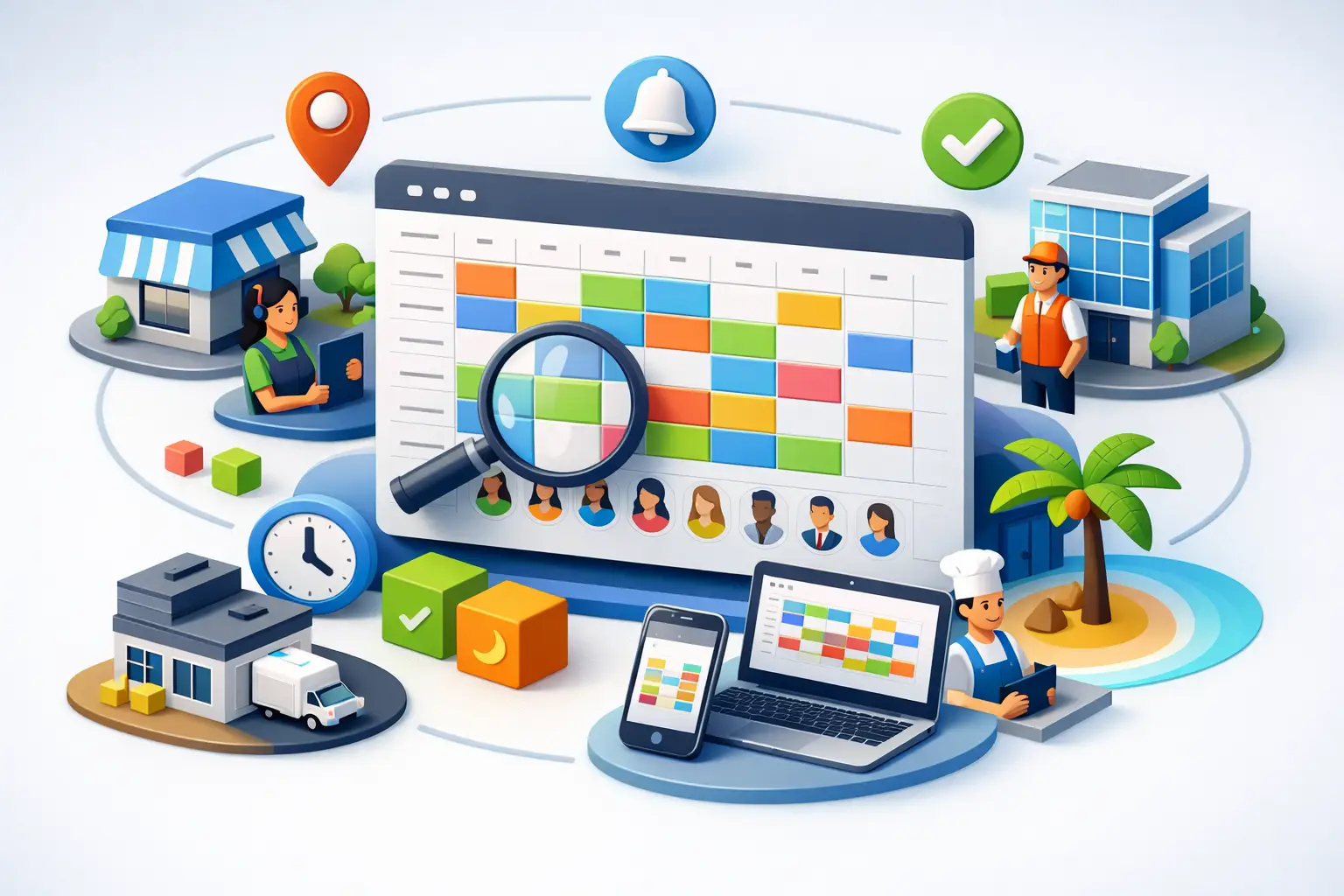
    A missed handoff between two sites can turn into overtime overruns, payroll corrections, and frustrated employees before the week is over. That is why shift scheduling software multi location businesses rely on is no longer a nice-to-have for enterprise operations. When teams are spread across branches, business units, or countries, scheduling stops being a simple manager task and becomes a control issue tied to labor cost, compliance, and service delivery.

    For HR, operations, and payroll leaders, the real challenge is not just filling shifts. It is coordinating people, rules, approvals, and time data across a workforce that rarely fits into one pattern. A retail network may need local flexibility by store. A healthcare group may need role-based coverage by facility. A hospitality brand may have to balance demand peaks, split shifts, and cross-location staff movement without creating payroll risk. The wrong scheduling system makes those issues harder, not easier.

    What multi location scheduling actually demands

    Single-site scheduling tools often look capable in a product demo. They can publish a rota, notify employees, and track attendance. The problem shows up when the business model becomes more complex.

    Multi location operations need a platform that can support different shift templates, pay rules, approval chains, and staffing levels by site while still maintaining central oversight. That means local managers need enough flexibility to run their operation, but head office still needs visibility, governance, and reporting.

    This is where many organizations hit a wall with disconnected tools. One location may use spreadsheets, another may rely on a basic scheduling app, and payroll may still receive hours through manual exports. The result is predictable: duplicate data entry, inconsistent practices, delayed approvals, and a higher risk of payroll errors.

    Shift scheduling software for multi location organizations has to do more than assign people to hours. It has to connect scheduling decisions to the wider workforce operation.

    Why shift scheduling software multi location enterprises use must go beyond rostering

    At enterprise scale, scheduling sits in the middle of several critical workflows. It affects attendance, overtime, payroll calculations, leave management, compliance, and workforce planning. If those functions are separated, managers spend too much time reconciling data instead of managing labor effectively.

    A stronger approach is to treat scheduling as part of an integrated workforce system. When employee records, availability, leave balances, job roles, and payroll rules sit in one platform, schedules become more accurate from the start. Managers can see who is eligible for a shift, who is already approaching overtime limits, and who is unavailable due to approved leave. Payroll teams receive cleaner time data, and HR gets a more reliable picture of workforce utilization.

    That matters even more across the UAE, GCC, and wider MENA region, where organizations often operate through multiple legal entities, business divisions, or countries with different labor requirements. In these environments, scheduling decisions cannot be detached from local rules and payroll implications.

    The features that matter most

    The best buying decisions usually come from looking past feature volume and focusing on operational fit. Not every organization needs the same depth in every area, but a few capabilities consistently matter in multi location environments.

    Location-based scheduling is foundational. Managers should be able to build rosters by branch, site, department, or cost center without losing enterprise visibility. If employees work across multiple locations, the system also needs to support controlled transfers or cross-site assignments without forcing manual workarounds.

    Rule-based scheduling is just as important. Enterprises often need to apply different shift patterns, break rules, overtime thresholds, or eligibility rules depending on employee group or geography. A tool that cannot reflect real business rules tends to push those checks back onto managers, which defeats the point of automation.

    Real-time attendance capture strengthens schedule accuracy. There is a big difference between a published schedule and actual hours worked. When attendance data flows back into the same environment, teams can identify no-shows, late arrivals, and unauthorized overtime faster.

    Approval workflows help maintain control at scale. A local manager may create or adjust the schedule, but regional or central teams may still need approval rights for overtime, agency coverage, or exception handling. That level of governance becomes increasingly valuable as the organization grows.

    Finally, reporting cannot be treated as an afterthought. Enterprises need to compare labor cost, coverage, absenteeism, and overtime trends across locations. Without that visibility, leaders are left making staffing decisions based on partial information.

    Where businesses usually underestimate complexity

    A common mistake is assuming scheduling pain comes only from poor shift creation. In reality, the deeper issues tend to sit around policy variation and data fragmentation.

    Take a company with ten locations. On paper, each site may run the same operating model. In practice, one location has higher weekend demand, another uses part-time staff heavily, and a third shares employees with a nearby branch. Add different local regulations, contract structures, and payroll cycles, and the scheduling process becomes far more than placing names into time slots.

    This is why implementation matters as much as software capability. Enterprise teams should ask whether the platform can support their real operating structure without forcing process compromises. Some systems are easy to start with but difficult to scale once exceptions and compliance requirements begin to stack up.

    There is also a trade-off between standardization and flexibility. Too much local freedom creates inconsistency. Too much central control slows execution on the ground. The right software should allow organizations to define a common framework while preserving controlled flexibility where it is operationally necessary.

    What to evaluate before choosing a platform

    If you are assessing shift scheduling software multi location requirements should shape the shortlist from the start. The question is not whether the tool can build a schedule. The question is whether it can support the way your business actually operates.

    Start with structure. Can the system handle multiple locations, legal entities, departments, and reporting lines within one environment? If your workforce spans countries or regions, that becomes essential.

    Then look at integration. Scheduling should connect cleanly with HR records, leave, attendance, and payroll. If your scheduling tool sits apart from payroll, every pay period introduces another point of failure.

    Configurability should come next. Enterprise businesses rarely fit an out-of-the-box model. You may need custom approval flows, location-specific rules, or reporting views tailored to operational leadership. That does not mean you want bespoke development for every request, but you do need enough flexibility to reflect the business accurately.

    Security and audit readiness also deserve close attention. Scheduling data affects pay, compliance, and employee relations. Role-based access, change tracking, and controlled approvals are not secondary features in an enterprise environment.

    For organizations operating in MENA, regional fit is especially important. A generic global platform may support shift planning at a surface level but still fall short when payroll localization, labor-law alignment, and country-specific administration become part of the process. This is where a platform such as Yomly can offer a stronger fit by combining workforce scheduling with broader HRMS and payroll capabilities built for regional complexity.

    The business case is bigger than manager efficiency

    It is easy to frame scheduling software as a time-saving tool for line managers. That value is real, but it is only part of the picture.

    Better scheduling improves cost control by reducing unnecessary overtime, overstaffing, and last-minute coverage decisions. It supports compliance by applying rules more consistently and creating a clearer audit trail. It improves payroll accuracy because hours, shifts, and exceptions are captured in a more structured way. And it gives leadership better workforce visibility across sites instead of leaving each location to operate as its own data island.

    There is also an employee impact. When schedules are clearer, changes are communicated faster, and shift allocation follows consistent rules, trust tends to improve. In sectors with high hourly populations, that can directly affect retention and engagement.

    Still, not every organization needs the most complex solution available. A business with a small number of highly similar sites may prioritize simplicity and speed. A larger enterprise with multiple entities, countries, and labor frameworks will usually need deeper configurability and integration. The right answer depends on operational complexity, not just headcount.

    The strongest scheduling systems do not simply help teams fill shifts. They help the business run with more control. When location managers, HR, payroll, and finance are all working from the same workforce data, scheduling becomes a lever for better decisions rather than a weekly administrative burden. For organizations managing distributed teams across sites and regions, that shift can have a measurable effect on efficiency, compliance, and confidence in every pay cycle.

  • Performance Management Software for Enterprise

    Performance Management Software for Enterprise

    Annual reviews rarely fail because managers do not care. They fail because enterprise organizations are trying to evaluate performance across different business units, reporting lines, countries, and legal realities with disconnected tools. That is exactly where performance management software enterprise teams rely on starts to matter – not as a nicer review form, but as a control layer for workforce alignment, accountability, and better decision-making.

    For large organizations, performance management is no longer a standalone HR process. It affects retention, compensation, succession planning, manager capability, and workforce productivity. When the process lives in spreadsheets, email threads, and separate point solutions, leaders lose visibility and employees lose trust in the system. Enterprise software changes that by turning performance into a structured, trackable process tied to business outcomes.

    What performance management software enterprise teams actually need

    Many platforms promise continuous feedback, goal tracking, and appraisal workflows. Those features matter, but they are not enough for enterprise use. Large employers need the system to work across multiple departments, geographies, and employee populations without creating administrative drag.

    That means configurable review cycles, role-based permissions, approval workflows, and reporting that can support executive oversight. It also means the platform should reflect the way the organization operates. A regional retail workforce, a professional services business, and a multi-entity manufacturing group will not run the same performance process, even if all three need consistency and auditability.

    The strongest enterprise systems are designed for variation without losing control. HR can standardize what must be standardized, while still allowing business units to tailor competencies, review forms, or timelines where appropriate. That balance matters. Too much rigidity creates poor adoption. Too much freedom creates governance problems.

    Why enterprise performance management often breaks down

    In most enterprise environments, the problem is not a lack of intent. It is process fragmentation.

    Managers may be setting goals in one system, tracking one-on-ones in another, and completing year-end reviews in static documents. Compensation discussions may happen separately from performance conversations, and HR may spend weeks consolidating results for calibration. By the time leadership gets a complete view, the data is already dated.

    There is also a regional and compliance dimension that global buyers sometimes underestimate. If your workforce spans the UAE, GCC, broader MENA markets, and additional international locations, performance processes need to fit local operating realities. Review schedules, language needs, reporting structures, and policy governance can vary significantly across entities. Enterprise buyers should not treat that as a minor implementation detail. It affects adoption, fairness, and administrative effort.

    Core capabilities that make a real enterprise difference

    A capable platform should support goal setting, periodic check-ins, feedback, formal appraisals, and development planning. But the real enterprise value comes from how those features connect with broader HR operations.

    For example, when employee records, organizational structures, and manager relationships already exist in the HR system, performance workflows become far easier to administer. Review assignments can be automated. Organizational changes can be reflected without manual corrections. Reporting becomes more reliable because the data is pulled from a consistent source.

    This is one reason integrated HR platforms often outperform disconnected specialist tools in enterprise settings. If performance management sits alongside core HR, payroll, time tracking, and reporting, leaders can move from isolated reviews to more useful workforce decisions. They can compare performance outcomes by location, function, tenure, or legal entity. They can identify where turnover risk is rising. They can support pay decisions with clearer evidence.

    That does not mean every organization needs the most feature-heavy platform on the market. In some cases, a simpler system with strong workflow controls and clean integration is a better fit than an overbuilt solution employees avoid using.

    Choosing performance management software for enterprise scale

    Buying decisions should start with operating complexity, not feature checklists.

    An enterprise with five countries, multiple payroll entities, and matrix reporting needs something different from a single-country business with one annual review cycle. The right evaluation criteria should reflect workforce structure, review frequency, approval complexity, and reporting expectations.

    A useful buying process usually begins with a few practical questions. Can the system support different review templates by employee group? Can HR control permissions at a granular level? Will it handle changing organizational structures without rework? Can it produce executive dashboards without manual consolidation? And just as important, can managers use it without extensive training?

    Implementation deserves equal attention. Even strong software underperforms when review forms are overcomplicated, rating frameworks are unclear, or approval paths do not match reality. Enterprise buyers should look for providers that understand process design, not just software deployment. Technology can improve consistency, but it cannot fix a broken performance philosophy on its own.

    The case for integration with HR and payroll

    Performance data becomes more useful when it is connected to the rest of the employee lifecycle.

    If salary reviews happen in a separate environment, HR and finance teams often spend valuable time reconciling information across systems. If promotions, transfers, and organizational changes are not reflected quickly, managers may complete reviews against outdated structures. If reporting lines are wrong, approval bottlenecks follow.

    This is where a platform approach has a clear operational advantage. When performance management connects with core HR and payroll, enterprises gain cleaner data, fewer handoffs, and more reliable reporting. That matters for compensation planning, succession discussions, workforce budgeting, and audit readiness.

    For organizations operating across the UAE, GCC, and MENA, integration also supports stronger governance. Regional compliance demands do not stop at payroll. Workforce processes need consistency, traceability, and secure data handling across multiple entities. A unified system reduces the risk that key decisions are made on incomplete or inconsistent records.

    What to watch out for during vendor evaluation

    Enterprise buyers should be cautious of software that looks strong in demos but weak in configuration depth. A clean user interface matters, but it is not enough if the platform cannot support your approval logic, data structure, or reporting model.

    Another common issue is treating performance management as an isolated employee experience tool. Employee usability matters, but enterprise leaders also need governance, controls, and reporting. If HR cannot manage policy changes centrally, or if executives cannot get a credible cross-business view, the platform will create more work than it removes.

    It is also worth testing how the system handles multilingual teams, distributed managers, and nonstandard employee populations. Frontline staff, shift-based workers, regional office teams, and headquarters employees may all need different experiences. Software should support that variation without forcing HR into manual administration.

    Yomly’s approach reflects this enterprise reality by combining performance management with core HR, payroll, and regional workforce operations in one configurable platform. For businesses managing complex structures across MENA and beyond, that alignment can reduce friction that standalone tools often leave behind.

    Performance management software enterprise leaders can trust

    The best enterprise platforms do more than digitize appraisals. They create a more consistent management rhythm, improve data quality, and give leadership a clearer view of workforce performance across the organization.

    Still, there is no single model that fits every business. Some enterprises need continuous feedback and quarterly goals. Others need a more formal annual structure with careful controls around calibration and compensation. The right system is the one that supports your operating model today while leaving room for growth, restructuring, and regional expansion.

    If performance management feels slow, inconsistent, or difficult to govern, the issue is rarely just the form itself. It is usually the system around it. Enterprise organizations gain the most when they choose software that supports performance as part of a wider people operations strategy – connected, compliant, and built for scale.

    A better performance process should make expectations clearer for employees, decisions easier for managers, and oversight stronger for leadership. That is the standard worth holding.

  • Employee Onboarding Workflow Software Guide

    Employee Onboarding Workflow Software Guide

    A new hire’s first week tells you a lot about your operating model. If IT is waiting on HR, payroll is missing bank details, managers are chasing documents by email, and compliance steps vary by location, the problem is not the employee. It is the process. Employee onboarding workflow software gives enterprises a structured way to coordinate people, approvals, documents, and deadlines from offer acceptance through day-one readiness and beyond.

    For growing organizations, onboarding rarely breaks because of one major gap. It breaks because of accumulated friction. A contract sits in one system, payroll data in another, visa or labor documentation in email, and equipment requests in a ticketing tool no one checks on time. That fragmentation creates delays, inconsistent employee experiences, and avoidable compliance risk. Workflow software addresses that by turning onboarding into a controlled process rather than a sequence of manual follow-ups.

    What employee onboarding workflow software actually does

    At its core, employee onboarding workflow software automates the chain of actions required to bring a new employee into the business correctly. That includes data collection, document management, policy acknowledgments, approvals, handoffs to payroll and finance, IT provisioning requests, and task tracking for managers and HR teams.

    The value is not just automation for its own sake. It is the ability to standardize critical steps while still allowing for different employee types, business units, legal entities, and countries. An enterprise hiring a sales manager in Dubai, a warehouse supervisor in Riyadh, and a remote analyst in Europe should not be relying on the same static checklist with manual exceptions handled over email.

    Strong onboarding workflows adapt based on role, location, contract type, reporting line, and internal policy rules. If the employee sits in a regulated entity, additional approvals may be triggered. If they are eligible for region-specific benefits, the system should assign the right enrollment process. If payroll inputs differ by country, the workflow should route the required fields and validations before the first pay cycle is at risk.

    Why onboarding workflows matter more at enterprise scale

    Small companies can sometimes absorb manual work. Enterprise environments cannot. Once you operate across multiple entities, locations, or countries, the cost of inconsistency compounds quickly.

    A delayed onboarding process affects more than HR. Payroll teams face incomplete records and cut-off pressure. Finance teams struggle with cost center accuracy and headcount visibility. Operations leaders lose confidence in start-date readiness. Managers inherit a poor first impression before the employee has even logged in.

    There is also a compliance dimension. In the UAE, GCC, and wider MENA region, onboarding can involve labor-law alignment, identity documentation, visa-related administration, and payroll setup requirements that are too important to manage through ad hoc processes. Global platforms often cover the broad HR use case but fall short when localized compliance and payroll workflows need to be part of one connected system.

    That is why enterprises increasingly look for workflow software that sits within a broader HR and payroll environment, rather than a standalone onboarding tool. If onboarding data has to be re-entered into payroll, core HR, or benefits administration later, the business simply shifts work downstream instead of removing it.

    The features that matter in employee onboarding workflow software

    Not every platform marketed as onboarding software is designed for enterprise complexity. Some are digital checklists with e-signature capability. Others provide stronger workflow orchestration but limited localization. The right fit depends on your operating model.

    A capable platform should give HR teams configurable workflows, not just fixed templates. That means setting triggers, approval paths, dependencies, reminders, and exceptions without rebuilding the process for every business unit. It should also maintain one employee record across onboarding, core HR, and payroll so that information collected once can be reused accurately.

    Document management is another major requirement. New hires need a secure place to submit IDs, contracts, tax or payroll forms, certifications, and policy acknowledgments. HR teams need visibility into what is complete, what is missing, and what remains pending by start date. Audit trails matter here, especially for organizations under strict internal controls or regional regulatory obligations.

    Role-based task assignment is equally important. Managers, HR business partners, IT, payroll, and finance all play a part in onboarding. Good workflow software makes ownership clear, timestamps completion, and escalates delays before they affect the employee experience.

    Then there is reporting. Enterprises need more than a task view. They need to know where onboarding slows down, which locations create the most exceptions, whether first-payroll accuracy is improving, and how long it takes to reach full readiness by employee type. Without that visibility, onboarding remains operationally invisible until something goes wrong.

    Where many implementations go wrong

    Buying software does not automatically fix onboarding. Many organizations implement a tool but keep the same fragmented process behind it. They digitize forms without redesigning ownership, approvals, or data flow. The result is a more polished front end with the same underlying delays.

    Another common issue is over-standardization. Central teams sometimes force one onboarding workflow across every location to simplify administration. That sounds efficient, but it can create compliance gaps or unnecessary work when local requirements differ. Enterprise software should support global control with local flexibility. It is not either-or.

    There is also a practical trade-off between speed and governance. Too many approval layers can delay hiring readiness. Too little control creates payroll and compliance exposure. The best onboarding workflow software allows organizations to apply governance where it matters most and keep routine steps automated.

    How to evaluate employee onboarding workflow software

    Start with the process, not the demo. Map what must happen from offer acceptance to first payroll and first-month readiness. Identify where data is collected, where approvals occur, where manual re-entry happens, and where regional or entity-level variation matters.

    Then assess whether the software can handle your actual operating conditions. Can it support multiple legal entities and countries? Can it route workflows by location, employee category, or contract type? Does it connect onboarding directly to payroll, document storage, leave, benefits, and reporting? Can it support audit readiness without creating administrative overhead?

    For organizations in MENA or with regional entities, localization should be a decision criterion, not an afterthought. Payroll setup, labor-law alignment, and country-specific onboarding obligations affect business continuity. A generic workflow tool may manage tasks well but still leave HR and payroll teams to solve regional complexity manually.

    Implementation also deserves scrutiny. Enterprise teams need more than software access. They need a partner that understands workflow design, data migration, user permissions, approval logic, and regional compliance realities. This is where platforms like Yomly stand apart for organizations that need both enterprise-grade HR technology and operational fit for the UAE, GCC, and broader multi-country workforce environment.

    The business case beyond HR efficiency

    Onboarding software is often justified as an HR productivity investment, but the return is broader than that. Better workflows reduce payroll errors by ensuring employee data reaches payroll accurately and on time. They improve compliance posture through documented approvals and complete records. They support finance through cleaner employee master data, cost allocation, and reporting consistency.

    There is also a talent outcome. New hires notice when the business is prepared for them. A structured onboarding experience signals that the organization is organized, credible, and ready to support performance. That matters for retention, especially in competitive labor markets where first impressions carry real weight.

    For leadership teams, workflow maturity creates control. Instead of relying on local teams to interpret process expectations differently, the business gains a consistent operating model with visibility across regions. That control becomes even more valuable during periods of rapid growth, restructuring, or multi-country expansion.

    What good looks like in practice

    The strongest onboarding environments are not the most complicated. They are the clearest. Data is entered once. Tasks are assigned automatically. Approvals follow defined rules. Documents are collected securely. Payroll is set up correctly before deadlines. Managers know what they own. HR can see progress without chasing updates. Leadership can spot bottlenecks before they become operational issues.

    That is the standard enterprise organizations should expect from employee onboarding workflow software. Not another disconnected app to manage checklists, but a workflow engine that supports compliance, readiness, and scale across the full employee lifecycle.

    If your onboarding process still depends on inboxes, spreadsheets, and memory, the problem is already visible to every new hire you bring in. Fixing it is not only about saving time. It is about building a more controlled, more credible, and more scalable business from the very first interaction an employee has with your organization.

  • Employee Benefits & Severance Pay In Thailand

    Employee Benefits & Severance Pay In Thailand

    Understanding employee benefits and severance pay in Thailand is essential for employers looking to stay compliant while building a fair and competitive workplace. These provisions are governed primarily by the Labour Protection Act (LPA), which outlines minimum standards for employee welfare, working conditions, and termination practices.

    For businesses expanding into Thailand or managing distributed teams in the region, aligning HR policies with these statutory requirements is not optional because it is a legal necessity. At the same time, companies that go beyond the minimum often see stronger retention, improved employer branding, and better workforce stability.

    For a broader legal overview, you can also explore: Labour & Employment Laws in Thailand

    Statutory Employee Benefits in Thailand

    Thailand has a well-defined framework for employee benefits that ensures a baseline level of protection for workers. These benefits apply to most employees and must be clearly documented in employment contracts.

    Benefit TypeEntitlement (Minimum Requirement)
    Annual Leave6 days per year (after 1 year of service)
    Public HolidaysMinimum 13 days per year
    Sick LeaveUp to 30 paid days per year
    Maternity LeaveUp to 98 days (partially paid)
    Personal LeaveAt least 3 paid days annually
    Social SecurityMandatory employer & employee contributions

    1. Annual Leave

    Employees who complete one full year of service are entitled to a minimum of six days of paid annual leave. Employers may choose to offer more generous leave policies, but they cannot provide less than the statutory requirement.

    Unused leave policies depend on company agreements, but many organizations allow carry-forward or encashment to remain competitive in the talent market.

    2. Public Holidays

    Thailand mandates at least 13 public holidays per year, although many employers provide more depending on industry norms. Employees required to work on public holidays must be compensated with either additional pay or a substitute day off.

    This ensures fairness, especially in sectors like hospitality, healthcare, and retail, where working on holidays is common.

    3. Sick Leave

    Employees are entitled to up to 30 days of paid sick leave annually. For extended absences, employers may request medical certification.

    This benefit plays a critical role in employee well-being and productivity, particularly in maintaining a healthy workforce without penalizing genuine health concerns.

    4. Maternity Leave

    Female employees are entitled to up to 98 days of maternity leave. Out of this, a portion is paid by the employer, while the rest may be covered under Thailand’s social security system.

    Employers must ensure that maternity protections are strictly followed, as violations can result in legal consequences.

    5. Personal and Other Leave

    Employees are also entitled to at least three days of paid personal business leave per year. Additionally, other forms of leave such as military service or sterilization leave may apply under specific conditions.

    6. Social Security Contributions

    Both employers and employees are required to contribute to Thailand’s Social Security Fund. These contributions cover benefits such as:

    • Medical care
    • Disability benefits
    • Unemployment support
    • Old-age pensions

    Employers must ensure timely and accurate contributions, as non-compliance can result in penalties and legal complications.

    7. Additional (Non-Statutory) Benefits

    While not required by law, many companies in Thailand offer additional benefits to attract and retain talent. These may include:

    • Private health insurance
    • Performance bonuses
    • Provident funds
    • Flexible working arrangements
    • Wellness programs

    Offering such benefits can significantly enhance employee satisfaction and help companies stand out in competitive hiring markets.

    ???? Also Read: 10+ Best HR Software in Thailand

    Yomly
    ★★★★★ 4.9 / 5 Rated by clients Enterprise

    Simplify Your Enterprise Payroll System with Yomly

    Manage HR, payroll, and employee data in one place. Save time and reduce errors with real-time access.

    Designed for companies with 250+ employees
    Book a Free Demo

    Severance Pay in Thailand

    Severance pay is one of the most important aspects of employment law in Thailand. It is designed to provide financial protection to employees who are terminated without cause.

    Employers are legally required to provide severance pay based on the employee’s length of continuous service. This payment must be made promptly upon termination.

    Severance Pay Structure

    The amount of severance depends on how long the employee has worked with the organization:

    Length of ServiceSeverance Entitlement
    120 days – <1 year30 days’ wages
    1 year – <3 years90 days’ wages
    3 years – <6 years180 days’ wages
    6 years – <10 years240 days’ wages
    10 years – <20 years300 days’ wages
    20+ years400 days’ wages

    This structured approach ensures that long-serving employees receive greater financial support upon termination.

    Notice Period Requirements

    In addition to severance pay, employers must comply with notice period requirements. Typically, either party must provide at least one full pay cycle’s notice before termination.

    Alternatively, employers may choose to provide payment in lieu of notice. This flexibility allows businesses to manage workforce transitions without disrupting operations.

    When Severance Pay Is Not Required

    There are specific circumstances under which employers are not required to pay severance. These generally involve serious misconduct by the employee.

    Examples include:

    • Fraud or dishonesty
    • Intentional damage to company property
    • Criminal acts against the employer
    • Repeated violation of company rules after warnings
    • Negligence causing significant loss
    • Unjustified absence for consecutive working days

    However, employers must exercise caution. Proper documentation, evidence, and adherence to due process are essential to avoid wrongful termination claims.

    Final Settlement Obligations

    When an employee exits an organization whether through resignation, termination, or contract completion employers are legally required to ensure that all final dues are calculated accurately and disbursed within the stipulated timelines. This process, often referred to as final settlement, plays a critical role in maintaining compliance and preserving employer credibility.

    A comprehensive final settlement typically includes multiple components that reflect both statutory obligations and contractual agreements. These include outstanding salary for the final working period, any pending overtime payments, and compensation for accrued but unused leave balances. 

    In addition, employers must account for bonuses, commissions, or other performance-based incentives that the employee is contractually entitled to receive. Where applicable, severance pay must also be included as per the employee’s tenure and local labour regulations.

    Accuracy and timeliness are crucial in this process. Miscalculations, delays, or omissions can not only lead to employee dissatisfaction but may also result in legal disputes, financial penalties, and reputational damage for the organization. 

    To mitigate these risks, companies often rely on structured payroll systems and clear exit processes that ensure every component is tracked, verified, and settled efficiently.

    For companies managing payroll complexities, outsourcing can help ensure compliance and efficiency: Payroll Outsourcing Services in Thailand

    Compliance Challenges for Employers

    Managing employee benefits and severance pay in Thailand can be complex, particularly for foreign companies unfamiliar with local regulations.

    Some common challenges include:

    • Interpreting labour laws correctly
    • Keeping up with regulatory updates
    • Managing payroll accuracy
    • Ensuring proper documentation
    • Handling employee disputes

    Without the right systems in place, these challenges can quickly escalate into compliance risks.

    Best Practices for Managing Benefits & Severance

    To ensure smooth HR operations and legal compliance, employers should adopt the following best practices:

    1. Maintain Clear Employment Contracts

    Employment contracts should go beyond basic job details and clearly outline all aspects of the employee relationship. This includes statutory benefits, additional perks, leave entitlements, notice periods, and termination conditions. 

    Well-defined contracts help eliminate ambiguity, reduce the likelihood of disputes, and serve as a legal safeguard in case of disagreements. Employers should also ensure that contracts are aligned with Thailand’s Labour Protection Act and are updated regularly to reflect policy or regulatory changes.

    2. Automate HR and Payroll Processes

    Manual HR and payroll processes increase the risk of calculation errors, missed compliance requirements, and inefficiencies especially when managing benefits and severance. Implementing an HRIS or payroll software allows organizations to automate salary calculations, leave tracking, social security contributions, and severance computations. 

    Automation not only improves accuracy but also ensures consistency across the organization, making audits and reporting significantly easier. It also reduces administrative burden, allowing HR teams to focus on strategic initiatives.

    3. Stay Updated with Labour Laws

    Labour regulations in Thailand can evolve, and even small changes can impact payroll, benefits, or termination processes. Employers must actively monitor updates from regulatory authorities and ensure that internal policies remain compliant.

     This may involve regular legal consultations, subscribing to compliance updates, or working with local HR experts. Staying updated helps organizations avoid penalties, adapt quickly to changes, and maintain a compliant and trustworthy work environment.

    4. Document Everything

    Proper documentation is critical for both compliance and dispute resolution. Employers should maintain detailed records of employment contracts, payroll transactions, leave balances, performance reviews, and any disciplinary actions. 

    In cases of termination especially where severance is not provided documentation becomes essential to justify decisions and demonstrate adherence to legal procedures. A well-documented HR system provides transparency and protects the organization from potential legal challenges.

    5. Seek Local Expertise

    Navigating Thailand’s labour laws can be complex, particularly for foreign companies or organizations without a local HR presence. Partnering with local HR consultants, legal advisors, or payroll service providers can help ensure accurate interpretation and implementation of regulations. 

    Local experts bring practical insights into compliance nuances, cultural expectations, and administrative procedures, enabling businesses to operate more confidently and efficiently in the Thai market.

    Why It Matters for Business Growth

    Employee benefits and severance policies are not just compliance requirements they directly influence employee trust, retention, and organizational culture.

    Companies that handle these aspects well are more likely to:

    • Attract top talent
    • Reduce employee turnover
    • Build a strong employer brand
    • Avoid costly legal disputes

    On the other hand, poor handling of benefits or termination can lead to dissatisfaction, reputational damage, and financial penalties.

    How Yomly Supports HR Compliance in Thailand

    Yomly – Supports HR Compliance in Thailand

    Managing HR processes manually can be time-consuming and prone to errors. Yomly provides a comprehensive HR and payroll platform designed to simplify compliance and improve efficiency.

    With Yomly, businesses can:

    • Automate payroll and statutory calculations
    • Manage employee benefits seamlessly
    • Track leave and attendance
    • Ensure compliance with local labour laws
    • Generate accurate reports for decision-making

    For organizations operating in Thailand, having a reliable HR system is key to managing workforce complexity while staying compliant.

    Building a Compliant and Employee-Centric Workplace

    Employee benefits and severance pay in Thailand form a critical part of the country’s employment framework. From statutory leave entitlements to structured severance payouts, these regulations are designed to protect employees while ensuring fair treatment.

    For employers, getting these fundamentals right goes beyond compliance. It directly impacts employee trust, retention, and long-term business sustainability. Organizations that proactively structure their HR policies and invest in the right systems are better equipped to scale without compliance risks.

    This is where having the right HR and payroll partner makes a meaningful difference. Yomly helps businesses simplify complex compliance requirements in Thailand by automating payroll calculations, managing employee benefits, and ensuring adherence to local labour laws all within a single, unified platform.

    Whether you’re setting up operations in Thailand or looking to streamline existing HR processes, working with experts can help you avoid costly errors and improve operational efficiency.

    ???? Talk to a Yomly expert to understand how you can manage benefits, payroll, and compliance seamlessly in Thailand.

  • How do companies with thousands of employees do payroll?

    How do companies with thousands of employees do payroll?

    Large companies handle payroll using automation, structured workflows, and often external providers. They do not rely on large teams doing manual calculations. Once employee data and approvals are ready, payroll runs through systems that process thousands of salaries in one cycle.

    Do companies with thousands of employees outsource payroll?

    Most large companies outsource payroll to providers like ADP because it reduces risk and saves time. These providers handle salary calculations, tax deductions, payslips, and payments at scale.

    One insight from the discussion makes this clear. Companies often send payroll to firms that only specialize in payroll processing.

    At the same time, outsourcing is not the only approach. Some companies still run payroll internally with very small teams. One company with over 10,000 employees managed payroll with just 8 people. Another company with around 3,000 employees had only 3 payroll staff.

    This shows that payroll scale depends more on systems than team size.

    For companies in the UAE, many now use platforms like Yomly that combine HR and payroll in one system. This helps teams avoid switching between tools and reduces manual work across payroll cycles.

    You can explore how this works here: Best HR Software, Cloud HRMS Software

    How does payroll actually work behind the scenes?

    Payroll starts with clean input data. Employees submit time, leave, or attendance. Managers approve it. HR systems store salary structures, allowances, and deductions.

    Once this data is ready, payroll systems process everything together. They apply rules automatically and generate outputs like payslips and bank files. In many setups, this data flows to a payroll engine or provider that completes the calculations.

    This structured flow is what allows companies to handle payroll for thousands of employees without delays.

    How much of payroll is automated today?

    Most payroll is automated, especially in large companies. Systems handle salary calculations, tax rules, deductions, and payslip generation without manual input.

    In practice, once attendance and salary data are in place, payroll runs almost automatically. One insight from the discussion highlights this clearly. Payroll at scale depends heavily on automation rather than manual effort.

    Modern payroll systems go beyond basic automation. They connect multiple parts of HR into one flow. For example, attendance, leave, and payroll data stay synced. This removes the need to manually transfer data between systems.

    Platforms like Yomly automate complex tasks such as multi currency salary processing, allowance calculations, and WPS compliant file generation. This means HR teams do not need to calculate or adjust salaries manually each month.

    Automation also improves accuracy. When systems handle calculations, the chances of errors drop significantly. The only time issues occur is when input data is incorrect, not the calculation itself.

    If you want to see how automated payroll works in practice, check this: Best Automated Payroll Software For Enterprises

    Do companies still need payroll teams?

    Yes, but the teams are much smaller than expected. Their role has shifted from doing calculations to managing the process.

    Examples from the discussion show this clearly:

    • A government agency had 30 to 40 payroll staff
    • A company with 3,000 employees had only 3 payroll workers
    • A 1,000 employee setup had one person handling part of payroll

    This shows that strong systems reduce the need for large teams.

    What role do payroll teams play today?

    Payroll teams today focus on control, accuracy, and issue handling rather than processing salaries.

    Their main responsibility is to ensure that everything going into the payroll system is correct. This includes checking employee data, validating salary structures, and confirming that attendance and leave inputs are accurate before payroll runs.

    Once payroll is processed, teams review outputs. They check if employees are paid correctly, if deductions are applied properly, and if there are any unusual changes compared to previous cycles. If something looks wrong, they investigate and fix it before payments are released.

    One professional in the discussion explained that their role was to ensure employees were paid correctly and that deductions worked as expected, while the actual calculations were handled by systems like ADP.

    Payroll teams also handle exceptions. These include bonuses, corrections, missed entries, employee exits, and final settlements. These cases often cannot be fully automated and require manual review.

    In many modern setups, especially with tools like Yomly, payroll teams also monitor system workflows. They ensure that approvals are completed on time, data flows correctly between modules, and reports are ready for finance and audits.

    This shift means payroll teams now act more like controllers of the process rather than operators doing manual work.

  • Employer of Record (EOR) vs. Managed Payroll: Which One Does Your Business Need?

    Employer of Record (EOR) vs. Managed Payroll: Which One Does Your Business Need?

    As companies expand across borders, managing employees in multiple jurisdictions becomes increasingly complex. HR and finance leaders must deal with varying employment regulations, payroll compliance requirements, tax obligations, and employee benefits frameworks.

    To simplify these challenges, many organizations turn to outsourcing solutions such as Employer of Record (EOR) services or managed payroll services.

    While both solutions help companies manage international workforces, they serve very different purposes. Understanding the difference between EOR vs. managed payroll is essential for HR leaders, especially in enterprise organizations managing large teams across multiple regions.

    In this article, we break down how each model works, when companies use them, and why managed payroll is often the preferred solution for established businesses operating in regions such as the GCC, MENA, and Southeast Asia.

    What Is an Employer of Record (EOR)?

    An Employer of Record (EOR) is a third-party organization that legally employs workers on behalf of another company.

    In this arrangement, the EOR becomes the official legal employer, while the client company manages the employee’s day-to-day responsibilities and work.

    EOR providers typically handle:

    • Employment contracts
    • Payroll processing
    • Tax compliance
    • Benefits administration
    • Regulatory compliance

    Companies often use EOR services when they want to hire employees in a country where they do not have a legal entity.

    For example, if a company wants to hire employees in a new market but has not yet established a local entity, an EOR provider can employ those workers on their behalf while ensuring compliance with local employment laws.

    However, once companies establish their own legal presence in a country, they typically transition away from EOR and manage employees directly.

    What Is Managed Payroll?

    Managed payroll services allow companies to retain full control of their workforce while outsourcing payroll administration and compliance management to a specialized provider.

    Unlike an EOR, the company remains the legal employer of its workforce. The payroll provider manages the operational aspects of payroll, including calculations, reporting, and regulatory compliance.

    Managed payroll services typically include:

    • Payroll processing and salary calculations
    • Statutory compliance and reporting
    • Payslip generation and payroll documentation
    • Payroll data management and reconciliation
    • Multi-country payroll coordination

    This model is particularly beneficial for enterprise organizations with large workforces, multiple business entities, or operations across several countries.

    Solutions provided by Yomly combine payroll expertise with HR technology to help businesses streamline payroll operations while maintaining compliance across multiple jurisdictions.

    EOR vs. Managed Payroll: Key Differences

    While both solutions simplify workforce management, their structures and use cases are very different.

    FeatureEmployer of Record (EOR)Managed Payroll
    Legal EmployerEOR provider becomes the legal employerThe company remains the legal employer
    Primary PurposeHire employees in countries without a local entityManage payroll operations efficiently
    Workforce ControlThe client manages work, but EOR handles employmentFull control remains with the company
    Compliance ResponsibilityShared with EOR providerManaged by a payroll provider, but the company remains the employer
    Payroll ProcessingIncluded within EOR servicesCore service offering
    Best ForCompanies entering new marketsEstablished companies with local entities

    In simple terms, EOR helps companies hire internationally, while managed payroll helps companies manage payroll efficiently once they have established operations.

    When Should Businesses Use an EOR?

    EOR services are typically useful during early-stage market entry.

    Companies may consider EOR when:

    • They want to test a new market without setting up a legal entity
    • They need to hire quickly in a new country
    • They are building an early-stage team in a new region

    However, EOR services may not be the best long-term solution for large organizations, especially when the company establishes its own entity.

    As companies scale operations and grow their workforce, maintaining direct employment relationships often becomes more efficient.

    When Managed Payroll Is the Better Solution

    Managed payroll becomes the preferred solution when companies have already established local entities and operational teams.

    For enterprise businesses with 250+ employees or multi-branch operations, payroll complexity can increase rapidly.

    Organizations operating across the GCC, MENA, and Southeast Asia often face challenges such as:

    • Multi-country payroll compliance
    • Different employment frameworks
    • Regulatory reporting requirements
    • Currency and tax considerations

    Managed payroll providers help organizations handle these complexities while ensuring payroll accuracy and compliance.

    This approach allows HR and finance teams to focus on strategic initiatives rather than administrative payroll tasks.

    Why Enterprise Companies Prefer Managed Payroll

    For large organizations with established entities, managed payroll offers several advantages over EOR solutions.

    1. Greater Control Over Workforce

    Managed payroll allows companies to retain full control over employee relationships, contracts, and internal policies.

    This is particularly important for enterprise organizations managing complex workforce structures.

    2. Improved Payroll Accuracy and Compliance

    Payroll providers bring specialized expertise in managing regulatory frameworks and statutory requirements.

    For companies operating across multiple jurisdictions, this expertise helps reduce compliance risks.

    3. Scalable Payroll Infrastructure

    As organizations grow, payroll complexity increases.

    Managed payroll solutions can support large workforces, multi-entity structures, and cross-border payroll requirements.

    4. Integration with HR Technology

    Many managed payroll providers also offer integrated HR platforms that automate workforce management.

    These platforms allow businesses to manage employee records, payroll data, and compliance processes from a centralized system.

    Managed Payroll for Global and Regional Operations

    For companies operating across regions such as the GCC, MENA, and Southeast Asia, managing payroll requires strong regional expertise.

    Yomly supports enterprise businesses with managed payroll services across multiple jurisdictions while providing an integrated HR and payroll platform.

    Organizations can explore region-specific payroll services, including:

    These services help businesses maintain compliance with local employment regulations while streamlining payroll operations for large workforces.

    Choosing the Right Model for Your Business

    Choosing between EOR and managed payroll depends largely on your organization’s growth stage and operational structure.

    Companies that are testing new markets or hiring internationally without a local entity may benefit from EOR services.

    However, organizations with established entities and large workforces typically require more robust payroll infrastructure.

    Managed payroll provides a scalable and compliant solution for these businesses, allowing them to retain control over their workforce while simplifying payroll operations.

    How Managed Payroll Supports Global Workforce Operations

    Both Employer of Record (EOR) and managed payroll services help organizations manage global workforces, but they serve different business needs.

    EOR solutions are designed for companies entering new markets without a legal entity, while managed payroll services help established organizations streamline payroll operations across multiple jurisdictions.

    For enterprise companies with large workforces and regional operations, managed payroll offers greater control, scalability, and compliance support.

    Solutions provided by Yomly help businesses manage payroll efficiently across the GCC, MENA, and Southeast Asia while maintaining full compliance with local employment regulations.

    If you’d like to see how managed payroll can simplify payroll operations for your organization, book a demo with our payroll experts to get a complete walkthrough of the platform. 

    And if you are exploring software platforms to manage HR operations alongside payroll, check out our HR software and payroll software pages to learn more about the features and capabilities we offer. 

    Our team is always available to help you understand how Yomly can support your organization’s payroll, compliance, and workforce management needs as your business grows across regions.

  • How Many HR Staff Do You Need? (It’s 1-1.5 per 100 Employees)

    How Many HR Staff Do You Need? (It’s 1-1.5 per 100 Employees)

    Most companies guess. A few benchmarks. Almost everyone ends up understaffed.

    We scraped 56 real responses from HR professionals on Reddit, crunched the numbers, and cross-referenced everything with data from SHRM, ADP, and Bloomberg Law. Here is what the numbers say, and more importantly, what the people actually living this say too.

    How We Collected This HR Staffing Data

    We found a thread on r/humanresources where someone asked a simple question: how big is your company and how many HR staff do you have?

    Over 170 people replied. These were not HR consultants selling a benchmark. They were HR directors, generalists, coordinators, and managers sharing real numbers from their actual jobs. We scraped the thread, cleaned the data, and pulled 56 usable data points that had both company size and HR headcount. We then grouped them by org size and industry to find patterns.

    This is not a survey with a controlled sample. It is a window into what HR staffing looks like on the ground, in real companies, right now.

    What Is the Ideal HR to Employee Ratio? Most Benchmarks Say 1 to 1.5 per 100

    If you want one number to start with, that is where most credible benchmarks land.

    SHRM Human Capital Benchmark Report puts it at 1.7 HR staff per 100 employees. Bloomberg Law HR Benchmarks Report says 1.5. ADP at Work Report comes in higher at 2.6.

    The gap between these is not a data error. It comes down to how each organization defines HR staff. Some include talent acquisition, payroll, and L&D. Others do not. And companies with more HR technology tend to need fewer people for the same work.

    The commonly cited “1% rule” (1 HR person per 100 employees) is a floor, not a target.

    HR to Employee Ratio by Company Size: What Real Teams Look Like

    Under 100 employees

    Solo HR practitioners dominate here. About 20% of the people in our dataset are a department of one. They handle hiring, onboarding, payroll, benefits, compliance, and often office management on top of all that.

    One HR manager from Ontario wrote: “35 employees, just me. I also do payroll, health and safety, events, office management, etc.”

    The ratio technically looks high at this size (2 to 3+ per 100) but that is because you cannot hire half a person. You need at least one, so the math always skews up.

    100 to 500 employees

    This is where the cracks show up most. A law firm with 100 employees had 2 HR staff. A nonprofit with 215 had 1. A manufacturing company with 300 had 2. All below the 1% floor, all well below the SHRM average.

    Companies in this range have outgrown the solo generalist model but have not committed to building a proper team. The HR function ends up entirely reactive, mostly doing admin, with no real capacity for anything strategic.

    500 to 2,000 employees

    Ratios start to settle here. A cybersecurity company with 500 employees had 12 HR staff (2.4%). ADP research found that companies with 2.5 to 3.5 HR staff per 100 employees had notably lower monthly turnover (4.5%) compared to companies with under 0.5 per 100 employees (5.8%). That is not a small gap.

    10,000 and above

    Economies of scale take over. Large organizations use standardized processes, HR tech, and specialized COE structures to handle volume without proportional headcount growth. Ratios at this size typically fall to 0.8 to 1.2%.

    The standout in our data was the Department of Veterans Affairs, with 482,000 employees and 10,500 HR staff (a 2.2% ratio). That higher number reflects federal compliance requirements, union agreements, and a workforce spread across the entire country.

    HR Staffing Ratios by Industry: Why One Benchmark Does Not Fit All

    The 1% benchmark is an average. Averages flatten the parts that actually matter.

    Healthcare and nonprofits consistently run leaner than their complexity warrants. In our data, one Canadian healthcare organization had over 2,000 employees and 3 HR staff across 25 locations. Their comment was short: “Very much underpaid.”

    Manufacturing tends to run near the 1% mark, but the workload is heavy on compliance and safety, not just people management.

    Tech companies tend to hire more generously, especially in the 100 to 1,000 employee range. Culture and retention are real competitive factors there, so HR gets more resources.

    Government and higher education sit above average, driven by regulatory complexity, union agreements, and dedicated HR business partners assigned to specific departments or units.

    Why the HR Headcount Ratio Alone Does Not Tell the Full Story

    The ratio misses something that the people in our data kept bringing up: scope.

    In smaller companies, the HR team is also running payroll, managing benefits, handling office supplies, organizing events, and staying on top of compliance. A “1 HR person for 125 employees” headline sounds reasonable until you find out that same person also processes biweekly payroll, manages the 401k, orders coffee, and plans the team offsite.

    The ratio counts heads. It does not tell you how many of those hours are going to actual HR work.

    This is why SHRM also tracks an HR expense ratio, which looks at total HR cost as a percentage of total operating expenses. Their benchmark sits around 15%, meaning roughly $150,000 in HR spend for every $1,000,000 in operating costs. This captures technology, outsourced functions, and consulting work that headcount ratios simply miss.

    Signs Your Company Needs to Hire More HR Staff

    The signals are usually pretty clear if you know what to look for.

    You probably need another hire when your HR team is almost entirely reactive, when most of their time goes to admin rather than anything strategic, when employee questions pile up for days without answers, or when you are about to cross a meaningful growth threshold. Fifty, 100, 250, and 500 employees are all inflection points where the existing model tends to break.

    Deb Hughes, Senior VP at ADP, put it simply: having the right ratio gives HR the capacity for “employee career growth and development, engagement initiatives and wellness activities” rather than just keeping the basic operations running.

    Recommended HR to Employee Ratio by Company Size

    Company sizeSuggested ratioNotes
    Under 501 HR person minimumCovers core functions, expect wide scope
    50 to 2502.0 to 3.4 per 100Lean teams create real gaps at this size
    251 to 1,0001.2 to 2.0 per 100Add specialists as headcount grows
    1,000 to 5,0001.0 to 1.5 per 100HRBP model becomes viable here
    5,000 and above0.8 to 1.2 per 100Technology and scale reduce per-person load

    Adjust up if your industry is heavily regulated, your workforce is spread across multiple locations, you have high turnover, or your HR team is handling payroll and compliance without tech support.

    Bottom Line: Most Companies Are Under-Resourced on HR

    Most companies are understaffed on HR and the people doing the work know it. Our Reddit data had over a dozen HR professionals describing burnout, overwhelming workloads, and one person departments covering hundreds of employees.

    The benchmarks back this up. The average company sits at or below 1.5 HR staff per 100 employees, while the research points to 2 to 2.5 as the range where retention outcomes actually improve.

    The ratio is a blunt tool. But it is a useful starting point when you need to make the case for one more hire.

  • Employer of Record vs Entity Establishment in the UAE: What HR Leaders Should Consider

    Employer of Record vs Entity Establishment in the UAE: What HR Leaders Should Consider

    As companies expand into new international markets, one of the first operational decisions they face is how to legally hire and manage employees in the new country. For organizations entering the United Arab Emirates, two common options are using an Employer of Record (EOR) service or establishing a local legal entity.

    Both approaches enable companies to hire employees and operate in the region, but they differ significantly in terms of compliance, operational control, and long-term scalability.

    For HR leaders and business executives planning market expansion, understanding the difference between EOR vs entity establishment in the UAE is essential for making the right decision.

    In this guide, we explore how both models work, their advantages and limitations, and what companies should consider when building their workforce in the UAE.

    What Is an Employer of Record (EOR)?

    An Employer of Record (EOR) is a third-party service provider that legally employs workers on behalf of another company.

    In this arrangement, the EOR becomes the official legal employer, while the client company manages the employee’s daily responsibilities, work schedule, and performance.

    Typically, EOR providers handle administrative and compliance responsibilities such as:

    • Drafting employment contracts
    • Payroll processing
    • Tax and statutory compliance
    • Benefits administration
    • Employee onboarding and offboarding

    Companies often choose an EOR when they want to hire employees in a country without establishing their own legal entity.

    For example, a company testing market demand in the UAE may use an EOR to quickly hire a small team while avoiding the time and costs associated with entity formation.

    However, EOR services are usually considered a temporary solution during early market entry.

    What Is Entity Establishment in the UAE?

    Entity establishment refers to the process of registering a legal business entity in the UAE, allowing a company to operate directly within the country.

    Businesses can set up entities in several jurisdictions, including:

    • Mainland UAE
    • Free zones
    • Financial free zones such as the Dubai International Financial Centre (DIFC) or Abu Dhabi Global Market (ADGM)

    Once a company establishes its own entity, it becomes the legal employer of its workforce and manages all HR, payroll, and compliance responsibilities directly.

    Entity establishment allows businesses to:

    • Hire employees directly
    • Sign contracts locally
    • Operate commercially within the country
    • Manage payroll and employee benefits internally

    While setting up an entity requires more time and administrative effort than using an EOR, it provides greater control and long-term scalability.

    EOR vs Entity Establishment: Key Differences

    To better understand how these two models differ, the table below highlights the key distinctions.

    FeatureEmployer of Record (EOR)Entity Establishment
    Legal EmployerEOR provider becomes the employerThe company becomes the legal employer
    Setup TimeFast – employees can be hired quicklyLonger process to establish an entity
    Compliance ResponsibilityHandled largely by the EOR providerManaged directly by the company
    Operational ControlLimited HR controlFull control over the workforce and policies
    Long-Term ScalabilityOften used for short-term market entryIdeal for long-term business operations
    Cost StructureOngoing service feesUpfront setup costs, but lower long-term costs

    In most cases, companies transition from an EOR model to entity establishment once they commit to building long-term operations in the country.

    When Businesses Choose an EOR

    An Employer of Record can be useful when companies want to enter a market quickly without setting up a legal presence.

    Common scenarios include:

    • Testing a new market before investing heavily
    • Hiring a small remote team in another country
    • Expanding quickly without navigating local entity registration

    EOR providers reduce the administrative burden during early market entry, allowing businesses to hire talent quickly.

    However, as operations grow, many companies prefer to establish their own entity to gain greater operational flexibility.

    When Entity Establishment Makes More Sense

    For companies planning long-term growth in the UAE, establishing a local entity often becomes the preferred option.

    Organizations that benefit from entity establishment typically include:

    • Companies opening regional headquarters
    • Businesses expanding operations across the GCC
    • Enterprises building large local teams
    • Organizations planning long-term market presence

    By establishing an entity, companies gain full control over employment contracts, payroll processes, and workforce management.

    This approach is particularly valuable for enterprise organizations managing large workforces or multi-country operations.

    The HR and Payroll Challenges After Entity Setup

    Once a company establishes its legal entity in the UAE, the responsibility for HR management and payroll compliance shifts entirely to the organization.

    This includes:

    • Employee onboarding and record management
    • Payroll calculations and salary payments
    • Compliance with labor regulations
    • Benefits and gratuity calculations
    • Payroll reporting and audits

    For companies expanding across multiple jurisdictions, managing these processes manually can quickly become complex.

    This is where HR technology and managed payroll solutions become essential.

    Solutions offered by Yomly help organizations manage payroll operations, employee records, and compliance requirements across multiple jurisdictions.

    Why HR and Payroll Software Becomes Essential

    As companies scale operations in the UAE and across regions such as the GCC, MENA, and Southeast Asia, payroll and HR management become increasingly complex.

    Enterprise organizations with 250+ employees or multi-entity operations often require centralized systems to manage workforce data and payroll processes efficiently.

    Yomly’s HR and payroll software platform helps organizations:

    • Centralize employee records across locations
    • Automate payroll calculations
    • Manage statutory compliance requirements
    • Generate payroll reports for HR and finance teams
    • Improve workforce visibility and operational efficiency

    Enterprise organizations with 250+ employees or multi-entity operations often require centralized systems to manage workforce data and payroll processes efficiently. Companies evaluating solutions should also review the key features to look for in a payroll software before selecting a platform that supports compliance, automation, and multi-country payroll operations.

    Managed Payroll for Growing Regional Operations

    For organizations that prefer to retain control over their workforce but outsource payroll administration, managed payroll services can provide the right balance.

    Managed payroll services allow companies to remain the legal employer while outsourcing payroll operations to experts.

    Solutions provided by Yomly support enterprise businesses with managed payroll services across multiple jurisdictions.

    Organizations operating in the region can explore services such as:

    These services help businesses streamline payroll operations while ensuring compliance with local regulations.

    Choosing the Right Approach for Your Expansion Strategy

    The decision between EOR and entity establishment ultimately depends on your company’s growth stage and long-term strategy.

    Companies testing a new market may prefer the flexibility of an EOR model.

    However, businesses planning to build long-term operations in the UAE typically benefit from establishing their own entity and implementing scalable HR and payroll infrastructure.

    For enterprise organizations expanding across the GCC, having the right systems in place for workforce management becomes a critical part of operational success.

    Managing HR and Payroll Effectively After Setting Up Your UAE Entity

    When expanding into the United Arab Emirates, companies often evaluate two primary workforce models: Employer of Record (EOR) and entity establishment.

    EOR solutions allow businesses to hire employees quickly without setting up a legal entity, making them useful during early market entry. However, companies planning long-term operations typically choose entity establishment to gain full control over workforce management.

    Once a company establishes its own entity, implementing a reliable HR and payroll infrastructure becomes essential for managing employee data, payroll processing, and regulatory compliance.

    If you’d like to see how HR and payroll technology can simplify workforce management, book a demo with our payroll experts for a quick walkthrough of the platform. You can also explore our HR software and payroll software pages to learn more about the features we offer. 

    Our team is always here to help you find the right solution as your business grows across regions.

  • Why Operational Compliance Matters More Than Ever

    Why Operational Compliance Matters More Than Ever

    Across the GCC, conversations around regional developments have naturally prompted leadership teams to reflect on resilience and operational continuity. While business across the UAE, Bahrain, Qatar and the wider region continues as usual, moments like these serve as a reminder of the critical role HR plays in maintaining stability and confidence.

    In any period where the external environment feels more dynamic, the role of HR shifts. It becomes not only strategic, but protective. Employees look for reassurance. Boards look for continuity. Finance looks for stability in payroll and cost control. And regulators continue to expect compliance, regardless of external circumstances.

    Regional tension does not automatically disrupt operations, but it increases sensitivity to risk. Delays that might otherwise be manageable feel heavier. Documentation gaps that once seemed minor become concerning. Questions around workforce mobility, cross-border payroll, or visa renewals take on greater urgency.

    For CHROs, the priority is clear: ensure that payroll runs without interruption, employee records remain accurate, and regulatory obligations continue to be met seamlessly. Compliance frameworks do not pause during periods of geopolitical uncertainty. Authorities maintain their standards. Reporting deadlines remain. Payroll accuracy is still non-negotiable.

    What changes is the margin for error.

    In moments like this, organisations benefit from having compliance embedded within daily workflows rather than dependent on reactive oversight. When payroll configurations, documentation standards, and mobility processes are already structured and locally aligned, leadership can focus on strategic communication and workforce reassurance, not operational firefighting.

    The Hidden Risk of Transition Periods

    As discussed previously, compliance exposure rarely emerges during stable regulatory periods. It surfaces during transition, whether that transition is regulatory change, workforce expansion, or external uncertainty. Regional tension can amplify routine processes:

    • Visa renewals may require closer coordination.
    • Cross-border employee movement may require additional review.
    • Workforce planning may shift.

    None of these are extraordinary in isolation. But when layered together, they increase operational complexity.

    This is where local execution proves decisive. Understanding how administrative processes function in practice, how authorities sequence approvals, how documentation is reviewed, and how payroll adjustments interact with immigration status reduces friction during sensitive periods.

    Compliance, in this context, becomes a stabilising force.

    Payroll Is a Signal of Stability

    During uncertain times, one of the clearest signals of organisational health is simple: payroll runs accurately and on time. For employees, this represents security. For leadership, it represents operational control. For regulators, it reflects disciplined governance.

    Payroll risk most often arises from routine misalignment, configuration errors, documentation gaps, classification inconsistencies. These are manageable under normal conditions. Under pressure, they escalate quickly. By embedding structured review workflows and local oversight into each payroll cycle, organisations reduce vulnerability. Compliance ceases to be reactive. It becomes systematic.

    Technology supports this process. But technology alone does not interpret nuance or administrative expectation. Local familiarity ensures that what is technically correct is also practically aligned.

    PRO, Mobility, and Continuity

    Periods of regional tension often raise questions around workforce mobility. Expat populations may seek clarity. Leadership may review contingency plans. Renewals and approvals may feel more time-sensitive.

    Treating PRO services, payroll, and employee documentation as isolated functions increases exposure. They are interconnected operational chains. A residency update affects payroll activation. A labor approval delay affects onboarding. A classification adjustment influences benefits and end-of-service calculations.

    When these workflows operate within a unified structure, continuity improves. Disruptions are anticipated rather than discovered. For scaling enterprises operating across multiple GCC jurisdictions, this alignment is not simply efficient. It is protective.

    From Reactive Concern to Disciplined Confidence

    The GCC labor environment has always required local interpretation and disciplined execution. That does not change during periods of regional tension. If anything, it becomes more visible.

    Compliance is not a static legal exercise. It is an operational discipline embedded within everyday activity. When it is treated as such, external uncertainty does not destabilise internal systems. At Yomly, our perspective remains grounded: stability comes from structure. Regulatory alignment must live inside payroll cycles, documentation standards, and workforce mobility workflows, not outside them.

    Periods of uncertainty test operational maturity. Organisations that have embedded compliance into daily execution navigate complexity with far greater confidence. And in a region defined by growth and ambition, that confidence becomes one of the most valuable assets leadership can hold.