As teams grow, payroll compliance gets more complex. We have worked with hundreds of enterprise clients with 500+ employees, and most of them went through the same journey. Things were manageable when the team was around 50 people. But as they scaled to 200, 300, and beyond, small gaps in payroll and compliance processes started turning into real risks.
To understand what actually changes at this stage and which compliance risks increase in the UAE, we spoke to a few industry experts. We asked them what they faced while managing payroll at scale, where companies usually slip up, and what to fix early before problems start showing up in audits, fines, or employee issues.
3 Things To Learn From Expert Insights
Here is what we learned after reviewing expert insights from teams that have managed payroll while scaling from 50 to 500+ employees in the UAE. The risks do not increase in a linear way. They multiply as your headcount grows, your payroll structure becomes more complex, and compliance rules start affecting operations directly.
1. Small payroll errors turn into large compliance risks
At 50 employees, a missed allowance entry or a wrong salary component is a small manual error. At 500+ employees, the same mistake becomes a compliance issue at scale. WPS errors, wrong Salary Information Files, and misaligned payroll structures across hundreds of employees can lead to repeated penalties.
What looks like a small process gap quickly turns into regulatory exposure when multiplied across a large workforce. This is why payroll accuracy needs system level controls, not manual checks.
2. WPS compliance becomes an operational risk, not just a payroll task
Once you cross 500 employees, WPS is no longer just about paying salaries on time. Delays of even a few days can trigger work permit suspensions, legal action, and public prosecution referrals. Incorrect SIF submissions or misclassified salary components can also lead to immediate penalties.
At this scale, payroll failures start impacting hiring, visas, and business continuity. Teams need daily monitoring and automated validation to catch issues before WPS penalties hit.
3. Complex workforce structures demand automation and clear ownership
As companies scale, payroll has to handle multiple visa types, free zone and mainland employees, different contract terms, gratuity rules, and allowances.
Without standardized systems and regular audits, inconsistencies grow fast. Experts consistently pointed out that automation is no longer optional at 500+ employees. Clear ownership between HR and finance, quarterly compliance audits, and automated payroll systems are critical to reduce regulatory and financial risks as the organization grows.
Here Is What The Expert Shared
Companies in the UAE, as they transition from having 50 employees to the point where they will have 500+ employees, see a major shift in the risk associated with payroll due to the change from a stand-alone manual error to much broader compliance exposure. For instance, when companies scale, they must not only consider Wage Protection System (WPS) compliance in terms of the complexity of WPS requirements, but also consider how small errors will now become larger issues; thus, resulting in more regulatory penalties for those errors when multiplied across a larger number of employees. Furthermore, there is an increased risk as it relates to non-alignment between employment agreements and payroll structure, especially with regard to allowances/gratuities.
Additional areas of risk will exist in regard to tracking of visas, in how staff that work for our UAE operations are classified and in having to manage payroll across a mainland employee base and multiple free zones. Without any standardization of systems and periodic audits of records, inconsistencies will continue to grow. Therefore, moving to an automated payroll system, completing quarterly compliance audits and clearly defining HR and finance responsibilities are imperative to reducing regulatory and financial risks associated with scaling. – Lin Meyer, CEO, Crucial Exams
The biggest risk to keep in mind is the UAE’s Wage Protection System (WPS), which is a key regulatory tool for monitoring salary payments by employers.
For firms with more than 500 employees, the failure to pay salaries within 30 days of their due date means that immediate legal action will be taken under WPS rules. Additionally, the business will be referred to the public prosecution, and criminal charges against company officers may be carried out.
If a delay of 17 days occurs, it may lead to the suspension of all new work permits, which could severely impact both operations and scaling efforts for companies intent on growth.
Similar regulatory scrutiny is in place for inaccurate Salary Information Files (SIFs), which can come with immediate administrative penalties if salary components go misclassified or records remain incomplete. – Chris Groome, Head of New Business, Access People SMB (Access Paycircle)
When you scale past 50 employees in the UAE, you move from basic payroll into complex compliance territory. One key risk is failing to align with WPS (Wage Protection System) as enforcement tightens — timing, record matching, and salary file accuracy become critical. We’ve seen enterprise systems require daily monitoring scripts to catch mismatches before fines hit.
You also encounter more diverse employment structures — local hires, expat contracts, gratuity calculations — each with different legal implications. We built custom logic in one HRMS to segment and validate end-of-service benefit rules depending on visa status, tenure, and salary frequency. At 500+ employees, automation isn’t optional — it’s the only way to keep up with evolving MOHRE audits. – Igor Golovko, Developer, Founder, TwinCore
Final Thoughts on Managing Payroll Compliance at Scale in the UAE
Payroll compliance is one of those areas most companies do not think deeply about when they are small. When the focus is on growth and revenue, compliance often takes a back seat. But as headcount increases, payroll mistakes can quickly turn into legal, financial, and operational problems. What feels manageable at 50 employees can become risky and expensive at 500+.
The smarter approach is to plan for compliance early and use the right systems before problems start showing up. An automated, cloud based payroll platform like Yomly helps you stay compliant with WPS, manage complex salary structures, track visas, and reduce manual errors as you scale.
You can book a demo of Yomly to see how much impact the right payroll system can make at scale. We are already supporting 250+ organizations with over 1 lakh active users and processing more than 1 million payslips every year.
Staying compliant is manageable when a company operates in one region. For smaller companies, basic payroll tools, local advisors, and manual checks are often enough. The real challenge starts when the business scales and enters multiple regions. Each new country brings its own labor laws, payroll rules, tax structures, reporting formats, and employee documentation requirements. What worked earlier starts breaking very quickly.
As companies grow across regions, HR teams are expected to handle compliance, payroll accuracy, employee records, audits, and reporting at the same time. Small mistakes like missed filings, incorrect tax calculations, or outdated policies can lead to penalties, delayed salaries, and employee dissatisfaction. Managing all of this manually or through disconnected systems puts unnecessary pressure on HR teams and slows down growth.
At Yomly, we work closely with growing and enterprise companies facing exactly this challenge. We support 250+ clients globally, with users across 50+ countries, helping them stay compliant through a unified HR and payroll platform built for multi-region operations.
To understand how companies can stay compliant across multiple regions without overloading HR teams, we reached out to industry experts who deal with global HR, payroll, and compliance challenges every day. Below, they share practical insights, proven approaches, and real-world advice on managing compliance at scale.
3 Things To Learn From Expert Insights
Here is what we learned from the expert insights shared above. When teams grow fast, HR bottlenecks usually show up in the same areas. The fixes are also surprisingly similar across industries.
1. Automate the repetitive admin work first
Most HR teams lose time on paperwork, reminders, forms, and approvals. This slows down hiring, onboarding, and daily operations. When these basic tasks are automated, HR teams get time back to focus on people, not processes. Start with screening, offer letters, onboarding forms, and routine approvals.
2. Speed up hiring and onboarding to avoid growth slowdowns
Delays in sending offers, collecting documents, and completing onboarding can cost you good candidates. Simple automation like tracking forms, digital credentials, and onboarding workflows reduces mistakes and shortens turnaround time. Faster hiring means teams can scale without burning out HR.
3. Use tools that fit into your current workflow
Automation only helps if people actually use it. Systems that connect with your existing tools for leave, feedback, scheduling, and compliance remove friction. This clears approval backlogs, reduces follow ups, and helps managers spend more time training and supporting new hires instead of chasing updates.
Expert’s Quotes On HR Bottlenecks
When you’re growing fast, hiring and onboarding can really bog everything down. At Morningscore, we were drowning in paperwork until we automated the screening and hiring process. Suddenly our HR folks could actually talk to people instead of pushing forms around. The automated reminders stopped those little mistakes that used to add up. My advice? Start with the boring repetitive stuff. You’ll get so much time back for building a real team. – Karsten Madsen, CEO, Morningscore
Our HR team was getting buried in recruiting paperwork. We set up simple tracking forms and templates for offer letters and new hire docs. All of a sudden, we weren’t taking a week to get an offer out just because of forms. That meant more time actually talking to candidates, which is what matters. Stop letting your people get stuck on admin tasks. Let them do the real work. – John Turns, Chief Technology Consultant, Seisan
Trying to handle hiring, onboarding, and compliance while still focusing on clients is tough. We switched to automated onboarding and a digital system for credentials, and it made a huge difference. Fewer mistakes, and our leaders finally had time to actually train people. If you try this, start with scheduling and credentials. It’s worked well for us at Mission Prep Healthcare. Aja Chavez, Executive Director, Mission Prep Healthcare
When your team doubles, HR work goes sideways fast. At Brex, we set up automation for time off requests and feedback cycles. That cut out all the manual reminders and people finally got the stuff they needed. Finding the right system was a challenge, but it cleared the backlog of people waiting on approvals. My advice is to find automation that plugs right into your existing tools. Saves a ton of headache. – Jon Kowieski, Lead, Growth Marketing, Brex
Turn HR Bottlenecks Into Scalable Systems
As we have seen from the experts, it is clear that there is nothing unusual about facing HR bottlenecks during fast growth. Every organization goes through hiring delays, onboarding gaps, approval backlogs, and compliance pressure at some stage. The main thing is how early you identify these problems and how quickly you fix them with the right systems in place.
If you are scaling your team or planning rapid growth, moving away from manual processes is not optional anymore. Yomly offers an all in one HR and Payroll software for teams across the globe.
It is built for large scale operations, so when you grow, your systems grow with you. You get automated payroll including shift scheduling, payroll processing, ATS, employee benefits management, and more. This helps your HR team spend less time on admin work and more time building strong teams that can support long term growth.
Yomly is the best payroll software for hospitality businesses with 200+ employees. It supports hotel groups, restaurant chains, and large hospitality operators that run complex payroll every month.
Hospitality payroll is rarely simple. Teams handle multi-currency salaries, service charge distribution, shift overtime, seasonal hiring, and gratuity accruals. WPS compliance adds another layer of pressure. Yomly manages all these moving parts within a single secure payroll system.
More than 200 enterprise clients across 50+ countries use Yomly to process payroll for over 60,000 daily users. Yomly delivered a customised payroll solution for Al Ghalia, increasing efficiency, automating overtime, and supporting rapid expansion across Bahrain and KSA.
Finance teams gain approval controls, audit trails, liability forecasting, and ERP-ready exports. Payroll runs stay accurate, compliant, and on schedule.
Core Features of Yomly:
Multi-country, multi-entity payroll engine: Run payroll across properties and countries while applying local wage rules and currency settings.
Hospitality-focused pay structure setup: Configure service charges, tips, overtime slabs, allowances, and deductions per department.
Automated salary events: Process prorations, final settlements, unpaid leave, and mid-cycle changes without spreadsheets.
WPS and bank file generation: Create compliant WPS and secure bank transfer files aligned with GCC regulations.
Bulk variable pay uploads: Import commissions, bonuses, and seasonal adjustments efficiently for large workforce volumes.
Gratuity and liability tracking: Calculate end-of-service provisions and generate finance-ready reports.
Approval workflows and audit logs: Control access, enforce approvals, and maintain payroll traceability.
Finance-ready exports: Generate payroll journals, variance reports, and ERP-compatible outputs.
Pricing: Enterprise modular pricing based on employee count and payroll complexity.
2. Oracle Hospitality
Oracle Hospitality delivers an integrated technology ecosystem for large hotel groups, resorts, casinos, and cruise operators that require centralized control across properties. The platform integrates property management, POS, finance, and operations systems into a single, unified environment.
Large hospitality brands use Oracle to manage room revenue, restaurant operations, event sales, and back office functions at scale. Its cloud-based OPERA platform enables standardization across thousands of locations while maintaining operational visibility.
Enterprise operators benefit from deep system integrations, advanced analytics, and strong financial controls that support high transaction volumes and multi-property environments.
Core Features
Cloud-based property management system: Manage reservations, room inventory, check-in, check-out, and housekeeping operations across multiple properties in one centralized system.
Integrated point of sale system: Connect restaurant, bar, and in-room dining transactions directly to guest profiles and financial records.
Multi-property operational control: Standardize processes, reporting, and data management across hotels, resorts, and global locations.
Event and sales management tools: Coordinate banquet bookings, conferences, and group sales with automated tracking and revenue forecasting.
Revenue and performance analytics: Monitor occupancy, ADR, restaurant revenue, and operational performance through real-time dashboards.
Centralized finance integration: Sync operational data with financial systems for accurate reporting and streamlined reconciliation.
Pricing: Custom enterprise pricing based on property size and deployment scale.
3. EQUAL HRMS for Hospitality
EQUAL HRMS for Hospitality focuses on operational control within mid- to large hospitality businesses that require payroll tightly integrated with daily workforce activity. The system integrates shift data, attendance records, salary structures, and reimbursement tracking into a single, unified payroll workflow.
Hospitality operators can configure policies based on local regulations, internal guidelines, and role-based compensation models. Instead of relying on separate tools, finance teams manage payroll, approvals, and compliance within a single centralized environment, reducing calculation errors and improving processing accuracy across properties.
Core Features
Biometric integrated payroll calculation: Capture clock-in and clock-out data automatically and convert attendance into payroll-ready salary calculations.
Custom policy-driven salary processing: Apply company-specific overtime rules, late penalties, allowances, and deductions without manual adjustments.
Shift and schedule linked pay computation: Calculate payroll based on assigned shifts, work hours, and real-time availability data.
Structured payroll approvals: Implement multi-step validation before payroll release to ensure financial control.
Integrated reimbursement processing: Include approved employee claims and advances directly within payroll cycles.
User-defined payroll reporting: Generate tailored reports for finance, compliance, and internal review purposes.
Pricing: Available upon request, based on deployment scope and employee volume.
4. ADP
ADP provides structured payroll and workforce solutions for hospitality businesses that manage complex scheduling, multiple job roles, and varied pay rates. Restaurant groups, hotels, and catering operators use ADP to process payroll accurately across departments and locations. The platform supports tip calculations, overtime tracking, bonus management, and compliance with labor regulations.
Businesses can run payroll locally or globally while maintaining consistent reporting standards. ADP helps operators reduce administrative workload and gain clearer visibility into employee costs, overtime exposure, and payroll trends across the organization.
Core Features
Multi-rate and multi-role payroll processing: Calculate salaries for employees working different roles, pay rates, and shifts within the same pay cycle.
Integrated time and attendance tracking; Capture worked hours, overtime, and time off data and sync directly into payroll calculations.
Tip and bonus management: Process tip allocations, incentives, and performance bonuses accurately within payroll.
Multi-location payroll control: Manage payroll across branches, outlets, or properties with centralized oversight.
Labor cost and payroll reporting: Generate detailed reports on wages, overtime costs, and department-level payroll breakdowns.
Compliance-focused processing: Apply regional labor rules and statutory requirements during payroll execution.
Pricing: Pricing varies based on company size, services selected, and geographic coverage.
5. Voyon Folks HRMS
Voyon Folks HRMS positions itself as a workforce automation platform for hospitality businesses that deal with constant staffing movement and payroll recalculations. Instead of treating payroll as a standalone task, the system integrates shift allocation, attendance capture, overtime rules, statutory deductions, and payout execution into a single continuous workflow.
Hotels and restaurant groups use Voyon to reduce salary disputes, control overtime leakage, and maintain compliance across dynamic work schedules. The platform focuses on minimizing payroll errors caused by fluctuating shifts, high attrition, and multi-department operations.
Core Features
Dynamic shift-driven payroll engine: Adjust payroll automatically based on assigned shifts, hours worked, and schedule changes.
Real-time attendance capture: Sync biometric data directly into salary computation to prevent time manipulation or manual corrections.
Automated statutory calculations: Process gratuity, income tax, and other mandatory deductions within payroll runs.
Loan and advance reconciliation: Track employee loans and recover amounts systematically during salary processing.
Workforce cost visibility dashboard: Analyze payroll impact by department, absenteeism, and overtime trends.
Integrated compliance controls: Apply rule-based validations before final payroll release.
Pricing: Available on request based on employee count and deployment scope.
What Key Features Should You Look for in Hospitality Payroll Software?
Advanced Tip Management and Gratuity Handling
Choose software that fully automates the tracking, allocation, pooling, and distribution of tips. It must distinguish between cash tips, credit card tips, declared tips, auto-gratuities (treated as wages in some cases), and tip credits under federal and state laws (such as FICA tip credits).
So, look for customizable rules based on shifts, roles, hours worked, or percentage-based pools, along with built-in audit trails for transparency and IRS-compliant reporting to simplify tax filings and reduce errors.
Integrated Time and Attendance Tracking
Ensure the system provides real-time clock-in/clock-out capabilities through mobile apps, kiosks, biometric devices, or geofencing. It should automatically capture breaks, meal periods, and overtime thresholds while enforcing compliance rules (e.g., mandatory breaks or daily/weekly overtime).
Support for Multiple Pay Rates, Shift Differentials, and Overtime Rules
The software needs to handle complex wage structures effortlessly, including different rates for the same employee across roles (e.g., server vs. bartender), night differentials, holiday pay, split shifts, and blended overtime calculations. Automatic enforcement of federal, state, and local overtime laws (such as time-and-a-half after 40 hours) and tip credit adjustments is critical to avoid costly violations.
Automated Tax Compliance, Filings, and Regulatory Updates
Select a solution that handles automatic calculation and withholding of federal, state, and local taxes, including tipped-employee-specific rules, wage garnishments, and year-end forms (W-2s, 1099s). Built-in compliance alerts, automatic updates for changing laws (especially important in multi-state operations), and features like ACA management help mitigate risk and reduce administrative burden.
Multi-Location Management and Centralized Control
For chains, groups, or properties with multiple sites, opt for centralized dashboards that support location-specific configurations, reporting, and labor cost tracking. The system should scale smoothly as your business expands, maintaining consistency while allowing departmental or site-level customization.
Payroll software for hospitality businesses with 200+ employees should deliver more than basic salary processing. It must handle complexity without slowing operations.
The right platform reduces manual intervention, strengthens compliance, and provides clear financial oversight across properties. Some solutions excel in enterprise integration, and others focus on shift accuracy and payroll automation.
The best choice depends on your structure, growth plans, and regulatory exposure. Choose a system that scales with your workforce and protects every payroll cycle from errors, delays, and compliance risks.
Candidate experience is how job seekers feel about your company during the hiring process. It starts from the moment they see a job post and continues through interviews, offers, and onboarding. Every interaction shapes their opinion about your brand.
This data shows what candidates expect, what frustrates them, and what drives them to accept or reject offers. It reveals how poor experiences reduce applications, hurt revenue, and weaken long-term retention.
This highlights clear gaps in communication, application design, interview behavior, salary transparency, and onboarding, helping companies see exactly where they need to improve.
All data sources are curated from trusted research reports, industry studies, and reputable publications. The source URLs are attached at the end of the article for full transparency.
Key Candidate Experience Statistics at a Glance:
83% of candidates say a negative interview experience can make them reject a job they once liked.
58% of candidates have declined a job offer because of a poor hiring experience.
60% of candidates abandon job applications halfway due to complex processes.
62% lose interest if they do not hear back within two weeks after an interview.
75% of job seekers consider employer’s brand before applying.
55% of candidates refuse to apply if a company has poor online reviews.
53% of candidates say they have been ghosted by employers during hiring.
94% of candidates want interview feedback, but only 41% receive it.
An effective onboarding process improves retention by 82%.
Organizations that invest in candidate experience see a 70% improvement in quality of hire.
???? Looking for HR solutions that help your enterprise HR team? Explore Yomly.
Candidates enter the hiring process with expectations, pressure, and personal doubts. Their mindset affects how they search, apply, and respond to employers. These numbers explain how job seekers behave before they even submit an application.
46% of candidates relied on themselves rather than recruiters or referrals to secure their most recent job, showing strong self-driven job-search behavior.
88% of job seekers feel concerned about the lack of jobs in their field, which increases competition and pressure.
71% of US employees are open to new job opportunities, showing strong job mobility and ongoing interest in better roles.
During the job search, 27% of candidates experience anxiety or nervousness, which makes the process emotionally stressful.
About 21% of candidates are unsure if they have the skills needed to succeed, which affects confidence before applying.
86% of active job seekers begin their job search using a smartphone, making mobile access essential.
Around 1 in 10 job seekers discovered a vacancy after seeing a LinkedIn post from an employer’s recruitment team, proving that social visibility matters.
Before starting an online application, 60% of candidates spend at least one hour researching and preparing.
Employer Branding and Reputation Influence
Candidates form opinions about a company long before they attend an interview. They check reviews, study ratings, and observe how the company treats applicants. Employer branding directly affects application numbers, offer acceptance, referrals, and even revenue. A strong reputation attracts talent, while a poor experience spreads quickly and damages trust.
75% of candidates consider employer branding before they begin an application, which shows that reputation shapes early decisions.
53% of job seekers avoid companies when they find signs of poor work life balance during research.
Before applying, 86% of candidates check Glassdoor ratings to understand employee feedback and company culture.
Among those who check reviews, 55% choose not to apply if the company has poor ratings.
Around 50 million candidates use Glassdoor every month to research employers and assess reputation.
85% say a positive or negative candidate experience can change their overall opinion of a company.
When candidates have a bad experience, 77% share it with their network, spreading negative feedback quickly.
About 25% of unhappy candidates actively discourage others from applying, which reduces future applicant flow.
On the positive side, 8 in 10 candidates share a good experience with their network, and 50% post about it on professional platforms.
Virgin Media once estimated that poor candidate experience cost the company £4.4 million per year due to lost customers.
Salary, Transparency and Role Clarity
Clear and honest job information builds trust before the application even starts. Candidates want full clarity about pay, flexibility, and expectations. When details are missing or vague, many job seekers lose interest. These numbers show how transparency directly affects application decisions.
83% of job seekers rank pay and compensation as their top concern when evaluating a role, placing it above culture, title, or growth opportunities.
When salary is listed clearly in the job post, 47% of US candidates say they are more likely to apply because it reduces uncertainty.
40% of workers prefer hybrid work arrangements, which shows that flexibility now plays a major role in job decisions.
More than half of job seekers stop applying when they see the word “competitive” instead of an actual salary range, since vague wording lowers trust.
About 7 in 10 candidates say transparency about workplace flexibility is very important, and they expect clear policies instead of general promises.
Before applying, candidates actively look for key details such as salary, location, commute time, benefits, and employee reviews to assess suitability.
43% of job candidates feel that many job adverts do not provide enough information about the role, which creates hesitation.
17% of candidates say lack of transparency during the hiring process is a core issue that damages their trust in the employer.
Application Experience and Drop Off
The application stage is where many companies lose strong candidates. Long forms, repeated questions, and complex steps create frustration. Candidates expect a fast and simple process. When applying feels difficult, many leave before finishing. These numbers show how design decisions affect completion rates.
19% of candidates will not apply if the role is advertised through a recruitment agency, which affects sourcing strategy.
Many time because the process feels too complex, 60% of candidates stop an application halfway, which directly reduces applicant volume.
Forms with fewer than 12 fields perform better, as shorter applications lead to higher completion rates.
Around 35% of candidates abandon the application when the overall process takes too much time.
When detailed screening questions appear too early, 29% say they would leave instead of continuing.
Only 4 in 10 applicants complete applications that stretch across multiple pages and ask for information already listed in the CV.
On average, 43% of candidates spend 30 minutes or more filling out an online application, and 10% invest over an hour, which increases fatigue.
Many job seekers prefer simpler methods, with 48% choosing to submit a CV to an online system instead of completing long forms.
While 35% prefer emailing a hiring manager directly, only 9% choose detailed online forms as their preferred method.
Communication, Updates and Feedback Gaps
Clear communication keeps candidates engaged. Silence creates doubt and frustration. Many candidates drop out not because of rejection, but because they do not hear back. These numbers show how lack of updates and feedback damages the hiring experience.
Even when updates are shared, 52% report waiting three months or more, which weakens interest.
62% of professionals lose interest in a job if they do not hear back within two weeks after the first interview.
Half of job seekers want clear next steps and timelines immediately after they submit an application.
57% expect to hear back within three days if they are rejected, showing demand for quick closure.
65% of candidates say they rarely or never receive updates about their application status.
78% of candidates say they were never asked for feedback after the hiring process ended.
Only 25% of employers collect candidate feedback through surveys, which shows a major gap in listening.
94% of candidates want interview feedback, but only 41% receive it, showing a major gap between candidate expectations and employer communication.
65% of North American employers provide feedback to internal candidates, but only 17% extend the same to external applicants.
Poor responsiveness affects perception, as 28% of candidates say lack of communication is their biggest frustration.
Ghosting and Communication Breakdown
When communication stops without explanation, trust breaks. Ghosting leaves candidates confused and frustrated. It affects both sides of the hiring process and damages long term employer reputation. These statistics show how common silence has become.
53% of candidates say employers have stopped responding to them during the hiring process without any explanation.
On the other side, 44% of candidates admit that they have also ghosted employers at some stage.
After interviews, 52% of US candidates report being ghosted, which shows that silence often happens at a critical stage.
In Ireland, 54% of candidates were ghosted after an interview, and 21% were ghosted even after receiving a job offer.
80% of candidates say they would not consider other relevant roles at the same company if they are not informed about their application outcome.
When candidates are clearly notified about their outcome, they are 3.5 times more likely to reapply for another role in the future.
Candidates prefer clear communication channels, with 69% choosing email for updates, 51% preferring phone calls, 39% selecting text messages, and only 10% choosing LinkedIn messages.
Interview Experience and Recruiter Behavior
The interview stage strongly shapes how candidates view a company. Professional behavior, respect for time, and clear communication make a big difference. A poor interview can push candidates away, even if the role is attractive. These numbers show how interview conduct affects hiring outcomes.
46% of candidates say they felt their time was disrespected during interviews, which lowers trust in the employer.
When interviews involve two or more interviewers, 37% of job seekers say they feel intimidated.
64% believe that more than two interview stages are unnecessary and make the process feel too long.
A quarter of job seekers have experienced interviewers arriving late, which creates a negative first impression.
83% of candidates say a negative interview experience can make them reject a role or company they once liked.
On the positive side, 87% say a strong interview experience can attract them to a role they were unsure about before.
46% cite interviewer attitude or behavior as a major frustration that shapes their opinion of the company.
42% say the interviewer’s focus and attention during the meeting strongly influence how they see the employer.
Flexible scheduling improves comfort, as 51% say it reduces stress and conflicts with work or personal commitments.
About 25% of candidates feel that the overall hiring process takes too long, which often includes extended interview rounds.
35% say that feeling appreciated by a recruiter plays an important role in their final hiring decision.
Offer Decisions and Acceptance Drivers
The candidate experience does not end with interviews. It strongly affects whether someone accepts or rejects a job offer. Respect, communication, and trust play a major role at this stage. These numbers show how experience directly influences offer outcomes.
94% of candidates say contact from the hiring manager builds trust and speeds up their acceptance decision.
58% of candidates say they have turned down a job offer because of a poor candidate experience during the hiring process.
Happy candidates are 38% more likely to accept a job offer, which reduces last minute withdrawals.
Even after receiving an offer, 52% of job seekers declined it due to a negative experience.
76% say that a positive hiring experience influenced their decision to accept an offer.
When recruiters stay in touch, 89% of candidates say outreach helps them accept offers faster by reducing uncertainty.
Onboarding and Early Retention Impact
The hiring journey does not end when a candidate accepts an offer. Early onboarding shapes long term satisfaction and retention. When expectations do not match reality, new hires leave quickly. These statistics show how onboarding quality affects employee stability and brand advocacy.
An effective onboarding process can increase employee retention by 82%, showing how structured support improves long term commitment.
1 in 10 employees leave within the first month because of a poor onboarding experience.
Candidates who receive a strong onboarding experience are 3 times more likely to recommend their employer to others.
87% of businesses say assigning a mentor or buddy during onboarding helps improve retention and early engagement.
41% of new hires resigned within the first 12 weeks because expectations set during hiring were not met.
Measurement and Business Impact
Candidate experience is not only about satisfaction. It affects hiring quality, recruiter performance, and company revenue. When companies measure and improve the experience, they see real business results. These statistics show how candidate experience connects to long term success.
Only 17% of employers measure candidate experience at every stage of the hiring process, which shows limited tracking.
44% of employers measure candidate experience only after a candidate has been hired, which delays improvement.
64% of companies tie recruiter performance to positive candidate experience scores, linking hiring quality to accountability.
Organizations that invest strongly in candidate experience see a 70% improvement in quality of hire, which reduces costly hiring mistakes.
47% of recruiting professionals believe candidate experience will shape hiring strategy over the next five years.
Companies with happier employees are 21% more profitable, and satisfaction often begins with a strong hiring experience.
Candidate experience shapes the full hiring journey from first click to first day at work. The data clearly shows that long applications, poor communication, weak interviews, and a lack of transparency push candidates away. Many companies lose strong talent not because of salary, but because of how they treat people during the process.
At the same time, simple actions create strong results. Clear salary details increase applications. Fast updates keep candidates engaged. Respectful interviews improve offer acceptance. Strong onboarding improves retention.
Companies that focus on candidate experience protect their reputation, improve quality of hire, and increase long term profitability. The message from this data is clear. When companies treat candidates with respect, clarity, and speed, they build stronger teams and stronger businesses.
Do you know what payroll really accounts for in your business? It is not just salaries. It covers compliance, employee trust, audits, and your company’s standing with authorities in Qatar. One small miss in WPS, wage structure, end of service benefits, or pay timelines can lead to penalties, blocked work permits, or unhappy employees.
Qatar has strict payroll and labour rules, and these rules keep getting refined. If you are running payroll manually or on spreadsheets, it becomes hard to stay accurate every month. Small mistakes add up over time and usually show up during audits or employee exits.
This article is a simple and practical payroll compliance checklist for Qatar, updated for 2026. It covers what you need to check every month, what you should review quarterly, and what needs to be in place from day one. It also shows how Yomly’s payroll software for Qatar helps you run WPS compliant payroll, track gratuity, manage allowances, and stay audit ready without extra manual work.
If you are a CHRO, HR head, finance manager, or business owner in Qatar, save this guide. You can use it as a working checklist for your payroll team and as a reference when setting up or reviewing your payroll process with Yomly.
At-a-glance Compliance Checklist For Payroll In Qatar (quick visual)
For your quick reference, here is a simple at a glance payroll compliance checklist for Qatar. You can use this as a monthly and quarterly review list for your HR and payroll teams.
Register for WPS and keep payroll files compliant
Apply minimum wage rules and allowances
End of service gratuity calculations and record keeping
Social security and pension contributions for Qatari nationals
Pay schedule and bank transfer rules including currency and timeframe
Public holidays, leave entitlements, and overtime rules
Record retention, payslips, and audit trail
Tax considerations and reporting for corporate and personal context
Labour contract terms and documentation of changes
Compliance alerts and WPS reconciliation
Now, we will take a deep dive into each of these points and explain what they mean in practice, what you need to do to stay compliant in Qatar, and how Yomly’s payroll software can help you manage each area with less manual work and fewer errors.
Detailed Look At The Important Checklist Items
Below is a detailed breakdown of each checklist item, explained in practical terms so you know exactly what to do and why it matters for payroll compliance in Qatar.
Along with each point, we have also shared clear guidance and resources to help you implement these checks in your day to day payroll process and see how Yomly’s payroll software for Qatar can support you in staying compliant without adding extra manual work.
1. Wage Protection System (WPS) — mandatory payroll channel
WPS, or the Wage Protection System, is the mandatory payroll channel in Qatar. All employers are required to pay employee salaries through WPS using approved banks and file formats.
This system is used by authorities to monitor salary payments, timelines, and compliance with labour rules. If WPS files are incorrect or payments are delayed, it can lead to penalties and operational issues for the business.
Here are the employer actions you need to ensure for WPS compliance:
Register your company with WPS through an approved bank
Maintain accurate employee QID and bank details
Generate payroll files in the approved WPS format
Submit salary files within the allowed payroll cycle
Ensure salaries are credited within the required timeframe
Fix rejected or failed WPS files immediately
Maintain WPS submission and payment records
Yomly’s payroll software for Qatar has built in WPS export in the approved SIF format, automatic validation of employee QIDs and bank details, scheduled WPS runs, pre submission warnings before file upload, and reconciliation reports to confirm that salaries were processed correctly.
2. Minimum wage & allowances (2021 law + updates)
Qatar set a national minimum wage framework in 2021 to ensure a basic level of pay protection for all employees. Employers must make sure that every employee meets the minimum wage requirement and that any shortfall is covered through approved allowances such as housing and transport where applicable. This is not a one time setup. You need to review wages whenever there are updates or changes in roles, contracts, or regulations.
From a payroll compliance point of view, you should map pay elements clearly so that basic pay, housing, transport, and other allowances are structured correctly in your payroll system. Wage revisions should be applied on time across all affected employees, and every change should be documented properly with updated contracts or salary letters.
If your payroll structure is not mapped correctly, you may be paying the right total amount but still fail compliance checks. This is why it is important to keep your pay structure clean, updated, and auditable.
3. End-of-service benefits (gratuity)
Like the UAE, Qatar also has end of service benefits, commonly called gratuity. This is a statutory payment that employers must pay to eligible employees when they leave the company, based on their basic salary and length of service.
Gratuity formula in Qatar:
Gratuity = Basic monthly salary ÷ 30 × 21 × Number of completed years of service
This means gratuity is calculated as 21 days of basic salary for each completed year of service and must be settled at the time of final settlement.
Employers must calculate gratuity accurately, maintain proper records of service periods and salary history, and make sure the final settlement is paid on time when an employee exits. Gratuity should not be treated as an afterthought. It needs to be tracked throughout the employee lifecycle so that there are no surprises at the time of exit or audit.
We also have a detailed guide on Qatar end of service benefits and a gratuity calculator for Qatar that you can use to estimate payouts for different employee scenarios. You can check these out to understand how gratuity is calculated in real cases and to plan your payroll and finance provisions better.
4. Social security / pensions (Qatari nationals)
In Qatar, social security and pension contributions apply mainly to Qatari nationals under Social Insurance Law No. 1 of 2022. This law mandates a state pension scheme for Qatari employees and sets clear rules on eligibility, contribution rates, and retirement benefits.
Main pointers you need to track:
A Qatari national becomes eligible for pension benefits at age 50 with at least 25 years of service.
The contribution rate is 21% of the contributory wage (total of basic salary plus social/housing allowance).
Employee share: 7%
Employer share: 14%
Contributions are capped on a contributory wage of QAR 100,000 per month.
The minimum pension benefit in government practice is around QAR 15,000 per month for retirees, with housing allowances up to QAR 6,000 depending on rules at the time of retirement.
Expatriate employees are generally exempt from Qatar’s state pension scheme. This makes accurate nationality classification in your payroll system critical for compliance and correct deduction management.
Yomly’s automated payroll takes care of all the auto deduction rules by employee category, contribution reporting, and the remittance calendar, so your team does not have to manage these rules manually every month.
5. Pay timing, currency & payslip rules
Payment for salaries in Qatar must follow clear timing, currency, and payslip rules. These are not flexible guidelines. They are compliance requirements that are tracked through WPS and can be checked during labour inspections.
Here are the specific things you should follow:
Salaries must be paid through WPS using an approved bank
Wages should be paid in Qatari Riyal only
Monthly paid employees should receive salaries at least once every month
Wage transfers should be completed within the WPS allowed payment window after payroll is processed
Payslips should show a clear break up of basic salary, allowances, deductions, and net pay
Payslips should be issued for every pay cycle and stored for records
Bank account details used for payroll must match employee records submitted under WPS
Any change in salary, allowances, or deductions should reflect in the next payroll cycle and payslip
You should also define and document your internal pay cycles clearly, such as payroll cut off date, payroll processing date, and salary credit date. This helps your team stay consistent and reduces the risk of delayed payments, which can trigger compliance flags under WPS.
Other Important Items For Payroll In Qatar
Here are other important payroll compliance items you must track in Qatar. These points focus on rules you need to follow every month and every year to stay audit-ready and compliant with labour requirements:
Record-keeping, audits & labour inspections
Maintain payroll records for required retention period
Store employment contracts and amendments
Keep payslips and WPS submission files
Retain attendance, leave, and overtime logs
Have a clear audit trail for payroll calculations
Public holidays & special days
Recognise statutory public holidays with paid leave
Apply correct holiday pay or compensatory offs
Track annual leave entitlement and carry-over rules
Record additional employer-specified paid holidays
Apply correct overtime pay rules when work is done on holidays
Payslip & documentation standards
Issue payslips every pay cycle
Show detailed break-ups: basic, allowances, deductions
Ensure payslips match WPS figures
Keeping these records and applying these checks every pay cycle helps you stay ready for audits and government inspections without last-minute rushes or missing files.
Implementation checklist & timeline (practical)
Here is a simple and practical 30, 60, and 90 day implementation plan you can follow to set up compliant payroll in Qatar and move to a more structured process with Yomly.
First 30 days: Setup and compliance foundation
Register or validate your WPS setup with your bank
Collect and verify employee QIDs, bank details, and contract data
Define your payroll calendar with cut off date, processing date, and salary credit date
Map salary structures into basic, housing, transport, and allowances
Identify Qatari nationals for social security and pension setup
Configure pay elements and deductions in Yomly
Upload existing payroll records and employee documents
Set user roles and access for HR and finance teams
Next 60 days: Parallel run and validation
Run payroll in parallel on your current system and Yomly
Generate WPS files from Yomly and validate format and data
Test gratuity calculations and final settlement scenarios
Validate social security deductions for Qatari nationals
Reconcile payslips with bank credits and WPS reports
Train HR and payroll users on Yomly workflows
Fix data gaps or structure issues found during parallel runs
Next 90 days: Go live and optimisation
Move fully to Yomly for live payroll processing
Enable automated WPS scheduling and alerts
Set up compliance reminders for pay dates, WPS submissions, and remittances
Create standard payroll checklists for monthly runs
Set up audit ready reports for payslips, WPS, gratuity, and deductions
Review payroll accuracy and timelines after first two live cycles
Document your internal payroll SOP and handover to operations
This phased approach reduces risk, avoids payroll disruptions, and helps your team move to a compliant and scalable payroll setup in Qatar without rushing critical compliance steps.
Payroll Compliance in Qatar Made Simple With Yomly
Payroll compliance in Qatar involves many moving parts, from WPS files and pay structures to gratuity, social security, and audit records. Managing all of this manually increases the risk of delays, errors, and compliance gaps.
All of this can be automated through Yomly’s cloud based integrated payroll software. More than 250 large scale businesses trust Yomly to manage complex payroll operations. Over one lakh daily users run payroll and HR workflows on the platform, backed by 99.9 percent system uptime. This means your payroll process stays reliable even during peak processing days.
Book a demo with Yomly to see how each compliance component is handled in a single system, from WPS exports and payslips to gratuity tracking and audit ready reports. Our team will walk you through the full setup and help you configure Yomly for your Qatar payroll requirements, so you can move to a compliant and scalable payroll process with confidence.
What starts as just paying people for their work quickly turns into a complex payroll operation. As companies scale, payroll is no longer about basic salary processing. It comes with compliance rules, statutory filings, audits, WPS requirements, and strict timelines. Every single mistake can lead to salary delays, employee dissatisfaction, penalties, and operational risk.
That is why many growing companies start looking at payroll outsourcing to reduce risk and take pressure off their HR and finance teams.
This guide is for organizations that are planning to outsource payroll or are already struggling with their current setup. With our experience working with mid sized and large businesses across GCC, MENA, and SEA regions, we are sharing the most practical points you should check before choosing a payroll outsourcing partner. These checks will help you avoid common mistakes and set up a payroll process that scales with your business.
What Is Managed Payroll?
Managed payroll means you outsource the end to end responsibility of running payroll to a specialized payroll partner. Instead of just using payroll software and managing everything internally, a managed payroll provider takes care of compliance, salary processing, statutory filings, WPS file preparation where applicable, payslip generation, and payroll reporting.
This model is designed for organizations that want to reduce operational load on HR and finance teams while ensuring payroll runs accurately and on time every cycle. Managed payroll is especially useful for large teams, multi country operations, and companies dealing with complex compliance requirements across regions.
Payroll Software vs Managed Payroll
Factor
Payroll Software
Managed Payroll (Yomly)
Who runs payroll
Your internal HR or finance team runs payroll
Yomly’s payroll team runs payroll for you
Compliance responsibility
Your team tracks and applies compliance changes
Yomly manages compliance and regulatory updates
Setup and configuration
Your team sets up payroll rules and structures
Yomly handles setup and ongoing configuration
Error handling
Your team fixes errors and reruns payroll
Yomly identifies and resolves payroll issues
WPS and statutory files
Prepared and validated by your team
Prepared and validated by Yomly’s payroll experts
Operational effort
High manual effort for HR and finance teams
Low operational effort with end to end payroll ownership
Best suited for
Small teams with simple payroll needs
Mid to large teams with complex payroll and compliance needs
5 Key Things You Need to Check Before Outsourcing Payroll
Below are the 5 key things you need to check before you outsource payroll. These points are based on real issues companies face when moving payroll to an external partner. Going through these will help you avoid compliance risks, reduce errors, and choose a payroll provider that can support your business as it grows.
1. Compliance Coverage for Your Region
Before outsourcing payroll, check if the provider truly understands the compliance rules in your region. Payroll laws differ across GCC, MENA, and SEA countries. This includes labor laws, statutory deductions, tax rules, end of service benefits, and WPS requirements where applicable. Many vendors claim regional coverage but rely on generic processes that fail during audits or salary file submissions.
Ask how often they update their compliance rules and how they handle regulation changes. Also check if they have handled payroll for companies of your size and industry in your region. Strong regional compliance support reduces the risk of fines, salary delays, and legal issues.
2. Data Security and Confidentiality Standards
Payroll involves highly sensitive employee data such as salaries, bank details, IDs, and contracts. Before outsourcing, understand how your data is stored, who can access it, and what security controls are in place. Ask about access roles for HR and finance teams, audit logs, and how data is protected from leaks or misuse. Also check where the data is hosted and how backups are handled. Weak security practices can lead to data breaches, payroll fraud, and loss of employee trust. A reliable payroll partner should follow strong security standards and have clear policies for data protection and confidentiality.
3. Accuracy, Automation, and Error Handling
Payroll errors create stress for employees and extra work for HR and finance teams. Before outsourcing, review how the provider ensures accuracy at scale. Ask about automated calculations for salaries, deductions, overtime, and benefits. Check if there are built in validation checks before payroll is processed.
Also understand how errors are handled when something goes wrong. A good payroll partner should have a clear process to detect issues early, fix them quickly, and prevent repeat mistakes. Strong automation with proper checks reduces manual work, improves accuracy, and ensures payroll runs smoothly every cycle.
4. Integration With Your HR and Finance Stack
Payroll does not work in isolation. It depends on data from HR, attendance, leave management, and finance systems. Before outsourcing, check how well the payroll provider integrates with your existing tools.
Ask if they support direct integrations or APIs with your HRMS, ERP, and accounting software. Poor integration leads to manual data entry, mismatched records, and delays in payroll processing. This increases the risk of errors and rework every month.
A well integrated payroll setup saves time, keeps data in sync across teams, and gives you a single source of truth for payroll related information.
5. Support Model and Service Accountability
Payroll runs on strict timelines. Delays or unanswered queries can directly impact employees. Before outsourcing, understand the support model of the payroll provider. Check if you will get a dedicated point of contact or a shared support desk. Ask about response times during payroll cycles and how issues are escalated when something is urgent.
Also clarify who owns the payroll outcome and how accountability is handled. Weak support structures create confusion and slow problem resolution. A strong support model ensures quick help, clear ownership, and peace of mind for HR and finance teams during every payroll run.
How Yomly Runs Payroll for 250+ Employee Organizations
Yomly offers professional managed payroll services designed for mid-size and enterprise businesses with 250+ employees across GCC, MENA, and global markets. The focus is on automation, compliance, accuracy, and integration so that payroll runs smoothly, on time, and in line with local laws and regulations.
Yomly combines cloud technology with expert support to reduce manual work, prevent errors, and give HR and finance teams full control and visibility over payroll operations.
Managed Payroll Services Built for Scale
Yomly offers professional managed payroll services that go beyond basic salary processing. It is designed for organisations with 250+ employees operating in the UAE, GCC, MENA, and global markets. With a focus on compliance, automation, and accuracy,
Yomly helps companies standardise payroll operations and move away from manual processes that can slow growth and increase risk.
Expert Compliance and Regional Coverage
Yomly ensures payroll is compliant with local labour rules, statutory requirements, and wage protection standards wherever you operate. The service covers country-specific rules across the GCC and MENA, making sure statutory deductions, social contributions, and filings are handled correctly every cycle. This reduces the risk of penalties, audit issues, and delayed payments.
End-to-End Payroll Management
With Yomly, payroll is managed end to end. This includes setting up salary structures, automating calculations for allowances, deductions, benefits, and final settlements, preparing payslips, and delivering accurate bank or payment files.
Expert teams support the setup and ongoing management of these processes so HR and finance teams don’t have to micromanage each run.
Seamless Integration With HR and Finance
Yomly’s managed payroll works closely with HR, attendance, leave, and finance systems to ensure data flows smoothly across teams. Integrated data from HR and time tracking systems makes payroll runs faster and more accurate while reducing manual entries and reconciliation work between departments.
Outsourcing payroll is not just about getting salaries processed on time. It is about having the right partner who can take end to end ownership of compliance, accuracy, and delivery at scale. With Yomly, you get a dedicated payroll delivery team backed by enterprise grade governance and clear reporting. This ensures every payroll cycle runs smoothly, stays compliant, and is easy to track for HR and finance leaders.
Managed Payroll Services by Yomly are designed to deliver compliance, reliability, and seamless integration with your existing HRIS, finance, and ERP systems. If you are looking to move away from fragmented processes and manual work, connect with our team to set up a managed payroll model that supports your growth and simplifies payroll operations end to end.
Choosing the right HR and payroll software in Bahrain helps enterprises run faster, stay compliant, and manage teams with clarity. As companies grow, they need tools that handle payroll, attendance, hiring, and reporting without errors or delays.
This list covers trusted HR platforms that enterprises and growing teams use to reduce manual work and improve visibility across operations.
In this guide, we compare the 10 best HR and payroll software in Bahrain to help you choose the right fit.
1. Yomly
Best for: Enterprises with 200+ employees that need scalable HR, payroll, and compliance management in one cloud platform.
Yomly is a trusted cloud-based HR software for large enterprises in Bahrain, suitable for large enterprises with 200+ employees and multi-branch companies. It helps companies manage HR, payroll, and hiring from one secure platform.
The platform manages core HR, payroll, applicant tracking, shift scheduling, and HR dashboards in one system. It automates salary processing, GOSI deductions, leave, attendance, and approval workflows. Yomly follows Bahrain labor laws and local payroll rules to keep businesses compliant. HR teams manage employee records, documents, and workflows across all locations in real time.
More than 250 companies use Yomly, and over 60,000 users rely on it every day. Yomly cuts manual work, improves accuracy, and gives enterprises clear visibility into workforce data.
Key features of the Yomly HR tool:
Centralizes employee records, documents, roles, and contracts across all locations in one secure system.
Manages leave, attendance, onboarding, and offboarding from a single HR dashboard.
Automates payroll processing with Bahrain Dinar support and built in GOSI calculations.
Ensures compliance with Bahrain labor laws through rule based payroll, contracts, and reports.
Supports multi location and multi entity workforce management for large enterprises.
Runs shift scheduling for rotational, hourly, and operations driven teams.
Provides applicant tracking to manage hiring workflows from job posting to onboarding.
Enables multi level approval workflows for leave, payroll, expenses, and hiring actions.
Pricing: Custom pricing. Book a free demo to know about the pricing.
2. Zimyo
Best for: Large enterprises in Bahrain that need scalable HR, payroll, and compliance management on a single cloud platform.
Zimyo HR software for Bahrain helps businesses manage daily HR and payroll work from one system. The tool handles hiring, onboarding, attendance tracking, leave management, payroll processing, and employee records.
In fact, Zimyo’s HR toolset supports structured workflows and reduces manual data entry for Bahrain companies.
The platform helps HR teams run Bahrain-compliant payroll, manage employee data securely, and track performance with clarity. Businesses use the system to manage the full employee lifecycle, from hire to exit.
The HR dashboard interface stays simple, and the setup stays fast, which helps teams scale HR operations as the workforce grows.
Zimyo Key features
Manages hiring, onboarding, role updates, and exit processes by keeping all employee lifecycle data in one system
Runs Bahrain-compliant payroll by calculating salaries, deductions, allowances, and generating payroll reports
Tracks daily attendance, work hours, shifts, and leave balances with real-time updates
Stores employee profiles, documents, and job details in a secure and organized HR database
Automates onboarding by assigning tasks, collecting documents, and tracking completion status
Tracks employee performance by setting goals, reviewing progress, and recording evaluations
Reduces manual HR work by automating approvals, reminders, and routine processes
Supports business growth by scaling HR and payroll operations without changing systems
Pricing: Zimyo pricing for Bahrain starts at BHD 1 per user per month for the Basic plan, with a minimum of 25 users. Advanced plans range up to BHD 2 per user per month, based on features and business needs.
3. ZenHR
Best for: Businesses in the MENA region that want simple, compliant, all-in-one HR and payroll management.
ZenHR delivers a modern, all-in-one HR and payroll platform that simplifies workforce management across the MENA region. The platform supports full localization and regional compliance to meet local business needs. ZenHR automates payroll, attendance, employee management, performance evaluation, recruitment, and reporting in one seamless system.
Powerful integrations connect ZenHR with existing business tools, while mobile self-service apps give employees direct access to essential services. Worldclass aftersales support ensures smooth operations and longterm reliability.
ZenHr Key Features:
Employees and managers manage HR tasks anytime through web or mobile access.
Employees view payslips, leave balances, and documents without HR support.
Managers review and approve requests in real time from anywhere.
All updates sync automatically with HR, payroll, and attendance systems.
Secure access with alerts and Arabic and English language support.
Employees submit business trip requests with full travel details.
Managers approve trips quickly while HR tracks budgets and policies.
Pricing: Subscription-based, starting around $8/user/month (annual billing). Custom quotes available based on company size, modules, and support. Implementation fees may apply for larger organizations.
4. Keka HR
Best For: Companies that want simple HR and payroll systems, easy people management, and strong team growth. Ideal for businesses that want clear processes, happy employees, smooth hiring, and better daily work control in one place.
Keka helps companies build strong and happy workplaces. Keka handles salary, attendance, leave, and expenses in one simple place. The system helps teams work faster and avoid mistakes. Keka supports fair pay and follows rules to keep companies safe and organized. Keka also helps people grow at work.
Managers set clear goals and track progress easily. Teams share feedback and stay connected. Hiring teams find good talent and welcome new staff smoothly. Employees use simple tools to mark attendance, apply for leave, and check pay details. Managers see daily work clearly and solve problems quickly. Keka supports many industries and helps businesses grow with strong teams and a better work culture.
Key Features:
Runs payroll in 6 simple steps, reduces manual errors, follows legal rules, and manages expenses, refunds, and taxes in one place.
Stores employee data, manages profiles, documents, leave, and attendance, and supports ESS self-service.
Sets SMART goals and OKRs, supports 360° feedback, and builds a culture of motivation.
Tracks applicants, manages offers, and helps new staff settle in smoothly.
Tracks work time and projects, manages billing, and monitors profit and progress.
Automates shifts and attendance with biometric, GPS, and remote clock-in/out.
Provides HR reports, supports better decisions, and tracks growth trends.
Supports IT, Pharma, Banking, Retail, and Manufacturing with industry ready compliance.
Pricing: Starts at $3 per employee per month, with flexible plans for all business sizes covering HR, payroll, performance, and time management.
5. INFORISE HRMS
Best For: InfoRise HRMS is for businesses of all sizes that want simple, fast HR management with easy automation of payroll, attendance, and employee tasks in one system.
InfoRise HRMS is a trusted HR software in Bahrain, used by 65+ organizations across the kingdom and the GCC. It helps companies manage HR work easily by reducing paperwork, saving time, and improving daily operations. The system works on the cloud and connects smoothly with payroll, attendance, and accounting tools. You can use it on-site or remotely. InfoRise HRMS manages employee records, hiring, onboarding, attendance, payroll, training, and labor law compliance.
It supports unlimited users and grows with your business. Employees use simple self-service tools, while HR teams work faster with automated processes and fewer errors.
Key Features:
Centralizes all employee records, personal details, contracts, dependents, and documents in one secure system.
Sends automatic alerts for document expiry to avoid compliance risks.
Supports employee self service so staff can view profiles, submit requests, and access company policies easily.
Simplifies recruitment, job offers, salary discussions, and onboarding with structured workflows.
Tracks attendance, shifts, work rules, and working hours with automatic system integration.
Manages leave requests with automated approval workflows and accurate balance calculations.
Runs payroll processing smoothly with loans, indemnity, GOSI, and LMRA calculations based on Bahrain labor laws.
Pricing: InfoRise HRMS offers flexible pricing for every business, with plans from Basic at BHD 150/month to Enterprise with custom pricing. Each plan adds powerful features, from core HR and attendance to full HRMS with payroll, training, reporting, and advanced integrations.
6. BambooHR
Best for: Best for companies seeking a simple, all-in-one HR platform that streamlines hiring, payroll, benefits, and employee management.
BambooHR is a simple and powerful HR platform that helps companies manage their people in one place. It brings hiring, onboarding, payroll, benefits, time tracking, and performance into one easy system. HR teams store all employee data safely and access real-time information to make better decisions. Companies use BambooHR to hire faster, welcome new employees smoothly, and manage daily HR tasks with less effort.
The system automates payroll and benefits, reduces mistakes, and saves time. It helps businesses follow labor laws and stay compliant. Employees use easy tools to track goals, give feedback, and stay engaged at work. BambooHR connects with many business tools and supports global hiring with local law compliance.
Key Features:
Centralizes all employee records into one secure and compliant source of truth.
Keeps employee data organized, accurate, and accessible across teams and devices.
Provides built in and customizable HR reports without spreadsheets or manual work.
Delivers real time workforce insights for headcount, trends, and compliance tracking.
Offers customizable dashboards to visualize key HR metrics clearly.
Uses automated workflows and approvals to remove delays and email follow ups.
Reduces compliance risk with automated tracking and audit ready reporting.
Enables role based access so users only see what is relevant to their role.
Pricing: BambooHR offers flexible pricing starting at $10 per employee per month, with Core, Pro, and Elite plans plus add-ons, and discounts for small teams, nonprofits, and growing businesses.
7. Deel
Best For: Best for companies looking to hire, pay, and manage global teams effortlessly while staying fully compliant across 150+ countries.
Deel is a powerful global people platform that helps businesses hire, onboard, pay, and manage teams in over 150 countries. Companies use Deel to expand worldwide without setting up local offices or legal entities. The platform handles payroll, HR, EOR, PEO, contractor management, and global payments in one system. Deel keeps companies compliant with local labor laws, tax rules, and legal standards. Its smart tools support performance, learning, team happiness, and workforce planning.
Key Features:
Hire employees and contractors in 150+ countries without opening local entities.
Streamline international payroll with automated tax calculations and filings.
Employ staff compliantly worldwide with minimal legal risk.
Onboard, manage, and pay contractors easily while reducing admin time.
Real-time updates on global labor laws, worker classification, and regulatory alerts.
Manage goals, performance, learning, and team satisfaction in one platform.
Access workforce analytics, compensation, OKRs, and reporting for better decisions.
GDPR, SOC2, and ISO 27001 compliant HR platform.
Single point of contact with fast response times for onboarding and operations.
Adaptable for startups, mid-market, and enterprise-level global teams.
Pricing: Deel offers flexible pricing based on your needs, starting from $29 per employee/month for Global Payroll, $49 per contractor/month, and $599 per employee/month for EOR services.
8. Zoho People
Best For: Zoho People is ideal for companies of all sizes seeking a simple, scalable, and secure HR solution that streamlines processes and enhances employee experience.
Zoho People is an intuitive, cloud-based HR software designed to streamline HR processes and enhance employee experiences. It offers end-to-end solutions for hiring, onboarding, employee management, performance tracking, and learning management, all from a centralized platform. With advanced recruitment tools, customizable onboarding workflows, and e-signature offer letters, it ensures smooth talent acquisition and integration.
The platform simplifies core HR tasks such as attendance tracking, leave management, document storage, and HR helpdesk support, boosting workplace efficiency. It also supports payroll processing, expense management, and benefits administration, seamlessly integrating with Zoho Payroll and Zoho Expense.
Standard, custom, and advanced reports, dashboards, and trend analysis for data-driven decisions.
Ticketing system for employee queries and HR support.
Pricing: Zoho People offers flexible pricing starting at ₹60/user/month, with Essential, Professional, Premium, and Enterprise plans for growing businesses. It also provides a free plan for up to 5 users and a 30-day free trial with no contracts or credit card required.
9. Workday HCM
Best For: Best for companies looking to streamline HR operations, enhance employee engagement, and make smarter, AI-driven workforce decisions.
Workday Human Capital Management (HCM) is a powerful cloud-based HR platform that helps organizations manage people smarter and faster. It uses AI to deliver clear insights that support better decisions, improve performance, and increase employee engagement. Workday connects hiring, learning, payroll, benefits, performance, and workforce planning in one system.
Organizations use it to manage global compliance, build skills, and support daily HR tasks with ease. Employees access simple self-service tools to find information and manage their work. The platform integrates easily with other business systems and keeps data connected across teams.
Workday HCM helps companies prepare for the future, build strong teams, and grow with confidence.
Key Features:
Centralized employee records, organizational management, and HR workflows.
Recruitment, onboarding, performance, and career development tools.
Streamlined payroll processing, benefits administration, and compensation planning.
Training programs, skill tracking, and career growth planning.
AI driven insights for staffing, productivity, and strategic decisions.
Tools to manage local regulations while operating internationally.
Easy access to HR knowledge, requests, and approvals via intuitive interfaces.
Workday Illuminat provides predictive analytics and actionable recommendations.
Combines human decision-making with intelligent automation for better outcomes.
Connects smoothly with other enterprise systems for a unified HR ecosystem.
Pricing: Workday offers custom pricing based on your company size, location, and HR needs, with no fixed public plans.
10. Dawmt
Best For: Dawmt is ideal for businesses seeking an all-in-one, fully digital HR solution to streamline attendance, payroll, leave, and recruitment.
Dawmt is a powerful HR management platform that helps organizations manage HR operations across the GCC, including Saudi Arabia and Bahrain. It brings attendance, leave, payroll, shift planning, recruitment, training, performance reviews, asset tracking, and employee management into one simple system. Dawmt ensures WPS compliance and delivers accurate salary processing and smooth HR workflows.
Organizations use Dawmt to improve productivity, boost efficiency, and strengthen daily operations. Its smart business tools provide clear insights that support better planning and faster decisions.
Key features:
Monitor and record employee attendance accurately.
Streamline leave requests and track balances effortlessly.
Calculate and manage salaries with precision and WPS compliance.
Assign and manage employee shifts flexibly.
Track and control company assets efficiently.
Organize and monitor employee development programs.
Evaluate staff performance and reward achievements objectively.
Pricing: Dawmt offers flexible pricing across essential, professional, and advanced enterprise plans, with custom quotes available by contacting sales for the right business package.
Choosing HR software is not about picking the most popular name. It is about choosing a system that fits your team size, payroll needs, and compliance requirements in Bahrain. The right platform should reduce manual work, prevent payroll errors, and give HR teams clear control over data and workflows.
Use this list as a starting point. Shortlist tools that match your current needs, then think about how well they will scale as your company grows. Always request a demo, check local compliance support, and test reporting and payroll flows before deciding.
If you are also comparing HR software across other GCC countries or want a deeper payroll-focused comparison, explore our related HR software guides to make a confident choice.
Payroll is a complex process and it becomes harder as organizations scale. With growing teams, multiple pay structures, compliance rules, and deadlines, even small mistakes can lead to delays, employee complaints, and penalties. Automated payroll software is a good starting point, but after a point, teams still struggle to manage approvals, compliance checks, and exceptions.
To manage payroll properly at scale, there is an alternate option called managed payroll. It allows businesses to hand over payroll operations to experts while keeping full visibility and control.
At Yomly, we offer managed payroll services to help organizations run payroll accurately, stay compliant, and reduce HR workload. We have prepared this guide to explain what managed payroll is, how the process works, the benefits, and best practices you can follow.
What Is Managed Payroll? (Simple Definition With Examples)
Managed payroll is a service where a dedicated payroll provider takes care of your end to end payroll operations for you. Instead of your HR team handling calculations, compliance checks, WPS files, payslips, and payroll reports every month, these tasks are managed by payroll experts using a structured process and payroll software.
Your team still controls approvals and employee data, but the heavy operational work is handled by specialists. This reduces errors, saves time, and ensures payroll runs correctly every cycle.
What Parts Are Handled by the Provider vs Internal HR
With managed payroll, responsibilities are clearly divided to avoid confusion and gaps.
Handled by the payroll provider:
Salary calculations and payroll processing
Overtime, leave, and deduction calculations
End of service gratuity calculations
WPS file preparation and bank submission support
Payroll compliance checks as per local regulations
Payslip generation and payroll reports
Monthly payroll audits and error checks
Handling payroll changes for new joiners and exits
Handled by your internal HR team:
Maintaining accurate employee data
Approving payroll before release
Communicating payroll dates to employees
Sharing updates like new hires, exits, and salary changes
Acting as the internal point of contact for payroll queries
Example: How a UAE Based Company Uses Managed Payroll
A mid sized company in the UAE with 200 employees was managing payroll in house using software and spreadsheets. As the team grew, payroll errors increased, WPS submissions took longer, and HR spent several days every month fixing payroll issues. They moved to managed payroll to reduce operational load and compliance risk.
With managed payroll, the HR team now shares monthly inputs like attendance, leaves, and new joiners. The payroll provider processes salaries, prepares WPS files, validates compliance, and generates payslips. HR only reviews and approves payroll before salaries are released. Payroll is now completed on time every month with fewer errors and less pressure on the HR team.
How Yomly’s Managed Payroll Works End to End
Yomly follows a structured and controlled payroll process to ensure accuracy and compliance every cycle.
Employee data and monthly inputs are collected and validated
Payroll is processed using the Yomly payroll system
Compliance checks are performed as per local payroll laws
WPS files are generated and prepared for bank submission
HR reviews payroll summaries and approves the final run
Payslips and payroll reports are shared with the company
Post payroll checks are done to fix any gaps or changes
This approach helps organizations run payroll smoothly without overloading their HR teams while staying compliant with local payroll requirements.
How the Managed Payroll Process Works at Yomly (Step by Step)
When you outsource payroll to Yomly, you are not just using a tool. You get access to a team that has hands on experience handling payroll for small teams and large organizations with up to 5000 employees. Every part of the payroll cycle is handled through a defined process with checks at each stage. This ensures payroll is accurate, compliant, and completed on time every month. Here is how the managed payroll process works at Yomly.
Step 1: Payroll Data Collection and Validation
Yomly starts each payroll cycle by collecting all required inputs from your HR and operations teams. This includes attendance, leaves, overtime, new joiners, exits, salary changes, allowances, deductions, and unpaid leave.
The data is reviewed for missing entries, duplicate records, and incorrect values before payroll processing begins. The team validates employee details such as bank information, salary structure, and contract type to avoid payout issues.
Any gaps or inconsistencies are flagged early and clarified with your HR team. This step ensures that only clean and verified data enters the payroll system, which reduces errors later in the cycle.
Step 2: Automated Calculations Using Yomly Platform
Once data is validated, payroll calculations are processed using the Yomly platform. The system applies salary structures, allowances, overtime rules, leave policies, and deductions based on your company policies and local payroll rules. This includes prorated salaries for new joiners, final settlements for exits, and accurate leave adjustments.
Automated calculations reduce manual work and help maintain consistency across departments and locations. The payroll team reviews calculation outputs to ensure figures match expected outcomes. This step creates a clear and structured payroll draft that is ready for compliance checks and approvals before final release.
Step 3: Compliance Checks and Approvals
After payroll calculations are completed, Yomly performs compliance checks based on local payroll regulations. This includes verifying wage calculations, deductions, and statutory requirements applicable in your operating country.
For UAE payroll, this also includes checks aligned with WPS requirements and labor rules. The payroll summary is then shared with your HR or finance team for review. You get clear reports showing salary totals, variances from the previous month, and any exceptions that need attention. Final payroll is processed only after your internal approval. This step ensures that payroll is compliant, reviewed, and approved before salaries are released.
Step 4: WPS File Creation and Bank Submission
Once payroll is approved, Yomly prepares the WPS file required for salary disbursement in the UAE. The file is generated in the correct format and validated to avoid bank rejections or delays. The payroll team supports your finance team with bank submission requirements and timelines.
If any errors are detected by the bank or WPS system, they are resolved quickly to ensure salaries are credited on time. This step removes the operational burden of WPS handling from your HR and finance teams and reduces the risk of non compliance, delays, or penalties related to salary payments.
Step 5: Employee Payslips and Reporting
After salary processing and submission, Yomly generates employee payslips and payroll reports. Payslips include clear breakdowns of earnings, deductions, leave adjustments, and net pay so employees understand how their salary is calculated.
Payroll reports are shared with HR and finance teams to support internal records, audits, and management reporting. These reports help track payroll costs, overtime spend, and month on month changes. The Yomly platform also gives controlled access to payroll records so teams can retrieve historical payslips and reports when needed. This step improves payroll transparency for both employees and management.
Step 6: Post Payroll Audit and Issue Resolution
After payroll is completed, Yomly conducts post payroll checks to identify any gaps, employee queries, or adjustments needed. This includes reviewing employee feedback, payment confirmations, and reconciliation with finance records. If any issues are reported, such as missing overtime, incorrect deductions, or bank credit failures, the payroll team investigates and resolves them quickly.
Root cause analysis is done to prevent similar issues in future payroll cycles. This step helps maintain payroll accuracy over time and builds a stable payroll system that improves with each cycle, rather than repeating the same mistakes every month.
When Should a Company Switch to Managed Payroll?
With our experience of working with SMEs and enterprise businesses across GCC, there are clear situations where in house payroll starts to break down. These are not theoretical problems. They show up as delays, compliance risk, and wasted HR time. If you see the signs below, managed payroll is usually the more practical option.
Payroll Errors or Delays
If payroll errors happen often or salaries are delayed even by one or two days, it is a strong signal that the current process is stretched. Common issues include wrong overtime amounts, incorrect leave deductions, missed new joiners, or errors in final settlements.
These mistakes lead to employee complaints, manual rework, and loss of trust in HR. Delays also increase the risk of WPS issues and penalties in the UAE. When errors become repetitive, the problem is not the people. It is the process. Managed payroll puts structured checks and audits in place to stop these issues before salaries are released.
HR Team Spending Too Much Time on Payroll
If your HR team is spending several days every month preparing payroll, fixing errors, coordinating with finance, and responding to payroll queries, payroll is taking time away from core HR work. This usually means HR is stuck in operational work instead of focusing on hiring, performance, engagement, and retention.
In growing companies, payroll work also increases with every new hire, policy change, or compliance update. Managed payroll moves this operational load to a dedicated payroll team, so your HR team can focus on people operations instead of monthly payroll firefighting.
Expansion Into GCC Countries
When a company expands into the UAE, KSA, Qatar, Oman, or Bahrain, payroll complexity increases immediately. Each country has different wage rules, payment structures, and compliance requirements. Managing this internally requires local payroll knowledge, updated processes, and regular monitoring of regulatory changes.
Many teams underestimate this complexity and end up with inconsistent payroll processes across regions. Managed payroll provides a single structured process with local compliance expertise, so payroll remains consistent and compliant even as your operations expand across GCC countries.
Frequent Compliance Updates and Fines
If your company has faced fines, warnings, or last minute compliance issues related to payroll, it is a clear sign that payroll compliance is not being managed systematically. In the UAE, even small errors in WPS submissions or employee data can lead to delays or penalties.
Compliance rules also change over time and need constant monitoring. Relying on internal teams to track and apply every update is risky, especially when payroll is not their primary role. Managed payroll includes regular compliance checks and structured reviews, which reduces exposure to penalties and regulatory issues.
Lack of In House Payroll Expertise
Many organizations rely on one or two people who understand payroll deeply. When that person is on leave, resigns, or changes roles, payroll becomes fragile. Knowledge gaps show up quickly in complex cases like final settlements, leave encashments, or special allowances.
Training new payroll resources also takes time and increases the risk of errors during transition. Managed payroll reduces dependency on individual employees by putting payroll operations with a trained team that follows documented processes. This makes payroll stable even when internal roles change.
Scaling From 20 to 200 Plus Employees
Payroll that works for 20 employees often breaks when the team grows to 100 or 200. More employees mean more salary structures, more leave scenarios, more approvals, and more exceptions. Manual coordination becomes slow and error prone. Payroll cycles take longer, and HR teams struggle to keep up with data changes.
At this stage, payroll needs structured workflows, audits, and capacity to handle volume without delays. Managed payroll is designed for scale, so payroll remains consistent even as headcount grows quickly.
Who Is Managed Payroll by Yomly Best For?
We at Yomly offer managed payroll services for enterprises across GCC, MENA, and SEA regions. While managed payroll can work for many organizations, it delivers the most value for teams that are dealing with scale, compliance pressure, and operational complexity.
Here are the types of businesses we are best suited for:
SMEs growing beyond basic payroll setups
Enterprises with large employee headcount
Companies operating across multiple GCC countries
Fast growing startups with rapid hiring
Businesses with complex salary structures
Organizations facing payroll errors or delays
HR teams stretched with operational workload
Companies with frequent compliance updates
Businesses handling shift based or hourly payroll
Organizations with distributed teams across regions
Want to give our managed payroll a try? Connect with our team and we will understand your setup, review your current payroll process, and suggest the right model for your organization.
HR teams in Abu Dhabi handle hiring, attendance, employee records, and compliance in fast-growing businesses. Manual tools and disconnected systems slow teams down and create errors. HR software helps companies manage people operations from a single platform and stay aligned with UAE regulations.
This listicle roundup covers the best HR software used by businesses in Abu Dhabi in 2026. The tools on this list suit companies of different sizes, team structures, and HR needs. In this guide, we compare leading HR platforms to help you choose the right solution for your organization.
Here are the recommended bes HR software for Abu Dhabi at a glance
HR software
Best for
Yomly
Large Abu Dhabi enterprises with complex HR operations
Voyon Folks HCM
Mid-sized companies using AI-driven workforce management
EQUAL HRMS
Shift-based and multi-branch teams
Doodle Technologies
Businesses needing custom HR workflows
HR WORKS
Startups and growing teams are focused on hiring
Wallet HR
Large teams needing analytics and internal issue tracking
TeamLog HR
Small offices replacing manual HR tracking
Nathan & Nathan
Companies managing performance and employee requests
WebHR
Mobile and field teams with varied attendance methods
Gear Up Technology
Firms using biometric attendance and structured HR records
1. Yomly
Best for: Large Abu Dhabi enterprises managing complex HR operations across departments.
Yomly is the leading cloud-based HR software built for enterprise businesses with 250+ employees in Abu Dhabi and across the UAE.
It helps HR teams manage payroll, WPS compliance, onboarding, attendance, performance, and employee records from one secure platform. The software supports Arabic and English and is well-suited for companies with large, multi-location workforces.
Yomly focuses strongly on the UAE labor law needs. HR teams use it to automate payroll, generate WPS files, manage end-of-service benefits, and store employee documents, such as visas and contracts. Employees and managers can access the system through web and mobile self-service, which reduces daily HR requests.
More than 250 enterprise companies use Yomly across the UAE and GCC. The platform supports over 60,000 daily users and runs in 50+ countries. In fact, well-known organizations like Isuzu Motors, Kärcher, Nord Anglia Education, and Lufthansa Technik Middle East rely on Yomly to manage HR operations at scale.
Key features
UAE payroll with WPS file generation and automated payslips
Leave and attendance tracking based on UAE company policies
Secure document storage for visas, contracts, and employee records
End-of-service benefit calculation aligned with the UAE labor law
Employee self-service on web and mobile for leave, payslips, and requests
Performance management with goal tracking and review cycles
Modular setup for Core HR, Payroll, ATS, and Reporting
UAE-based data hosting with role-based access control
Pricing: Custom pricing based on employee count and selected modules.
2. Voyon Folks
Best for: Mid-sized Abu Dhabi companies that want AI-driven hiring and workforce tracking.
Voyon Folks is an AI-driven HR software that helps Abu Dhabi companies manage hiring, attendance, performance, and employee records from one system.
The platform focuses on improving day-to-day HR decisions through automation and real-time data. HR teams use it to reduce recruitment delays, track employee attendance across shifts, and monitor performance without relying on manual reports. Voyon Folks fits organizations with mixed workforces where visibility and speed matter. It supports structured HR workflows while keeping employee information centralized and easily accessible.
Key features
AI-based applicant screening that shortlists candidates using role-specific criteria
Shift and attendance tracking built for mixed schedules and on-site teams
Performance tracking that links daily activity with review cycles
Central employee records with access control for HR and managers
HR workflows designed to align with Abu Dhabi labor practices
Pricing: Subscription pricing based on employee count, selected HR modules, and deployment type.
3. EQUAL HRMS
Best for: Abu Dhabi businesses with shift-based teams and multiple branches.
EQUAL HRMS focuses on organizing employee data, attendance, and internal HR workflows for businesses operating in Abu Dhabi.
It supports companies that manage multiple branches, rotating shifts, or growing teams. HR teams use the system to control access by role, monitor attendance through biometric devices, and apply leave rules without manual tracking.
The platform centralizes employee records, performance inputs, and approvals, reducing coordination gaps between departments and improving day-to-day HR consistency as headcount increases.
Key features
Central employee records from onboarding to separation
Attendance tracking with biometric and manual inputs
Shift and roster management for varied work hours
Leave management with balances, approvals, and calendars
Performance records linked to the employee lifecycle
Employee self-service via web and mobile access
Pricing: Subscription pricing based on employee count and selected HR modules.
4. Doodle Technologies HRMS
Best for: Companies in Abu Dhabi that need a custom-built HR system aligned to internal processes.
Doodle Technologies offers a customizable HRMS designed for businesses operating in Abu Dhabi.
The system helps companies manage recruitment, employee records, attendance, leave, performance reviews, and internal HR workflows from one platform. It suits organizations that want a tailored HR setup rather than a fixed product.
HR teams work with Doodle Technologies to configure modules, approval flows, and reports based on their internal processes. The focus stays on automation, process clarity, and long-term adaptability as business needs change.
Key features
Builds hiring flows where HR can move candidates from enquiry to joining without emails or spreadsheets
Maintains a single employee file that stores personal details, job history, documents, and role changes
Tracks daily working hours, shifts, and attendance for office and field staff
Manages leave rules, holidays, approvals, and leave balances based on company policy
Records performance goals, reviews, and manager feedback in one place
Allows employees submit requests and update details through a self-service portal
Pricing: Custom pricing based on scope, features, and deployment needs.
5. HR WORKS
Best for: Startups and growing firms in Abu Dhabi focused on faster recruitment and onboarding.
DLI-IT Group developed HR WORKS to simplify hiring and internal HR tasks for businesses in Abu Dhabi.
Hiring delays and scattered candidate data slow many Abu Dhabi companies down. HR WORKS addresses this problem by structuring recruitment and core HR tasks in one system. Teams use it to move candidates from job posting to onboarding without emails or manual follow-ups.
Once employees join, the same system manages records, leave requests, attendance, and internal updates. HR WORKS works well for companies that want faster hiring and clearer coordination between HR and managers without a heavy setup.
Key features
Tracks candidates from application to joining in a single hiring flow
Stores employee details and documents after onboarding
Handles leave requests and approvals without spreadsheets
Records attendance linked to daily work schedules
Allows employees to submit HR requests through self-access
Pricing: Shared via custom quotes based on company size and modules.
6. Wallet HR
Best for: Large Abu Dhabi teams that rely on HR analytics, support tickets, and issue tracking.
Wallet HR is built for HR teams that deal with volume, data, and daily employee issues in Abu Dhabi.
Instead of focusing only on HR tasks, the platform concentrates on visibility. Teams use it to see who is working, who is absent, where issues are rising, and which departments need action. It also covers employee support, complaints, and expense tracking, making it useful in large, fast-moving workplaces where HR decisions depend on real-time data.
Key features
Shows complete employee data with dashboards instead of static lists
Tracks attendance and leave using device and mobile inputs
Schedules shifts for large and rotating teams
Manages travel expense claims with limits and approvals
Handles employee grievances through structured workflows
Uses analytics to highlight trends, risks, and gaps
Pricing: Subscription pricing based on employee strength and selected modules.
7. TeamLog HR
Best for: Small Abu Dhabi offices replacing manual attendance and employee registers.
Invent NextIT Solutions LLC offers TeamLog HR, which records employee attendance, leave, and basic staff information in a single system.
Companies in Abu Dhabi use it to replace paper registers and Excel sheets used for daily HR tracking. The software stores employee profiles, logs working hours, and manages leave requests with approval records.
It does not rely on complex workflows or advanced analytics. TeamLog HR fits offices that need a clear view of who is working, who is on leave, and where employee data is stored.
Key features
Stores employee details such as role, department, and joining date
Records daily attendance and working hours
Manages leave requests with approval history
Keeps staff records available to HR from a single login
Reduces manual HR entries and duplicate records
Pricing: Shared on request based on employee count.
8. Nathan HR
Best for: Abu Dhabi companies managing performance goals and employee requests in one system.
Nathan & Nathan offers HR software that manages attendance, employee requests, hiring, and performance tracking for businesses in Abu Dhabi.
Companies use the system to record shifts, handle employee letters and claims, run onboarding tasks, and track goals and appraisals. The software connects daily HR actions, such as attendance and requests, with longer-term activities, such as performance reviews and recruitment.
It suits organizations that want HR tasks and employee experience managed from one system without manual follow-ups.
Key features
Records daily clock-in and clock-out activity for employees working in shifts
Allows employees raise requests for letters, claims, and updates without contacting HR
Moves candidates from application to joining through a single hiring flow
Stores goals and appraisal inputs used during performance reviews
Keeps all employee-related actions logged under one employee profile
Pricing: Shared through consultation based on company size and modules.
9. WebHR
Best for: Businesses in Abu Dhabi with mobile staff and multiple attendance methods.
WebHR is used in Abu Dhabi to manage time tracking, shifts, onboarding records, and employee actions through a single cloud system.
Companies use it when staff clock in using different methods like biometric devices, kiosks, or mobile phones. Attendance data connects with leave rules, schedules, and employee records.
HR teams rely on it to reduce manual follow-ups, while employees submit requests and updates directly inside the system. The setup works across office teams, field staff, and mixed work environments.
Key features
Supports 18+ attendance methods, including biometric and mobile
Applies geo-fencing for location-based check-ins
Handles shift planning and live schedule changes
Stores onboarding documents and employee records
Allows employees to submit leave and updates directly
Pricing: Free plan available. Paid plans are billed per employee per month.
10. Gear Up HRMS
Best for: Abu Dhabi companies needing biometric attendance and structured employee records
Gear Up Technology provides an HRMS that UAE businesses use to run employee records, attendance, leave, recruitment, and performance from one system.
In Abu Dhabi, companies use it when they need biometric-based attendance, structured leave rules, and clear employee records, without having to maintain separate tools.
The system stores visa details, documents, roles, and history in one place. It also supports hiring workflows and appraisal tracking. Gear Up HRMS fits teams that want HR processes aligned with UAE rules while remaining usable across departments and branches.
Key features
Central employee records with documents and visa tracking
Attendance capture through biometric devices and mobile check-in
Leave requests with balances and UAE holiday calendars
Recruitment flows from job posting to onboarding
Performance reviews with goals and feedback
Pricing: Tier-based plans offered as Essential, Corporate, and Enterprise.
HR software decisions should support long-term growth, not just fix today’s issues. As teams expand, HR processes become harder to manage without clear systems in place. The tools covered in this roundup address different stages of growth, from basic employee tracking to enterprise-level workforce management.
Before choosing, review your internal HR gaps, approval flows, and team structure. Shortlist tools that fit those realities and test them with real use cases. In this listicle roundup, we outlined HR software options to help Abu Dhabi businesses plan smarter and scale with control.
Managing people operations in Dubai requires more than basic HR tools. Companies must handle employee records, attendance, leave, performance, and compliance while aligning with UAE labor laws. As teams grow and work models change, manual processes and disconnected systems slow down HR work and increase risk.
Modern HR software helps centralize data, automate routine tasks, and improve visibility across the employee lifecycle.
This listicle roundup reviews the top 10 HR software solutions in Dubai, ranked by company size, workforce structure, and operational needs. It highlights how different solutions support day-to-day HR management, employee self-service, and compliance readiness in the local market.
1. Yomly
Pricing: Custom enterprise pricing based on employee count and modules
Best for: Enterprises with 250+ employees in Dubai and the GCC
Yomly is the best HR software in Dubai designed for large organizations or multi-branch companies in Dubai with complex workforce needs. CoreHR module of Yomly is trusted by 250+ enterprise companies, used across 50+ countries, and supports 60,000+ daily users.
The platform helps enterprises manage core HR, payroll, leave, attendance, onboarding, recruitment, performance, and reporting from one system. It supports UAE labor law, WPS payroll, end-of-service benefits, multi-currency payroll, and Arabic and English interfaces.
Centralised cloud platform to manage HR, payroll, attendance, and employee data in one system.
Built for UAE labour law and WPS compliance to ensure accurate and legal payroll processing.
Automated payroll engine that handles salaries, allowances, deductions, and payouts at scale.
Core HR module to manage employee records, contracts, leave, and performance securely.
Applicant Tracking System to manage hiring workflows from job posting to onboarding.
Shift scheduling tools to plan, assign, and track complex workforce shifts.
Attendance management with real time tracking for accurate payroll and compliance.
Expense and benefits management to track claims, approvals, and employee entitlements.
Employee self service portal for payslips, leave requests, and personal data updates.
Manager dashboards for real time visibility into team data, leave, and approvals.
???? Book a free demo to see how Yomly supports enterprise HR at scale.
2. SmartHR
Pricing: Starts at AED 10 per user per month for the Lite plan with a 14-day free trial. Advanced HR plans use custom pricing based on features and team size.
Best for: Small and growing businesses in Dubai
SmartHR is an HR management system used by Dubai-based companies to manage employee records, attendance, benefits, and compliance from one platform. The software focuses on structured HR operations rather than broad all-in-one suites.
It supports Emirates ID-based employee records and location-aware attendance, which suits UAE workplaces. SmartHR works well for organizations that need clear HR control, audit-ready data, and employee self-service without depending on payroll-focused tools.
Key HR features:
Employee database management with Emirates ID and passport storage
Attendance and time tracking with geo-fencing and mobile clocking
Employee benefits administration with role-based access
Compliance management for HR records and audit trails
Employee self service portal for leave and profile updates
3. Octofy
Pricing: Available on request based on selected HR modules
Best for: Small to mid-sized businesses in Dubai and the UAE
Octofy is a cloud-based HR management system designed for Dubai companies that manage growing and diverse teams. The platform brings employee data, attendance performance, and compliance into a single HR workspace. It focuses on daily HR control rather than finance-heavy workflows.
Octofy fits businesses that want flexible modules, strong security, and access from any device. Its design supports UAE workplaces that operate across locations and need real-time visibility into people operations.
Key HR features:
Central employee information management with document storage
Leave and attendance management with approval workflows
HR compliance reporting aligned with local regulations
Runs performance reviews, including 360-degree feedback
Provides HR dashboards with mobile access
Custom dashboards and HR analytics for decision making
4. Bayzat
Pricing: Available on request, based on HR modules
Best for: UAE companies with shift-based and multi-location teams
Bayzat handles HR tasks, including attendance, shifts, and employee requests, which change daily. HR teams configure leave rules, track attendance through mobile, biometric, or GPS check-ins, and assign shifts across locations.
Employee records, documents, and compliance files stay in one system with expiry alerts. Employees raise HR requests, download letters, and manage leave through self-service tools. Managers review attendance, overtime, and performance data through dashboards aligned with UAE labor rules.
Key HR features:
Tracks attendance using mobile app, GPS, biometric, and facial check-ins
Manages shift-based teams and overtime across locations
Configures leave policies aligned with UAE labor rules
Stores employee records with compliance alerts
Handles HR letters, requests, and approvals through self-service
Shows real-time HR data through dashboards and reports
5. TrueBays StackHX
Pricing: Available on request based on selected HR modules
Best for: UAE companies that need UAE labor law-aligned HR processes
TrueBays StackHX is used to manage HR data across the full employee lifecycle in UAE businesses. HR teams maintain employee records, track attendance and work time, manage leave, handle recruitment stages, and run performance reviews from one system.
The platform supports WPS payroll inputs, gratuity tracking, visa and document records, and employee self-service requests. It is commonly used where UAE compliance, attendance accuracy, and centralized employee data are required across small and large teams.
Key HR features:
Maintains employee data with visa, passport, and document expiry tracking
Calculates payroll inputs with WPS and gratuity requirements
Tracks attendance using biometric, geofencing, and ESS tools
Manages recruitment, onboarding, and performance records
Supports employee self-service requests and approvals
Generates HR and compliance reports for UAE audits
6. Zapio HR Software
Pricing: Quote-based
Best for: UAE businesses running HR through structured internal workflows
Zapio HR Software covers internal HR processes that rely on forms, approvals, and employee requests. HR teams maintain employee profiles, visa and passport records, attendance logs, leave balances, payroll data, and benefit records in a single system.
Recruitment stages, onboarding forms, appraisals, training records, and loan tracking are handled through defined workflows. Employees submit leave, attendance, salary certificates, and document requests through self-service access. The system also tracks document expiry, overtime, and shift schedules across departments.
Key HR features:
Manages internal HR requests like letters, certificates, and approvals
Tracks attendance, shifts, overtime, and timesheets by department
Stores employee profiles with visa, passport, and contract details
Handles onboarding forms, appraisals, and training records
Tracks employee loans, allowances, and deductions
Sends alerts for document expiry and policy-based actions
Supports employee self-service for daily HR tasks
7. Nathan & Nathan HR Technology
Pricing: Available on request after consultation
Best for: UAE companies focusing on performance, goals, and employee experience
Nathan & Nathan HR Technology focuses on day-to-day HR operations along with performance and goal management. HR teams use the platform to manage attendance, shifts, payroll inputs, recruitment, onboarding, and employee records. The system also supports performance reviews, KPI tracking, and continuous feedback.
Employees access HR tasks such as letter requests and claims through self-service tools. It suits UAE organizations that want HR automation combined with structured performance and wellbeing tracking.
Key HR features:
Manages attendance and shift schedules across teams
Handles employee records, letters, and claim requests
Connects payroll with attendance and benefits data
Supports recruitment and onboarding workflows
Tracks goals, KPIs, and performance reviews
Provides HR reports and workforce insights
8. HTIC Global HRMS
Pricing: Available on request based on HR scope
Best for: UAE businesses looking for a broad HRMS covering core HR and people development
HTIC Global HRMS focuses on putting order back into HR operations. Employee records, attendance, leave, performance reviews, and compliance documents are stored in a single controlled system. HR teams can track actions, approvals, and history without switching tools. The software suits Dubai businesses that want clear HR processes, proper documentation, and fewer gaps during audits or reviews.
Key HR features:
Central employee records with document and compliance tracking
Attendance and leave management linked to payroll data
Payroll calculations with payslip generation
Recruitment and onboarding process tracking
Performance appraisals and goal monitoring
Training and development records
HR analytics and reporting for workforce planning
9. BizCentric HR & Payroll
Pricing: Available on request based on HR and payroll scope
Best for: UAE businesses that want HR and payroll in one integrated system
BizCentric HR and Payroll Software combines employee data management, attendance, leave, payroll processing, and compliance tracking in one platform. HR teams use it to run payroll, manage leave balances, track attendance, and maintain employee records aligned with UAE labor rules.
Employees access payslips, leave requests, and personal details through self service tools. The system also generates HR and payroll reports for internal review. It fits Dubai-based companies that want a single system for routine HR administration and payroll compliance.
Key HR features:
Processes payroll with deductions and allowance calculations
Tracks attendance and leave linked directly to payroll
Stores employee records with compliance-related data
Provides employee self service for payslips and leave
Generates HR and payroll reports for audits and reviews
Best for: Large UAE organizations with complex HR structures and data needs
Infotrack Systems offers HR software for organizations with large, diverse workforces in the UAE. HR teams use it to manage employee lifecycle data, attendance, shifts, payroll inputs, performance reviews, and employee relations cases.
The platform supports advanced people analytics, predictive insights, and AI-driven tools, including virtual assistants and sentiment analysis. It suits enterprises that need deep HR data handling, custom workflows, and long-term employee management across departments and locations.
Key HR features:
Manages the complete employee lifecycle from onboarding to retirement
Tracks attendance, shifts, and complex rostering rules
Handles performance reviews, goals, and competency data
Manages employee grievances and relations cases
Provides people analytics and predictive HR insights
Supports AI-based HR assistants and employee interactions
Final Words
HR software in Dubai must match how the organization runs today and how it plans to grow. The focus should stay on employee records, attendance control, approvals, and compliance handling. Overbuilt systems add confusion, while limited tools create gaps.
Review internal HR tasks first, then compare platforms based on real usage. A short pilot or demo with live data will show whether the system reduces effort or adds more work.
We use essential cookies to keep this website working and remember your choice. With your permission, we also use WordPress.com Stats to understand how visitors use our website and help us improve it. You can change your choice at any time through Privacy settings. Privacy Policy

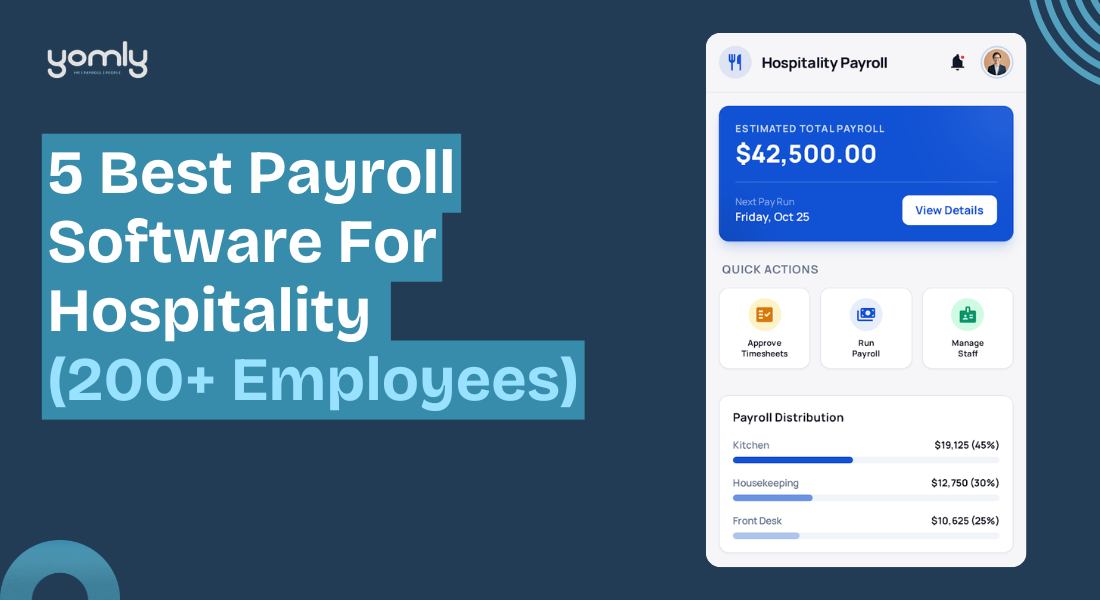





![Payroll Compliance Checklist For Qatar [ 2026 Updated]](https://yomly.com/wp-content/uploads/2026/02/Payroll-Compliance-Checklist-For-Qatar.png)



![10 Top-Rated HR Software In Abu Dhabi [2026 Updated]](https://yomly.com/wp-content/uploads/2026/02/Best-HR-Software-In-Abu-Dhabi.png)


![Top 10 Best HR Software In Dubai [2026 List]](https://yomly.com/wp-content/uploads/2026/02/Best-HR-Software-In-Dubai.png)


 English
  العربية