Payroll usually feels manageable until a business adds a second or third country. Then one pay run becomes several calendars, tax frameworks, currencies, banking formats, statutory benefits, and approval chains – all with different rules and deadlines. That is why a practical multi country payroll guide matters for HR, finance, and operations leaders who need control without slowing growth.
For enterprise teams, the challenge is not just paying people on time. It is maintaining compliance across jurisdictions, reducing manual intervention, and giving leadership a clear view of labor costs across entities. The more distributed the workforce becomes, the more payroll stops being a back-office process and becomes a business risk and a strategic function.
What makes multi-country payroll so complex
Single-country payroll is already detail-heavy. Multi-country payroll adds complexity in layers. Every country has its own tax calculations, social insurance requirements, employee classifications, leave rules, severance obligations, reporting schedules, and recordkeeping expectations. Even countries that seem operationally similar can handle overtime, end-of-service benefits, or payslip requirements very differently.
The GCC and wider MENA region add another dimension. Payroll teams may need to account for WPS file requirements, labor law alignment, Arabic and English documentation, regional banking practices, and employer obligations that do not map neatly to the payroll logic used in Europe or North America. For organizations operating across both MENA and other international markets, using a generic global process often creates gaps rather than consistency.
There is also the issue of fragmentation. Many organizations expand through acquisition or establish regional entities over time, which leaves them with different local vendors, spreadsheets, disconnected HR systems, and inconsistent approval workflows. Payroll may still get processed, but visibility suffers. That makes audit readiness, cost forecasting, and exception handling harder than they should be.
A multi-country payroll guide starts with operating model decisions
Before selecting software or outsourcing support, define how payroll will be managed. This decision shapes everything that follows.
Some organizations centralize governance while keeping local execution in-country. Others build a shared services model with standardized controls and selected local partners. A smaller number fully outsource payroll operations while retaining internal oversight for approvals, finance reconciliation, and compliance review. None of these models is universally right.
If your workforce spans a handful of countries with limited headcount, outsourcing may reduce risk and administrative effort. If you operate across many entities with complex reporting and approval requirements, you may need a more integrated structure that centralizes data and controls while still supporting local compliance rules. The key is to separate standardization from oversimplification. You want one governance framework, not one rigid process forced onto every market.
The core components of a scalable payroll framework
Strong multi-country payroll is built on a few foundational elements. First is clean employee data. Payroll errors often start upstream, with inconsistent job codes, outdated bank details, missing tax identifiers, or unclear effective dates for compensation changes. If HR and payroll data live in different systems or require repeated manual entry, error rates rise quickly.
Second is localized payroll logic. Standard global templates can help with governance, but they cannot replace country-specific calculations and statutory requirements. Tax, benefits, gratuity, pensions, social contributions, and reporting formats need local treatment.
Third is workflow control. Enterprises need clear ownership for data changes, payroll review, variance checks, approvals, and final release. This is particularly important when multiple departments contribute inputs, such as overtime, expenses, allowances, leave balances, or commissions.
Fourth is reporting. Leadership teams need payroll data that is both locally compliant and centrally visible. If each country reports labor cost differently, the business loses the ability to compare, budget, and make timely workforce decisions.
Compliance is where most payroll strategies succeed or fail
In multi-country environments, compliance is not a one-time setup task. It is an ongoing operating requirement. Tax thresholds change. Contribution rates shift. New labor rules affect leave accruals, end-of-service calculations, or worker classification. Banking and wage protection requirements can also change with little tolerance for delay.
This is where many organizations underestimate their exposure. They assume payroll is compliant because employees are being paid, but that does not guarantee statutory accuracy or reporting completeness. A payroll process can look stable while still carrying hidden risk in classification, termination calculations, document retention, or local filing practices.
The practical response is to build compliance into the process rather than relying on manual checks at the end. That means maintaining localized rule sets, documenting approval trails, preserving payroll records, and reviewing changes in legislation regularly. For businesses operating in the UAE and wider region, local expertise matters because regulatory requirements often involve operational details that generic global systems are not designed to manage well.
Why disconnected systems create payroll risk
Payroll depends on data from across the business. New hires come from recruiting or onboarding. Compensation changes come from HR. Attendance and shift data may come from workforce management. Expense claims can affect reimbursements. Leave balances influence deductions or accruals. If these inputs move between systems manually, the payroll team becomes the final checkpoint for every upstream inconsistency.
That creates bottlenecks and introduces avoidable risk. Teams spend time validating files, chasing approvals, and reconciling mismatched records instead of focusing on payroll accuracy and control. It also makes scaling difficult. A process that works for two countries and 200 employees may collapse under the weight of 10 countries and 5,000 employees.
An integrated HR and payroll environment changes that equation. When employee data, payroll inputs, approvals, and reporting live in one platform, the organization gains stronger data integrity and faster processing. It becomes easier to apply consistent governance while supporting local payroll execution. This is especially valuable for enterprises with complex legal entity structures or region-specific compliance demands.
What to look for in a multi-country payroll solution
Technology selection should reflect operational reality, not just feature lists. The first question is whether the platform supports the countries you operate in with real localization, not surface-level coverage. Country availability means little if statutory calculations, local filings, banking formats, or labor-law alignment still require heavy manual work.
The second question is whether the system can handle enterprise complexity. Large organizations need configurable workflows, segmented permissions, audit trails, API integrations, and reporting that spans entities, business units, and employee groups. Payroll software that works for a simple single-entity setup may not support regional expansion or matrixed approvals.
The third question is service model. Some teams need software only. Others need managed payroll support, implementation guidance, or regional compliance expertise. The right answer depends on internal capability. If your team lacks in-country payroll specialists, operational support can be as important as the platform itself.
A provider such as Yomly is relevant in this context because it combines enterprise HRMS and payroll capabilities with stronger regional depth across the UAE, GCC, and MENA, while also supporting broader multi-country operations. For organizations that need both centralized visibility and local payroll alignment, that balance matters.
Implementation is where payroll strategy becomes real
Even strong technology can underperform if implementation is rushed. Multi-country payroll rollouts require careful mapping of current processes, local rules, data structures, approval paths, pay elements, and reporting requirements. They also require disciplined data migration and parallel testing.
A phased rollout is often the better path. Start with a controlled set of entities, stabilize payroll cycles, validate outputs, and then expand. This approach reduces disruption and gives stakeholders confidence. It also helps teams refine governance standards before adding more complexity.
Change management matters just as much. Payroll touches HR, finance, managers, and employees. If workflows, deadlines, or responsibilities shift, the organization needs clear communication and ownership. Enterprise payroll transformation is not just a system project. It is an operating model project.
The right payroll model supports growth, not just processing
A good payroll function pays employees accurately. A strong multi-country payroll function gives the business confidence to expand, hire, and operate across regions without losing control. It supports better forecasting, cleaner audits, faster month-end close, and stronger employee trust.
That is the real value of building payroll properly. Not fewer spreadsheets for their own sake, but a payroll operation that can absorb complexity without creating friction. As your footprint grows, the best time to strengthen payroll is before the next country goes live, not after the first compliance issue forces the conversation.
A missed payroll deadline rarely starts with payroll. It starts with disconnected HR data, last-minute employee changes, local compliance gaps, or too many manual handoffs between HR, finance, and operations. That is why the real question behind payroll outsourcing vs software is not simply which option is cheaper. It is which model gives your organization the control, accuracy, and compliance coverage it needs as complexity grows.
For enterprise and mid-market organizations, payroll is tied to risk management, employee trust, cash flow, and audit readiness. The right choice depends on your operating model, internal payroll capability, and how many countries, entities, and employee groups you need to support. In many cases, the decision is less about replacing one approach with another and more about choosing the right balance of technology and service.
Payroll outsourcing vs software: the core difference
Payroll outsourcing means a third-party provider runs part or all of your payroll process. That may include collecting inputs, validating calculations, applying statutory rules, producing pay slips, filing reports, and in some cases managing payments. Your team still owns approvals and governance, but much of the execution shifts to an external partner.
Payroll software gives your organization a platform to run payroll internally with automation, rules, workflows, reporting, and integration to HR and finance systems. The software does not remove accountability. It gives your team the tools to manage payroll with more speed, visibility, and consistency.
The distinction matters because outsourcing solves primarily for capacity and specialist support. Software solves primarily for control, standardization, and operational efficiency. If your organization is struggling with fragmented data, multiple approval layers, and limited visibility into payroll status, outsourcing alone may not fix the root problem. If your team lacks country-specific payroll expertise or does not have the bandwidth to process payroll accurately each cycle, software alone may not be enough.
Where payroll outsourcing works well
Outsourcing is often a strong fit when payroll complexity is high but internal payroll maturity is low. This is common in growing companies entering new markets, businesses with lean HR operations, or organizations that need immediate support in locations with specific statutory requirements.
The clearest advantage is access to expertise. A capable provider can help reduce the burden of keeping up with tax rules, labor law changes, reporting deadlines, and local payroll practices. That support can be especially valuable in the UAE, GCC, and broader MENA region, where payroll operations often involve localized compliance requirements, WPS processes, and market-specific documentation standards.
Outsourcing can also reduce dependency on a single in-house payroll specialist. If key payroll knowledge sits with one person, the business is exposed. A provider gives you operational continuity and a defined service structure.
That said, outsourcing has trade-offs. Turnaround times depend on service-level agreements, not always business urgency. Visibility into payroll data and processing steps may be limited. Configuration can be rigid if the provider relies on standardized templates. And when HR data, leave records, employee changes, and payroll inputs live in separate systems, your team can still spend significant time chasing errors before the provider can process anything.
Where payroll software works well
Software is often the better fit for organizations that want tighter control over payroll operations and better alignment across HR, finance, and business units. A strong payroll platform centralizes employee data, standardizes workflows, automates calculations, and gives teams real-time access to reports and approvals.
This matters at scale. If you manage multiple legal entities, pay groups, or locations, manual consolidation becomes a risk. Payroll software creates a structured operating model. Employee updates flow from HR into payroll. Approval chains are documented. Reporting is faster. Audit trails are easier to maintain.
Software also improves decision-making. Instead of waiting for an external provider to send reports, payroll and finance leaders can monitor payroll costs, exceptions, trends, and compliance status directly. That level of visibility is increasingly important for organizations that want payroll to be part of broader workforce planning rather than an isolated back-office function.
The challenge is that software requires ownership. Your team still needs payroll knowledge, governance, and disciplined processes. If data quality is poor or internal accountability is weak, implementing software will expose those issues quickly. Technology can automate work, but it cannot compensate for missing controls.
Cost is only one part of the equation
Many buyers start with cost, but payroll decisions made on price alone often create larger downstream issues. Outsourcing may appear predictable because it is priced as a service, usually per employee or payroll cycle. Software may appear more cost-effective over time, especially at larger scale, but it comes with implementation, training, and change management.
The more useful question is total operational cost. That includes payroll rework, compliance exposure, approval delays, reporting effort, integration gaps, and the time HR and finance teams spend correcting bad data. A lower monthly fee does not mean lower payroll cost if your internal team is still doing extensive manual work around the process.
For enterprise teams, the highest cost is often loss of control. If payroll errors affect employee trust, if reporting takes days instead of minutes, or if local compliance is handled reactively, the business impact is far greater than the line item on a vendor invoice.
Compliance, control, and accountability
In any payroll model, accountability stays with the employer. That is where many outsourcing decisions go wrong. Handing execution to a provider does not transfer legal or reputational responsibility. If filings are late or payroll calculations are wrong, your organization still carries the risk.
Software can strengthen compliance by applying rules consistently, creating audit trails, and reducing manual touchpoints. But that only works if the platform is localized correctly for the markets you operate in. Generic systems may support payroll at a broad level while falling short on regional requirements, local reporting, or country-specific workflows.
Outsourcing can strengthen compliance when the provider has genuine local expertise and clear process ownership. The key is visibility. Your team should know what data was used, what checks were applied, and where approvals sit. A black-box service model may reduce administrative effort, but it can increase governance risk.
For organizations operating across the UAE, GCC, and other MENA markets, localization is not optional. Payroll accuracy depends on understanding statutory rules, labor-law alignment, WPS handling where applicable, and entity-level requirements. That is one reason many enterprise buyers now prefer platforms that combine payroll software with managed services support rather than choosing one or the other in isolation.
When a hybrid model makes more sense
For many organizations, the best answer to payroll outsourcing vs software is both. A hybrid model gives you a centralized payroll platform for data integrity, workflow control, reporting, and integration, while also providing managed payroll support for execution, validation, or market-specific expertise.
This approach is often ideal when the business wants strategic control without building a large in-house payroll function in every region. HR and finance teams retain visibility and approval authority. The service layer helps manage calculations, local compliance tasks, and operational execution where internal resources are limited.
A hybrid model also scales better during expansion. Instead of adding fragmented country providers or forcing internal teams to absorb every new market manually, the organization can standardize data and processes through a single system while using expert support where needed. That is especially relevant for businesses managing distributed workforces across several countries with different payroll calendars, currencies, and compliance obligations.
Platforms such as Yomly are designed around that enterprise reality, combining payroll software with managed payroll capabilities so organizations do not have to choose between visibility and support.
How to choose the right model for your business
The best decision starts with operational honesty. If your payroll issues come from weak systems, inconsistent data, and fragmented workflows, software should be central to the solution. If your issues come from limited payroll expertise, country-specific complexity, or lack of processing capacity, outsourcing or managed services may be the better starting point.
It also depends on your growth plans. If you expect to add countries, entities, or employee populations, ask whether your chosen model can scale without increasing manual work. If payroll is tightly connected to leave, time tracking, expenses, and core HR records, ask whether your solution can centralize those inputs instead of relying on spreadsheets and email.
Finally, assess what level of control your business needs. Some organizations are comfortable with a service-led model and periodic reporting. Others need direct access to payroll data, configurable approval workflows, and enterprise-grade reporting across regions. Neither approach is universally right. The stronger choice is the one that matches your governance model, risk tolerance, and operating complexity.
Payroll should not force a trade-off between compliance and efficiency. If your organization is outgrowing manual processes or struggling with fragmented providers, this is the right moment to redesign payroll as a controlled, scalable function that supports the business instead of slowing it down.
Payroll issues tend to surface at the worst possible moment – after approvals are done, salaries are due, and one small data mismatch turns into a finance, HR, and compliance problem at once. That is why choosing the best enterprise payroll software is less about buying a payroll engine and more about creating control across entities, countries, teams, and risk points.
For enterprise organizations, payroll is rarely a standalone process. It depends on accurate employee data, leave records, benefits, expense claims, time inputs, statutory deductions, approval workflows, and local compliance rules. When those inputs sit across disconnected systems, payroll becomes slower, harder to audit, and more exposed to error. The right platform reduces that friction by centralizing payroll operations while giving HR, finance, and operations a shared view of what is happening.
What the best enterprise payroll software actually needs to do
At enterprise level, payroll software has to do more than process payslips. It needs to support complex organizational structures, multiple legal entities, different worker categories, and country-specific requirements without forcing teams into manual workarounds.
That means automation matters, but accuracy matters more. A system that automates calculations but still relies on spreadsheet-based imports, side approvals, or manual compliance checks will not hold up under scale. Enterprise buyers should look for software that connects payroll to core HR data, captures changes in real time, and creates a reliable audit trail from source data to final pay run.
Another critical factor is configurability. Large organizations often have layered approval paths, custom earning and deduction rules, region-specific policies, and payroll calendars that do not fit a one-size-fits-all setup. The best systems can adapt to enterprise processes without becoming a custom-build project that is expensive to maintain.
How to evaluate the best enterprise payroll software
The market is crowded, but enterprise payroll buying decisions usually become clearer when you evaluate software against operating reality rather than feature volume.
Compliance depth, not just compliance claims
Many platforms describe themselves as compliant. That is not enough. Enterprise teams should ask how compliance is handled in practice: tax logic, statutory calculations, recordkeeping, reporting, labor-law alignment, and local payroll file generation. If your business operates in the UAE, GCC, or broader MENA region, this becomes even more important because payroll requirements often involve market-specific processes that global platforms do not support well out of the box.
A strong enterprise payroll platform should help reduce compliance risk at process level, not simply leave legal interpretation to internal teams. That includes validation controls, country-aware workflows, and reporting that supports audit readiness.
Multi-country and multi-entity control
Global growth creates payroll complexity quickly. Even when employee counts are manageable, the combination of separate legal entities, currencies, pay frequencies, and local rules can strain teams using basic payroll tools.
The best enterprise payroll software gives you centralized visibility without flattening local requirements. That balance matters. Headquarters may want standard reporting and governance, while local teams still need flexibility to manage payroll according to country-specific rules. Software should support both without duplication or fragmented data.
Integration with the wider HR and finance environment
Payroll accuracy depends on the quality of upstream data. If joiners, leavers, salary revisions, leave balances, attendance inputs, and expense claims are transferred manually, payroll teams spend too much time validating information that should already be synchronized.
This is why integration is a core buying criterion. Enterprise payroll software should connect with HRMS, finance systems, time and attendance, and other business applications through practical, maintainable integrations. APIs matter, but so does implementation quality. A platform can look technically capable and still create operational delays if integration setup is inflexible.
Security, permissions, and auditability
Payroll data is among the most sensitive data an organization holds. Enterprise buyers should expect role-based permissions, strong access controls, data protection standards, and detailed logging. Beyond security, auditability is essential. When leaders ask why a payment changed or when an auditor requests a record trail, the system should provide answers quickly.
Service support when operations get complex
Software alone does not solve every payroll challenge. For some organizations, especially those with regional complexity or lean internal payroll teams, managed payroll support can be as valuable as system functionality. This is especially true during expansion, restructuring, or periods of regulatory change.
Where many global payroll platforms fall short
Some global vendors are strong on broad coverage but weaker on local depth. Others are polished for mid-market use but start to show limitations when enterprises need advanced configuration, layered approvals, or support for regional compliance requirements.
This gap is common in the UAE and wider MENA market. A platform may support payroll in principle, yet lack practical capabilities such as WPS file handling, labor-law alignment, or the ability to manage local payroll nuances without manual intervention. That usually pushes teams back into spreadsheets, offline checks, or external processes that reduce visibility.
The trade-off is not always obvious during software demos. A platform can present a clean interface and standard automation, but enterprise teams need to understand what happens in edge cases. How are retroactive changes handled? Can multiple entities run with different approval structures? How are allowances, overtime, unpaid leave, and end-of-service calculations managed? These details define whether software will scale in real operations.
Best enterprise payroll software for regional and global needs
For organizations operating in the UAE, GCC, and MENA while also managing wider international headcount, the best enterprise payroll software is often not the most globally generic option. It is the one that combines enterprise-grade architecture with local payroll intelligence.
That is where regional specialization becomes a strategic advantage. A platform built for enterprise needs in these markets can reduce the operational burden that comes from stitching together global tools with local payroll workarounds. Instead of forcing HR and payroll teams to compensate for system gaps, the software reflects the compliance and workflow requirements they already manage.
Yomly is one example of that model. It brings payroll, core HR, leave, expenses, benefits, reporting, and workforce management into one platform while supporting UAE, GCC, and MENA payroll requirements alongside multi-country operations. For enterprises, that matters because payroll outcomes improve when the underlying employee data, approvals, and compliance controls live in the same environment.
Signs a payroll platform is built for enterprise scale
Enterprise teams should expect more than payroll processing speed. The real indicator of maturity is whether the platform improves control as complexity increases.
A strong enterprise payroll solution should support configurable workflows across business units and legal entities, automate repetitive calculations and validations, and produce reporting that is useful for both payroll operations and executive oversight. It should also make implementation realistic. Long projects are sometimes unavoidable, but software should not require excessive bespoke development just to match standard enterprise structures.
There is also a practical test worth applying: can the system reduce dependency on key individuals? In many payroll teams, critical knowledge sits with a small number of specialists who know how to reconcile exceptions manually. That creates continuity risk. Better software standardizes processes so payroll becomes less vulnerable to personnel changes and month-end pressure.
Questions decision-makers should ask before buying
When evaluating vendors, it helps to move beyond feature checklists and ask operational questions. What data has to enter the payroll process manually? Which compliance tasks still sit outside the platform? How are exceptions handled? What happens when the business adds a new country, entity, or employee category? How much configuration can internal teams manage after go-live?
It is also worth asking what success looks like six months after implementation. For most enterprises, the goal is not simply faster payroll. It is fewer errors, stronger compliance confidence, less manual reconciliation, cleaner reporting, and better coordination between HR and finance. If a vendor cannot explain how its platform supports those outcomes, the software may not be enterprise-ready in the ways that matter.
Why the right choice is rarely the flashiest one
Enterprise payroll buying decisions often reward substance over surface. A platform with impressive dashboards but limited localization, weak workflow flexibility, or shallow integration capability can create more work than it removes. By contrast, software that handles complexity reliably may deliver better long-term value even if the sales pitch feels less flashy.
That is especially true in payroll, where the cost of a poor fit is high. Errors affect employee trust, compliance exposure, finance accuracy, and management time. The best enterprise payroll software creates stability. It gives teams confidence that payroll can scale with the business, adapt to regional requirements, and remain controlled even as structures become more complex.
The smartest payroll investment is usually the one that makes month-end feel less dramatic – not because payroll became simple, but because the system was designed for the complexity you actually operate.
One payroll error in the UAE can trigger more than an internal correction. It can delay salaries, create WPS issues, raise employee complaints, and expose the business to avoidable compliance risk. That is why more enterprises are reassessing whether in-house processing is still the right model, and why managed payroll services UAE have moved from a back-office support function to a strategic operating decision.
What managed payroll services in the UAE actually cover
At enterprise level, managed payroll is not just about calculating salaries and issuing payslips. It is a structured service model where payroll processing, controls, validation, statutory alignment, and operational execution are handled with dedicated expertise, usually supported by a payroll platform that centralizes employee data and approval workflows.
In the UAE, that scope often includes salary calculations, variable pay inputs, leave and end-of-service treatment, deductions, WPS file preparation, payroll reporting, and audit-ready records. For larger organizations, it may also extend to multiple legal entities, different employee groups, cross-border coordination, and integration with HR, finance, and attendance systems.
That distinction matters. Many companies think they need software when the real issue is operating discipline, or they think they need a service when the real issue is fragmented data. In practice, the strongest payroll model usually combines both – a system of record with managed operational support.
Why enterprises in the UAE are outsourcing payroll operations
The pressure points are usually familiar. Payroll teams are expected to stay accurate across changing headcount, policy exceptions, allowances, deductions, and labor requirements while working with data from HR, finance, time tracking, and business-unit managers. The larger the organization, the more manual intervention creeps in.
For UAE-based employers, complexity increases further when payroll depends on WPS compliance, multiple pay components, multilingual documentation, and region-specific employment practices. Add expansion across the GCC or wider MENA region, and a local payroll team can quickly become overstretched.
Managed payroll services become attractive when the cost of internal complexity starts to exceed the cost of specialist support. That does not only mean direct payroll effort. It includes rework, approval delays, reporting gaps, and the risk created when payroll knowledge sits with too few individuals.
The business case for managed payroll services UAE
The strongest case is control. Outsourcing payroll operations is sometimes viewed as giving up control, but for many enterprises the opposite is true. A well-run managed payroll model replaces spreadsheet dependency and person-based knowledge with documented workflows, service checks, approval stages, and clearer accountability.
Accuracy is the second driver. Payroll errors are rarely caused by one big failure. More often, they come from small breaks in the process – a missed allowance update, an incorrect leave balance, a delayed new hire record, or inconsistent source data between systems. Managed services reduce this risk by introducing repeatable validation and dedicated oversight.
Compliance is the third. UAE payroll is not forgiving when process discipline slips. Businesses need confidence that payroll outputs, records, and payment files align with local requirements and internal governance. This is especially relevant for organizations facing audits, operating across entities, or supporting high employee volumes.
There is also a scalability argument. A payroll team designed for 400 employees may struggle at 1,500, particularly if the business adds locations, subsidiaries, or more complex shift and overtime structures. Managed support allows payroll operations to scale without rebuilding the function from scratch every time the business grows.
Where managed payroll adds the most value
Not every organization needs full outsourcing. Some only need support for the most risk-sensitive parts of payroll. Others want an end-to-end service. The right model depends on operating maturity, internal capacity, and the complexity of the workforce.
For some enterprises, the biggest benefit is in pre-payroll data control. If inputs from leave, attendance, claims, and HR changes are inconsistent, payroll becomes a monthly reconciliation exercise. In that case, managed support should start earlier in the cycle, not only at final processing.
For others, the value sits in specialist execution – especially WPS handling, end-of-service calculations, and multi-entity consolidation. These are areas where mistakes are costly and where local expertise matters more than generic payroll capability.
Companies expanding across the region often see value in standardization. Payroll may still need country-level localization, but the governance model, approval process, reporting structure, and employee data management can be centralized. That creates stronger visibility for HR and finance without forcing every market into an identical operating model.
What to look for in a managed payroll partner
The first requirement is regional depth. UAE payroll is not a market where generic international coverage is enough. A provider should understand local operating realities, not just theoretical compliance. That includes WPS workflows, common pay structures, documentation expectations, and the practical impact of labor-law alignment on payroll processing.
The second is technology integration. Managed payroll should not sit outside the rest of the people operation. If payroll data has to be re-entered from separate HR, leave, attendance, and expense systems, the service may reduce some effort while preserving the root cause of errors. The better approach is a connected platform where data moves through one controlled environment.
The third is configurability. Enterprise payroll is rarely simple. Different business units may have distinct approval chains, pay frequencies, earning elements, cost centers, or employee categories. A provider must be able to support that complexity without pushing the organization into rigid templates.
Service governance also matters. Senior decision-makers should ask how validations are handled, what the escalation model looks like, how cut-off dates are managed, how payroll changes are tracked, and what reporting is available after each cycle. A payroll service should improve audit readiness, not create a black box.
Managed payroll services UAE and software should work together
This is where many payroll projects either succeed or stall. Service alone can solve capacity issues, but it does not automatically solve fragmented processes. Software alone can automate transactions, but it does not replace operational expertise. Enterprises usually need both.
When payroll is connected to a broader HRMS, employee records, leave balances, expense claims, organizational structures, and approval history feed directly into the payroll cycle. That reduces manual handoffs and improves confidence in the source data. Managed payroll specialists can then focus on validation, exceptions, compliance handling, and final execution instead of spending time chasing spreadsheets.
This model is especially effective for businesses with distributed workforces, multiple legal entities, or regional operations. A centralized system creates one source of truth, while managed support adds the local and operational expertise needed to run payroll accurately at scale. For organizations balancing UAE requirements with wider MENA or global reporting expectations, that combination is often more durable than relying on disconnected tools or fully manual service delivery.
A platform such as Yomly is designed around that enterprise reality – combining HRMS, payroll management, and managed payroll support in one environment built for UAE, GCC, and broader multi-country workforce operations.
Common trade-offs to consider
Managed payroll is not a cure-all. If internal approvals are slow, employee data is poorly maintained, or policy rules are unclear, outsourcing payroll processing will not remove those problems overnight. It will, however, make them more visible, which is often the first step to fixing them.
There is also a balance between standardization and flexibility. Enterprises want consistent controls, but payroll often needs to reflect different business models across divisions or countries. A provider that over-standardizes can create friction. A provider that allows too many exceptions can recreate the same complexity the business was trying to escape.
Cost should be viewed carefully as well. The decision is not simply service fee versus internal payroll salary cost. The more useful comparison includes compliance exposure, error correction effort, system duplication, reporting delays, and the operational drag of fragmented administration.
When the timing is right to switch
The best time to move to managed payroll services UAE is usually before payroll becomes a visible business risk, not after. If your payroll team relies heavily on manual checks, if month-end is consistently stressful, if reporting is slow, or if growth is outpacing operational capacity, the organization is already paying the price.
A transition also makes sense during wider HR transformation. If the business is replacing legacy HR systems, centralizing workforce data, or entering new regional markets, payroll should be redesigned at the same time. Leaving payroll as a separate workstream often preserves the exact inefficiencies the broader transformation was meant to remove.
For enterprise leaders, the real question is not whether payroll can be processed internally. It is whether the current model gives the business enough accuracy, visibility, and resilience for the next stage of growth.
Payroll is one of the few processes that touches compliance, employee trust, finance controls, and operational continuity all at once. When it is managed well, the benefit is felt far beyond the payroll team.
Payroll problems in the UAE rarely start with calculations alone. They start when HR, finance, and operations are working from different systems, approvals happen over email, and WPS files are treated as a final-step admin task instead of part of a controlled payroll process. That is exactly where UAE WPS payroll software creates value – not just by generating a file, but by bringing structure, accuracy, and compliance into every payroll cycle.
For enterprise teams, that distinction matters. A payroll platform that simply exports WPS data may cover the minimum requirement. A platform built for UAE payroll operations supports the full process around it: validated employee records, allowance structures, leave impact, final settlements, audit trails, approval workflows, and reporting that stands up to internal and external scrutiny. When payroll runs across multiple legal entities, locations, or employee groups, those differences become material very quickly.
What UAE WPS payroll software should actually solve
At a basic level, UAE WPS payroll software helps employers prepare salary files in line with Wage Protection System requirements. But for larger organizations, the real need is wider. Payroll teams are not looking for another isolated tool. They need a system that reduces risk across the full payroll operation.
That includes controlling master data, applying pay components consistently, managing cut-off dates, and capturing changes from leave, overtime, variable pay, and employee lifecycle events. If those inputs still live in disconnected spreadsheets or separate HR tools, WPS compliance becomes a last-minute reconciliation exercise. The software may be doing one task, but the business is still carrying the same payroll exposure.
This is why decision-makers should evaluate UAE WPS payroll software as part of a broader payroll governance model. The strongest systems do not just produce outputs. They improve how payroll is prepared, reviewed, approved, and reported.
Why generic payroll tools often struggle with UAE WPS requirements
Many global HR and payroll platforms position themselves as flexible enough to support any country. In practice, flexibility without localization creates extra work for in-house teams. UAE payroll has its own operational logic, and WPS is only one part of it.
A generic platform may require manual configuration for earnings and deductions, custom workarounds for local file formats, or external handling for statutory and banking processes. That can work for a smaller company with a simple headcount. It becomes much harder when the business has different employee categories, multiple payroll calendars, or region-specific policies that need to be applied consistently.
The issue is not that global platforms are always unsuitable. It depends on complexity. If your UAE entity is small and payroll rules are straightforward, a broader platform with light localization may be enough. But once scale increases, the cost of patching gaps with spreadsheets, manual checks, and local service providers starts to outweigh the appeal of a one-size-fits-all system.
Core capabilities to look for in UAE WPS payroll software
The most valuable UAE WPS payroll software supports compliance and operational control at the same time. That starts with payroll configuration that reflects local salary structures, including fixed and variable components, allowances, deductions, and settlement logic.
It should also manage employee data in one place so payroll is drawing from current records rather than duplicate inputs. When joiners, leavers, salary revisions, unpaid leave, or document updates happen in a separate workflow, payroll accuracy suffers. Integrated HR and payroll matters because it reduces rekeying and closes common error points.
WPS file generation is, of course, essential. But enterprises should also expect built-in validations, approval routing, payroll registers, exception reporting, and clear audit history. A file that can be generated is useful. A file that is generated from validated and approved payroll data is far more valuable.
For larger organizations, role-based access is another non-negotiable. Payroll contains sensitive employee and financial information. The right software gives finance, HR, line managers, and payroll administrators access to what they need without exposing data unnecessarily.
UAE WPS payroll software in a multi-entity business
Multi-entity payroll is where software quality becomes visible. It is relatively easy to run payroll for one company with one policy set and one approval chain. It is much more difficult to maintain control when one platform needs to support different business units, legal entities, pay groups, and stakeholder workflows.
In that environment, UAE WPS payroll software should allow centralized oversight without forcing uniformity where it does not belong. Some organizations need local autonomy at entity level with group-level reporting above it. Others want tighter shared-service control across payroll operations. The software should support both models.
This is also where reporting becomes strategic. Finance leaders do not only need to know that payroll has been processed. They need visibility into payroll cost by entity, department, location, and workforce segment. HR leaders need to see trends, headcount impact, and exception patterns. Operations teams need confidence that payroll timing and compliance are not being compromised by fragmented processes.
Compliance is not just about the WPS file
A common mistake is treating WPS compliance as the entire compliance picture. In reality, payroll compliance in the UAE depends on data quality, process discipline, and documentation as much as file output.
For example, if payroll changes are approved informally, if final settlements are calculated manually, or if leave balances are inaccurate, WPS software alone will not prevent downstream issues. It may still produce a technically correct file based on flawed inputs. That is why mature payroll teams focus on upstream controls.
The best platforms support audit readiness by creating traceability. You should be able to identify who changed a salary component, when it was approved, what was paid, and how the final figure was produced. For enterprise organizations, this level of control supports not only external compliance but internal governance and board-level confidence.
Implementation trade-offs leaders should consider
Not every payroll implementation should aim for maximum customization. There is a trade-off between fitting every historical process and improving the process itself.
Some businesses benefit from standardizing workflows during implementation rather than recreating old manual practices inside new software. Others have legitimate complexity that requires configurable approvals, multiple pay cycles, or tailored reporting structures. The right approach depends on your operating model, internal controls, and growth plans.
What matters is choosing a platform that can handle complexity without turning every requirement into a custom development project. Enterprise teams need configuration depth, not fragility. They need flexibility that can be maintained over time as the business changes.
This is where regional specialization has real commercial value. A provider with UAE and wider GCC payroll experience is more likely to understand common edge cases, implementation risks, and compliance expectations before they become project delays.
The business case goes beyond payroll efficiency
Payroll software is often justified on time savings alone, but for larger organizations the business case is broader. Better UAE WPS payroll software reduces payroll leakage from manual errors, lowers dependency on offline reconciliations, and shortens the time spent preparing reports for finance and audit teams.
It also improves employee experience in ways that are often underestimated. Employees may not know the details of WPS processing, but they notice delayed salary payments, inconsistent payslips, and slow responses to payroll queries. A controlled payroll system supports trust, and trust matters in workforce retention.
There is also a resilience angle. When payroll knowledge lives with a small number of individuals and process steps are hidden in spreadsheets, the business is exposed. A centralized system creates continuity. It gives leadership more control over one of the most sensitive operational functions in the company.
Choosing a platform that fits enterprise reality
When assessing UAE WPS payroll software, buyers should ask a practical question: will this system still work when our workforce structure becomes more complex than it is today? That means looking beyond product demos that focus on basic payroll runs.
You want to understand how the platform handles approvals across teams, integrations with HR and finance systems, localized payroll logic, reporting by entity, and support for change over time. If your organization operates across the UAE and other countries, the question becomes even more important. Running local payroll well while maintaining group-wide visibility is a different challenge from running one country in isolation.
This is where a platform like Yomly is relevant for many enterprise buyers. It is built for organizations that need UAE and regional payroll depth without giving up the broader control of an integrated HRMS and payroll environment. That matters when WPS processing is only one part of a much larger people operation.
The right software should make payroll feel less like a recurring risk review and more like a controlled business function. That is usually the clearest sign you have moved beyond basic compliance and into real operational maturity.
When payroll closes in one country on Thursday, another entity may still be waiting on timesheets, while a third needs a statutory file submitted in a completely different format. That is the reality for HR and finance teams managing distributed workforces. Multi country payroll software matters because payroll complexity does not scale neatly. It multiplies across currencies, pay cycles, labor laws, approval paths, and reporting requirements.
For enterprise teams, the real issue is not simply processing pay in multiple locations. It is maintaining control while reducing manual work, compliance exposure, and data fragmentation. The right platform should help you standardize what can be standardized, localize what must be localized, and give leadership a clear view across the whole workforce.
What multi country payroll software should actually solve
Many platforms claim global coverage, but coverage alone is not a useful buying criterion. Enterprise buyers need to ask a harder question: what operational problems will this system remove?
At a practical level, multi country payroll software should centralize employee data, payroll inputs, approvals, and outputs across countries and entities. It should reduce duplicate entry between HR, payroll, finance, and operations. It should also support local payroll requirements without forcing every country team into separate tools, spreadsheets, or manual workarounds.
That balance is where many systems fall short. Some global platforms offer broad geographic reach but limited local payroll depth. Others are strong in one market but create visibility gaps when a business expands. If your organization operates in the UAE, GCC, or wider MENA region, this trade-off becomes even more important. Regional compliance requirements, wage protection processes, and country-specific labor rules often need more than generic global functionality.
The core capabilities that matter most
The best evaluation process starts with risk and process mapping, not feature shopping. Payroll errors usually come from broken workflows, inconsistent source data, and poor handoffs between teams. Software should address those points directly.
بيانات مركزية للموظفين والرواتب
A payroll team cannot operate efficiently when employee records live in one system, attendance in another, and compensation changes in email threads. A strong platform brings core HR data, payroll inputs, leave, documents, benefits, and organizational structure into one environment. That improves data accuracy and reduces the reconciliation work that often delays payroll runs.
For enterprises with multiple legal entities, this centralized model should still support local variations. You may need group-level governance with entity-level rules, country-specific earnings and deductions, and different approval paths for different business units. Software that cannot handle both central control and local flexibility usually creates admin strain later.
Local compliance support across jurisdictions
Compliance is where multi country payroll software proves its value. Country-level payroll calculations, tax treatment, reporting obligations, and statutory file formats are not interchangeable. A platform should support local requirements by design, not as an afterthought.
This is especially relevant in regions where payroll is closely tied to local labor regulation and filing rules. In the UAE and across the GCC, for example, payroll operations may involve wage protection requirements and country-specific administrative expectations that generic global systems do not always handle well. For organizations operating across MENA and beyond, regional depth can be as important as international breadth.
Workflow automation and audit readiness
Enterprise payroll is a controlled process. Changes to salary, allowances, deductions, overtime, bonuses, and leave balances should move through structured workflows with timestamps, approvals, and role-based permissions. This is not just about efficiency. It is about creating an audit trail and reducing dependence on informal communication.
When payroll software automates recurring calculations and validations, teams spend less time chasing exceptions. That said, automation should not become a black box. Buyers should look for systems that make calculations visible and allow payroll teams to review exceptions before finalization.
Reporting across countries and entities
Leadership does not want payroll insight country by country in disconnected reports. They want workforce cost visibility across the organization. Good software should provide consolidated reporting while still allowing local teams to access the data they need.
This is where many payroll tools become limiting. They can process local payroll, but they cannot provide enterprise-level dashboards, cost analysis, variance tracking, or reporting across entities. For growing organizations, that gap affects not only payroll operations but also budgeting, compliance oversight, and workforce planning.
What to ask vendors before you buy
The sales conversation often sounds similar from one provider to another. Most vendors will say they support multiple countries, automate payroll, and improve compliance. The difference is in how they deliver those outcomes.
Start by asking how payroll is handled in each country you operate in. Is it native software functionality, a partner network, a managed service, or a combination? There is nothing inherently wrong with a hybrid model, but you need transparency. A provider with broad map coverage may still rely heavily on third parties, which can affect consistency, implementation timelines, and support quality.
Next, ask how the platform handles regional complexity. Can it support local statutory rules, country-specific file generation, and customized workflows across different legal entities? Can it accommodate varied pay frequencies, currencies, and earning structures without excessive manual configuration?
Integration also matters. Payroll does not sit in isolation. It relies on HR records, attendance, leave, expenses, finance systems, and sometimes third-party benefits data. If your team still has to export and reformat data every cycle, the software is not solving the root problem.
Why regional fit matters in multi country payroll software
A system can be technically global and still be operationally weak for your footprint. That distinction matters for enterprise buyers in the GCC and MENA.
Regional payroll has nuances that affect both compliance and administration. Wage protection file handling, labor-law alignment, local document workflows, and country-specific employee record requirements are not edge cases. They are part of daily operations. If your platform treats the region as a generic international market, your team may end up compensating with manual controls.
This is where enterprise-focused providers with regional specialization stand apart. Yomly, for example, supports multi-country operations while being built around the realities of payroll and HR administration in the UAE, GCC, and wider MENA environment. For organizations that need both regional compliance depth and centralized workforce control, that combination can reduce implementation friction and ongoing payroll risk.
Common mistakes that create payroll issues later
One of the most common mistakes is buying for immediate geography instead of planned expansion. A system that works for two countries may not scale well to six if each new location requires a separate process or support model.
Another mistake is evaluating payroll software only through the payroll team. HR, finance, IT, and operations all influence payroll quality. If the platform cannot support cross-functional workflows, bottlenecks remain in place even after implementation.
The third mistake is underestimating configuration needs. Enterprise organizations rarely have a simple structure. They may have different entities, employee categories, shift patterns, grading frameworks, approval chains, and benefit rules. Good software should be configurable without becoming a custom development project. That is a critical difference.
How to make the right decision
Choosing multi country payroll software is less about picking the platform with the longest country list and more about selecting one that fits your operating model. The strongest option will support compliance at the local level, visibility at the group level, and workflow discipline across both.
For enterprise organizations, the right system should reduce payroll administration, improve data accuracy, strengthen governance, and give teams confidence that payroll can scale with the business. It should also reflect the regions you operate in, not force your teams into generic processes that ignore local requirements.
Payroll is one of the few business functions where errors are immediately visible to employees, auditors, and leadership at the same time. That is why the software decision carries weight far beyond payroll itself. Choose a platform that gives your organization control as complexity grows, not one that asks your team to work around it.
The best payroll strategy is not just paying people correctly in more places. It is building an operating model that lets your business expand without adding payroll risk every time a new country comes online.
Payroll management is becoming more complex as businesses deal with compliance, reporting, and employee expectations.
The broader payroll administration market reached $4.2 billion in 2025 and is growing at 10.7% CAGR from 2025 to 2033, showing a clear shift toward managed payroll solutions.
In Singapore, payroll involves strict rules like CPF, IRAS filings, and MOM compliance. Even small errors can create penalties.
That is why many companies now choose payroll outsourcing providers to handle payroll accurately, reduce risk, and improve operational control.
To make your research process easy, we have listed the top 5 payroll outsourcing companies in Singapore.
Best Payroll Outsourcing Companies in Singapore at a glance:
يوملي — Best for real-time payroll control, error-free processing, and structured workflows
Payroll Outsourcing (JobPlus) — Best for local Singapore compliance and statutory-heavy payroll handling
ADP — Best for global payroll and multi-country operations
BoardRoom — Best for regional payroll across Asia Pacific with strong compliance systems
Links International — Best for in-country payroll support across Asia and the Middle East
1. يوملي
Yomly is one of the top payroll outsourcing companies in Singapore for businesses that need tight control over payroll accuracy, compliance, and reporting. Mark JP Nutter launched Yomly in 2018 to solve a common issue in payroll outsourcing, lack of visibility and frequent calculation errors.
Yomly fixes this by running payroll through structured validation layers, where every input, from attendance to variable pay, gets checked before processing.
For Singapore operations, this approach helps reduce errors in salary computation, keeps payroll audit-ready, and provides finance teams with real-time access to reports, payslips, and cost data. Companies managing large teams or multiple entities benefit from its ability to standardize payroll workflows and remove dependency on manual coordination.
With 250+ clients and 100% compliance focused execution, Yomly is built for businesses that want predictable, error-free payroll cycles.
Key offerings:
Full payroll ownership from input validation to salary disbursement
Multi-layer payroll checks to reduce calculation errors
Real-time payroll reports, cost breakdowns, and payslips
Integration with HR, attendance, and leave systems
Capture payroll inputs from attendance, overtime, and variable pay
Apply correct Singapore tax rules and year-end IR8A adjustments
Process CPF, SDL, and other statutory contributions on time
Standardize payroll across teams, entities, and locations
Maintain audit-ready records aligned with IRAS and MOM requirements
Generate clear payroll reports with cost and compliance breakdowns
Payroll Outsourcing is a brand of Job Plus Employment Agency that delivers structured payroll outsourcing services built around Singapore’s statutory framework.
The team manages payroll files for both direct employees and outsourced staff, ensures every contract aligns with local employment rules, and handles end-to-end filings with IRAS.
Their payroll tool also processes CPF, SDL, and community contributions while managing claims like national service, maternity, and childcare. The service runs on SMARTHRMS, a cloud payroll system hosted on AWS, with real-time e-payslips, audit-ready reports, and adoption across 600+ Singapore companies.
Key Services:
Maintain payroll files for direct and outsourced employees
Ensure employment contract compliance with local regulations
Process CPF, SDL, CDAC, MBMF, SINDA, and ECF contributions
Submit IRAS income declarations and statutory filings
Handle national service, maternity, and childcare claims
Run payroll on SMARTHRMS with AWS backed, secure cloud system
Provide real-time e-pay slips and detailed management reports
Support training grant applications for employee development
3. ADP
ADP is a global payroll outsourcing company founded in 1949 by Henry Taub. It supports businesses in Singapore and in 140+ countries, which sets it apart from local providers. ADP handles payroll processing, IR8A reporting, and direct IRAS submission, reducing manual effort.
Its platform also includes built-in tax calculations and real-time payroll access. The company has won multiple HR Tech awards, including recognition for payroll and outsourcing solutions, and has been listed among Fortune’s World’s Most Admired Companies for several years. This makes it a strong choice for businesses managing complex or multi-country payroll.
Key Services:
Global payroll processing across 140+ countries
IR8A reporting with direct IRAS submission support
Automated payroll tax calculation and compliance tracking
Real-time cloud access to payroll data and reports
Scalable payroll outsourcing for growing and large businesses
Integrated HCM platform covering payroll, HR, time, and analytics
4. BoardRoom
BoardRoom is a payroll outsourcing provider in Singapore with over 50 years of experience supporting businesses across the Asia Pacific region. It stands out for its regional payroll coverage across 19 countries and its proprietary Ignite payroll system. The platform is built for multi-country payroll, with strong compliance controls like ISO 27001, SOC 2 hosting, and ISAE 3402 Type 2 certification. BoardRoom also integrates payroll with accounting, tax, and corporate services, making it useful for companies that want a single partner for full back-office operations.
Key Services:
Singapore and multi-country payroll processing across 19 locations
Gross to net salary computation with CPF and statutory filings
IR8A, IR21, NS, and government reporting support
Payroll disbursement with confidential payslips (digital or hard copy)
Ignite payroll system with integrated HRMS, leave, and claims
Regional payroll coordination with a single point of contact
Compliance management with ISO, SOC 2, and PDPA-aligned systems
5. Links International
Links International is a payroll outsourcing company in Singapore that works well if you manage teams across multiple countries and want local compliance handled properly without building an in-house team. With 25+ years of HR experience, the company delivers payroll through a 100% in country model, so Singapore payroll is managed by local experts who understand CPF rules, IRAS filings, and labor laws.
Its Links One platform helps you track payroll, reports, and multi-country data from one place. It is also recognized as a Star Performer by Everest Group and known for accurate, compliant payroll execution in Singapore and across Asia.
Key Services:
Singapore payroll outsourcing with full local compliance support
CPF calculation, tax reporting, and statutory filings
Payroll processing, including bonuses, overtime, and deductions
Links One platform for payroll reporting and visibility
Integration with SAP, Workday, Oracle, and HR systems
Dedicated HR support for Singapore labor law queries
Multi-country payroll support if you expand beyond Singapore
ISO 27001 certified data security and payroll systems
How to choose the best payroll outsourcing company in Singapore?
Choosing a payroll partner in Singapore is not about price. It is about accuracy, compliance, and control. Use these checks before you decide:
Check Singapore compliance expertise
Your provider must handle CPF, IR8A, IR21, SDL, and MOM rules without gaps. Ask how they track regulation changes and update payroll processes. A strong provider will show clear workflows for statutory filings and deadlines. This reduces the risk of penalties and keeps your business aligned with local compliance requirements at all times.
Look for error prevention, not just processing.
Payroll errors often stem from poor data entry. Choose a provider that uses validation layers, approval steps, and reconciliation checks before salary disbursement. This ensures calculations are accurate across bonuses, deductions, and variable pay. A structured process helps prevent rework, employee complaints, and compliance issues.
Ask about visibility and reporting.
You should not depend on emails or manual reports. Look for real-time dashboards that let you track payroll costs, payslips, and summaries instantly. Clear reporting helps finance teams audit payroll, track expenses, and make better decisions without waiting for monthly updates or manual exports.
Understand how payroll data flows.
Check how the provider collects and processes data such as attendance, overtime, and incentives. A clear, standardized workflow reduces confusion across teams. If data flows are not structured, errors increase. Good providers define input timelines, validation steps, and approval layers before payroll runs.
Evaluate the system and integration.s
Your payroll system should connect with HR, attendance, and accounting tools. This removes manual data entry and reduces errors. Ask whether the provider supports integrations with tools such as SAP, Workday, or local HR systems. Seamless integration improves efficiency and ensures data consistency across platforms.
Check scalability
As your business grows, payroll complexity increases. Choose a provider that can handle larger teams, multiple entities, or regional expansion. Switching providers later can be costly. A scalable payroll partner supports your growth without requiring system changes or process rebuilds.
Review security and compliance standards.
Payroll data includes salaries, tax details, and personal information. Ensure the provider adheres to standards such as ISO 27001 and the PDPA. Ask about data storage, access control, and system security. Strong security protects your business from data breaches and compliance risks.
Ask about support and ownership.
You need fast and reliable support when payroll issues arise. Check if you get a dedicated account manager or just a ticket system. A responsive team ensures quick resolution of errors, compliance queries, and payroll adjustments without delays.
Compare total cost, not just service fee.
Low pricing can mask risks such as errors, delays, or limited support. Evaluate the total value, including time saved, reduced compliance risk, and process efficiency. A slightly higher cost can deliver better accuracy and fewer payroll issues.
Request a demo or sample workflow.
Always ask for a demo before finalizing. Review how payroll inputs, validation, processing, and reporting work in real scenarios. This helps you understand the actual process, not just sales claims, and ensures the system fits your business needs.
الكلمات الأخيرة
Payroll outsourcing in Singapore is not just about processing salaries. It affects compliance, reporting accuracy, and the confidence your finance team operates with. The right provider should reduce manual work, ensure CPF and IRAS compliance, and give you clear visibility into every payroll cycle.
If you want a solution that goes beyond basic outsourcing, Yomly stands out for its structured payroll workflows and real-time reporting. It helps you control payroll inputs, reduce errors before they happen, and maintain audit-ready records without relying on manual checks. This makes it a strong fit for businesses seeking predictable, scalable payroll operations in Singapore.
If payroll errors, compliance risks, or a lack of visibility slow your business down, it is time to fix it. احجز عرضًا توضيحيًا مع Yomly and see how you can run payroll with full control and zero guesswork
HR technology adoption is rising as companies move toward automation and AI to manage growing workforces.
The HR software market is projected to grow from $43.66 billion in 2025 to $95.95 billion by 2034, at a CAGR of 9.2%, indicating strong demand for systems capable of handling complex HR operations.
For Singapore companies managing 500+ employees, this creates a challenge. More tools exist, but not all can handle large-scale HR tasks efficiently.
To make this easier, we evaluated tools based on workflow efficiency, scalability, and real-world enterprise use.
This listicle roundup focuses on the top 10 HR software options for 500+ employees in Singapore that can manage high-volume operations without slowing teams down.
Here are the top 10 best HR software for 500+ employees in Singapore:
يوملي — Best for handling high-volume HR tasks like onboarding, document tracking, and approvals with strong structure and control
Info-Tech HRMS — Best for compliance-focused HR with strong certifications and structured workforce management
PeopleStrong HCM — Best for AI-driven HR insights and end-to-end employee lifecycle management
أكريفية HCM — Best for predictive analytics, AI automation, and data-driven HR decisions
QuickHR — Best for multi-entity workforce control and Singapore compliance integrations
Voyon Folks HRMS — Best for talent management, hiring workflows, and employee engagement tracking
HashMicro HRM Software — Best for real-time HR updates, approvals, and KPI-based performance tracking
Synchro HRMS — Best for attendance, claims, and day-to-day HR task execution at scale
Employment Hero — Best for global HR management with strong employee experience features
uKnowva HRMS — Best for workflow automation, helpdesk management, and lifecycle tracking
1. يوملي
Yomly is the best HR software for 500+ employees in Singapore when your HR team manages high-volume onboarding, document tracking, leave approvals, and employee requests across departments every day. Mark JP Nutter launched it in 2018 to simplify complex HR operations through one unified system.
You can organize employee records, automate onboarding steps, track document expiries with alerts, and manage leave or letter requests without chasing emails or spreadsheets. Mobile self-service helps employees submit requests directly, reducing HR workload.
Case studies show clear operational impact. For example, كيو للمأكولات والمشروبات (750+ employees) improved HR efficiency by simplifying leave and document workflows, while هاليان (900+ employees) reduced errors and saved time by moving to one centralized platform with better workforce visibility.
With ISO and GDPR aligned security and 300,000+ employees managed monthly, it fits large Singapore teams that need structured, compliant, and scalable HR operations.
Client reviews show faster HR execution, better visibility, and reduced manual work after implementation.
الميزات الرئيسية
Centralized employee records: Store and manage employee profiles, documents, and job history in one place. Track updates like role changes, transfers, and contract details without scattered systems.
Automated onboarding workflows: Create structured onboarding journeys with document collection, approvals, and task tracking. Reduce manual follow-ups for large batches of new hires.
Document expiry and compliance alerts: Track visa, contract, and certification expiry dates with automated reminders. Avoid compliance risks and missed deadlines.
Leave and HR request management: Handle leave requests, letters, and approvals through clear workflows. Remove email chains and speed up response time.
بوابة الخدمة الذاتية للموظفين: Let employees access documents, raise requests, and update details directly. Reduce HR workload for daily queries.
Organization structure and visibility: View reporting lines and team structures clearly across departments. Help HR manage large workforce hierarchies.
Mobile HR access: Approve requests, track updates, and manage tasks on mobile. Support fast decision-making across distributed teams.
Workforce dashboards and insights: Access real-time HR data to track employee activity, requests, and trends. Improve planning and decision-making.
Custom workflows and approvals: Set role-based approval chains and workflows. Maintain cross-departmental control in large organizations.
Secure and compliant system: Follow ISO and GDPR aligned standards. Protect employee data while managing HR operations at scale.
التسعير: Yomly follows a custom per-employee pricing model, tailored for enterprises based on headcount, modules, and deployment scope.
2. Info-Tech
Info-Tech HRMS fits enterprises that need strict control over HR processes as teams grow beyond 500 employees. It brings structure to daily operations like attendance, payroll inputs, onboarding, and employee records without relying on multiple tools.
HR teams can manage the full employee journey, from hiring to exit, while keeping compliance aligned with Singapore regulations. The system supports detailed record keeping, performance tracking, and workforce planning in one place.
Its strength lies in consistency. Every workflow follows a defined path, which reduces errors and keeps large teams organized. Their certifications such as ISO 27001, DPTM, and MTCS, along with the HR Vendors of the Year (Gold), demonstrate trusted, secure HR management at scale.
الميزات الرئيسية
Employee data in one system: Keep personal details, job history, education, and documents in one place. HR teams can update and access records quickly without scattered files.
Structured onboarding and exits: Set clear workflows for new hires and resignations. Track every step and avoid missed tasks during high-volume hiring or exits.
Mobile attendance tracking: Capture attendance with GPS and face recognition through the mobile app. Monitor shifts, overtime, and real-time workforce movement easily.
Leave and claims handling: Let employees apply for leave and claims through the app. Managers can review and approve with full visibility and faster turnaround.
Appraisal and performance tracking: Run 360-degree appraisals with custom formats. Track employee performance, feedback, and growth in one place.
Career and growth tracking: Record promotions, increments, bonuses, and training progress. Build clear visibility into employee development across large teams.
Grievance and feedback system: Allow employees to raise issues or share feedback directly. HR teams can respond faster and maintain better transparency.
Training management: Assign required or optional training programs. Track completion and keep teams aligned with company standards.
Organization view and reporting: Create organization charts and generate HR reports. Help leaders understand workforce structure and trends.
Bulk updates and notifications: Send announcements, alerts, and updates to large teams at once. Keep everyone informed without manual follow-ups.
التسعير: Offers custom pricing based on company size, modules, and deployment needs, with up to 50% PSG grant support available for eligible Singapore businesses.
3. Peoplestrong
PeopleStrong HCM gives Singapore enterprises a clear way to manage HR when teams cross 500+ employees and data starts to spread across systems. PeopleStrong, founded by Pankaj Bansal, integrates Core HR, onboarding, performance, learning, and succession planning into a single platform. HR teams can track employee lifecycle events, view organization structures, manage skills, and run workflows using a drag-and-drop builder. Jinie, the AI assistant, answers employee queries instantly and reduces HR workload. With 500+ enterprises and 2M+ users across APAC, it handles complex HR operations at scale.
الميزات الرئيسية
Single source of employee data: Access complete employee records in one click, including personal, professional, and skill data. Remove data silos across departments and keep HR information consistent across systems.
Unified organization view: Visualize team structures with dynamic organization charts. Understand reporting lines, roles, and workforce distribution in real time.
Employee lifecycle tracking: Track every stage from hiring to exit on a single timeline. Monitor key events, engagement signals, and workforce changes without switching tools.
Workflow automation with builder: Create HR processes using a drag-and-drop builder. Design policies, approvals, and checklists faster and assign stakeholders easily.
AI-powered HR assistant (Jinie): Resolve employee queries instantly with AI. Reduce HR workload by automating common questions and requests.
Document and record management: Store and manage employee documents with auto updates. Keep records organized and accessible without manual tracking.
Employee self-service (ESS): Let employees update their own data, check details, and access HR services anytime from any device.
Skills and workforce insights: Track employee skills, roles, and performance data. Use insights to plan workforce changes and better manage attrition.
AI-driven alerts and notifications: Get alerts for key events, such as milestones, leave, or updates. Stay proactive without manual follow-ups.
Enterprise-grade security and scalability: Protect employee data with strong security standards. Scale HR operations smoothly as workforce size grows.
التسعير: Offers custom enterprise pricing based on modules, employee count, and deployment scope, with tailored plans for large organizations.
4. Akrivia HCM
أكريفية HCM is built for enterprises that want to move from basic HR tracking to data-driven decision making. It uses AI across workflows to help teams manage complex workforce operations at scale.
The platform supports predictive analytics, real-time dashboards, and automated document creation. It runs on a multimodal system that processes both structured and unstructured data, helping HR teams generate insights faster.
With support for enterprise-level environments and compliance standards like ISO, SOC 2, and GDPR, it fits companies managing large teams across locations. Akrivia works best when HR leaders need deeper visibility into attrition, engagement, and workforce planning.
الميزات الرئيسية
AI native HR platform: Run HR operations on a system built with AI at the core. Use automation, predictions, and generative tools across workflows without adding extra tools.
Unified employee lifecycle management: Manage everything from hiring to exit in one system. Avoid disconnected tools and keep all HR activities aligned across teams.
Multi-modal HR database: Handle both structured and unstructured employee data in one place. Get faster data access and deeper insights without manual consolidation.
Predictive and prescriptive analytics: Forecast attrition, identify engagement risks, and get suggestions for training or career paths. Make decisions before problems grow.
Generative HR automation: Create job descriptions, performance reviews, and policy documents automatically. Reduce repetitive HR tasks and maintain consistency.
Custom workflows and approvals: Design HR processes based on your company structure. Set approvals, compliance steps, and workflows without complex setup.
Real-time dashboards and insights: Track hiring funnels, workforce trends, and attrition in live dashboards. Share insights with leadership to make decisions faster.
Flexible workforce segmentation: Segment employees by role, location, skills, or performance. Analyze workforce data with precision across large teams.
Scalable architecture for enterprises: Support growing teams, regions, and complex workflows without system limits. Adapt as your workforce expands.
Enterprise-grade security and compliance: Protect HR data with strong standards like ISO, SOC 2, and GDPR. Maintain secure access and data control across regions.
التسعير: Offers custom enterprise pricing based on employee size, modules, and global deployment needs, with tailored plans for large organizations.
5. QuickHR
QuickHR focuses on solving high-volume HR execution for Singapore teams where 500+ employees create constant approvals, updates, and compliance tasks. HR teams can manage full employee profiles, track attendance via mobile clock-ins, run leave workflows, store signed documents, and monitor performance in a single system. The platform supports multi-entity structures with consolidated reporting and role-based access, which helps large organizations control data across departments. Direct compliance integrations with IRAS, CPF, and MOM remove manual filings. With SOC 2 Type II, ISO 27001, and a 99.9% uptime SLA, it delivers stable and secure HR operations at scale.
الميزات الرئيسية
إدارة دورة حياة الموظف: Manage employee data from onboarding to exit in one system. Store profiles, track updates, and maintain clean records across departments.
Mobile attendance tracking: Track attendance with mobile clock-ins, biometrics, and scheduling tools. HR teams can monitor shifts and workforce activity in real time.
Leave and approval workflows: Automate leave requests with built-in policies and approval chains. Reduce manual follow-ups and keep approvals structured.
Document and e-sign management: Store contracts, letters, and HR documents digitally. Use e-signatures and automated workflows to remove paperwork delays.
Performance management system: Set goals, run appraisals, and track employee feedback continuously. Keep performance data aligned across teams.
Multi-entity workforce control: Manage multiple business entities with one dashboard. Generate consolidated reports while maintaining separate data controls.
Advanced analytics and reporting: Use pre-built reports and dashboards to track workforce trends. Get real-time insights without manual data compilation.
Role-based access and audit logs: Control who can view or edit HR data. Maintain full audit trails for compliance and internal tracking.
Compliance integrations (Singapore): Connect directly with IRAS, CPF, and MOM systems. Stay compliant without manual calculations or filings.
AI-driven automation and insights: Automate repetitive HR tasks and use predictive insights to track retention, performance, and workforce trends.
التسعير: Offers flexible pricing based on employee count and modules, with no setup fees, a 14-day free trial, and plans designed for enterprise-scale teams.
6. فويون فولكس
فويون فولكس is designed for companies where hiring, training, and performance tracking happen continuously. It supports 1M+ employees, with 90% of its clients being enterprises, which shows strong usage in large organizations.
It’s HR tools connect talent acquisition, learning, and performance into one system. HR teams can track candidates, monitor employee growth, and measure engagement without switching between tools.
AI helps shortlist candidates, identify skill gaps, and provide workforce insights. This makes it easier to build strong teams and plan leadership pipelines.
It works well for companies that want better control over talent quality and long-term employee development.
الميزات الرئيسية
AI-driven talent acquisition: Post jobs, track candidates, schedule interviews, and move them to onboarding in one flow. AI helps shortlist profiles and match candidates faster.
Structured hiring workflows: Create clear pipelines from requisition to offer rollout. Keep recruiters, managers, and HR aligned at every stage.
Learning and development tracking: Plan training programs, track participation, and measure outcomes. Link learning progress to employee growth and career paths.
Performance and KPI management: Set goals, track progress, and run structured appraisals. Use data to support promotions, training, and role changes.
Employee engagement tools: Run surveys, track feedback, and manage recognition programs. Monitor employee sentiment and improve workplace culture.
Skill and leadership tracking: Identify skill gaps and leadership potential. Build development plans based on real workforce data.
Automated onboarding workflows: Convert selected candidates into employees with minimal manual steps. Manage documentation and joining processes centrally.
Workforce insights and analytics: Track performance trends, engagement levels, and hiring metrics. Use data to improve HR strategy and decision-making.
التسعير: Offers custom pricing based on modules, company size, and deployment needs, with tailored plans for enterprise teams.
7. HashMicro
HashMicro HRM Software helps HR teams handle constant employee updates like transfers, promotions, contract renewals, and daily approvals without delays. HashMicro launched it in 2015 and now supports 3,000+ businesses across industries.
You can track employee records in real time, run KPI based evaluations, manage contracts with expiry alerts, and process leave or expense requests instantly.
Calendar integration keeps schedules visible across teams, while Hashy AI answers queries and generates reports on demand. These features reduce manual follow-ups and keep HR workflows fast and structured.
الميزات الرئيسية
Real-time employee database updates: Track promotions, transfers, and role changes instantly. Keep employee records accurate without manual edits or delays.
KPI based performance evaluation: Measure employee performance using trackable KPIs. Run structured assessments and align outcomes with business goals.
Fast approvals and request tracking: Process leave, expense, and cash advance requests instantly. Monitor status in real time without back-and-forth follow-ups.
Employee contract management: Manage contracts with automated expiry alerts. Avoid missed renewals and maintain compliance easily.
Attendance and timesheet tracking: Track attendance through integrated systems and analyze working hours. Generate performance insights from time data.
Expense and reimbursement management: Handle allowances, claims, and reimbursements with accurate reporting. Reduce manual calculations and errors.
AI assistant (Hashy): Generate reports, pull HR data, and answer queries instantly using AI. Reduce dependency on manual reporting.
التسعير: Offers custom pricing based on modules, company size, and system configuration, with customized plans for enterprise businesses.
8. Synchro
Synchro focuses on handling high-volume HR tasks that grow with large teams. It simplifies daily operations like attendance tracking, leave approvals, and claims processing through a centralized system.
HR teams can manage employee records, monitor real-time data, and handle approvals without delays. The platform reduces manual work and keeps workflows consistent across departments.
Designed for scalability, it supports structured HR execution without adding complexity. It is a practical choice for companies that want to improve speed and accuracy in everyday HR operations while managing large teams.
الميزات الرئيسية
Smart attendance tracking: Track employee attendance in real time with accurate records. Reduce manual errors and improve workforce visibility.
Centralized employee management: Store employee data, onboarding details, and records in one place. Access and update information without delays.
Digital claims management: Allow employees to submit claims online. Speed up approvals and reduce paperwork across HR teams.
Leave management system: Handle leave requests with structured workflows. Keep balances updated and approvals clear.
Mobile HR access: Manage HR tasks, approvals, and performance tracking from mobile devices. Stay updated without being tied to a desk.
Paperless HR workflows: Replace manual processes with digital systems. Save time and reduce administrative load.
التسعير: Offers custom pricing based on company size, features, and deployment needs, with tailored plans for growing and enterprise teams.
9. Employment Hero
Employment Hero handles the volume and coordination challenges of managing 500+ employees across Singapore teams, where hiring, onboarding, compliance, and daily HR requests run in parallel. Employment Hero launched in 2014 and now supports 300,000+ businesses and 2M+ users globally.
You can manage recruitment pipelines, digital onboarding, employee records, performance tracking, and engagement from one platform. The system also helps teams stay aligned with IRAS requirements, automate admin tasks, and use reporting dashboards to track workforce trends, thereby reducing manual follow-ups and improving decision speed.
الميزات الرئيسية
End-to-end employee lifecycle management: Handle hiring, onboarding, performance tracking, and offboarding in one system. Keep every stage connected without switching tools.
نظام تتبع مقدمي الطلبات (ATS): Post jobs across multiple boards and track candidates through each stage. Manage interviews and hiring decisions from one dashboard.
Digital onboarding workflows: Send contracts, collect documents, and complete employee setup online. Reduce delays and manual follow-ups during hiring.
بوابة الخدمة الذاتية للموظفين: Let employees update details, submit leave requests, and manage timesheets directly. Reduce HR dependency for daily tasks.
Performance and feedback management: Set goals, track progress, and run performance reviews. Use continuous feedback to improve employee development.
Learning and development tools: Provide training courses and track employee progress. Build skills and improve retention across large teams.
Workforce insights and reporting: Access dashboards and reports to track workforce trends. Use data to make faster HR decisions.
Employee engagement features: Run pulse surveys, recognition programs, and team updates. Keep employees connected and engaged.
Mobile HR super app: Manage HR tasks, pay, benefits, and communication in one mobile app.
التسعير: Offers tiered pricing plans based on features and company size, with modular add-ons and custom enterprise plans available for larger teams.
10. uKnowva HRMS
uKnowva HRMS handles large-scale HR operations in Singapore, where managing 500+ employees means constant onboarding, evaluations, helpdesk queries, and workflow approvals all running simultaneously.
You can automate processes from pre-hire to post-retirement, track employee profiles, manage leave and attendance using virtual biometric logs, and handle probation or exits without manual follow-ups.
The system also adds an internal helpdesk and document directory, which helps HR teams resolve requests and maintain records faster. With 300,000+ users across industries, it shows strong adoption for teams that need structured and automated HR execution.
الميزات الرئيسية
End-to-end employee lifecycle automation: Manage hiring, onboarding, probation, performance, and exits in one system. Keep workflows connected without switching tools.
Virtual biometric attendance tracking: Track attendance with geo-tagged, device-based login. Monitor workforce activity in real time.
Workflow automation engine: Automate repetitive HR tasks and approvals. Reduce manual errors and speed up operations.
Employee profile and data management: Store detailed employee records with roles, skills, and hierarchy. Access and update data instantly.
Probation and performance tracking: Create evaluation templates, track progress, and automate confirmation workflows. Support structured employee assessments.
Exit and offboarding management: Handle resignations, clearance, and final settlements with approval-based workflows. Maintain complete records.
التسعير: Offers flexible pricing with a free start option and custom enterprise plans based on modules, employee size, and deployment needs.
Why is Yomly the best HR software for 500+ employees in Singapore?
When your workforce reaches 500 employees, HR work shifts from simple tracking to managing volume, speed, and accuracy. Yomly stands out because it solves these exact challenges without adding complexity.
Bulk onboarding without chaos
Hiring in batches often creates gaps, such as missing documents, incomplete records, and delayed approvals. Yomly creates structured onboarding flows where every step gets tracked, so nothing slips when you hire at scale.
No more chasing document requests
Employees often need letters, contracts, or updates. HR teams waste hours replying to emails. Yomly lets employees request and access documents directly, eliminating back-and-forth.
Leave approvals stop becoming a bottleneck.
In large teams, leave requests pile up across managers. Yomly routes approvals clearly, tracks status in real time, and keeps everything visible so HR does not step in every time.
Document expiry risks are controlled.
Missed contract or visa expiry creates compliance issues. Yomly sends alerts before deadlines, so HR teams can act early rather than fixing problems later.
Real results from similar-sized companies
Q Food & Beverage (750+ employees) improved HR efficiency by simplifying requests and workflows. Halian (900+ employees) removed spreadsheet dependency and reduced errors after centralizing HR data.
One system replaces scattered work.
Instead of managing HR across emails, sheets, and tools, everything sits in one place. That shift alone reduces delays, confusion, and manual work.
★★★★★ 4.9 / 5 Rated by clientsEnterprise
The HR Platform Built for Enterprise Scale
Manage HR, payroll, and employee data in one place. Save time and reduce errors with real-time access.
For Singapore companies managing 500+ employees, Yomly is a good fit because it keeps HR execution fast, organized, and consistent as teams grow.
الكلمات الأخيرة
Managing HR for 500+ employees in Singapore means your team deals with constant onboarding, document control, approvals, and employee requests at scale. Small delays turn into bigger operational issues when everything runs in volume. You need a system that keeps work moving without adding extra steps.
يوملي gives you that control. You can organize employee records, automate onboarding, track document expirations with alerts, and handle leave or HR requests without back-and-forth. HR teams stay focused on execution rather than chasing tasks, while leaders gain clear visibility across departments.
If your current setup still depends on manual tracking or disconnected tools, this is where change matters. احجز عرضاً تجريبياً مجانياً مع Yomly and see how your HR team can manage 500+ employees with speed, structure, and consistency.
The HR software market in Southeast Asia is growing fast, with a projected 15% CAGR from 2025 to 2030.
As more tools enter the market, businesses now have more choices, but it also becomes harder to pick the right payroll software for multi-country teams.
To simplify your research, we evaluated tools based on multi-country payroll support, local compliance, automation, scalability, and real business use cases. This curated list highlights the best payroll software for teams operating across Southeast Asia.
How we selected these tools:
We evaluated each software based on multi-country payroll support, local compliance across SEA countries, automation level, scalability, and real-world use cases. Our research team focused on tools that reduce manual work, handle different regulations, and support growing regional teams.
Top 5 best payroll software for multi-country teams in Southeast Asia at a glance
يوملي — Best for enterprise teams managing complex multi-country payroll with structured workflows and strong input validation
SunFish — Best for companies needing country-specific payroll engines across Southeast Asia with built-in compliance
HR Forte — Best for teams looking for affordable multi-country payroll with automation and AI compliance support
Omni HR — Best for teams that want simple and structured payroll workflows with strong variation tracking
Better HR — Best for small to mid-size teams that need easy-to-manage payroll workflows across multiple countries
5 best payroll software for multi-country teams in Southeast Asia
It is built for HR teams handling payroll across Southeast Asia, where things get complex fast. You are not just running payroll. You are dealing with different tax rules, currencies, and compliance needs in every country. Most teams end up juggling spreadsheets, fixing errors, and chasing data from multiple systems.
Yomly fixes this at the core. It brings multi country payroll into one system, where salaries are calculated automatically based on local rules, currencies, and pay cycles. It also connects payroll with real time leave and attendance data, so you are not dealing with mismatches or last minute corrections.
You get clear visibility across all regions, with structured approvals and reports that actually help you stay in control. Instead of managing payroll country by country, your team can run it smoothly, accurately, and without constant rework across Southeast Asia.
Enterprises like Kärcher و إيسوزو موتورز use Yomly to run payroll with fewer corrections and better control across Southeast Asia operations.
الميزات الرئيسية
Input validation before payroll runs: Teams capture salary changes, leave updates, and new joiners in one place. The system checks inputs before processing, so errors do not carry forward.
Variation tracking across payroll cycles: The platform highlights differences such as salary revisions, bonuses, or attendance changes. Teams review what changed instead of rechecking everything.
Payroll is built on real-time HR data: Attendance, leave, and employee updates reflect directly in payroll. Teams avoid delays caused by mismatched or outdated data.
Flexible salary structures across countries: Teams define pay components based on country, role, or entity. This supports different payroll setups across Southeast Asia.
Multi-currency payroll processing: Teams process salaries in multiple currencies for regional employees without having to manage separate systems.
Approval flow before final payout: HR and finance teams review and approve payroll before release. This improves control and reduces last-minute corrections.
Payslip distribution without manual effort: The system automatically generates payslips and shares them via the employee portal. Employees access details without raising requests.
Payroll reporting for finance and audits: Teams generate reports for cost tracking, audits, and decision-making across entities.
التسعير: Custom enterprise pricing based on employee count, number of countries, and payroll requirements.
2. SunFish
DataOn’s SunFish Payroll tool is designed for finance and HR teams that process payroll across multiple Southeast Asia countries. It uses built-in country-specific payroll engines, so teams can calculate salaries, taxes, and statutory deductions for markets like Indonesia, Malaysia, Vietnam, Thailand, and the Philippines without relying on third-party tools.
The system helps standardize payroll operations across countries while still handling local compliance rules, reporting formats, and employee pay structures in each market.
Unlike global payroll tools that rely on integrations, SunFish uses native payroll engines built for each SEA country. This makes it more reliable for companies operating across multiple Southeast Asia markets.
الميزات الرئيسية:
Multi-country payroll processing with automation: Run payroll across multiple Southeast Asia countries from one system. Built-in automation, checklists, and reminders help ensure accuracy and consistency without manual effort.
Country-specific compliance and statutory calculations: Handles local tax rules, social contributions, and statutory requirements for each country. Generates monthly and annual reports to keep teams compliant with changing regulations.
Flexible pay structures and salary configurations: Set up country-specific salary components, allowances, deductions, and pay rules. This helps manage different compensation structures across SEA markets.
Payslip and payroll document management: Generate and share payslips and payroll reports in country-specific formats. Keeps records organized and ready for audits or employee access.
Claims, reimbursements, and final settlements: Manage employee claims, reimbursements, and offboarding payouts in one workflow. Includes structured checklists for leave, loans, and assets to avoid errors.
Payroll reporting and cost analysis: Access detailed payroll reports by country, cost center, or time period. Helps finance and HR teams track expenses, compare trends, and support audits.
Local support and compliance updates: Backed by regional experts who track regulatory changes and ensure payroll processes stay accurate in each country.
التسعير: Custom pricing based on employee count, countries covered, and payroll complexity (available on request).
3. HR Forte
HR Forte Payroll is built for teams that run payroll across multiple Southeast Asian countries and handle different tax rules, approval flows, and reporting formats in each market. It structures the entire payroll process from data collection to approvals and final calculations into one workflow-driven system.
Teams can manage payroll for multiple entities and countries from a single dashboard, while built-in logic and AI support help handle country-specific compliance requirements. This reduces back-and-forth between teams, improves visibility, and keeps payroll operations consistent across the region.
الميزات الرئيسية
End-to-end payroll workflow automation: Manages the full payroll cycle from data input to approvals and final processing using structured workflows, reminders, and validation checks. This reduces manual coordination across countries.
AI-powered compliance support (AskGenie): Provides instant answers to payroll, tax, and statutory queries across Asian countries. Helps teams handle complex rules without delays or external dependency.
Multi-country payroll management: Run payroll across multiple SEA countries and entities from a single system while keeping country-specific rules intact. Improves control and standardization across regions.
Automated statutory calculations and reporting: Handles tax calculations, social contributions, and compliance reports based on local regulations. Reduces risk of errors and penalties.
Flexible payroll structures: Configure salary components, allowances, and deductions based on country-specific requirements. Supports diverse compensation models across SEA.
Payroll data visibility and reporting: Customize payroll reports, track salary breakdowns, and analyze payroll data across countries and entities from one dashboard.
التسعير: Free plan available for teams with up to 10 employees. Paid plans start from $1.50 per employee per month, with lower per-head pricing as team size increases.
4. Omni HR
Omni HR focuses on how payroll actually runs inside Southeast Asia teams. Many teams deal with repeated checks, last-minute fixes, and manual coordination between HR and finance. Omni replaces that with a structured payroll flow. Teams input salary data, run calculations, review highlighted changes, and complete payouts in one controlled sequence.
The system flags variations, such as new hires or salary updates, before final approval, so errors do not pass through silently. Employee data stays connected to payroll, eliminating rework in every cycle. This setup helps teams run payroll across countries without breaking consistency or missing local requirements.
الميزات الرئيسية
Structured payroll flow instead of manual cycles: Payroll follows a fixed sequence from input to payout. Teams do not rely on spreadsheets or scattered steps during each cycle.
Automatic variation detection before approval: The system flags salary changes, new hires, and other adjustments. Teams review differences quickly and avoid last-minute surprises.
Connected HR and payroll data: Changes in employee records are reflected directly in payroll. This removes duplicate work and keeps every cycle accurate.
Automated calculations for deductions and net pay: The system calculates contributions and payouts using country-specific logic. Teams do not need to verify each rule manually.
Simple payslip distribution for employees: Employees access payslips anytime through the web or mobile. HR teams receive fewer queries after payroll runs.
Reporting for payroll review and analysis: Teams download preset reports or create custom views to track compensation changes and payroll trends.
Support for multi-country payroll execution: Teams manage payroll across countries while the system adapts to local compliance rules and requirements.
التسعير: Custom pricing based on employee count, number of countries, and payroll scope.
5. Better HR
Better HR is built around how payroll actually runs each month across Southeast Asia teams. Instead of just calculations, it focuses on creating a clear, repeatable workflow from input to approval to final output. HR teams can configure salary components once, apply country-specific tax and contribution rules, and run payroll with built-in approval controls and audit logs.
The system keeps payroll operations consistent across multiple entities and countries while still preserving local rules, and removes the need for spreadsheets, manual handoffs, and reconciliation work between HR and finance.
الميزات الرئيسية
Workflow-driven multi-country payroll: Runs payroll through a clear monthly process with defined steps, approvals, and logs. This removes spreadsheet handoffs and makes payroll repeatable across countries.
Configurable salary structures and components: Set up recurring and one-time components like fixed pay, variable pay, overtime, allowances, and deductions. Configure once and reuse across payroll cycles.
Country-specific tax and statutory logic: Applies local tax rules, social contributions, and statutory deductions automatically for each country while keeping calculations transparent.
Role-based approvals with audit trail: Control payroll runs with approval layers and track every change with a full activity history. This improves accountability across teams and entities.
Disbursement-ready outputs and reconciliation views: Generate bank-ready salary files, payroll summaries, and variance checks. Helps finance teams process payouts without extra formatting or cleanup.
Localized statutory reports and exports: Create country-specific reports for filings, audits, and year-end processes. Keeps compliance workflows aligned with local requirements.
التسعير: Starts from $2.2 per user per month under the Standard plan, with access to multi-country payroll support and core HR modules. Pricing may vary based on billing cycle and additional features.
How to Choose the Best Payroll Software for Multi-Country Teams in Southeast Asia (SEA)?
If your team operates across Singapore, Indonesia, Vietnam, or the Philippines, you already deal with different rules, approvals, and data sources. Payroll usually breaks during coordination, not calculation. The right software should solve that.
Understand how your payroll process works today
You should map your current payroll workflow in detail and identify where delays, errors, or repeated work happen. Most teams struggle during input collection, validation, and approvals. The right system should clearly structure these steps and reduce reliance on manual coordination between HR and finance teams.
Ensure support for country-specific payroll rules
Each country in Southeast Asia follows different tax structures, salary components, and compliance rules. The software should allow you to define payroll logic separately for each country while still managing everything in one system. This helps maintain accuracy without forcing one standard process across all regions.
Check how HR data connects to payroll
Payroll accuracy depends on correct attendance, leave, and employee data. The system should sync this data directly into payroll without manual uploads. This reduces errors caused by outdated or mismatched data and ensures that every payroll cycle uses real-time and consistent information.
???? Yomly solves this by connecting HR data directly with payroll. In fact, attendance, leave, and employee updates flow into payroll automatically, so teams do not need to upload or fix data manually. This keeps every payroll cycle accurate and reduces delays caused by data mismatches.
★★★★★ 4.9 / 5 Rated by clientsEnterprise
Simplify Your Enterprise Payroll System with Yomly
Manage HR, payroll, and employee data in one place. Save time and reduce errors with real-time access.
Every payroll cycle includes updates such as new hires, exits, salary changes, and leave adjustments. The software should clearly highlight these changes so your team can review what has changed rather than rechecking everything. This improves speed, reduces errors, and simplifies payroll validation.
Review approval workflows and control
Payroll usually requires multiple approval steps from HR and finance teams. The software should support structured approval flows with full visibility into changes, inputs, and final outputs. This ensures accountability, reduces the risk of errors, and gives leadership confidence before payroll is finalized.
Check multi-entity and multi-country capability
Many companies in Southeast Asia operate across multiple entities and countries. The system should allow you to manage all entities in one platform while keeping their policies, structures, and approvals separate. This helps maintain control without increasing operational complexity.
Confirm multi-currency support
Teams across Southeast Asia often receive salaries in different currencies. The software should handle currency conversions, calculations, and reporting without manual effort. This ensures accurate payouts and avoids the need for separate tools or spreadsheets for managing cross-border payroll operations.
Look at reporting and finance visibility
Payroll does not end with salary processing. Finance teams need access to detailed reports for audits, cost tracking, and planning. The software should provide clear, exportable reports and dashboards that help both HR and finance teams understand payroll data across countries and entities.
Managing payroll across Southeast Asia is not just about handling different countries. It is about keeping everything aligned when inputs, approvals, and policies keep changing every month. The tools in this list solve that problem in different ways. Some focus on workflow control, others on compliance, and some on automation.
Yomly is built for enterprise teams that want structured payroll cycles instead of reactive fixes. It focuses on input validation, variation tracking, and connected HR data, which helps reduce errors before payroll runs and improves control across multi-country operations.
Yomly also supports employee expense management within the same system. Teams can capture, approve, and sync expenses directly into payroll, so reimbursements and payouts stay accurate without separate tools or manual tracking.
You should shortlist based on how your team operates today. Compare workflows, test real scenarios, and choose the system that removes coordination effort. Consider booking a demo with Yomly and evaluating it against your current process.
Educational institutions in Thailand deal with complex payroll needs across schools, colleges, and universities. Faculty, visiting lecturers, and administrative staff often follow different salary structures, contracts, and payment cycles.
Thai tax rules and social security requirements add another layer of complexity. Managing all of this manually increases the risk of errors and delays. The right payroll software helps standardize salary processing, ensure compliance, and manage payments across campuses.
In this listicle, we cover the top 7 payroll tools designed for educational institutions in Thailand.
How we selected these tools:
We selected these payroll tools based on real use cases in educational institutions, especially those handling complex salary structures, multi-campus operations, and compliance requirements.
Then, our team evaluated each platform on key factors like automation, accuracy, local compliance, scalability, and ease of use.
Here are the best HR software for educational institutes in Thailand at a glance
يوملي → Best for large universities and multi-campus education groups that need centralized, multi-country payroll control
فويون فولكس → Best for institutions with complex salary structures based on qualifications, tenure, and academic roles
SAP SuccessFactors → Best for universities that want payroll tightly linked with budgets, grants, and financial planning
FlowAccount Payroll → Best for small schools and training centers that need simple, Thailand-compliant payroll
Better HR → Best for institutions that want AI-driven payroll automation with minimal manual work
Sprout Totem Payroll → Best for institutions focused on payroll accuracy, compliance, and audit readiness in Thailand
ByteHR Payroll → Best for institutions managing contract-based faculty, semester changes, and variable pay cycles
1. يوملي
Yomly is a top payroll software in Thailand for educational institutions, designed for K–12 schools, colleges, universities, and multi-campus education groups that run payroll across different staff types and locations. Mark JP Nutter founded Yomly in 2018, and the platform now supports 250+ enterprise clients across 50+ countries with 60,000+ daily users.
Institutions use Yomly to process payroll for teachers, visiting professors, administrative teams, and support staff, while managing multi-currency salaries and academic allowances in a single system.
على سبيل المثال: نورد أنجليا للتعليم adopted Yomly to centralize payroll across 33 countries and manage different tax rules and currencies from a single platform. In fact, مدرسة الشارقة للغة الإنجليزية reduced payroll reporting time and simplified audits after switching, improving payroll efficiency across departments.
Here’s what Yomly’s clients say:
الميزات الرئيسية
Processes payroll for teachers, visiting faculty, admin staff, and support teams in one system
Calculates salaries with academic allowances, bonuses, and leadership payments
Supports multi-currency payroll for institutions with international faculty
Generates payslips, bank files, and statutory reports for compliant salary processing
Handles multiple payroll cycles across campuses and departments
Connects payroll inputs like attendance and leave for accurate salary calculations
Provides payroll reports for audits, variance tracking, and financial planning
التسعير: Custom enterprise pricing based on employee count, modules, and deployment scope
★★★★★ 4.9 / 5 Rated by clientsEnterprise
Simplify Your Enterprise Payroll System with Yomly
Manage HR, payroll, and employee data in one place. Save time and reduce errors with real-time access.
فويون فولكس, established in 2020, supports payroll for over 1 million employees, with 90% of clients being enterprises. Educational institutions in Thailand can use the platform to manage payroll linked to qualifications, tenure, and experience-based salary structures. Schools and universities often deal with varied pay components such as professional allowances, retirement benefits, and contract-based payments. Voyon Folks handles these variations while aligning payroll with academic schedules and staff roles. Institutions like Jawaharlal College use it to standardize payroll across departments and reduce errors in complex salary calculations.
الميزات الرئيسية
Processes payroll based on qualification levels, tenure, and experience, which are key factors in education salary structures
Manages multiple pay components such as academic allowances, retirement benefits, and special grants for faculty
Supports contract-based payroll for visiting lecturers, part-time staff, and temporary academic roles.
Aligns payroll cycles with academic calendars, including term-based payments and variable schedules
Connects attendance systems that handle class hours, office hours, and extracurricular workloads for accurate salary calculation
Centralizes payroll across departments, faculties, and campuses to maintain consistency and control
Integrates payroll data with finance systems to ensure accurate reporting and audit readiness
التسعير: Custom enterprise pricing based on institution size and modules
3. SAP SuccessFactors
SAP SuccessFactors builds enterprise-grade ERP systems used by universities and research institutions worldwide, including institutions such as the University of Toronto and the University of Cincinnati. SAP’s education-focused ERP supports payroll as part of a larger financial and workforce system. Institutions in Thailand use it to manage payroll in line with budgets, grants, and funding allocations, rather than treating payroll as a standalone process. The system helps universities control salary spending, track personnel costs, and align payroll with institutional budgets. This approach gives finance teams better visibility and reduces overspending across departments.
الميزات الرئيسية
Connects payroll with budgeting systems to control salary expenses across departments and faculties
Links payroll to grants and funding sources to track how staff costs are allocated
Uses real-time financial data to adjust payroll planning and resource allocation
Automates accounting processes to ensure payroll entries remain accurate and audit-ready
Tracks personnel costs against approved budgets to prevent overspending
Integrates payroll with procurement and expense systems for full financial visibility
Provides analytics to monitor payroll trends, anomalies, and cost distribution across campuses
التسعير: Custom enterprise pricing based on modules, users, and deployment scope
4. FlowAccount Payroll
FlowAccount Payroll runs on Thailand’s local tax and banking systems and supports over 10,000 businesses and 70,000+ employees. Educational institutions such as small schools, coaching centers, and training institutes use it to manage routine salary processing without a heavy setup. Teacher payments, admin salaries, and part-time instructor payouts stay aligned with Thai withholding tax and social security rules. Direct bank integration through systems such as KBank helps institutions disburse salaries quickly. The platform suits education providers that need a practical, locally compliant payroll system that works day to day without complexity.
الميزات الرئيسية
Calculates payroll for teachers, admin staff, and part-time instructors with Thai tax and social security rules
Handles monthly salary processing along with allowances and basic deductions common in education setups
Connects with Thai banks to process salary payments directly from the system
Generates payslips and statutory reports required for local compliance
Syncs payroll data with accounting to track salary expenses for institutions
Supports simple employee record management for small academic teams
Secures payroll data with controlled access for finance and admin staff
التسعير: Free plan available, with paid plans starting at 165 THB per month for extended payroll and accounting features
5. Better HR
Better HR stands out in Thailand by offering a fully localized payroll engine that automatically handles forms such as PND1, SSO, and WTC, eliminating the need for manual filing. It runs payroll for 1,000+ companies across APAC and focuses on reducing manual workload by up to 99% using AI-driven automation.
Educational institutions benefit from the ability to process overtime, shift-based teaching schedules, and project-based payouts in a single workflow. The system also supports multi-country payroll, which helps universities in Thailand manage international faculty alongside local staff without switching systems.
الميزات الرئيسية
Calculates payroll using Thailand tax rules, including PIT, SSF, and statutory deductions
Generates government reports like PND1, SSO, and tax filing documents automatically
Uses AI agents to verify attendance, leave, and payroll inputs before salary processing
Supports overtime, shift-based pay, and project-based payments for academic staff
Provides employee access to payslips, tax details, and payroll history through self-service
Handles multi-currency payroll for institutions with international staff
Syncs attendance, leave, and payroll data to ensure accurate salary calculations
التسعير: Starts at 80 THB per user per month with all payroll features included
6. Sprout Totem Payroll
Sprout Totem Payroll is built specifically for Thailand and focuses on one critical need: running error-free, compliant payroll every single month. Thai companies rely on it because payroll errors can impact compliance and employee trust. The system suits institutions that handle structured salary revisions, contract-based teaching roles, and frequent payroll adjustments across departments. It keeps a clear record of salary changes and ensures payouts stay consistent with Thai labor regulations. Finance and admin teams get better control over payroll execution without depending on manual spreadsheets or disconnected tools.
الميزات الرئيسية
Processes payroll using Thailand-specific statutory rules, contributions, and compliance requirements
Tracks salary changes and historical payroll data for better transparency and audits
Connects payroll with attendance and leave systems to improve calculation accuracy
Ensures on-time salary disbursement with consistent payroll cycles
Reduces manual errors through automated calculations and structured workflows
Provides visibility into payroll data for finance and HR teams
Supports scalable payroll operations for growing institutions and teams
التسعير: Custom pricing based on business size and payroll requirements
7. ByteHR Payroll
ByteHR runs payroll directly from Thailand and is designed for organizations that deal with changing contracts, mixed pay cycles, and frequent salary revisions. It has processed over ฿50 million in salaries and supports 50,000+ active users across Southeast Asia. Institutions that operate on semester-based hiring, visiting faculty contracts, and role changes during the year can use ByteHR to handle payroll without having to recalculate everything manually. The system automatically adjusts salaries as contracts change, helping finance teams maintain consistent payroll even during mid-term updates.
الميزات الرئيسية
Handles payroll across multiple contracts for the same employee, useful for role changes, promotions, and academic appointments
Calculates salaries based on different pay cycles, such as monthly, weekly, or hourly structures
Automatically prorates salaries for mid-term joining, exits, or contract changes.
Includes overtime, extra sessions, and reimbursements directly from approved records
Applies Thai tax rules, social security, and provident fund calculations within payroll
Generates statutory reports like PND1, SSO, and withholding tax filings
Creates bank-ready payroll files and delivers ePayslips through mobile access
التسعير: Custom pricing based on plan selection, employee count, and payroll complexity
What Makes Yomly Stand Out as a Payroll Management Software for Businesses in the UAE
Yomly stands out because it solves real payroll problems that UAE businesses face every month. It focuses on accuracy, compliance, and ease of use across teams, locations, and employee types.
1. Built for UAE compliance from day one
Yomly handles WPS, labour laws, and statutory rules without extra setup. It generates SIF files and ensures every payroll run meets UAE regulations. This reduces the risk of fines and delays.
2. Handles complex workforce structures
Companies in the UAE manage full-time staff, contract workers, and shift-based teams. Yomly supports all of them in one system. You can set different salary structures, allowances, and deductions for each role.
3. Multi-country and multi-currency payroll
Yomly supports payroll across 50+ countries with multi-currency processing. This helps companies with global teams manage everything from one platform.
4. Fully automated salary processing
Once inputs like attendance and leave are set, Yomly calculates salaries automatically. It includes bonuses, overtime, and end-of-service benefits with high accuracy. This removes manual work and reduces errors.
5. Direct integration with attendance and leave
Payroll connects with time tracking and leave data. This ensures correct payouts without manual checks or follow-ups. It improves accuracy in every cycle.
6. Fast payroll execution with fewer steps
HR teams can run payroll in a few clicks. Payslips, bank files, and reports are generated instantly. This saves time and improves team productivity.
7. Strong reporting and financial visibility
Yomly connects with accounting systems and provides real-time dashboards. Finance teams can track payroll costs, analyze trends, and plan budgets better.
8. Designed for enterprise scale
Yomly supports 250+ companies and over 100,000 daily users. It works well for businesses with large teams, multiple locations, and complex payroll needs.
9. Proven results across industries
Companies in education, hospitality, real estate, and tech use Yomly to simplify payroll. They report better accuracy, faster processing, and reduced manual work.
الكلمات الأخيرة
Payroll in Thailand’s education sector rarely follows a fixed pattern. Institutions have different pay rules for teachers, visiting faculty, and support staff, with frequent changes during academic terms. Handling taxes, social security, and multi-campus salary runs adds more pressure on finance teams.
Large institutions with 250+ employees need a payroll system like Yomly that maintains consistent payroll across departments, reduces calculation errors, and supports smooth audits. Without that, delays and compliance risks increase.
If your institution manages complex salary structures and multiple campuses, Yomly helps you run payroll with better control and fewer manual steps.
نستخدم وسائل تخزين أساسية لتشغيل الموقع وتذكّر اختيارك. وبموافقتك، تقيس إحصاءات WordPress.com الزيارات باستخدام عنوان IP والصفحة التي زرتها ومصدر الإحالة ومعلومات المتصفح والدولة. تحتفظ Automattic بالسجلات التي تحدد هوية الزائر لمدة 28 يومًا. سياسة الخصوصية



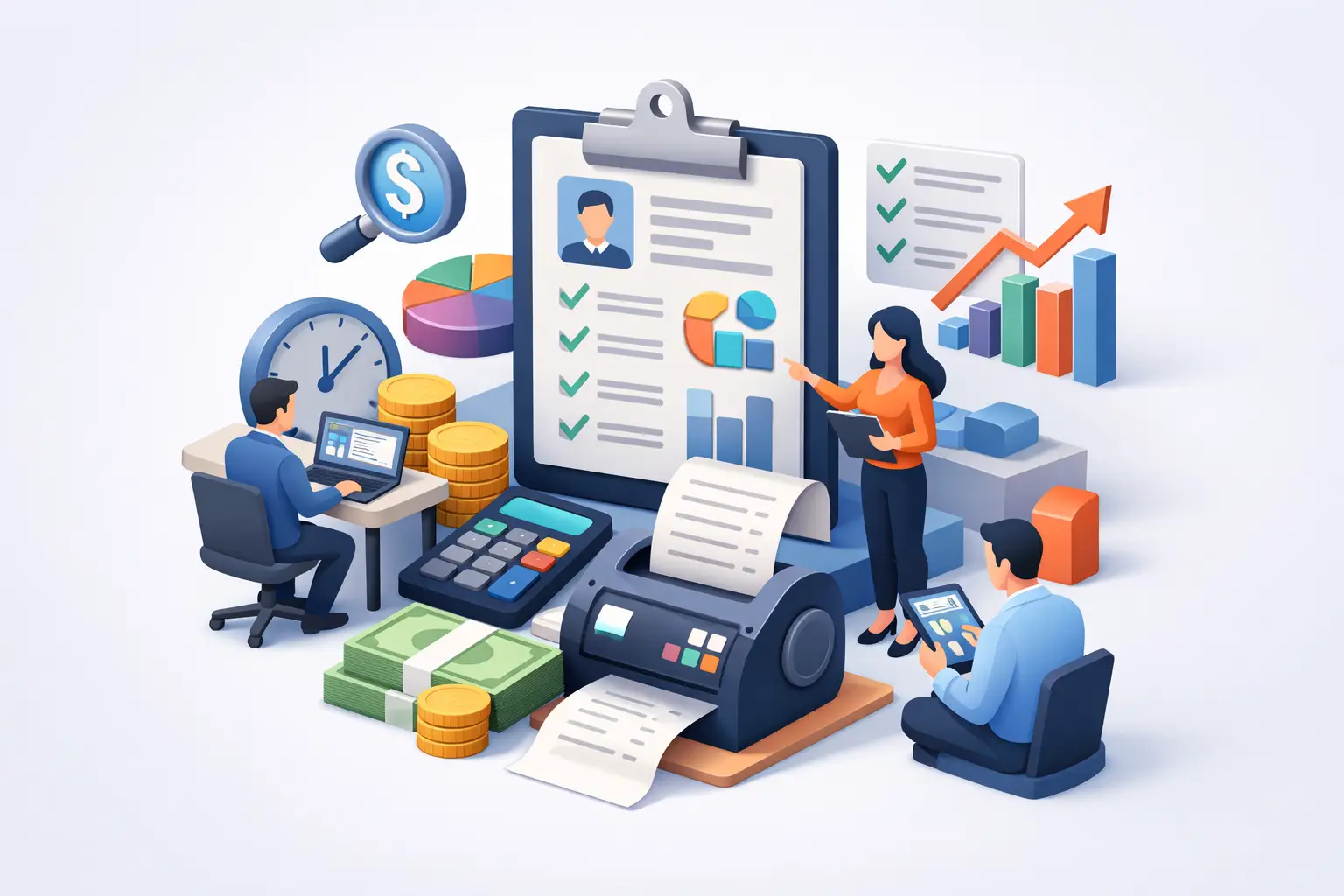










 العربية
  English