Author: Lee Bowen

  • 10 Best HR Software For Malaysia (2026)

    10 Best HR Software For Malaysia (2026)

    HR management in Malaysia comes with many responsibilities, from handling employee records to ensuring compliance with EPF, SOCSO, and local labour laws. Many businesses struggle to manage these tasks efficiently using manual processes.

    Modern HR software helps address this challenge by automating daily HR tasks, improving accuracy, and giving teams better visibility into their workforce. These platforms make it easier to track attendance, approve leave, onboard new hires, and manage performance in one secure place.

    In this roundup, we explore the best HR software in Malaysia that helps companies work smarter and keep employees engaged.

    1. Yomly

    Yomly is the best HR software for enterprise companies in Malaysia with 250+ employees. It helps large organizations manage core HR tasks, attendance, leave, and employee records through one secure cloud platform. The system supports Malaysia’s statutory requirements, including EPF, SOCSO, and PCB compliance, ensuring accurate and compliant payroll every month. 

    More than 250 global enterprises, including leading brands across Asia and the Middle East, trust Yomly to manage over 60,000 daily users. HR teams in Malaysia use Yomly to reduce manual work, streamline processes, and maintain accuracy across every HR operation.

    Key features

    • Tracks attendance, shifts, overtime, and leave from a single HR dashboard. Try Yomly’s employee performance management tool.
    • Manages employee onboarding, exit formalities, and digital document storage.
    • Keeps all employee records, contracts, and policy files secure in the cloud.  Try Yomly’s employee shift scheduling tool.
    • Let employees request leave, access documents, and update personal details online.
    • Handles expense claims and approval workflows with full visibility.
    • Provides real-time HR analytics on headcount, attendance, and engagement.
    • Supports multi-location workforce management across offices in Malaysia.
    • Integrates with ERP or accounting tools to sync employee data when needed.
    • Helps HR teams maintain compliance with Malaysian labour and record-keeping standards.
    • Enables managers to review performance, track goals, and approve actions at any time.

    Pricing: Custom pricing based on company size and selected modules.

    What we proudly promote Yomly

    Yomly helps large Malaysian enterprises manage HR operations with clarity and control. It connects payroll, attendance, and compliance in a single system, providing real-time insights and smoother workflows. The platform reduces manual work, improves accuracy, and supports informed decisions for HR teams managing large employee groups.

    2. Employment Hero

    Employment Hero helps Malaysian teams manage hiring, onboarding, records, and performance in one cloud system. HR managers digitize approvals, automate routine tasks, and track compliance with ease. Employees use the mobile app to update details, request leave, and complete learning modules from anywhere. The platform combines recruitment, learning, reporting, and performance tools to give companies a complete HR workflow without heavy manual work.

    Malaysian companies can customize workflows, manage policies, and track compliance with ease. Employment Hero also provides a mobile app that lets employees manage leave, timesheets, and learning from anywhere, making HR management more efficient and accessible for modern teams.

    Key features:

    • Employment Hero centralizes employee data, leave requests, and performance details in one secure cloud platform.
    • The recruitment module simplifies hiring with built-in job postings and an applicant tracking system.
    • The onboarding feature allows new employees to complete digital contracts and policy acknowledgments.
    • HR teams can automate approvals, reminders, and notifications to reduce administrative work.
    • The performance management tool helps managers set goals, provide feedback, and conduct timely reviews.
    • The learning management system allows employees to access training materials and upskill online.
    • The recognition and rewards feature encourages peer appreciation and improves workplace culture.
    • Reporting and analytics tools help HR leaders make better workforce decisions with real-time data.
    • The mobile app lets employees update information, apply for leave, and track progress on the go.

    Pricing: Employment Hero offers flexible subscription plans for Malaysian businesses.

    What we love about Employment Hero:

    It offers a complete set of HR tools that suit companies of all sizes in Malaysia. The cloud-first design, automation features, and employee self-service options make HR work faster, simpler, and more transparent.

    3. BrioHR

    BrioHR gives Malaysian companies a clean and structured way to manage employee data, onboarding, recruitment, and performance. The platform keeps every record organized in one place and allows HR teams to configure workflows based on their policies. Its modular setup means companies can start with basic features and add more as they expand.

    BrioHR also supports local leave rules, public holidays, and compliance, which helps businesses stay aligned with Malaysian labour requirements. This mix of simplicity, flexibility, and compliance makes BrioHR a reliable choice for small and growing teams.

    Key features:

    • BrioHR keeps all employee records, career details, and documents in a secure, digital employee file.
    • HR teams can manage onboarding tasks, assign responsibilities, and monitor progress in one dashboard.
    • The leave and time-off module allows employees to request leave while managers approve and track balances instantly.
    • The performance management system helps managers set goals and run structured reviews on time.
    • The recruitment module simplifies hiring by connecting job boards, applications, and candidate tracking.
    • Surveys and feedback tools help HR teams gather employee feedback and measure engagement.
    • HR managers can generate reports on attendance, performance, and other workforce insights with a few clicks.
    • The organization chart and employee directory provide staff with clear visibility into teams and reporting structures.

    Pricing: BrioHR follows a modular pricing model where companies pay only for the features they use.

    What we love about BrioHR 

    It offers an easy-to-use HR software experience that suits both small and growing Malaysian businesses. The software’s local compliance features, regular updates, and clean interface make it one of the most practical choices for managing employees in Malaysia.

    4. Worksy.io

    Worksy.io offers a practical HR system that centralizes employee information, leave, claims, and performance details for Malaysian companies. The platform gives HR teams full control over dashboards, approval paths, and automated alerts, so internal processes feel smoother and more structured. It also protects sensitive employee data with secure access controls.

    With flexible modules and straightforward pricing, Worksy.io serves small and mid-sized businesses that want to reduce manual work and build a more organized HR workflow without overcomplicating operations.

    Key features:

    • Worksy.io centralizes employee records, leave details, and claims management in one connected system.
    • HR teams can create personalized dashboards that display key updates, tasks, and reports.
    • The system includes access control settings to manage visibility and maintain data privacy.
    • HR managers can easily track employee progression, promotions, and internal transfers.
    • Custom approval workflows reduce manual steps and speed up internal HR processes.
    • The smart letter builder lets HR teams quickly create offer letters, confirmations, and other documents.
    • The system sends automatic alerts and reminders to ensure timely follow-ups on tasks and approvals.
    • HR managers can generate customized reports and export them to Excel or PDF for better analysis.
    • The organization chart feature provides a clear visual of reporting structures across teams.

    Pricing: Worksy.io starts from RM3 per user per month, offering an affordable HR software option for Malaysian businesses.

    What we love about Worksy.io

    It delivers essential HR management tools in a simple, affordable, and locally relevant platform. The software’s customization options and user-friendly interface make it an excellent choice for Malaysian companies looking to digitalize their HR processes.

    5. JustLogin

    JustLogin supports Malaysian organizations that need dependable tools for attendance, leave, expenses, and employee record management. The platform uses facial recognition and geofencing to ensure accurate attendance tracking, which is helpful for distributed teams. HR managers rely on automated workflows to approve leave, process expenses, and keep policies updated.

    Employees can handle most tasks through the mobile app, making day-to-day HR interactions smooth and accessible. With strong compliance alignment and easy customization, JustLogin fits companies that need a stable, user-friendly HR system.

    Key features:

    • JustLogin centralizes employee data, documents, and milestones in an easy-to-navigate dashboard.
    • HR teams can automate leave approvals, update entitlements, and view team availability through a shared leave calendar.
    • Employees can clock in and out using facial recognition and geofencing features for accurate attendance tracking.
    • The expense management tool lets users scan and upload receipts directly from the mobile app for quick approvals.
    • The organizational chart and employee directory allow staff to connect and easily find colleagues’ contact details.
    • Custom notifications and alerts keep employees informed about updates, approvals, and company announcements.
    • The digital business card feature lets employees share contact details via QR code, improving networking convenience.
    • Reports and insights help HR managers monitor attendance, leave balance, and workforce activity efficiently.
    • JustLogin integrates with key business tools to connect HR functions with recruitment, performance, and accounting systems.

    Pricing: JustLogin offers flexible plans for Malaysian businesses.

    What we love about JustLogin:

    It provides an employee-first HR software experience designed for Malaysia’s compliance needs. The simple interface, automation tools, and local regulations support make JustLogin ideal for companies that want reliable HR management without complexity.

    6. Talenox

    Talenox focuses on helping Malaysian SMEs handle HR tasks like employee profiles, leave policies, approvals, and statutory compliance with clear, simple tools. The platform stores all employee information in one secure place and automates leave tracking to remove manual checks.

    It includes built-in support for EPF, SOCSO, and EIS, which keeps HR teams compliant throughout the year. Integrations with Xero and QuickBooks strengthen connections between HR and finance. Its clean interface, free starter plan, and easy learning curve make Talenox a strong choice for small teams.

    Key features:

    • Talenox Profiles centralizes all employee information, documents, and records in a single secure database.
    • The employee self-service feature allows staff to view and update their personal details at any time, with controlled access.
    • The leave management module lets HR teams set leave policies, approve requests, and automatically track entitlements.
    • The shared company calendar helps managers and teams plan around employee leave schedules.
    • HR teams can assign access permissions and safeguard confidential information using two-factor authentication.
    • Built-in compliance with Malaysian statutory requirements ensures HR teams stay aligned with labour laws.
    • The system integrates with tools like Xero and QuickBooks, making it easy to sync HR data with other business systems.
    • The platform supports multi-company access, allowing HR managers to oversee multiple entities from a single account.
    • Data encryption and SSL/TLS protocols protect employee information across all access points.

    Pricing: Talenox offers a free plan for small teams and paid plans starting from RM3 per employee per month for advanced HR features.

    What we love about Talenox:

    It provides a secure, flexible HR system specifically designed for Malaysian SMEs. The simple setup, built-in compliance, and free plan make it ideal for growing companies that want to automate HR tasks without high costs.

    7. HR2eazy

    HR2eazy is a full digital system for managing attendance, work hours, shifts, claims, and performance KPIs. HR teams get real-time visibility of employee activity through a detailed dashboard, while employees use the self-service portal to update profiles, apply for leave, and submit claims. The platform supports EPF, SOCSO, EIS, and HRDC requirements, which helps companies maintain compliance without manual tracking. With features for training, scheduling, and reporting, HR2eazy suits mid-sized businesses that need broad automation and strong accuracy.

    Key features:

    • HR2eazy unifies employee data, attendance, leave, and claims management into a single dashboard.
    • The Employee Self-Service feature lets employees manage personal details, apply for leave, and submit claims independently.
    • The attendance tracker records work hours and supports overtime and shift management.
    • HR managers can configure multiple leave types and policies that align with Malaysian regulations.
    • The roster planner simplifies staff scheduling across teams and departments.
    • KPI and performance tracking tools help managers set objectives and evaluate employee performance.
    • The training module allows HR teams to assign, track, and report on employee learning programs.
    • HR2eazy maintains secure cloud storage and ensures compliance with local statutory requirements.
    • Real-time reporting and analytics support better decision-making across HR operations.

    Pricing: HR2eazy offers flexible, quote-based pricing depending on company size and selected modules.

    What we love about HR2eazy:

    It simplifies core HR management for Malaysian businesses by automating and ensuring compliance. The self-service access, customizable modules, and strong local support make HR2eazy a dependable HR system for growing teams.

    8. Swingvy

    Swingvy focuses on creating a connected workspace where HR operations and employee engagement come together. The system helps companies manage onboarding, leave, claims, and performance reviews with simple, well-designed tools.

    HR teams publish announcements, share updates, and maintain visibility across departments, while employees receive a clean dashboard that keeps them informed and involved. Strong communication features, an easy layout, and smooth workflows make Swingvy a good match for teams that value a modern and collaborative HR experience.

    Key features:

    • The HR Hub brings employee profiles, company updates, and resources together in a single dashboard.
    • Automated onboarding tools reduce paperwork and speed up the new-hire experience while making it more consistent.
    • Managers can define goals, monitor progress, and complete reviews through the performance module.
    • Employees can apply for leave and submit claims online, while approvals and records update automatically.
    • The organization chart and shared calendar improve team visibility and communication.
    • HR can publish company news, announcements, and milestones to keep staff engaged.
    • The reporting dashboard offers a real-time overview of HR activities, attendance, and workforce trends.
    • Integration with Google Calendar, Outlook, and Xero ensures data sync across tools employees already use.
    • The mobile app gives everyone instant access to personal details, requests, and company information.

    Pricing: Swingvy offers flexible plans for Malaysian companies based on team size and selected modules.

    What we love about Swingvy:

    It feels more like a modern workspace than a traditional HR system. The design is clean, the tools are intuitive, and the experience empowers both HR teams and employees to manage work effortlessly.

    9. Emplx

    Managing daily HR tasks becomes easier with Emplx because it organizes every core function in one clean system. The platform brings together attendance tracking, leave management, claims processing, performance reviews, and training tools, so HR teams no longer switch between multiple apps.

    Each workflow runs through digital forms, automated updates, and visual dashboards that highlight trends and gaps that need attention. Employees use GPS check-in, mobile access, and simple self-service features to complete tasks without depending on HR. Emplx supports multilingual teams and lets companies activate new modules as they grow, which makes it a practical long-term option for Malaysian businesses that need a flexible and scalable HR setup.

    Key features:

    • The e-Profile module stores every employee’s data, documents, and work history in a centralized space.
    • The e-Leave and e-Time features help HR teams instantly automate attendance and leave approvals.
    • Employees can clock in using GPS tracking and view shift details directly from their phones.
    • Expense claims, overtime, and trip requests are processed digitally, cutting down administrative follow-up.
    • HR can issue digital letters and forms using the e-HR Letters tool to simplify documentation.
    • Managers can monitor performance and set KPIs using visual dashboards.
    • Built-in training management makes it easier to assign, track, and evaluate employee learning.
    • The analytics feature converts raw HR data into simple charts that reveal workforce trends and bottlenecks.
    • A clean, multilingual interface supports diverse teams and ensures ease of use for everyone.

    Pricing: Emplx uses a subscription-based pricing model that adjusts based on active modules and company size. 

    What we love about Emplx:

    It feels lightweight but powerful. The interface is clean, the modules are flexible, and setup is quick, making Emplx a great fit for Malaysian companies that want a practical HR system without unnecessary complexity.

    10. QNE

    QNE brings HR, payroll, and accounting together for Malaysian SMEs that want one connected system. The platform manages employee records, leave requests, claims, and salary details while keeping data synced with financial workflows. Employees access payslips, profiles, and leave tools through the self-service portal, reducing HR follow-up work. QNE also supports bank submissions, LHDN requirements, and statutory updates, which simplifies compliance. With secure encryption, bilingual options, and a free plan for small teams, QNE delivers strong value for budget-conscious companies.

    Key features:

    • The dashboard provides a clear overview of employee information, the salary structure, and key HR metrics on a single screen.
    • Managers can automate leave requests and approvals through the e-Leave module.
    • The Employee Self-Service (ESS) portal lets staff view payslips, update profiles, and apply for leave online.
    • QNE integrates HR and accounting data and automatically syncs payroll entries into the company’s books.
    • The e-Claim system helps process expense claims digitally with multi-level approval support.
    • Employee data and payroll files are secured with bank-grade encryption and JWT authentication.
    • The platform supports electronic submissions to Malaysian banks and the Inland Revenue Board (LHDN).
    • Automatic software updates keep the system aligned with changes to EPF, SOCSO, and EIS.
    • The multilingual interface ensures easy adoption across teams.

    Pricing: QNE offers a free plan for up to five employees, with paid tiers starting from RM1.67 per employee per month. Pricing varies by company size and features.

    What we love about QNE:

    It brings HR, payroll, and accounting together in one simple system. The free plan for small teams and strong compliance tracking makes QNE a smart choice for Malaysian SMEs looking for dependable HR software without a heavy cost.

    ???? RELATED RESOURCES

    Comparison of best HR management software for Malaysia

    HR SoftwareBest ForKey Advantage
    Yomly Start free trial →Large enterprisesScalable HR platform with full compliance support
    Employment HeroSMEsComplete HR and performance tools in one system
    BrioHRGrowing businessesFast setup with modular HR functions
    WorksySmall to mid-sized teamsSimple, customizable HR workflows
    JustLoginMulti-location teamsEasy attendance and leave management
    TalenoxSMEsBuilt-in EPF, SOCSO, and EIS compliance
    HR2eazyMid-sized businessesFull HR automation and analytics
    SwingvyModern workplacesClean design with strong employee engagement tools
    EmplxExpanding teamsModular setup with performance and learning features
    QNESMEsAffordable HR solution integrated with accounting

    Final words

    The HR tools featured in this listicle support companies of all sizes and needs, from basic employee record management to advanced analytics and automation. 

    Start by identifying the main challenges your HR team faces, such as manual record-keeping, delayed approvals, or compliance with Malaysian labour laws. Review the platforms in this list to see which ones align best with your company’s size, structure, and goals. 

    Next, you can schedule a demo or trial with two or three shortlisted software providers to experience their features in real time. 

    Involve your HR and finance teams during testing to ensure the system fits your workflow. 

    Once you find the right platform, create a step-by-step rollout plan to train employees and transition smoothly to digital HR management.

  • Labor Laws In Vietnam [Complete Guide For The Employers]

    Labor Laws In Vietnam [Complete Guide For The Employers]

    Vietnam is considered one of the fastest growing labor markets in Southeast Asia. It has clear laws that guide how employers should manage contracts, working hours, salaries, benefits and employee rights. 

    As an employer, it is common to face confusion about what is required, what is optional and how to stay fully compliant while managing a growing team.

    This guide is created to help you understand the key labor laws in Vietnam in a simple and practical way. It comes from our experience of helping Vietnamese companies streamline their HR and payroll operations using our all in one HR and payroll platform in Vietnam. 

    The guide covers employment contracts, working hours, overtime, leave entitlements, payroll compliance, social insurance, personal income tax and important employer obligations.

    Overview of Vietnam Labor Code

    The Labor Code in Vietnam governs how employers and employees should work together in the private sector. It sets the rules for hiring, managing and compensating employees. It applies to Vietnamese nationals, foreign employees working in Vietnam and companies operating in the country. The law ensures that both employers and employees follow fair and transparent practices.

    Here are the key compliance areas you must understand:

    • Employment contracts
    • Working hours and rest periods
    • Overtime rules
    • Minimum wage and salary structure
    • Taxes and payroll compliance
    • Social insurance contributions
    • Leave entitlements
    • Probation and termination
    • Health and safety requirements

    Understanding these areas will help you manage your workforce properly and avoid compliance issues.

    Types of Employment Contracts in Vietnam

    As per the Vietnam Labor Code, employers must use the correct employment contract type depending on the nature and duration of the job. Let us take a look at the types of contracts that are legally recognized today, based on the latest updates in the Labor Code.

    1. Indefinite Term Labor Contract

    This contract has no end date. It is used when the job is stable and long term. Employees on indefinite term contracts receive the highest level of protection. Termination rules are stricter, and employers must follow proper notice periods and lawful termination grounds.

    2. Definite Term Labor Contract (12 to 36 months)

    This is the most commonly used contract type in Vietnam. It must have a clear start date and end date and can be signed for a period between 12 and 36 months. A definite term contract can only be renewed once. After the second term, it automatically becomes an indefinite term contract unless specific legal conditions apply.

    3. Seasonal or Project-Based Contract

    Seasonal or project-based contracts are used for short term jobs that last less than 12 months. These contracts apply only when the work is genuinely seasonal or tied to a specific project with a fixed duration. Employers must not use these contracts to avoid long term obligations.

    4. Mandatory Elements in Every Contract

    Vietnamese law requires all contracts to include key information such as:

    • Job role and responsibilities
    • Basic salary and allowances
    • Working hours and rest periods
    • Social insurance and health insurance details
    • Workplace location
    • Contract duration
    • Terms for salary increases and evaluations
    • Conditions for termination

    All employment contracts must be signed before work begins and must be provided to the employee in writing.

    Working Hours, Rest Periods and Overtime

    Like every regulated labor market, Vietnam has clear rules for working hours, rest periods and overtime to protect employees and help employers manage work schedules fairly. Here are the key requirements all employers must follow under the Vietnam Labor Code.

    Standard Working Hours

    The standard working hours in Vietnam are 8 hours per day and 48 hours per week.
    However, employers are encouraged to apply a 40-hour workweek where possible.
    For jobs involving heavy, hazardous or dangerous conditions, working hours may be reduced according to sector specific rules.

    Overtime Rules

    Overtime is allowed, but strict limits apply:

    • Maximum 40 overtime hours per month
    • Maximum 200 hours per year for most industries
    • Up to 300 hours per year only for specific sectors approved by the government

    Overtime pay rates:

    • 150 percent of the hourly wage for regular overtime
    • 200 percent for weekly rest day overtime
    • 300 percent for public holiday or Tet overtime (excluding daily wages)

    Employers must obtain employee consent before assigning overtime, except in emergency situations allowed by law.

    Rest Breaks and Weekly Days Off

    Employees working 6 continuous hours must receive a minimum rest break during the shift.
    Every employee must also receive at least one day off per week, which can be a Sunday or any other day depending on the company schedule.

    For jobs with rotating or shift patterns, weekly rest can be accumulated and arranged according to operational needs.

    Night Shift Regulations

    Night shift hours in Vietnam are defined as 10:00 PM to 6:00 AM. Employees working during these hours must receive:

    • A minimum 30 percent increase on their regular hourly wage
    • Additional pay if the night shift includes overtime
    • Consideration for health and safety due to the nature of night work

    Employers must ensure proper scheduling and compensation to remain compliant with the law.

    Managing working hours, overtime and rest periods correctly is essential for staying compliant with Vietnam’s labor laws. Yomly offers an automated payroll and workforce management platform designed for Vietnamese businesses, helping you apply these rules accurately without manual calculations. 

    Want to give it a try? Book a free demo to see the entire process in action and learn how Yomly can simplify your HR and payroll operations.

    Minimum Wage and Salary Structure (Vietnam-wide + Regional Wages)

    When it comes to payroll compliance in Vietnam, salary is one of the most important areas employers must get right. Vietnam follows a region based minimum wage system, and every employer must ensure that employees are paid at or above the legally defined rates. Here are the key details you need to know.

    Region-Based Minimum Wages

    Vietnam divides its minimum wage into four regions based on economic development levels. Each region has a different minimum wage:

    • Region I: Highest minimum wage, covers major cities like Ho Chi Minh City and Hanoi
    • Region II: Covers urban districts of medium sized cities
    • Region III: Covers provincial towns
    • Region IV: Lowest minimum wage, covers rural and less developed areas

    The government reviews and updates these rates periodically, usually once a year. Employers must apply the correct regional wage based on the registered workplace location.

    Minimum Wage for Employees with Specialized Skills

    Employees who perform jobs that require training or technical skills must earn at least 7 percent higher than the standard minimum wage for their region. This applies to positions requiring vocational training, technical certificates or specialized skills.

    Salary Structure Requirements

    Vietnamese law requires that salaries must be clear, transparent and documented in the employment contract. The salary structure may include:

    • Basic salary
    • Fixed allowances (such as housing, transport, meal allowance)
    • Bonuses and performance incentives
    • Overtime payments
    • Deductions for insurance and taxes

    The basic salary must be high enough to support the calculation of social insurance, health insurance and unemployment insurance contributions.

    Mandatory Salary Payment Rules

    Employers must:

    • Pay salaries monthly through bank transfer or cash
    • Ensure payment is not delayed
    • Provide clear payslips with all breakdowns
    • Apply correct insurance deductions
    • Follow regional minimum wage rules at all times

    Late payments or incorrect wage structures may lead to compliance penalties.

    Payroll Compliance in Vietnam

    As an employer in Vietnam, you must follow strict payroll rules to stay compliant with the Labor Code and social insurance regulations. 

    If you are setting up payroll for the first time or managing a growing team, understanding these requirements will help you avoid errors and penalties. Here are the key areas of payroll compliance you need to focus on.

    Payroll Cycle

    Vietnam follows a monthly payroll cycle, which means employers must:

    • Calculate salaries once every month
    • Record all allowances, overtime and deductions
    • Prepare payslips with clear salary breakdowns
    • Pay employees on time through bank transfer or cash
    • Keep payroll records for audits and inspections

    All salary payments must match the amounts stated in the employment contract.

    Mandatory Deductions

    Vietnam requires three mandatory insurance deductions plus personal income tax (PIT). These must be calculated accurately every month:

    • Social Insurance (SI)
    • Health Insurance (HI)
    • Unemployment Insurance (UI)
    • Personal Income Tax (PIT)

    Leave Entitlements Under Vietnam Labor Law

    Employees need proper rest, recovery time and family support, and Vietnam Labor Law clearly defines the types of leave every employee is entitled to. You can check out the main leave categories below to understand what employers must provide and how they should be managed.

    Annual Leave

    Employees who complete 12 months of service are entitled to:

    • 12 days of paid annual leave for regular jobs
    • 14 to 16 days for heavy, hazardous or dangerous jobs

    Annual leave increases by one additional day for every five years of service with the same employer.

    Sick Leave

    Sick leave is covered by the Social Insurance Fund, not the employer.

    Entitlement depends on:

    • Employee’s working conditions
    • Total social insurance contribution years

    Employees can receive between 30 to 70 days per year with payment from Social Insurance.

    Maternity Leave

    Female employees are entitled to 6 months of maternity leave.

    If expecting twins or more, an extra 1 month is added for each additional child.

    The allowance is paid by Social Insurance, based on the employee’s average salary used for insurance contributions.

    Paternity Leave

    Male employees receive paternity leave depending on the delivery method:

    • 5 days for normal birth
    • 7 days for surgical birth or premature birth
    • 10 to 14 days for twins or more

    Payment is covered by Social Insurance.

    Public Holidays

    Vietnam has 11 national public holidays, all fully paid.

    These include Tet, National Day, Reunification Day and others. You can check out our complete guide on public holidays in Vietnam to find the complete list. If employees work on a public holiday, they must be paid 300 percent of their normal wage.

    Personal Leave (Marriage, Funeral)

    Employees can take:

    • 3 days paid leave for their own marriage
    • 1 day paid leave for a child’s marriage
    • 3 days paid leave for the death of immediate family members

    Unpaid Leave

    Employees may request unpaid leave for personal reasons. Approval depends on company policy and must be agreed upon in writing.

    How Yomly Helps Companies Stay Compliant in Vietnam

    While this guide is only an overview of the key labor laws in Vietnam, there are many other compliance areas you must manage every month. These include tax calculations, social insurance reporting, unemployment insurance contributions, personal income tax rules, contract renewals, attendance tracking and proper payroll documentation. New organizations often find it difficult to manage all these requirements consistently and accurately.

    Yomly’s HR and payroll software takes the complexity out of Vietnamese labor compliance. It automates the entire payroll process with built in local rules for social insurance, health insurance, unemployment insurance and PIT. 

    Every calculation follows the latest Vietnam regulations, and the platform can be set up according to your salary structure, allowance policies and approval workflows. Yomly keeps your HR data organized, your payroll accurate and your business fully compliant without manual work.

    Book a free demo or get in touch with our team to take the next step towards automating your payroll.

  • Payroll Process In Qatar (A Detailed Guide with Tips)

    Payroll Process In Qatar (A Detailed Guide with Tips)

    Qatar is one of the fastest growing economies in the GCC and has strengthened its labour policies in the last few years to protect employees and improve workplace standards. 

    The country follows a clear and regulated payroll framework, and with so many compliance requirements, it is important for every employer to understand how payroll works. Qatar’s Wage Protection System plays a key role in ensuring that salaries are paid accurately and on time.

    Our HR and Payroll software for Qatar allows businesses to automate payroll from end to end while following every local rule and WPS requirement. 

    With our experience of helping companies across the GCC manage payroll smoothly, we have prepared this detailed guide for you. It covers every important step in the payroll process along with practical tips. You can bookmark this guide and refer to it whenever you need clarity on payroll compliance in Qatar.

    Understanding Payroll Regulations in Qatar

    Our team listed down some important payroll regulations that every employer in Qatar must follow. 

    Let us start by understanding the laws that govern payroll, the mandatory salary payment rules for private sector employees and the requirements of Qatar’s Wage Protection System. These regulations ensure transparency, accuracy and employee protection across all industries.

    Applicable Laws Under Qatar Labour Law

    Qatar Labour Law outlines how salaries must be calculated, paid and recorded for every private sector employee. 

    It defines what should be included in the wage, how overtime is calculated, rules for deductions, how leave salary is managed and when end of service benefits must be paid. All companies must follow these provisions and keep proper payroll records for inspection when required.

    Mandatory Salary Payment Rules for Private Sector Employees

    Private sector employers must pay salaries once every month through approved financial channels. 

    The payment must match the amount listed in the employment contract and must not be delayed beyond the legally allowed period. If an employee’s pay includes fixed allowances, those must also be paid consistently and recorded accurately in the payroll system.

    Qatar Wage Protection System (WPS)

    Qatar’s Wage Protection System is a digital salary monitoring system that ensures employees receive their wages on time. Companies must generate a WPS file each month and submit it through an approved bank. 

    The system verifies whether employees received their correct salaries and flags any delays or inconsistencies. Failure to comply with WPS can lead to penalties or restrictions.

    Key Components of Payroll in Qatar

    To dive deeper into how payroll works in Qatar, it is important to understand the core elements that make up each salary cycle. Take a look at the key components that every employer must calculate and record accurately.

    Basic Salary

    The basic salary is the fixed amount agreed in the employment contract. It forms the foundation for most payroll calculations in Qatar, including overtime, leave salary and end of service benefits. Employers must ensure the basic salary matches the employee’s contract and is paid consistently every month.

    Allowances (housing, transport, medical)

    Allowances are additional fixed payments provided to support the employee’s living needs. The most common allowances in Qatar include housing, transport and medical. These allowances must be clearly stated in the contract and paid every month as part of the employee’s total wage.

    Overtime Calculations

    Overtime pay applies when an employee works beyond normal working hours. Qatar Labour Law requires overtime to be calculated based on the basic salary rate plus an additional percentage depending on the type of extra work performed. Employers must record working hours accurately to avoid disputes.

    Deductions (loans, absences, penalties)

    Deductions must follow strict rules under Qatar Labour Law. Allowed deductions include approved loan repayments, salary deductions for absences without pay and penalties permitted by law. Any deduction that is not supported by documentation can lead to compliance issues.

    End of Service Benefits

    End of service benefits in Qatar are calculated based on the employee’s basic salary. Employees are entitled to a gratuity after completing at least one year of service. The amount increases with the number of years worked. Accurate record keeping is essential to ensure the correct amount is paid upon separation.

    Leave Salary Calculations

    Annual leave salary is paid based on the employee’s basic salary. Employees earn paid leave days each year, and any unused leave may be encashed according to company policy and the law. Employers must calculate leave balances carefully to avoid underpayment or overpayment.

    Step-by-Step Payroll Process in Qatar

    Here is a simple and practical breakdown of how payroll is processed in Qatar. Following these steps ensures accurate salaries, proper documentation and full compliance with Qatar Labour Law. Yomly supports every stage of this process, making payroll smooth and error free.

    Step 1: Gather Employee Data

    The first step is to collect all necessary employee information. This includes contracts, Qatar IDs, attendance data, leave records and any changes in salary or position. Accurate data is important because one small mistake can affect the entire payroll cycle.

    Yomly lets you save and manage employee documents in one secure place, so all required details are always updated.

    Step 2: Calculate Gross Salary

    Gross salary is calculated by adding the basic salary and all fixed allowances. For example, if an employee has a basic salary of QAR 5,000 plus QAR 2,000 housing allowance and QAR 500 transport allowance, the gross salary becomes QAR 7,500.

    To help businesses, Yomly’s payroll software applies these calculations automatically based on the employee profile, preventing manual calculation errors.

    Step 3: Apply Deductions

    Next, deductions must be applied according to the law and company policy. These may include approved loan repayments, deductions for unpaid leave or penalties allowed under Qatar Labour Law. For example, if an employee took two unpaid leave days, the deduction is calculated based on their daily wage.

    Step 4: Process Overtime and Leave Salary

    Overtime is calculated based on the employee’s basic salary and the legal overtime rates in Qatar. Leave salary is also calculated based on the basic salary and the employee’s leave balance. Employers must ensure all overtime hours and leave requests are recorded accurately.

    With Yomly, attendance, overtime and leave data are synced directly into payroll for accurate calculations. You can check out the public holidays in Qatar to make sure that everything is calculated properly.

    Step 5: Generate Payroll Report

    Once the salary, deductions and allowances are calculated, a payroll report is generated. This report includes gross salary, net salary, overtime, deductions and all supporting data for approval.

    Step 6: Create and Submit WPS File

    Qatar requires companies to submit a compliant WPS file through an approved bank. This file contains salary details for all employees for the month. It must follow the exact format required by Qatar’s Wage Protection System.

    With Yomly, you automatically get a WPS compliant file ready for submission, saving time and reducing formatting mistakes.

    Step 7: Disburse Salaries

    After WPS approval, salaries are transferred to employees through their bank accounts. Payments must be made within the legal timeframe to avoid penalties or WPS violations.

    Yomly ensures all payment data remains aligned with WPS requirements, helping you avoid delays or rejection.

    Also check out our list of top HR Software in Qatar to get a detailed insights on the same.

    End of Service Benefits (EOS) in Qatar

    While we will have a separate article explaining End of Service Benefits in Qatar in complete detail, here is a quick overview to help you understand the basics as part of the payroll process. 

    EOS is a mandatory payment given to employees when their employment ends, as long as they have completed at least one year of continuous service. It is designed to recognize their service and provide financial support after leaving the job.

    End of service benefits in Qatar are calculated based on the employee’s last basic salary. 

    The standard formula is:

    Three weeks of basic salary for every completed year of service.

    Employers must calculate EOS carefully, taking into account any partial years at the end of employment. Employees who resign or are terminated are both eligible for EOS as long as they meet the minimum service period.

    Guidelines require employers to:

    • Use the final basic salary for calculation
    • Include all complete years of service
    • Calculate remaining partial months proportionally
    • Pay EOS promptly during the final settlement

    Accurate EOS calculations are important to avoid disputes and ensure full compliance with Qatar Labor Law. Yomly automates EOS calculations based on contract details and service duration, making final settlements simple and error free.

    Best Practices for Payroll Management in Qatar

    When you are running payroll in Qatar, you need a clear process, updated records and full compliance with labor laws. To help you manage payroll smoothly and avoid errors, here are some practical tips and best practices you can follow:

    • Maintain accurate employee records
    • Update salary changes immediately
    • Track attendance and leave in real time
    • Verify overtime hours before payroll
    • Review deductions with proper approvals
    • Generate payroll reports for internal checks
    • Submit WPS files on time each month
    • Store payroll documents securely for audits
    • Use automated payroll software to reduce manual work

    The best decision for any business that wants accurate and compliant payroll is to choose Yomly. We are one of the top HR and Payroll platforms in Qatar and the wider GCC, MENA and SEA regions. You can book a free demo and our team will show you how Yomly can automate payroll and help you manage everything with confidence.

  • A Complete List of Public Holidays In Vietnam (2026 Updated)

    A Complete List of Public Holidays In Vietnam (2026 Updated)

    In Vietnam, public holidays play a major role in workforce planning and payroll management. 

    As an employer or HR professional, knowing about the public holidays in Vietnam for 2026 will help your business:

    • Plan workforce availability and leave schedules in advance
    • Manage payroll and overtime calculations accurately
    • Align holiday policies with Vietnam’s labor laws
    • Improve employee satisfaction and work-life balance

    At Yomly, we work with various organizations across Southeast Asia and globally. We offer HR and Payroll Software for Vietnam that simplifies leave tracking, attendance, and payroll automation. 

    With this guide, we want to help you keep yourself updated with the key public holidays in 2026 and plan your HR calendar effectively.

    2026 Public Holidays Calendar For Vietnam At A Glance

    For people looking for an overview, here is a quick glance at the 2026 public holidays in Vietnam:

    DateDayHoliday
    Jan 1ThursdayNew Year’s Day
    Feb 16MondayTết Nguyên Đán (Vietnamese New Year Eve)
    Feb 17TuesdayTết Nguyên Đán – New Year Day
    Feb 18WednesdayTết Holiday (Day 1)
    Feb 19ThursdayTết Holiday (Day 2)
    Feb 20FridayTết Holiday (Day 3)
    Feb 21SaturdayTết Holiday (Day 4)
    Apr 26SundayGiỗ Tổ Hùng Vương (Hung Kings’ Commemoration)
    Apr 30ThursdayReunification Day (Victory & Unification)
    May 1FridayInternational Labour Day
    Sep 2WednesdayNational Day (Independence Day)

    Note: Many holiday periods such as Tết often include additional “bridge” days or are extended by official decree.

    Vietnamese Public Holidays Explained (2026 Edition)

    Here are some detailed insights into Vietnam’s 2026 public holidays to help you plan your work, travel, or business activities better. 

    Each holiday reflects a part of the country’s culture and history, giving you a clearer picture of how Vietnam celebrates and observes important national occasions.

    New Year’s Day – January 1

    New Year’s Day marks the beginning of the Gregorian calendar year. In Vietnam, it is a time for relaxation, short family trips, and celebrations among friends. 

    While it is not as important as the Lunar New Year, many people still use this day to reset goals and reflect on the past year. Public offices, schools, and most businesses close for the day. Cities like Hanoi and Ho Chi Minh City host fireworks and countdown events, making it a cheerful start to the year before the busier Tết season arrives in February.

    Tết Nguyên Đán (Vietnamese Lunar New Year) – February 16 to 21

    Tết Nguyên Đán is the most important and widely celebrated festival in Vietnam. It marks the Lunar New Year and the arrival of spring. Families reunite, honor ancestors, clean and decorate their homes, and prepare special dishes like bánh chưng. 

    Businesses close for several days as people travel to their hometowns. Streets are filled with flowers, red decorations, and festive music. It is also a time for paying debts, settling disputes, and giving lucky money to children. For visitors, Tết offers a deep cultural experience but also requires planning since many services pause during the week.

    Hung Kings’ Commemoration Day – April 26

    This day honors the legendary Hung Kings, who are believed to have founded Vietnam thousands of years ago. It is a national occasion for remembering Vietnam’s roots and cultural unity. Ceremonies take place at temples, especially the Hung Temple in Phu Tho Province.

    People participate in processions, folk games, and various offerings to pay respect to their ancestors. Schools and offices close, allowing citizens to take part in local events. The holiday strengthens national pride and reminds the younger generation of Vietnam’s rich heritage and the importance of family and tradition.

    Reunification Day – April 30

    Reunification Day marks the end of the Vietnam War in 1975 and the unification of North and South Vietnam. It is one of the most important national holidays, often celebrated with parades, fireworks, and patriotic displays.

    The day carries deep historical meaning as it represents peace and national unity after decades of conflict. Government offices and most businesses close, while people use the long weekend to travel or visit family. 

    International Labour Day – May 1

    International Labour Day, known locally as Ngày Quốc tế Lao động, celebrates workers and their contributions to the country’s development. 

    It follows Reunification Day, creating a two-day public holiday period. Many Vietnamese take advantage of this break for travel or family gatherings. Government and private offices remain closed, and several local unions hold events appreciating labor achievements.

    National Day – September 2

    National Day celebrates Vietnam’s declaration of independence from France in 1945 by President Hồ Chí Minh. It is a day of national pride marked by flag-raising ceremonies, parades, and cultural performances across the country. Major cities like Hanoi hold official events and fireworks shows. Citizens display the national flag outside their homes, and many join community gatherings to honor the country’s independence.

    Also Check Out: Top 10 HR Software in Vietnam

    Need an Automated Way to Manage Leaves and Payroll in Vietnam?

    Like for any growing business, managing leaves, payroll, and compliance in Vietnam can become complex as your team expands. 

    Between handling public holidays, calculating wages, and ensuring compliance with local labor laws, manual work often leads to errors and time loss. 

    Yomly lets you automate the entire process with its cloud-based HR and Payroll software designed for Vietnam and the wider SEA region. It ensures accuracy, transparency, and effortless management across departments.

    Here is what makes Yomly stand out:

    • Fully cloud-based and automated platform
    • Mobile-ready access for employees and managers
    • Employee self-service for leave requests and payslips
    • Great for scale with multi-location and multi-currency support
    • Enterprise-grade solution trusted by 250+ businesses globally

    Want to give it a try? Book a free demo and our team of experts will guide you through the platform. They will also help tailor it to your organization’s structure, compliance needs, and future growth plans.

  • Wage Protection System in UAE: Everything You Need To Know

    Wage Protection System in UAE: Everything You Need To Know

    The UAE’s labour market is one of the most dynamic and regulated in the region, ensuring that employees are paid fairly and on time. To maintain transparency and protect workers’ rights, the UAE has its Wage Protection System (WPS), a government-backed electronic salary transfer system that allows companies to pay employees securely through approved financial channels.

    At Yomly, we offer an automated payroll software that makes WPS compliance simple for every business. From generating SIF files to managing approvals and payroll records, Yomly ensures 100% accuracy and compliance with MOHRE standards. 

    Today, our experts explain everything you need to know about the Wage Protection System in the UAE and how it can help your business stay compliant and efficient. So, let’s get started.

    Important Note: These insights are shared only for informational purposes to help businesses understand the UAE Wage Protection System. You should always verify the latest rules and requirements directly from MOHRE or consult a compliance expert before making any payroll adjustments.

    What Is the Wage Protection System (WPS)?

    WPS stands for Wage Protection System, a digital platform introduced by the UAE Ministry of Human Resources and Emiratisation (MOHRE) in partnership with the Central Bank of the UAE. It was created to ensure employees in the private sector receive their salaries accurately and on time through official financial channels.

    Here is how it works: companies submit payroll data in a Salary Information File (SIF) to their bank or an authorised exchange house, which then transfers salaries directly to employees’ accounts. MOHRE monitors every transaction to verify that all wages are paid correctly and on schedule.

    Organizations across the UAE depend on reliable payroll platforms like Yomly to manage this process seamlessly. Yomly automatically generates compliant SIF files, validates data, and integrates payroll with banking systems, helping HR teams stay fully compliant with WPS regulations.

    Also Read: 10 Best Payroll Software in the UAE

    Documents and Data Required for WPS Submission

    Every organization in the UAE must prepare and submit accurate payroll data each month to stay compliant with the Wage Protection System. To complete a valid WPS submission, employers must ensure all required employee and company details are accurate and up to date. Here are the key documents and data points needed:

    • Company’s MOHRE Establishment ID
    • Bank or exchange house details registered under the company name
    • Salary Information File (SIF) in MOHRE-approved format
    • Employee names and Labour Card numbers
    • Employee bank or exchange account numbers
    • Basic salary, allowances, and deductions
    • Pay period and total payment amount
    • Date of payment and month of salary cycle

    If you face any errors during WPS submission, you should review your payroll data carefully and validate it against MOHRE guidelines before resubmitting. 

    Yomly allows you to keep all WPS-related documents and employee data securely in one place, automatically generating compliant SIF files and reducing manual errors during every payroll cycle.

    Recent Updates in the UAE WPS (2026 Edition)

    Here are some of the key changes to the Wage Protection System (WPS) in 2026 that employers and payroll teams need to be aware of:

    Expansion to Domestic Worker Professions

    Last year, wage payment digitisation expanded for certain domestic worker categories under the domestic labour framework. However, these workers follow a separate salary payment system, not standard MOHRE WPS used for private-sector employees.

    Stricter Penalties for Late Payments

    The WPS framework now enforces faster penalties when salaries are delayed. Salary payments that are not processed through WPS on time may result in suspension of new work permits or further legal action.

    Enhanced Online Reporting Services

    The Ministry of Human Resources & Emiratisation (MOHRE) has expanded digital services so business owners can access WPS-salary statements, employee account summaries and other compliance reports directly from its portal.

    New Minimum Payment Thresholds

    According to the latest guidance, employers must pay at least 90% of their staff and cover at least 80% of each worker’s wage under WPS payroll for each cycle. MOHRE uses internal compliance thresholds, such as salary coverage ratios, to assess employer adherence and trigger inspections. Employers should aim for full salary compliance for every payroll cycle.

    If you want to stay fully compliant without manual effort, use Yomly. We are trusted by 250+ enterprise businesses across 50+ countries, offering a powerful, cloud-based payroll system that is WPS-ready for markets including the UAE, Qatar, Saudi Arabia, Jordan, Vietnam, and Singapore. Yomly helps you manage payroll, automate compliance, and stay ahead of every new regulation with ease.

    Penalties for WPS Non-Compliance

    While the Wage Protection System (WPS) is designed to protect employees and ensure timely salary payments, employers who fail to comply may face serious legal and financial consequences. Below are the key penalties you should be aware of.

    1. Suspension of Work-Permit Issuance

    If salaries are delayed beyond 15 days after the due date, the Ministry of Human Resources and Emiratisation (MOHRE) may suspend the issuance of new work permits for the establishment. Establishments with more than 50 employees may also receive inspection warnings.

    2. Legal Action & Referral to Public Prosecution

    When delays extend to 30 days or more, especially in establishments with 50-499 employees or 500+, MOHRE can refer the case to public prosecution. This may lead to more severe sanctions against the company and its owners.

    3. Financial Fines Per Affected Employee

    Employers may face fines ranging from AED 1,000 per worker for basic wage-delay violations, to AED 5,000 per affected worker for intentional data falsification or salary-slip fraud. Total fines can reach up to AED 50,000 or more depending on the number of employees and severity of breach.

    4. Downgrade of Company Category & Business Restrictions

    Repeat offenders or fraudulent cases may result in the company being downgraded to Category C under MOHRE’s classification system. Other restrictions include blocking the company owner from registering new entities and limiting business activity.

    5. Impact on Company Reputation & Operations

    Non-compliance can trigger labour inspections, derail hiring processes, hamper visa renewals, and cause reputational damage, making it harder to attract talent and operate efficiently.

    How Yomly Ensures Full WPS Compliance

    Yomly is built to help organizations of all sizes meet WPS requirements with complete accuracy and almost zero manual effort. The system follows MOHRE and Central Bank standards to ensure every payroll cycle is processed securely and on time.

    Here’s how Yomly simplifies WPS compliance:

    • Automated generation of Salary Information Files (SIF) in the approved format
    • Pre-submission validation to detect and fix errors before uploading
    • Seamless integration with banks and exchange houses for WPS processing
    • Real-time tracking of payment status and employee salary confirmations
    • Secure cloud storage for payroll records and compliance reports
    • Alerts and reminders for salary submission deadlines

    With Yomly, you can be confident that every payroll run meets the UAE’s WPS regulations. Book a free demo today to see how Yomly can help your business automate payroll, stay compliant, and eliminate the risk of WPS penalties.

    Stay WPS Compliant with Confidence

    Yomly is an all-in-one HR and Payroll software in the UAE built for enterprise scale and complete compliance. Over 250+ businesses trust us to manage payroll and workforce operations, with users across 50+ countries. 

    The platform is designed for the UAE labour market and fully aligned with MOHRE, WPS, and international payroll standards, making it easy to manage multiple locations and entities from one secure system.

    With over 1 million payslips processed every year, Yomly ensures accuracy, transparency, and compliance for businesses of all sizes. Whether you are a company with 250 employees or more than 5,000, Yomly is engineered to support your team and simplify complex payroll and compliance requirements.

    You can book a free demo with our team and we will walk you through how Yomly can streamline payroll processing, automate WPS reporting, and give your HR and finance teams complete confidence in every salary cycle.

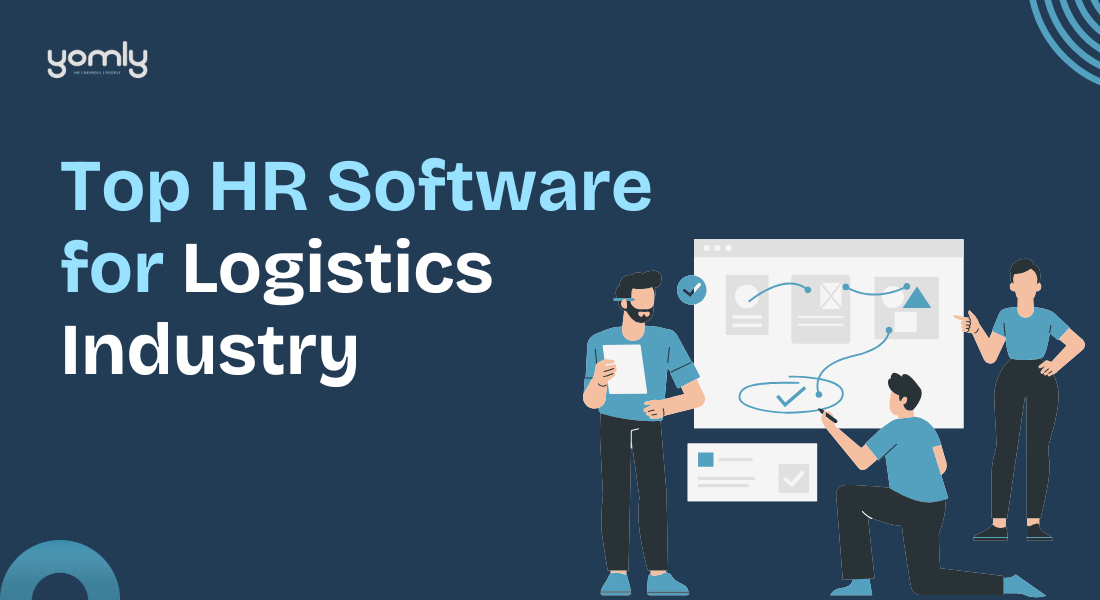
  • Top 7 HR Software for The Logistics Industry

    Top 7 HR Software for The Logistics Industry

    Struggling to manage your growing logistics workforce?

    From tracking attendance to managing payroll and performance, HR operations can get complex fast.

    Modern HR software helps logistics companies save time, reduce errors, and stay compliant while keeping employees engaged.

    In this guide, we share the 7 best HR software for the logistics industry that help you manage attendance, payroll, onboarding, and performance with ease.

    7 Best HR Software for The Logistics Industry

    1. Yomly

    Yomly is a leading HR software for the Logistics Industry, trusted by over 250 enterprise clients across 50+ countries and supporting 60,000+ daily users. It transforms HR for logistics companies and large teams by automating payroll, attendance, onboarding, and performance management with precision and speed. 

    Renowned for its innovation and compliance excellence in the UAE, it simplifies workflows, ensures secure data management, and delivers real-time insights. Its dedicated local support team and multilingual platform empower employees and HR teams alike, making operations smoother, faster, and more efficient. 

    The software truly sets the benchmark for modern HR solutions.

    Core features of Yomly hr software for the logistics industry:

    • Track driver and warehouse staff attendance, shifts, and overtime in real time
    • Automate multi-currency payroll for local and international logistics teams, including allowances and deductions
    • Simplify onboarding for drivers, dispatchers, and warehouse employees with paperless workflows
    • Keep all employee and contractor records secure in one centralized HR system
    • Automate leave and rest-day management for shift-based logistics operations
    • Set clear goals, monitor field and back-office performance, and conduct regular reviews
    • Improve workforce morale with employee surveys and instant feedback tools
    • Manage licenses, compliance documents, and HR files with secure role-based access
    • Enable on-the-go access to HR data and approvals through Yomly’s mobile app
    • Generate real-time workforce analytics and payroll dashboards to support fast operational decisions

    Pricing:

    Yomly offers flexible pricing tailored to each organization’s size and needs. Businesses can request a custom quote to see the exact cost and plan features.

    2. Ensaan HR

    Ensaan Technologies delivers advanced HR software solutions for the logistics industry, serving 200 organizations across GCC, North Africa, and the Indian subcontinent. The software streamlines HR operations by automating payroll, talent management, employee engagement, and learning processes, reducing administrative workload by up to 40%. 

    It has received multiple recognitions for performance management and learning platforms. Their team consults, designs, and implements tailored HR solutions, ensuring compliance, efficiency, and real-time access to employee data. With years of industry experience it enhances HR service delivery for enterprises.

    Core Features of EnsaanHR Software for the Hospitality Industry:

    • Manage employee records securely in one place
    • Automate payroll and attendance tracking
    • Streamline recruitment and onboarding processes
    • Enable self-service for employees and managers
    • Generate reports and analytics quickly
    • Simplify performance and learning management
    • Provide mobile access for HR and employees
    • Reduce manual and repetitive HR tasks

    Pricing:

    The software offers customized pricing based on the size and needs of each organization. Interested businesses can contact their sales team for tailored quotes and detailed solutions.

    3. Easy HR

    EasyHR provides HR software solutions for the logistics industry, supporting many employees across 2,000 organizations. The software manages payroll, attendance, recruitment, and performance, helping reduce HR administrative tasks by 30%. 

    It offers automated workflows, centralized employee data, and reporting tools to support data-driven decisions. It has received recognition for its solutions and maintains a good customer satisfaction rate. 

    With years of experience, the software focuses on streamlining HR processes, improving employee engagement, and supporting compliance, helping logistics organizations operate more efficiently and effectively.

    Core Features of EasyHR Software for the Hospitality Industry:

    • Centralize and manage employee data, profiles, and documents efficiently.
    • Automate salary calculations, tax deductions, and payslip generation.
    • Track attendance, manage leave requests, and generate reports.
    • Streamline hiring, track applicants, and assess candidates easily.
    • Provide a smooth and engaging experience for new hires.
    • Simplify leave tracking and auto-update balances.
    • Set objectives, provide feedback, and track employee performance.
    • Automate reimbursements for faster approvals and settlements.
    • Boost productivity with automated task workflows.
    • Track and maintain assets efficiently for better utilization.
    • Convert data into insights for informed decision-making.

    Pricing:

    The software offers tiered pricing based on the number of employees and required features, allowing businesses to start small and scale up. A one-time setup fee applies, and annual plans may include discounts.

    4. Oracle

    Oracle provides cloud-based HR and enterprise solutions for the logistics and transportation industry. Its HR software supports hiring, onboarding, training, and performance management for employees across global logistics companies. 

    The software has been recognized for Transportation Management Systems for years. Many companies use Oracle to improve workforce efficiency, streamline workflows, and gain real-time insights, leveraging AI-driven tools and scalable cloud technology to support operations and employee management.

    Core Features of Oracle Software for the Hospitality Industry:

    • Streamlines hiring, onboarding, and employee management
    • Automates payroll, attendance, and performance tracking
    • Provides real-time workforce analytics and reporting
    • Enhances employee engagement with self-service tools
    • Supports training, learning, and skill development
    • Integrates HR, finance, and operations for smooth workflows
    • Uses AI and cloud technology to improve decision-making
    • Ensures compliance with labor and industry regulations

    Pricing:

    Oracle offers flexible pricing based on business size, selected modules, and deployment needs. Companies can request a custom quote or demo to explore plans suited to their specific requirements.

    5. SAP

    SAP has years of experience in providing enterprise software solutions and serves customers in 180 countries. The software has been recognized globally for its contributions to digital transformation and cloud innovation. 

    In the logistics sector, it offers HR and logistics management systems designed to streamline workforce operations and improve supply chain efficiency. Its HR software helps logistics companies manage employee information, monitor performance, and ensure compliance. 

    Through AI integration and real-time analytics, this software supports data-driven decision-making, operational transparency, and consistent productivity across logistics processes.

    Core Features of SAP Software for the Hospitality Industry:

    • Simplifies workforce scheduling and attendance tracking for hotel staff
    • Manages payroll, compliance, and employee benefits in one platform
    • Enables real-time performance tracking and staff evaluation
    • Automates onboarding and training for new employees
    • Provides analytics for better staffing and operational planning
    • Integrates with other SAP modules for finance and inventory management
    • Supports multi-location operations with centralized HR control
    • Enhances employee engagement through self-service tools and mobile access

    Pricing:

    SAP offers flexible pricing based on business size, industry needs, and selected modules. Companies can choose from customizable subscription plans with scalable options for cloud and on-premise solutions.

    6. Zimyo

    Zimyo has established itself as an HR software provider in the Middle East, empowering logistics businesses across industries, including logistics. With more than 1 million employees managed through its platform, Zimyo delivers measurable results such as a 70% reduction in payroll processing time and a 3x improvement in workforce efficiency. 

    The software has received recognition for innovation and excellence in digital HR transformation across the MENA region. By integrating AI-driven tools, biometric systems, and real-time tracking, they streamline HR operations, enhance workforce visibility, and support logistics companies in optimizing employee performance and operational accuracy.

    Core Features of Zimyo Software for the Hospitality Industry:

    • Streamlines attendance tracking with biometric and geofencing options
    • Automates payroll processing with error-free calculations
    • Simplifies shift scheduling and overtime management
    • Enables real-time tracking of employee activities and performance
    • Manages employee expenses and reimbursements efficiently
    • Supports smooth onboarding and offboarding processes
    • Provides self-service access for employees to manage their profiles
    • Enhances communication and engagement through centralized HR tools
    • Ensures compliance with regional labor laws and company policies
    • Offers detailed analytics and reports for better decision-making

    Pricing:

    It offers flexible pricing starting at AED 11 per user per month for the Basic plan, with higher tiers for advanced features and enterprise needs. Additional modules like recruitment, timesheets, trips, and learning management are available at separate monthly rates.

    7. Zoho People

    Zoho People serves as an HR software for the logistics industry, supporting many businesses worldwide. The platform automates repetitive HR tasks, including attendance tracking, payroll processing, onboarding, and performance management, reducing errors and saving teams up to 40% of administrative time. 

    Recognized with industry awards for innovation and efficiency, it integrates workflows, checklists, email alerts, and custom functions to streamline HR processes. With years of experience, the software helps logistics companies maintain compliance, improve employee engagement, and enhance operational efficiency through structured, automated, and measurable HR practices.

    Core Features of Zoho People Software for the Hospitality Industry:

    • Automates attendance, leave, and shift management
    • Streamlines onboarding and employee records
    • Simplifies payroll and compensation management
    • Tracks performance and learning progress
    • Manages documents and HR compliance
    • Supports employee engagement and feedback
    • Provides analytics and reports for informed decisions
    • Integrates with recruitment, travel, and expense systems
    • Offers customizable workflows, checklists, and email alerts
    • Enables mobile access and self-service for employees

    Pricing:

    It offers plans starting at ₹48 per user per month, with features scaling from essential HR to advanced analytics and learning management. All plans include a 30-day free trial and support for easy setup and onboarding.

    ???? Further resources

    Final Words

    Ready to take your logistics HR operations to the next level and make work simpler for your team? Choosing the right HR software can transform your business, reduce errors, and boost productivity. 

    Look for solutions that automate payroll, attendance, onboarding, and performance management while providing real-time insights and mobile access. Evaluate your team’s needs, compare features, and consider scalability. 

    Taking action today can streamline your HR processes and make your operations more efficient, productive, and future-ready.

  • Types of Employee Leaves in UAE: A Complete Guide

    Types of Employee Leaves in UAE: A Complete Guide

    As an employer or HR professional, you should have a clear understanding of the different types of employee leaves allowed under UAE Labour Law. 

    The UAE’s leave regulations, governed by MOHRE, ensure that both employee welfare and business operations stay balanced. Managing these leaves accurately is not only a compliance requirement but also a key part of maintaining employee satisfaction and trust.

    At Yomly, we work with leading organizations across the UAE, GCC, and other global markets to simplify leave and payroll management. 

    Our HR and Payroll Software allows companies to automate leave tracking, calculate pay adjustments, and stay fully compliant with the latest UAE Labour Law updates. Our experts have shared their insights in this complete guide, so let us help you understand every leave type and how to manage them efficiently.

    Overview of Leave Entitlements Under UAE Labour Law 

    The UAE Labour Law applies to all private sector employees working in mainland companies and most free zones, except for financial zones such as DIFC and ADGM, which have separate regulations. 

    It covers both full-time and part-time employees, as well as remote and flexible workers, ensuring that every employment relationship is governed by clear legal standards.

    It is important for every employer and HR team to understand these leave entitlements to maintain compliance, prevent disputes, and support employee well-being. Leave policies must be clearly mentioned in employment contracts and managed in line with MOHRE regulations. 

    Let us look at the different types of employee leaves recognized under the UAE Labour Law and how each one is structured for both employers and employees.

    Types of Employee Leaves in the UAE

    Now that you know the basics of leave entitlements under UAE Labour Law, let us explore the different types of employee leaves available and what each one means for both employers and employees.

    Annual Leave

    Annual leave allows employees to take time off for rest and personal needs while maintaining work-life balance. 

    It must be scheduled based on mutual agreement between the employer and employee and recorded in the company’s HR system. Proper leave tracking helps avoid salary miscalculations and disputes.

    • Eligibility: Employees become eligible after completing six months of continuous service.
    • Pay Entitlement: Two days of paid leave per month in the first year and 30 days of full pay for each year of service thereafter.

    Sick Leave

    Sick leave ensures employees have time to recover from illness without losing their jobs. It requires a valid medical certificate approved by a licensed healthcare provider. Employers cannot terminate employees during certified medical leave, ensuring fair protection under the law.

    • Eligibility: Employees must complete a 90-day probation period before being eligible for paid sick leave.
    • Pay Entitlement: First 15 days with full pay, next 30 days with half pay, and up to 45 additional days without pay.

    Maternity Leave

    Maternity leave allows female employees to care for their health and newborns before and after childbirth. The UAE Labour Law supports women’s rights by extending adequate paid time off and protecting them from termination during pregnancy or maternity leave.

    • Eligibility: Available to all female employees, regardless of their duration of service.
    • Pay Entitlement: 60 days of leave with 45 days at full pay and 15 days at half pay. Additional unpaid leave is allowed if medically required.

    Paternity Leave

    Paternity leave helps fathers support their families during childbirth and early parenting. The UAE encourages family-friendly workplaces that value employee well-being and shared responsibilities. This leave can be taken continuously or separately within the defined period.

    • Eligibility: Male employees who become fathers of a newborn within the company’s employment.
    • Pay Entitlement: Five working days of paid leave to be used within six months from the date of the child’s birth.

    Study Leave

    Study leave supports employees who wish to pursue higher education or professional training while continuing their employment. It encourages skill development and aligns with the UAE’s focus on continuous learning. Employees must provide valid proof of exams or course enrollment when applying for this leave.

    • Eligibility: Employees with at least two years of continuous service.
    • Pay Entitlement: Up to 10 working days of paid leave per year.

    Compassionate Leave (Bereavement Leave)

    Compassionate leave allows employees to take time off following the death of a close family member. It ensures employees can manage personal responsibilities and grief without workplace pressure. Employers are required to approve this leave upon receiving proper notification and documentation.

    • Eligibility: All employees, regardless of service duration.
    • Pay Entitlement: Five days of paid leave for the death of a spouse and three days for the death of a parent, sibling, grandparent, or grandchild.

    Hajj Leave

    Hajj leave enables Muslim employees to fulfill their religious obligation to perform the pilgrimage. This leave can only be availed once during employment and must be approved by the employer to avoid operational disruptions.

    • Eligibility: Muslim employees who have completed at least one year of service.
    • Pay Entitlement: Up to 30 days of unpaid leave, granted once during the period of employment.

    Public Holidays

    Employees in the UAE are entitled to official public holidays as declared by the government each year. These holidays apply equally to all private sector workers and help ensure cultural and religious observance.

    • Eligibility: All employees covered under the UAE Labour Law.
    • Pay Entitlement: Full pay for official public holidays. If required to work, employees receive compensatory leave or additional pay as per the law.

    Unpaid Leave

    Unpaid leave may be granted for personal reasons or extended absences that are not covered by other leave categories. Approval is at the employer’s discretion and must be properly documented to ensure payroll accuracy.

    • Eligibility: All employees, subject to employer approval.
    • Pay Entitlement: No pay during the leave period, with salary adjustments made through the company’s payroll system.

    Emergency Leave (at Employer’s Discretion)

    Emergency leave is designed for unforeseen personal situations such as family emergencies or sudden travel needs. It is not a statutory entitlement but a discretionary leave granted by the employer to support genuine cases.

    • Eligibility: All employees, based on the nature of the emergency and company policy.
    • Pay Entitlement: Usually unpaid, unless the employer chooses to offer it as paid leave under internal policy.

    Important Note: These leave types are shared only for informational purposes based on the current UAE Labour Law. Employers should always verify the latest updates from MOHRE or consult legal experts before implementing or updating internal leave policies.

    Leave Encashment and Carry-Forward Rules

    Annual leaves that are unused within a given year can either be carried forward or encashed, depending on the agreement between the employer and employee. The UAE Labour Law requires both options to be clearly stated in the company’s HR policy or employment contract to avoid disputes and payroll errors.

    Here are the calculation and carry-forward rules:

    • Encashment: If annual leave is not used, the employee is entitled to payment in lieu, calculated based on their basic salary for the unused days. Allowances and bonuses are not included in this calculation.
    • Carry-Forward: Unused annual leave can only be carried forward to the next year if both parties agree in writing. It cannot be accumulated indefinitely.
    • Final Settlement: On resignation or termination, employees must be paid for any remaining unused leave days as part of their end-of-service settlement.

    With Yomly’s Payroll Software, employers can automate leave encashment calculations, apply accurate payroll adjustments, and generate MOHRE-compliant reports, ensuring every employee’s entitlement is handled transparently and without manual errors.

    How Yomly Simplifies Leave Management

    Yomly has helped over 500+ SMBs and startups across the UAE and GCC manage employee leaves with complete accuracy and compliance. 

    Here is how Yomly makes leave management simpler, faster, and fully compliant with UAE Labour Law.

    Smart Approvals & Automated Tracking

    Yomly enables customized leave approval workflows based on department, hierarchy, or region. Every leave request automatically updates the employee’s balance in real time, reducing manual tracking and ensuring complete accuracy.

    Seamless Payroll Integration

    Leave data in Yomly is directly integrated with payroll, so deductions, encashments, or unpaid leave adjustments are calculated automatically. This ensures employees receive accurate payouts and HR teams maintain full compliance with UAE Labour Law.

    Employee Self-Service Portal

    Employees can apply for, track, and manage their leave requests through Yomly’s self-service portal. They can view balances, policy details, and approval status instantly, reducing HR workload and improving transparency across the organization.

    Compliance Dashboard for HR Teams

    Yomly’s centralized compliance dashboard allows HR managers to monitor leave usage, track policy adherence, and generate reports for multiple regions. It helps teams maintain MOHRE-compliant records and ensures every leave transaction meets legal and organizational standards.

    Automate Leave Compliance with Confidence

    The UAE’s Labour Law sets clear rules for managing employee leaves, ensuring that both employers and employees operate within a fair and transparent framework. You should understand that this guide is meant for informational purposes only and does not replace official legal advice. If you have specific cases or complex compliance concerns, it is always best to consult legal or MOHRE-approved professionals.

    And if you are looking for a reliable way to automate leave management and payroll processing, Yomly’s Payroll Software is trusted by leading enterprise clients across 50+ countries. Book a free demo to see how powerful our software platform is.

    Over 1 million payslips are processed annually, serving hundreds of thousands of employees through a single, cloud-based platform. Fully integrated and automated with WPS compliance, Yomly helps businesses simplify HR operations, eliminate manual errors, and maintain full legal compliance with every payroll cycle.

  • 7 Best HR Software for the Hospitality Industry (2026)

    7 Best HR Software for the Hospitality Industry (2026)

    Looking to simplify HR tasks in your hotel or restaurant? Managing hiring, payroll, attendance, and performance can get overwhelming, especially with a large, diverse team. 

    The right HR software can save time, reduce errors, and make daily operations smoother. From automating routine tasks to providing real-time insights, these tools help you focus on delivering excellent service while keeping your staff engaged and productive. 

    In this list, we’ve rounded up the 7 top HR solutions that cater specifically to the hospitality industry, helping you find the perfect fit for your business needs.

    Here are the 7 Best HR Software for the Hospitality Industry

    1. Yomly

    Yomly is a leading software in cloud-based HR software for the hospitality industry, trusted by over 250 enterprise clients across 50 countries. With more than 60,000 daily users, the company has transformed how enterprises in the UAE and beyond manage people and payroll processes. 

    Our HR platform simplifies complex HR functions, automating payroll, attendance, onboarding, and compliance with precision and speed. In the hospitality industry, it empowers hotels, resorts, and lifestyle brands to manage large, diverse teams efficiently. 

    Recognized for its innovation and customer-focused approach, the software set new benchmarks in HR excellence, driving productivity and operational success across industries.

    Core Features of Yomly HR Software for the Hospitality Industry:

    • Maintains complete employee records in a secure, centralized system for authorized HR access.
    • Streamlines onboarding and offboarding with digital forms, document uploads, and automated workflows.
    • Automates attendance and leave tracking in line with company policies for real-time accuracy.
    • Enables goal setting, performance reviews, and progress tracking to improve service quality.
    • Stores employee documents and certificates securely with alerts for renewals to ensure compliance.
    • Offers employee self-service for payslips, leave requests, and personal detail updates.
    • Allows HR to customize approval workflows and notifications for specific team needs.
    • Delivers real-time reports and analytics for better workforce insights and decisions.

    Pricing

    The pricing varies based on your organization’s size and needs, so it’s customized for each business. For an accurate quote and personalized guidance, please connect with Yomly’s sales team.

    2. Oracle

    Oracle provides cloud-based HR solutions with operations in 200 countries. The software offers tools that help hospitality businesses manage recruitment, onboarding, payroll, and employee engagement through AI-driven and mobile-enabled systems. 

    It has been recognized for its extensive industry experience and a large client base. Their solutions aim to simplify workforce planning, training, and HR operations. 

    The technology enables hotels to build efficient teams, enhance employee experiences, and maintain consistent service standards across all locations.

    Core Features of Oracle HR Software for the Hospitality Industry:

    • AI-driven screening and automated shortlisting speed up hiring; candidates can self-schedule interviews.
    • Mobile-friendly onboarding workflows let new staff complete paperwork and training anytime.
    • Accurate time tracking applies hotel-specific payroll rules automatically.
    • Flexible scheduling adapts to occupancy levels and seasonal demands.
    • Handles complex payroll across multiple locations and employee types with automated compliance.
    • Employees can update personal info, request leave, and view payslips through self-service.
    • Personalized learning paths support continuous training and skill development.
    • AI chat assistants answer HR questions and manage service requests efficiently.
    • Predictive analytics help forecast staffing needs and optimize workforce planning.
    • Reporting provides insights into performance, retention, and productivity.
    • Personalized communication and engagement programs enhance overall employee experience.

    Pricing

    They offer flexible pricing based on each organization’s size and needs. For exact costs and a tailored solution, customers should contact the sales team.

    3. Ensaan HR

    Ensaan Technologies provides HR software solutions for the hospitality industry, supporting several organizations across the Middle East, Africa, and South Asia. With years of experience, the company implements systems that streamline recruitment, payroll, performance management, and employee engagement. 

    Their solutions support local languages, follow regional regulations, and integrate with existing systems. The software has received recognition for its HCM platform, learning management system, and employee engagement tools. 

    It follows a structured approach by analyzing client needs, aligning HR priorities with technology, and ensuring efficient deployment, ongoing support, and measurable results.

    Core Features of Ensaan HR Software for the Hospitality Industry:

    • Post jobs across multiple platforms, track applicants, schedule interviews, and manage communication for smooth hiring.
    • Centralized employee records for quick access and compliance with hospitality labor standards.
    • Automates payroll, bonuses, and statutory compliance to ensure timely and accurate salary processing.
    • Enables goal-setting, performance tracking, and structured appraisals to support workforce development.
    • Provides training modules and tracks skill development to enhance staff capabilities.
    • Boosts engagement through surveys, feedback, recognition, and internal collaboration tools.
    • Offers detailed HR analytics and dashboards for data-driven decision-making.
    • Allows employees and managers to handle HR tasks easily through a mobile app.
    • Supports local labor laws and bilingual operations (e.g., English and Arabic).
    • Integrates with other HR and business systems for streamlined operations.

    Pricing

    Ensaan HR software offers flexible pricing based on your organization’s size and needs. Contact their sales team for a customized quote.

    4. SAP

    SAP provides HR software solutions tailored for the hospitality industry, supporting hotels, restaurants, and service organizations in managing payroll, time tracking, employee benefits, and other HR processes. The company operates in several countries and serves numerous employees worldwide. 

    They receive positive feedback from customers for their performance and usability. Its platform uses AI-enabled tools to automate workflows, simplify HR tasks, and support compliance.

    Integrating core HR, payroll, and time management helps hospitality organizations improve efficiency and workforce management.

    Core Features of SAP Software for the Hospitality Industry:

    • Centralizes all employee information for easy access and updates.
    • Automates payroll with accurate salary calculations and tax compliance.
    • Tracks attendance, work hours, and shifts in real time.
    • Allows employees to update details, apply for leave, and access HR services on their own.
    • Manages employee benefits while ensuring regulatory compliance.
    • Monitors leaves and absences to support better staffing decisions.
    • Automates HR workflows for faster approvals and task management.
    • Securely stores and manages HR documents digitally.
    • Integrates HR data with finance and operations for smooth workflows.
    • Supports global operations with localized compliance and language options.

    Pricing

    SAP Core HR starts at ₹1,597 per user/month with flexible 1–3 year contracts and core HR features included. Additional HCM modules are priced separately based on business needs, with customized quotes provided by SAP sales.

    5. Zimyo

    Zimyo has established itself as an HR software provider for the hospitality industry, serving several businesses and supporting users across 40 countries. The platform streamlines HR processes, including recruitment, onboarding, attendance tracking, payroll automation, and performance management. 

    Recognized as a reliable Performer in Mid-Market APAC and Easiest Admin by global review platforms, it combines AI-driven automation with mobile-friendly tools to enhance workforce efficiency. 

    By centralizing employee data, generating 100 automated reports, and enabling real-time insights, the company helps hospitality businesses reduce errors, optimize staffing, and maintain compliance across multiple locations.

    Core Features of Zimyo Software for the Hospitality Industry:

    • Centralizes all employee records and HR data in one secure system.
    • Manages staff across multiple hotel or restaurant locations with unified oversight.
    • Tracks attendance via biometrics/mobile and simplifies shift planning.
    • Automates payroll with allowances, deductions, taxes, and ensures legal compliance.
    • Speeds up hiring and onboarding, especially for large or seasonal workforce needs.
    • Supports performance reviews, goal-setting, and continuous feedback.
    • Uses AI to predict staffing needs and optimize workforce planning.
    • Allows employees to access records, payslips, attendance, and requests themselves.
    • Provides real-time reports and analytics for HR, payroll, and compliance decisions.
    • Mobile access for managers and employees to manage tasks anytime, anywhere.

    Pricing

    Their pricing starts from ₹80 to ₹160 per employee/month across Basic, Standard, and Enterprise plans, with minimum billing for up to 50 users and options for advanced HR, payroll, and performance features. Add-ons like ATS, LMS, trip management, and timesheets are available, along with a 14-day free trial and flexible plan upgrades/downgrades.

    6. Zoho People

    Zoho People offers a reliable and easy-to-use HR system used by organizations across many industries. In the hospitality sector, it helps hotels and restaurant groups manage hiring, onboarding, attendance, shift schedules, and payroll within one connected platform. 

    The system supports reducing manual work, improving accuracy, and staying organized during fast-paced operations. It also allows staff and managers to access information and complete tasks through the web and mobile, making daily work smoother.

    It refines its features and maintains a secure environment to support efficient and consistent HR processes.

    Core Features of Zoho People Software for the Hospitality Industry:

    • Simplifies hiring and onboarding for quick staff placement
    • Manages attendance, shifts, and time-off with ease
    • Automates payroll and expense tracking for accuracy
    • Stores employee records and documents securely in one place
    • Enables performance reviews and training management
    • Supports mobile access for staff on the go
    • Generates HR reports for better planning and insights
    • Ensures compliance with industry standards and labor laws

    Pricing

    Zoho People offers tiered HR plans starting from basic to enterprise levels, with prices ranging from ₹48 to ₹192 per user per month. It includes a free plan for up to five users and a 30-day free trial with no contracts or hidden charges.

    7. Easy HR

    EasyHR has established itself as an HR software provider with many users and several businesses across multiple industries. The software manages a number of employees globally and maintains a 98% customer satisfaction rate. 

    Its solutions simplify complex HR tasks such as payroll, attendance, onboarding, and performance management. In the hospitality industry, it helps hotels and restaurants streamline workforce operations, reduce administrative work by 30%, and ensure accurate payroll and compliance. 

    Recognized for its innovation and reliability, it enhances employee management through automation, data accuracy, and seamless integration across HR functions.

    Core Features of Easy HR Software for the Hospitality Industry:

    • Manages employee data, profiles, and documents in one secure platform.
    • Tracks attendance with biometric or mobile check-ins and automates shift planning.
    • Automates payroll with accurate salary, tax, and service charge calculations.
    • Handles leave requests and approvals efficiently to maintain proper staffing.
    • Streamlines onboarding and training for faster employee integration.
    • Monitors performance to improve staff productivity and guest satisfaction.
    • Simplifies expense claims and reimbursements with quick approvals.
    • Offers mobile access for attendance, schedules, and payslips on the go.
    • Maintains compliance with labor laws and hospitality industry regulations.

    Pricing

    The software provides tiered pricing plans that grow with your business needs. Each plan includes essential HR features, with advanced options available for larger teams.

    Final Words

    Ready to take your HR management to the next level? Choosing the right HR software can completely transform how your hospitality business runs, from hiring and onboarding to payroll and performance tracking. 

    The key is to pick a solution that fits your team size, budget, and goals while ensuring smooth operations across locations. Explore these top platforms, compare their features, and start a free trial to see which one aligns best with your business.

  • Best HR Software For Singapore (2026 Updated)

    Best HR Software For Singapore (2026 Updated)

    Managing people in a company takes a lot of work, especially in Singapore, where businesses must follow strict rules for CPF and MOM compliance. HR teams handle payroll, leave, and employee records every day, and doing these tasks manually can waste time and cause errors.

    Modern HR software makes this process easier by automating payroll, tracking attendance, and managing employee data in one place. These tools help companies save time, stay compliant, and keep employees happy. 

    In this listicle roundup, you will discover the top 10 best HR software for Singapore that help businesses work smarter and grow faster.

    1. Yomly

    Yomly is an enterprise-grade HR and payroll software platform built for organizations with more than 250 employees. Yomly has grown from its origins as EmiratesHR into one of the most trusted HRMS solutions across the GCC, MENA, and Asia-Pacific regions. 

    Yomly has its headquarters in Dubai with offices in Riyadh and Doha, and supports over 200 enterprise clients in 50+ countries, helping more than 60,000 employees manage payroll, leave, and performance every day.

    Large businesses in Singapore rely on Yomly to manage complex workforce structures, ensure CPF and MOM compliance, and maintain smooth payroll operations across multiple entities. 

    Yomly’s HR software streamlines HR workflows, automates payroll calculations, and centralizes employee data in one secure, cloud-based system. 

    With localized compliance support and mobile access, HR teams gain the flexibility to manage regional operations while maintaining full visibility and control.

    Why enterprises in Singapore Choose Yomly:

    • Enterprise-Focused HR Platform: Designed for organizations with 250+ employees that require scalability, accuracy, and multi-department coordination.
    • Built-In CPF and MOM Compliance: Automate statutory deductions, CPF submissions, and payroll filings with complete regulatory alignment.
    • Multi-Country and Multi-Currency Payroll: Handle payroll across Singapore and regional branches with ease, ensuring consistency and transparency.
    • Advanced Shift and Attendance Management: Schedule shifts, monitor working hours, and automatically calculate overtime.
    • Employee Self-Service via Mobile App: Empower staff to manage requests, download payslips, and update records on the go.
    • Performance Management and KPIs: Track employee progress, review goals, and link performance to rewards and development.
    • Data Privacy and Security: Protect sensitive HR information with ISO- and GDPR-compliant hosting and PDPA-aligned security measures.
    • Actionable Analytics and Reports: Gain insights into payroll, headcount, and compliance metrics through real-time dashboards.

    Pricing:

    Yomly provides custom pricing for organisations with more than 250 employees based on selected modules and deployment scale. 

    ???? Enterprises can book a free Yomly demo to explore customized HR solutions.

    2. Adaptivepay

    Adaptive Pay is a cloud-based HR and payroll management software developed in Singapore. The platform helps businesses manage payroll, attendance, leave, claims, and appraisals in one integrated system. It complies fully with IRAS, MOM, and CPF standards, enabling HR teams to run accurate payroll and generate bank files in seconds.

    The software offers high flexibility and customization options, making it suitable for companies that need to tailor workflows, policies, and approval hierarchies to their operations. All modules, including payroll, leave, claims, and appraisals, connect seamlessly, so HR teams can eliminate redundant data entry and ensure consistency across every function.

    Key Features:

    • Payroll automation compliant with IRAS, MOM, and CPF guidelines
    • Customizable leave, claim, and appraisal modules
    • Integrated attendance tracking with GPS, selfie, and facial recognition options
    • Configurable shift and overtime management
    • Secure mobile app for employee access
    • Fixed subscription pricing with no hidden fees
    • Integration with QuickBooks, Xero, and NetSuite for accounting workflows

    Pricing:

    Adaptive Pay offers transparent, fixed-rate pricing with no annual fee increases. SMEs can also receive up to 50% PSG funding support under the IMDA SMEs Go Digital programme.

    3. Info-Tech

    Info-Tech is a Singapore-based cloud HRMS software designed to help organizations manage payroll, time attendance, leave, claims, and appraisals through one integrated platform. With over 17 years of experience and a strong local presence, the system supports seamless operations for businesses of all sizes, from SMEs to enterprises.

    The platform ensures compliance with CPF, MOM, and IRAS requirements while providing end-to-end automation for HR and payroll processes. HR teams can generate CPF submissions, itemized payslips, and IRAS reports directly from the dashboard. 

    Employees use the mobile app to clock in via GPS or facial recognition, apply for leave, and submit claims. The system also includes project costing, performance appraisals, and grievance management tools for complete workforce oversight.

    Key Features:

    • CPF, IRAS, and MOM-compliant payroll automation
    • Mobile attendance tracking with GPS and face recognition
    • Leave, claim, and performance appraisal management
    • Asset tracking, onboarding, and training modules
    • Organization charts and internal communication tools
    • Integration with accounting and project costing systems

    Pricing:

    Info-Tech offers subscription-based packages with up to 50% Productivity Solutions Grant (PSG) support under the IMDA SMEs Go Digital programme for eligible Singapore businesses.

    4. Voyon Folks

    Voyon Folks delivers a cloud-based HRMS platform that uses AI to simplify workforce, payroll, and performance management for enterprises in Singapore. The system helps HR teams automate routine processes, make faster data-driven decisions, and stay compliant with CPF and MOM regulations.

    The software applies artificial intelligence to improve recruitment, scheduling, and productivity tracking. HR teams use their AI-powered Applicant Tracking System (ATS) to screen candidates, onboard new hires, and track performance more efficiently. The platform captures attendance through mobile and biometric systems while automatically calculating payroll and benefits. Managers access real-time workforce analytics to measure engagement, productivity, and compliance.

    Key Features:

    • AI-based recruitment and onboarding automation
    • Payroll processing compliant with CPF and MOM rules
    • Attendance tracking with biometric and GPS options
    • Workforce analytics and productivity insights
    • Performance and learning management tools
    • Employee self-service mobile app
    • Integration with accounting and ERP systems

    Pricing:

    Voyon Folks provides modular pricing based on organization size and required features. Businesses can request a custom quote directly from the vendor.

    5. The Access Group

    The Access Group offers a comprehensive HR and payroll management suite that helps organizations in Singapore enhance workforce engagement, streamline payroll operations, and support hybrid work environments. The company combines its core products, i.e., Access PeopleHR, Access EasyPay, and Access HRIS, to create a unified solution for end-to-end HR management.

    The system enables HR teams to manage recruitment, onboarding, payroll, and performance in a single centralized dashboard. Access EasyPay automates payroll processing while ensuring full compliance with CPF and MOM requirements across Southeast Asia. Employees can use the Employee Self-Service (ESS) portal to apply for leave, access payslips, and update personal information securely. Managers gain access to real-time analytics for workforce planning and performance tracking.

    Key Features:

    • All-in-one HR, payroll, and workforce management suite
    • Compliant payroll processing across Singapore and regional markets
    • Automated recruitment and onboarding workflows
    • Performance and employee recognition tools
    • Real-time analytics and payroll reporting
    • Mobile and self-service access for hybrid teams
    • Integration with time, attendance, and workspace solutions

    Pricing:

    The Access Group provides customized pricing based on organizational size, regional deployment, and selected modules. Businesses can book a demo or request a customized quote.

    6. QuickHR

    QuickHR is a comprehensive cloud-based HR software developed in Singapore that manages payroll, leave, claims, and employee data on a single unified platform. The system supports CPF, IRAS, and MOM compliance, helping HR teams automate recurring tasks and minimize manual errors.

    HR professionals use QuickHR to process payroll, manage shifts, and track attendance in real time. The platform seamlessly integrates with accounting tools such as QuickBooks and Xero, ensuring a smooth flow of data between HR and finance systems. QuickHR also includes performance appraisals, an applicant tracking system, and a learning management module to support end-to-end employee lifecycle management.

    Key Features:

    • Automated payroll with CPF, IRAS, and MOM compliance
    • Attendance and shift scheduling with biometric options
    • Leave and claims management with approval workflows
    • Applicant tracking and onboarding tools
    • Performance appraisal and learning management modules
    • Integration with QuickBooks and Xero
    • Real-time analytics and customizable reports

    Pricing:

    QuickHR offers tiered plans starting from $5 per employee per month, eligible for up to 70% funding under the CTC Grant, and includes a 14-day free trial with no commitment.

    7. Payboy

    Payboy is a modern HR and payroll software platform that simplifies core HR functions for growing businesses. The system automates payroll, leave, claims, time attendance, and shift scheduling in one connected dashboard. HR teams use Payboy to save time on repetitive administrative tasks and ensure full compliance with CPF and MOM requirements.

    It provides an intuitive interface for both employees and managers. Staff can check payslips, submit claims, and apply for leave using the mobile app, while HR professionals gain real-time insights into workforce activity. Payboy also integrates seamlessly with Xero, Financio, and other accounting platforms to support efficient financial reconciliation and reporting.

    Key Features:

    • Automated payroll processing with CPF and MOM compliance
    • Digital leave, claims, and attendance management
    • Smart shift scheduling and roster planning
    • Employee self-service mobile access
    • Integration with accounting tools like Xero and Financio
    • Role-based data access and secure storage

    Pricing:

    Payboy offers flexible plans starting from $3 per employee per month, with up to 50% PSG funding and 90% salary support under the Career Conversion Programme.

    8. Darwinbox

    Darwinbox is a mobile-first HCM platform built for large enterprises with 200+ employees seeking to modernize HR operations. The platform unifies payroll, performance, and workforce management into a single AI-powered system that helps businesses in Singapore automate workflows, improve employee engagement, and stay compliant with CPF and MOM regulations.

    HR leaders use Darwinbox to manage complex, multi-department teams across hybrid and global setups. The system provides real-time insights into workforce trends, automates repetitive HR tasks, and simplifies compliance tracking. Employees can clock in with facial recognition or geotagging, view payslips, and receive instant feedback through the mobile app. Its open APIs also allow seamless integration with existing ERP, finance, and communication tools.

    Key Features:

    • Mobile-first HRMS built for enterprises with 200+ employees
    • Payroll, attendance, and leave automation with CPF and MOM compliance
    • AI-driven recruitment, appraisals, and feedback management
    • Real-time analytics and workforce dashboards
    • Geotagged and biometric attendance tracking
    • Integration-ready with ERP and productivity tools
    • Data security aligned with global standards (ISO & GDPR)

    Pricing:

    Darwinbox provides custom enterprise pricing based on workforce size, deployment needs, and selected modules.

    9. HReasily

    HReasily is a cloud-based HR and payroll software that helps businesses in Singapore automate daily HR tasks with accuracy and compliance. The platform manages payroll, leave, claims, attendance, and scheduling through one integrated dashboard. It also supports CPF and MOM compliance, ensuring businesses stay aligned with Singapore’s employment regulations.

    HR teams use HReasily to streamline payroll runs, manage shifts with facial recognition attendance, and process claims digitally. Employees can apply for leave, view payslips, and clock in or out through the mobile app. The platform integrates smoothly with accounting systems and biometric devices, reducing administrative overhead while improving data accuracy.

    Key Features:

    • Automated payroll and CPF submissions
    • Digital leave and claims management
    • Attendance tracking with facial recognition
    • Shift scheduling and real-time notifications
    • Employee self-service mobile app
    • Integration with accounting and biometric tools
    • Cloud access across multiple countries

    Pricing:

    HReasily offers modular plans starting at S$1.50 per module and a full HR suite from S$10 per employee per month, with customizable packages and PSG grant support available for eligible Singapore businesses.

    10. uKnowva

    uKnowva is a versatile cloud HRMS that helps Singapore organisations automate HR tasks from recruitment to offboarding. The platform centralises employee records, leave and attendance, payroll, performance, and timesheets into a single portal so HR teams spend less time on admin and more on strategy.

    uKnowva uses AI and workflow automation to cut repetitive tasks, surface actionable insights, and streamline approval flows across departments.

    HR managers use the system to configure custom fields, automate probation and exit processes, and run project-based timesheets with integrated calendars. Employees access payslips, apply for leave, and raise helpdesk tickets through the mobile-friendly interface.

    The platform supports biometric and geotagged attendance, document repositories, asset tracking, and a modular app store for extensions and third-party integrations.

    Key Features:

    • Core HR, payroll, and expenses management
    • Recruitment, onboarding, and automated workflows
    • Attendance with virtual/biometric punch-in and geotagging
    • Performance management, appraisals and continuous feedback
    • Projects, timesheets and customised calendars
    • Advanced document repository and asset management
    • API integrations and modular extensions

    Pricing: 

    uKnowva provides custom pricing based on deployment size and selected modules; contact sales for a customized quote.

    Final Words

    Choosing the right HR software helps Singapore businesses save time, reduce errors, and stay compliant with CPF and MOM rules. Whether you run a small company or a large enterprise, these tools simplify payroll, leave, and attendance management while improving employee experience. 

    The best HR system is one that fits your team’s size, goals, and budget. By adopting smart HR software, you can focus less on paperwork and more on building a productive, motivated, and future-ready workforce.

  • 50+ Interesting Employee Recognition Statistics 2026

    50+ Interesting Employee Recognition Statistics 2026

    Employee recognition means noticing and appreciating the efforts of team members.

    It helps people feel valued and motivated to do their best work. When employees know their hard work matters, they stay longer, perform better, and feel happier at work.

    In this report, we have curated insights from trusted sources and our extensive research to share the most updated employee recognition statistics for 2026.

    The data shows how a strong recognition culture can enhance performance, reduce turnover, prevent employee burnout and create a positive and motivated work environment for all.

    All source URLs are listed at the end of the article.

    The Power of Employee Recognition on Engagement and Performance

    When employees feel appreciated, their motivation and confidence increase. Recognition helps them stay focused and take pride in their work. It also improves team spirit and builds a stronger connection between employees and company goals. Organizations that value recognition often see better performance and higher engagement among their teams.

    • Recognized employees are seven times more likely to be fully engaged in their work compared to those who receive little or no recognition.
    • Companies with strong recognition programs experience a 31% lower voluntary turnover rate, which means more people choose to stay with them longer.
    • A well-designed recognition program can lead to an 11.1% rise in employee performance, showing how appreciation can directly improve results.
    • Employee recognition can increase productivity by 17%, especially when workers feel their efforts are valued.
    • When recognition is done correctly, employees are 5 times more likely to feel connected to the company’s culture.
    • Non-financial rewards such as verbal praise or kind gestures make up 55% of what drives engagement, proving that small actions can have a big impact.
    • Meeting even one important standard of strategic recognition can make employees 2.9 times more engaged, while meeting several can make them nine times more engaged.

    Recognition and Retention: Building Loyal Workforces

    When employees feel recognized, they develop a stronger bond with their workplace. Recognition makes people feel valued, which encourages them to stay longer and put in their best effort. A culture of appreciation helps companies reduce turnover, boost loyalty, and create a happier work environment.

    • 91% of employees say recognition motivates them to work harder and give their best every day.
    • 66% of employees would leave their jobs if they did not feel appreciated, showing how recognition directly affects retention.
    • Employees who do not feel recognized are two times more likely to quit within a year than those who feel appreciated.
    • 79% of employees say that receiving more recognition would make them more loyal to their employer.
    • According to research, 53% of employees would stay longer at their company if they felt appreciated by their boss.
    • Small businesses that practice regular recognition see 18% lower turnover and 20% higher engagement.
    • Medium-sized companies with formal recognition programs have a 25% improvement in employee retention.
    • Large organizations with structured recognition systems experience a 28% drop in absenteeism, proving the long-term impact of appreciation on attendance and morale.

    Recognition Preferences and Frequency

    Every employee values recognition differently. Some prefer simple words of thanks, while others enjoy growth opportunities or team celebrations. Understanding how and when to recognize employees helps leaders make appreciation more meaningful and personal, which leads to better engagement and satisfaction.

    • 75% of employees report higher job satisfaction when they are recognized at least once a month, even through small gestures.
    • 65% of employees prefer non-monetary rewards, such as a kind note, public praise, or a verbal thank you.
    • A Deloitte study found that 75% of employees feel happy with a simple “thank you” for their daily efforts.
    • 54% of employees prefer verbal recognition for everyday work, while 47% like career growth or learning opportunities for big achievements.
    • 36% of women prefer written appreciation such as a thank-you message or personalized note.
    • Peer recognition improves team performance by 14%, as employees often value appreciation from coworkers.
    • Peer-to-peer praise contributes 35% more to financial growth than recognition given only by managers.
    • Only 2% of employees receive daily recognition, and 11% receive it weekly, showing that most workplaces still lack regular appreciation.

    Recognition Across Generations, Gender, and Work Models

    Different groups of employees value recognition in unique ways. Age, gender, and work setup all influence how people like to be appreciated. Understanding these differences helps leaders design fair and inclusive recognition programs that make everyone feel valued, whether they work in the office or remotely.

    • 94% of Gen Z employees want frequent feedback and recognition, while only 68% of Boomers feel the same need.
    • 78% of Millennials prefer experience-based rewards like team outings or trips, compared to 30% of Boomers who prefer material gifts.
    • 53% of men receive weekly recognition from their managers, but only 41% of women do.
    • 37% of men receive daily recognition from peers, while just 26% of women experience this level of appreciation.
    • 82% of remote workers say they feel unrecognized by their employers, showing that distance often limits appreciation.
    • Virtual recognition programs can increase engagement by 30% among remote and hybrid employees.
    • Only 31% of remote or hybrid companies have formal recognition systems in place, meaning most still rely on informal gestures.
    • 43% of remote mothers feel overlooked for promotions and growth opportunities, highlighting the need for fair recognition in flexible work setups.

    Challenges in Recognition Programs

    Even though most leaders agree that recognition is important, many still find it hard to do it regularly. Busy schedules, lack of tools, and limited awareness often stop managers from building a culture of appreciation. Solving these issues can make recognition a natural part of everyday work.

    • Many employees say they do not have enough time to appreciate others at work, and 31% list this as the main reason recognition is missed.
    • A lack of proper tools or clear steps to recognize others makes it difficult for one in five employees, 20% to express appreciation.
    • Some workers simply forget to give recognition, with 18% admitting they rarely think about it during their routine.
    • Recognition is not always supported from the top. Around 8% of employees say their company culture does not encourage or reward appreciation.
    • Others lack confidence, as 5% of employees are unsure how to recognize a colleague in a meaningful or professional way.

    Technology, AI, and Data-Driven Recognition

    Digital tools are changing how companies recognize their employees. Modern HR platforms make it easier to track achievements, share appreciation instantly, and use data to improve employee engagement. However, as AI becomes part of recognition systems, many employees still prefer human connection and sincerity in appreciation.

    • HR leaders are using recognition tools to learn from data. About 65% of them rely on insights from these platforms to plan training and development programs.
    • Many employees still doubt the role of technology in appreciation. Around 53% believe AI cannot provide meaningful recognition like a human can.
    • A large share, 67% of employees, say they can easily tell the difference between an AI-written message and one written by a person.
    • Bigger organizations lead in digital recognition. Nearly 80% of large companies now use enterprise-wide systems to celebrate employee success and improve engagement.

    Recognition by Company Size and Global Insights

    Recognition practices differ by company size and culture. Small businesses often use personal and verbal praise, while larger organizations rely on structured systems and digital platforms. Around the world, many employees still feel under-recognized, showing that appreciation remains an area where most workplaces can grow.

    • In small businesses, 78% of managers use verbal or informal recognition to motivate their teams.
    • Mid-sized companies often focus on teamwork. About 72% use group awards to celebrate team success and build collaboration.
    • Large organizations see strong results from structure. Those with formal programs report a 22% boost in productivity and a 28% drop in absenteeism.
    • In the United States, 60% of employees feel meaningfully recognized at work, compared to a global average of 52%.
    • Recognition frequency does not always mean quality. For example, 52% of Australian employees are recognized monthly, but only 15% feel that recognition is meaningful.
    • Around 60% of Australian employees believe recognition helps build a strong company culture.
    • In Singapore, 32% of employees say they consider leaving their job because they do not feel valued or recognized.
    • Across all organizations, only 52.6% have a formal recognition program in place.
    • The difference such programs make is clear, 92% of employees in companies with recognition programs feel valued, compared to 70% in companies without one.

    Final Words

    Employee recognition is one of the simplest and most effective ways to build a strong workplace culture. When leaders take time to notice effort and celebrate achievements, employees feel respected and motivated to give their best.

    Recognition does more than just make people happy. It reduces turnover, improves teamwork, and helps companies reach their goals faster. The data clearly shows that appreciation, when done regularly and sincerely, creates loyal and high-performing teams.

    As workplaces continue to evolve, HR leaders and business heads should make recognition a daily habit. Whether through a kind word, a team award, or a digital platform, showing genuine appreciation can turn good employees into long-term contributors and brand ambassadors.

    Data Sources

    FAQs

    How does employee recognition affect engagement and performance?

    Recognition directly improves engagement and performance. Appreciated employees are seven times more likely to be engaged and 17% more productive. When workers feel valued, they show stronger commitment, teamwork, and confidence, helping organizations achieve better overall results.

    What impact does recognition have on employee retention?

    Recognition helps employees stay longer. About 66% of workers say they would leave if they don’t feel appreciated, while recognition programs reduce turnover by 31%. A culture of appreciation builds loyalty, reduces absenteeism, and strengthens long-term relationships between employees and employers.

    What types of employee recognition work best?

    Non-monetary recognition works best for most employees. Simple actions like verbal praise, thank-you notes, or public appreciation build stronger engagement. Around 65% of employees prefer meaningful gestures over money, and 75% feel happiest when recognized at least once a month.

    How do recognition preferences differ by generation?

    Generations value recognition differently. Gen Z and Millennials prefer frequent feedback and experience-based rewards, while Boomers appreciate material gifts or formal praise. Understanding generational preferences helps companies design recognition programs that feel personal, inclusive, and effective across all age groups.

    How can technology improve employee recognition?

    Technology helps automate and personalize recognition. HR platforms and AI tools make it easier to track achievements, share instant praise, and measure engagement impact. However, 53% of employees still believe that human-led appreciation feels more genuine than AI-generated messages.

    What are the main challenges in employee recognition programs?

    Common challenges include lack of time, unclear processes, and limited support from leadership. Around 31% of employees say they’re too busy to recognize others, and 20% lack the right tools. Building awareness and using digital systems can solve these gaps.