Author: Lee Bowen

  • Workplace Mental Health Statistics For 2026: Key Data & Trends

    Workplace Mental Health Statistics For 2026: Key Data & Trends

    Workplace mental health has become a serious global concern. Many employees continue to face stress, burnout, and emotional challenges at work. 

    Companies are investing more in mental wellbeing, yet the gap between support and actual need remains wide. 

    In this report, we have curated insights from trusted sources and our extensive research to present the most up-to-date statistics on workplace mental health in 2026. 

    The data highlights how mental health affects employees, productivity, and workplace culture worldwide. 

    Each section helps employers and HR teams understand current trends and take meaningful action to support their workforce.

    Access all source URLs at the bottom of the article.

    Key Takeaways: Workplace Mental Health 2026

    1. 84% of employees faced at least one mental health challenge in the past year, including stress, burnout, or low motivation.
    2. 14.7% workers experience a mental health problem while at work, making it one of the most common workplace issues globally.
    3. 63% of UK employees now show signs of burnout, up from 51% two years ago — showing how fast exhaustion is spreading.
    4. 81% of organizations have increased their focus on mental wellbeing since the pandemic, but support gaps still remain wide.
    5. Poor mental health costs employers £56 billion per year in the UK — a 25% rise since 2019.
    6. 69% of employees say their manager has the biggest impact on their mental health, more than company policies or pay.
    7. Globally, $1 trillion is lost each year due to mental health-related productivity loss and staff turnover.
    8. Happy employees are 13% more productive, proving that mental wellbeing directly drives performance and retention.

    How Common Are Mental Health Challenges in Today’s Workplaces?

    Mental health concerns are now common in every kind of workplace. Stress, anxiety, and emotional struggles are affecting how people work and how businesses perform. These numbers give a clear view of the current situation around the world.

    • Around 1 in 6 employees (14.7%) experience mental health problems in the workplace, showing that emotional health issues have become a normal part of working life.
    • About 84% of workers have faced at least one mental health challenge in the last year, including stress, low motivation, or burnout.
    • Nearly 71% of working adults have shown at least one symptom of stress, such as lack of focus, fatigue, or trouble sleeping.
    • In 2024, 75% of U.S. workers reported experiencing mental health challenges like anxiety, depression, or grief at least sometimes during the year.
    • Mental ill health has now become the most common reason for limited work performance among employees aged 44 years and younger.

    How Companies Are Shifting Their Approach to Employee Wellbeing

    Many employers have started to take mental health more seriously, especially after the pandemic. These statistics show how organizations are changing their approach and what progress has been made in recent years.

    • Since the pandemic, 81% of workplaces have improved their focus on employee mental health and wellbeing, showing a clear shift toward awareness.
    • A growing number of organizations now include mental health in their employee benefits. In 2024, 90% of employers offered mental health coverage, compared to 84% in 2019.
    • Research shows that initiatives promoting mental health can bring a return on investment of up to 800%, mainly due to better productivity, fewer absences, and lower employee turnover.

    Good Mental Health Drives Productivity and Performance

    Employee wellbeing and productivity are closely connected. When mental health declines, performance, creativity, and focus also fall. These data points show how supporting mental health can directly improve work outcomes.

    • Happy employees are 13% more productive, showing that positive mental health leads to better focus and results.
    • Companies that build a culture of mental health awareness experience a 20% rise in employee retention, proving that care and support keep employees motivated and loyal.
    • About 52% of employees say they feel more engaged and productive when their organization offers access to counselling or wellness programs.
    • Around 47% of employees work even when they are mentally unwell, a behavior known as presenteeism, which reduces performance and overall output.

    Hidden Cost of Poor Mental Health on Businesses

    Poor mental health doesn’t just affect individuals—it also creates major financial losses for organizations and the global economy. The data below highlights the scale of the economic impact and why mental wellbeing is a business priority.

    • Poor workplace mental health costs UK employers about £56 billion each year, showing a 25% increase since 2019 as stress and burnout rates continue to rise.
    • Globally, mental health issues cost the economy around $1 trillion every year, mainly through lost productivity and staff turnover.
    • The cost of staff turnover caused by poor mental health has gone up by 150% in the last three years, making it one of the fastest-growing business expenses.
    • Around 17 million working days are lost each year due to stress, depression, or anxiety, showing how poor mental wellbeing directly affects output.

    How Stress and Burnout Are Increasing Employee Absences

    Mental health challenges are one of the main causes of employee absence worldwide. The data below shows how stress and emotional fatigue lead to more sick days and long-term leave, affecting both productivity and team stability.

    • By early 2024, 11% of all leaves of absence were due to mental health reasons, showing a 22% increase compared to the previous year.
    • On average, employees take 18 days off each year to deal with mental health issues such as stress, depression, or anxiety, more than they take for physical illnesses.
    • Around 50% of long-term sick leave cases are linked to stress, depression, or anxiety, making these conditions the top reason for extended absence.

    Do Employees Feel Supported with Mental Health at Work?

    How employees view their company’s mental health efforts says a lot about workplace culture. The following statistics reveal how supported, safe, and open employees feel when it comes to discussing and managing their mental wellbeing.

    • Around 1 in 3 employees believe that mental health support in their workplace is inadequate and want more active help from their employer.
    • 52% of employees say they do not get enough support for their mental wellbeing from their organization.
    • About 45% of employees feel uncomfortable talking about mental health issues with their manager because they fear negative reactions or judgement.
    • Just 38% of employees use the mental health services offered by their employer, which suggests a lack of trust or awareness.
    • Nearly 47% of employees say an open and regular dialogue about mental health at work would help improve their wellbeing and overall engagement.

    Leadership Style Affects Employee Mental Health

    Managers and senior leaders have the strongest impact on how employees feel at work. Their empathy, communication, and support often decide whether employees feel valued or stressed. These numbers show how leadership behaviour shapes workplace mental health.

    • Around 69% of employees say their manager has the greatest influence on their mental health, showing that leadership plays a bigger role than company policy alone.
    • 61% of employees working under empathetic leaders report being more innovative and creative, showing that supportive management improves performance.
    • 76% of employees with understanding managers say they feel consistently engaged and motivated at work.
    • Addressing the critical skills gap in workplace mental health training is essential, only 38% of HR professionals believe their line managers are properly equipped for sensitive mental health conversations.

    Why Many Employees Quit Due to Mental Health Struggles

    Mental health has become one of the biggest reasons employees leave their jobs. High stress, burnout, and lack of support are driving skilled professionals to seek healthier workplaces. These figures show the strong link between wellbeing and staff retention.

    • Around 61% of UK employees who quit their job in the past year said that poor mental health was one of the main reasons for leaving.
    • 50% of full-time employees have left a role at some point because of stress, burnout, or other mental health challenges.
    • Among younger workers, 68% of millennials and 81% of Gen Z employees have left a job for mental health-related reasons.
    • Each year, about 300,000 people with mental health issues lose their jobs — a number higher than those who leave work due to physical health problems.
    • Employees aged 18 to 29 are more likely to quit due to poor mental wellbeing compared to older workers, showing that younger generations now value mental health more in career choices.

    Demographic Insights

    Mental health challenges affect people differently based on gender, background, and identity. Understanding these differences helps HR leaders create more inclusive and supportive wellbeing strategies for all employees.

    Gender

    • Women working full-time are almost twice as likely to face mental health problems as men, showing a significant gender gap in workplace stress.
    • Around 75% of women report experiencing burnout, compared to 58% of men, highlighting the need for better workload balance and gender-specific wellbeing support.
    • In early 2024, women accounted for 71% of all mental health-related leaves, showing that female employees are more likely to reach burnout faster.

    Ethnicity and Diversity

    • About 35% of employees say they have faced stigma or discrimination at work due to poor mental health support.
    • The pandemic had a stronger effect on ethnic minority employees, leading to 35% higher turnover compared to 26% among white employees.
    • Around 30% of LGBTQ+ employees say they feel extremely stressed on a daily basis, much higher than the general workforce average.
    • 60% of LGBTQ+ workers say mental health support initiatives are “highly valuable” to them, showing how important inclusive programs are in improving trust and engagement.

    Industry-Specific Insights

    Different industries experience mental health challenges in unique ways. Long hours, client pressure, and cultural barriers affect employees differently depending on the sector. These insights help employers identify where the need for mental well-being support is highest.

    • In the UK tech industry, around 54% of employees now work more on weekends and evenings than before COVID-19, making it harder to maintain work-life balance.
    • In construction and engineering, nearly 45% of workers take time off because of poor mental health, showing how physically demanding jobs also carry emotional strain.
    • About 30% of these industry employees use their annual leave to avoid questions about their mental health, highlighting how stigma remains strong.
    • In the finance sector, 86% of organizations saw a clear increase in employee demand for mental health support after the pandemic, the highest among all industries surveyed.
    • Among employees in small companies (10–100 people), 64% feel guilty about taking annual leave, showing that workplace culture can discourage rest even in smaller teams.
    • Around 46% of employees in small firms worry that taking time off might make them appear less hardworking, while this concern rises to 52% in larger organizations.

    Burnout and Work-Life Balance

    Burnout has become one of the most visible signs of poor workplace mental health. Long hours, digital overload, and blurred boundaries between work and home are making it harder for employees to recover and stay motivated.

    • Around 63% of UK employees now show clear signs of burnout, such as exhaustion, loss of focus, or detachment — up from 51% two years ago.
    • About 57% of employees experience moderate levels of burnout, affecting their mood, performance, and concentration.
    • More than 1 in 4 employees say they are unable to relax or switch off after work, showing how personal time is shrinking for many workers.
    • In London, 51% of employees work on weekends which is 11% higher than the national average — proving how constant pressure affects big-city workers.
    • Around 95% of employees say it is important to work for organizations that respect work-life boundaries, showing that balance is now a top priority for job satisfaction.

    Financial Stress, Toxic Work Culture, and Job Fears: The Big Triggers

    Outside factors like financial stress, toxic work culture, and job insecurity are among the main triggers of poor mental health. These statistics help employers understand what is driving anxiety and dissatisfaction in the workplace.

    • Financial pressure is now the top external stressor, affecting 41% of employees, up from 37% in the previous year.
    • Around 52% of employees say money worries have negatively affected their job performance, while 45% say financial stress has disrupted their sleep.
    • Among those facing financial difficulties, 80% report feeling anxious or depressed at least once a week, showing a direct link between financial health and mental wellbeing.
    • Around 67% of workers say they currently work in a toxic environment, an increase of 4% compared to last year.
    • When workplace culture turns toxic, 61% of employees say they would rather quit their job than continue working under poor conditions.
    • Among employees who report poor mental health, 62% blame toxic culture, 53% blame poor managers, and 48% cite fear of layoffs or the weak economy as major causes.
    • 43% of employees also point to a lack of growth opportunities and heavy workload as key factors that harm their mental health

    Kindness and Respect Improve Mental Health at Work

    A positive and respectful workplace culture plays a major role in improving mental health. When employees feel valued and respected, they are more engaged, motivated, and loyal. These numbers show why kindness and empathy matter in every organization.

    • Around 63% of employees agree that being kind to others also improves their own mood and wellbeing, and has a direct positive impact on their mental health.
    • Nearly 92% of employees say it is important to work for a company that values emotional and psychological wellbeing.
    • About 95% of employees say being respected at work is essential for their mental health and job satisfaction.

    The Future of Workplace Mental Health

    Poor mental health continues to be one of the biggest challenges facing workplaces around the world. The data shows how stress, burnout, and toxic work culture lower productivity and increase turnover. For HR leaders, the message is clear — supporting mental health is not optional, it’s essential for business growth and team stability.

    Organizations that build open, empathetic, and respectful cultures see stronger engagement, better performance, and longer employee retention. By investing in wellbeing programs, training managers, and creating balanced workloads, companies can turn mental health care into a lasting competitive advantage.

    Data Sources

    FAQs

    1. What are the latest workplace mental health statistics in 2025?

     In 2025, about 84% of employees faced mental health challenges, 63% showed signs of burnout, and poor mental health cost UK employers £56 billion annually, showing a sharp rise in stress and exhaustion worldwide.

    2. How does mental health affect employee productivity? 

    Poor mental health lowers focus, creativity, and motivation. Studies show happy employees are 13% more productive, while untreated stress and burnout cause major losses from absenteeism and presenteeism.

    3. What percentage of employees experience burnout in 2025?

    Around 63% of UK employees show clear signs of burnout in 2025, up from 51% two years ago, proving that workplace stress and exhaustion are growing problems.

    4. How much does poor mental health cost employers? 

    In the UK, poor mental health costs employers about £56 billion each year. Globally, productivity loss and staff turnover linked to mental health issues cost around $1 trillion annually.

    5. How do managers influence workplace mental health? 

    About 69% of employees say their manager has the biggest impact on their mental health—more than salary or company policy—highlighting the need for empathetic and well-trained leadership.

    6. What are the main causes of poor mental health at work?

     Top causes include toxic culture (62%), poor management (53%), financial stress (41%), and job insecurity (48%), all of which contribute to anxiety, burnout, and turnover.

    7. Why is work-life balance important for mental health?

     Nearly 95% of employees say respecting work-life boundaries is vital for mental wellbeing. Balanced workloads and rest time reduce burnout and improve long-term job satisfaction.

  • Yomly and iSAMS Partner to Strengthen Digital Operations for the Education Sector

    Yomly and iSAMS Partner to Strengthen Digital Operations for the Education Sector

    Yomly, a leading HR and Payroll software provider across the GCC, has announced a strategic partnership with iSAMS, the world’s leading cloud-based School Management Information System (MIS), to better support educational institutions in streamlining their people operations and administrative processes.

    Both Yomly and iSAMS serve schools, colleges, and education groups across the region, empowering institutions to operate more efficiently through modern, secure, and compliant digital platforms. This partnership brings together iSAMS’ comprehensive student information and academic management capabilities with Yomly’s robust HR, payroll, and workforce management solutions designed specifically for GCC regulatory requirements.

    Through this collaboration, education providers can benefit from a more connected ecosystem of trusted technology partners, enabling them to manage both academic and people operations with greater efficiency, transparency, and control.

    Supporting Digital Transformation in Education

    Educational institutions today face increasing operational complexity, from managing large, diverse workforces to ensuring compliance with regional labour and payroll regulations. Yomly’s platform supports HR automation, multi-country payroll, compliance, employee self-service, and secure cloud-based workforce management, helping education groups focus more on delivering quality education and less on administrative burden.

    Meanwhile, iSAMS continues to lead the global education sector with its powerful MIS platform, supporting schools with student data management, admissions, academic tracking, safeguarding, reporting, and communication tools. Together, Yomly and iSAMS aim to provide education organisations with a holistic digital foundation to support growth, operational excellence, and long-term success.

    A Shared Commitment to the Education Industry

    This partnership reflects both companies’ commitment to the education sector and their shared vision of enabling institutions through innovative, people-first technology.

    “Education organisations require specialised solutions that understand the complexity of both academic and workforce management,” said Lee Bowen, CRO at Yomly. “Partnering with iSAMS allows us to collectively support schools and education groups with trusted, industry-focused platforms that enhance efficiency and operational performance.”

    Empowering Education Institutions Across the GCC and Beyond

    With a strong presence across the GCC and an expanding client base, Yomly continues to support enterprises and education groups with compliant, secure, and scalable HR and payroll solutions. iSAMS, trusted by thousands of schools worldwide, brings global expertise in education management systems. This partnership will include joint initiatives such as co-marketing activities, industry events, thought leadership content, and collaborative efforts to support education institutions in their digital transformation journeys.

  • Top 7 Payroll Software for Large-Scale Businesses

    Top 7 Payroll Software for Large-Scale Businesses

    The right payroll software can solve these challenges by automating calculations, ensuring compliance, and giving employees instant access to their payslips and data. 

    It helps large-scale businesses handle thousands of payments accurately, streamline HR operations, and save countless hours each month. 

    In this listicle roundup, we have listed the top 7 payroll software for large-scale businesses that deliver enterprise-level efficiency, scalability, and reliability. 

    Each platform offers powerful automation tools, compliance tracking, and real-time insights designed to make payroll management faster, smarter, and more secure.

    Here are the 7 Best Payroll Software for Large Scale Businesses

    1. Yomly

    Yomly is a trusted Payroll software for large-scale businesses, transforming how large global enterprises manage their people. Since its inception in 2018, we have built an impressive presence across 50 countries, empowering over 250 clients and 60,000 users every day. 

    The platform redefines efficiency through intelligent automation, enabling seamless payroll processing, precise compliance with UAE labour laws, and effortless employee management. With a strong reputation across the GCC and MENA regions, this software helps businesses unlock higher productivity and build stronger, more connected workplaces.

    Core Features of Yomly Payroll Software for Large-Scale Businesses:

    • Automates payroll processing from calculations to disbursements, reducing errors and saving time.
    • Supports payroll across multiple countries with varied tax structures and currencies.
    • Ensures compliance with UAE labor laws and adapts to regional legal standards.
    • Customizes salary structures, including bonuses, allowances, and deductions.
    • Integrates with major banks and payment gateways for secure, timely salary transfers.
    • Provides real-time analytics and reports for data-driven payroll decisions.
    • Offers employee self-service access to payslips, leave details, and personal data.
    • Syncs attendance, shifts, and leave with payroll for accurate salary computation.
    • Uses secure, cloud-based architecture ensuring data protection and easy access.
    • Scales efficiently to handle the complex payroll needs of growing organizations.

    Pricing:

    Yomly offers customized pricing tailored to the specific needs and scale of each organization. They can provide a personalized quote and demonstrate how they can support your business objectives. 

    ???? Claim your free Yomly trial here →

    2. Easy HR

    EasyHR stands out as a payroll software provider for large businesses, helping organizations manage employee payments accurately and efficiently. The software streamlines payroll processing, automates tax calculations, and generates payslips, reducing administrative workload for HR teams. 

    Its integrated platform combines payroll, time tracking, employee management, claims, and asset management, ensuring smooth operations from data entry to salary disbursement. Recognized for its reliability and innovative approach, the team follows a structured work process that emphasizes accuracy, automation.

    Their employee self-service supports businesses in improving efficiency and maintaining compliance.

    Core Features of EasyHR Payroll Software for Large-Scale Businesses:

    • Automates salary, tax, and deduction calculations for accurate, timely payments.
    • Centralizes employee data for easy access and updates.
    • Streamlines the claim submission, approval, and reimbursement process.
    • Manages and tracks company assets efficiently.
    • Provides secure access to payslips and tax documents at any time.
    • Integrates with HR, attendance, and expense systems for smooth operations.
    • Automatically tracks attendance and leaves for precise payroll input.
    • Maintains compliance and generates detailed audit-ready reports.
    • Offers mobile access for employees and HR teams.
    • Scales easily to support complex payroll structures across locations.

    Pricing:

    • EasyHR provides scalable HR plans from basic payroll to advanced AI-driven management.
    • It offers secure, flexible pricing with free trials and support, reliable for several companies.

    3. Workday

    Workday provides payroll software to several organizations, including many Fortune companies. It has been recognized as a Gartner Magic Quadrant for years. 

    The platform, Workday Illuminate, combines AI with human workflows to manage payroll, HR, and workforce operations. It delivers insights, personalized employee experiences, and automated processes to support skill development and operational efficiency. 

    It serves multiple industries, including healthcare, finance, technology, and education, helping organizations manage their workforce effectively.

    Core Features of Workday Payroll Software for Large-Scale Businesses:

    • Integrates payroll with HR and finance systems to ensure accurate data flow and minimize manual tasks
    • Manages global payroll operations with multi-country compliance and tax support
    • Provides real-time payroll analytics for informed financial decisions
    • Automatically updates tax laws and compliance rules to reduce risks
    • Scales easily for large organizations and expanding global operations
    • Offers employee self-service for payslips, personal details, and tax forms
    • Uses AI to detect payroll errors and enhance data accuracy
    • Handles complex pay structures, bonuses, and benefit integrations
    • Connects time, attendance, and scheduling directly with payroll
    • Ensures enterprise-grade data security and privacy across all regions

    Pricing:

    Workday offers customized pricing based on each organization’s size and needs. Contact their team for a tailored quote and solution.

    4. SAP

    SAP stands as a good name in payroll software for large-scale businesses, serving millions of cloud users across countries. With years of experience and a workforce of skilled employees, it supports large-scale businesses in managing finance, HR, procurement, and supply chains through integrated, AI-driven platforms. 

    They operate 100 development locations worldwide and reported billions in revenue in FY2024. The software drives digital transformation by delivering scalable, data-powered payroll and business management solutions.

    Core Features of SAP Payroll Software for Large-Scale Businesses:

    • Manages payroll across multiple countries with compliance to local tax and labor laws.
    • Automates salary, bonus, and deduction calculations using AI and analytics.
    • Integrates seamlessly with HR, time, and finance systems for unified data management.
    • Enables employees to access pay slips, update details, and manage benefits securely.
    • Generates detailed audit and compliance reports for regulatory adherence.
    • Scales easily with organizational growth and complex payroll structures.
    • Delivers real-time analytics for payroll costs and workforce performance.
    • Secures payroll data with advanced encryption and access controls.

    Pricing:

    • SAP Core Payroll starts at INR 1,597 per user/month with flexible 1–3 year contracts and auto-renewal. 
    • Add-on modules and packages are customized based on business size, needs, and functionality.

    5. Ensaan HR

    Ensaan Technologies serves payroll solutions to 200 large enterprises across the Middle East, North Africa, and the Indian Sub-Continent. It has successfully implemented payroll systems that handle thousands of employees, ensuring accurate calculations, compliance, and timely processing. 

    Recognized for its robust and secure platforms, the software integrates automation and real-time insights to reduce errors and streamline workflows. Its certified technical team follows a structured consultative approach, analyzing existing systems, aligning HR priorities with business goals, and delivering customized solutions. 

    With years of experience, this software enhances payroll management for diverse industries.

    Core Features of EnsaanHR Payroll Software for Large-Scale Businesses:

    • Automates salary, bonuses, allowances, and deductions for accurate, on-time payments.
    • Ensures compliance with local labor laws, tax rules, and statutory requirements.
    • Offers self-service access to payslips, tax details, and payroll history.
    • Integrates with attendance, leave, and other HR systems for smooth data flow.
    • Provides real-time payroll analytics and reports for better decision-making.
    • Detects and alerts to errors or anomalies for quick corrections.
    • Automates tax calculations, deductions, and compliance reporting.
    • Secures employee data with encryption and role-based access.
    • Scales easily for large, multi-location organizations.
    • Uses RPA to automate approvals, tasks, and notifications.

    Pricing:

    Pricing is customized based on company size and specific requirements. Contact the sales team for a tailored quote and solution.

    6. Oracle

    Oracle provides cloud-based human capital management solutions, including Oracle Payroll, which serves millions of employees in 60 countries. The software manages complex payroll processes, supports compliance with local and global regulations, and integrates with HR, benefits, and workforce management systems. 

    The software updates its solutions regularly based on customer feedback and uses AI to improve payroll efficiency and accuracy. It also offers a scalable platform that supports the needs of large enterprises worldwide.

    Core Features of Oracle Payroll Software for Large-Scale Businesses:

    • Processes employee payments in 60+ countries with multi-currency support and local tax compliance.
    • Ensures adherence to global, national, and local payroll laws, reducing compliance risks.
    • Integrates with Oracle HCM, HR, benefits, workforce management, and third-party systems.
    • Handles millions of payments monthly with speed and accuracy.
    • Uses AI to detect errors and automate repetitive payroll tasks.
    • Supports complex pay rules and workflows without coding.
    • Allows employees to access payslips and earned wages anytime.
    • Scalable, secure, and adaptable for growing organizations.
    • Provides dashboards, KPIs, and reports for actionable insights.
    • Integrates with global payroll partners like ADP, Neeyamo, and Ramco.

    Pricing:

    It provides flexible, tailored pricing and personalized quotes based on organizational needs. 

    7. Zoho People

    Zoho People has extensive experience providing payroll solutions for large businesses worldwide. It helps organizations manage payroll, attendance, and employee data efficiently, streamlining processes and reducing errors. 

    The platform streamlines tasks such as tax calculations, overtime tracking, and benefits management, while ensuring payroll operations comply with local laws. The software is recognized for its intuitive design, strong data security, and scalable tools. 

    It integrates seamlessly with multiple Zoho and third-party applications, enabling organizations to improve efficiency and enhance the overall employee experience.

    Core Features of Zoho People Payroll Software for Large-Scale Businesses:

    • Automatically syncs employee info to payroll, eliminating manual entry
    • Ensures compliance with labor laws, taxes, and statutory rules
    • Calculates salaries, deductions, overtime, and benefits accurately
    • Employees can access payslips, submit claims, and upload proofs via the portal
    • Tracks attendance, leave, shifts, and work hours in real-time
    • Customizable payroll workflows and approval hierarchies
    • Integrates with onboarding, performance, learning, and other HR modules
    • Offers detailed payroll reports and workforce analytics
    • Provides secure, role-based access and scales with the organization
    • Supports multi-country payroll with different currencies and local compliance

    Pricing (per user/month, billed annually):

    • Zoho HR plans range from ₹48–₹192 per user, adding features from basic HR to advanced analytics, performance, and learning management. 
    • Free 30-day trial, 24/5 support, and custom pricing for 500+ users are available.

    ???? Further resources:

    Final Words

    The right payroll software not only simplifies complex calculations but also reduces manual work, prevents costly errors, and ensures employees are paid on time.

    The platforms featured in this list—like Yomly, EasyHR, Workday, SAP, EnsaanHR, Oracle, and Zoho People—offer enterprise-grade automation, compliance support, and scalability for businesses operating across multiple regions. Each tool brings unique strengths, from AI-powered automation to advanced reporting and multi-country payroll management.

    If your business handles hundreds or thousands of employees, investing in a trusted payroll system can save time, improve transparency, and enhance employee satisfaction. 

    Choose a solution that fits your organization’s size, compliance needs, and growth plans to build a smoother and smarter payroll process.

    Need help selecting or implementing the best payroll software for your business? 

    Explore Yomly’s enterprise payroll solutions to simplify payroll management and achieve complete compliance across every region.

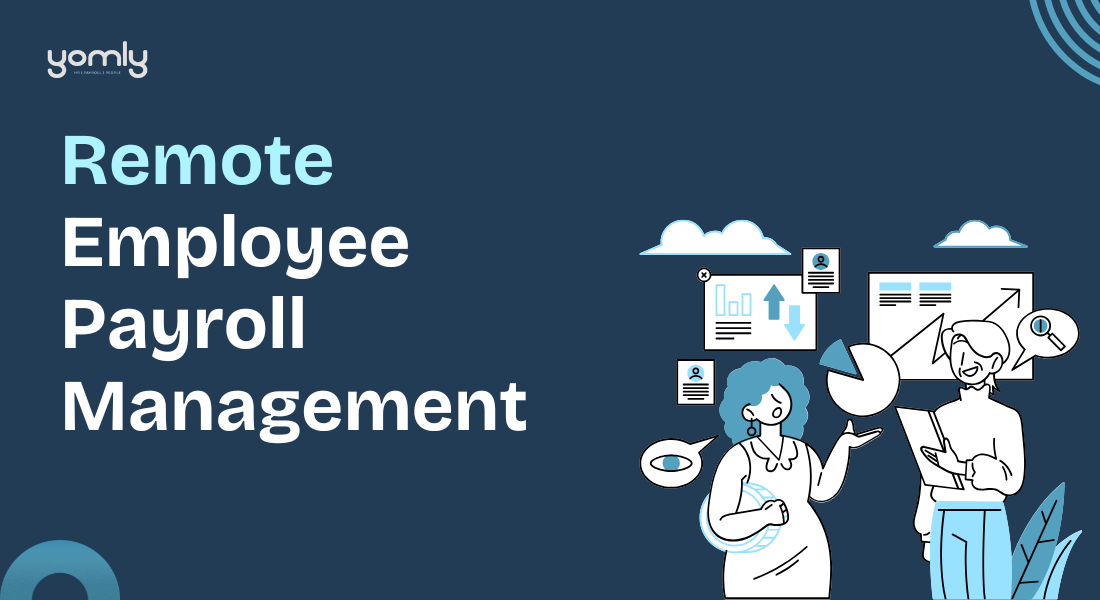
  • Remote Employee Payroll Management 2026 (UAE and GCC)

    Remote Employee Payroll Management 2026 (UAE and GCC)

    Managing payroll for remote employees in the UAE and GCC is no longer a simple monthly task. It now involves balancing multiple labour laws, currencies, and compliance systems across different countries. 

    As more businesses adopt remote and hybrid work models, payroll accuracy, legal compliance, and data security have become major concerns.

    Each GCC nation has its own labour rules and reporting frameworks such as WPS in the UAE and GOSI in Saudi Arabia. Missing a filing deadline or submitting an incorrect salary file can result in serious penalties.

    This is why understanding regional compliance and adopting best practices is essential for HR and finance teams managing remote employees.

    In this guide, we explore the biggest challenges in remote payroll management, key compliance rules across the GCC, and practical strategies that help companies stay accurate and compliant. 

    We also look at how modern HR and payroll platforms like Yomly simplify payroll operations for remote and multi-country teams.

    What are the Challenges in Remote Payroll Management?

    1. Managing Multi Country Compliance

    One of the main challenges in remote payroll management is following the labour laws of different countries. Each GCC country such as the UAE, Saudi Arabia, Oman, and Kuwait has its own payroll system, contribution rates, and compliance process. 

    For instance, salaries in the UAE must go through the Wage Protection System while Saudi Arabia follows GOSI contribution rules. Tracking all these laws manually can cause confusion and delays. Staying compliant requires constant updates and close monitoring of every country’s regulation.

    2. Handling WPS or Wage Protection System Requirements

    In the UAE and most GCC countries, using the Wage Protection System is a legal requirement. This becomes complicated when employees work remotely across different countries. Salary files must be accurate and submitted on time to avoid fines. 

    Any small mistake in the Salary Information File or payment delay can lead to penalties or suspension of work permits. Payroll teams need proper validation tools and automated checks to stay compliant.

    3. Processing Multi Currency Payments

    Remote payroll often includes employees who work from various countries and receive salaries in different currencies such as AED, SAR, or OMR. Managing exchange rates, conversion errors, and international banking charges is a big challenge. 

    Delays or incorrect conversions can lead to salary mismatches. Payroll managers must ensure that payments follow local currency requirements and remain consistent every month.

    4. Correctly Classifying Remote Workers

    Remote work has made it difficult to clearly separate full time employees, freelancers, and contractors. Wrong classification can cause issues with taxes, benefits, and end of service calculations. Employers must create clear contracts that specify employment terms and entitlements according to each country’s labour law. This helps prevent disputes and ensures correct payroll processing for every worker type.

    5. Ensuring Data Security and Confidentiality

    Payroll data includes sensitive employee details such as salary information, bank accounts, and identification numbers. When managed remotely, this data travels across digital systems and can face higher security risks. 

    Employers must use secure platforms, apply access restrictions, and follow strict data handling policies to protect employee privacy and company information.

    6. Minimizing Manual Errors

    Manual payroll processing increases the chances of mistakes such as incorrect salary deductions or wrong overtime calculations. In the UAE, one compliance mistake can result in fines of up to AED 50,000. Remote payroll adds more complexity as HR teams rely on multiple data sources. 

    Automating payroll processes helps reduce these errors and ensures accurate and timely payments.

    7. Integrating Payroll with HR and Accounting Systems

    When payroll software does not connect properly with HR and accounting systems, it creates data gaps and extra work. Teams must manually match records and verify totals, which slows down the process. Integrated systems make payroll faster, improve accuracy, and provide clear audit trails that meet compliance standards.

    Key Payroll Compliance Rules in the GCC

    Payroll Compliance Rules in the UAE

    The UAE follows Federal Decree Law Number 33 of 2021 which controls employment contracts and wage payments. All salaries must go through the Wage Protection System and reach employees within 15 days from the due date. Employers must keep payroll records for at least two years. 

    End of service benefits are 21 days of basic pay for each of the first five years and 30 days for each year after that. 

    Emirati employees contribute five percent to the General Pension and Social Security Authority while employers contribute twelve and a half percent and the government adds two and a half percent.

    Payroll Compliance Rules in Saudi Arabia

    In Saudi Arabia, all private companies must follow the Wage Protection System and pay salaries in Saudi Riyals through approved banks. Employers contribute eleven point seven five percent to social insurance and employees contribute nine point seven five percent. The minimum monthly wage for Saudi citizens is four thousand Riyals. 

    End of service benefits are half a month’s pay per year for the first five years and one full month’s pay for every additional year. Any delay or error can result in penalties or suspension from the Ministry of Human Resources and Social Development.

    Payroll Compliance Rules in Kuwait

    Kuwait’s payroll process is regulated by the Public Institution for Social Security. Employers must contribute eleven and a half percent of salary and employees contribute eight percent. Payments are handled through the Wage Protection System using Kuwait based bank accounts. 

    Companies must file reports such as Report 55 for salary details, Report 103 for new hires or terminations, and Report 166 for monthly contributions. Late submissions or incorrect filings can attract penalties from authorities.

    Payroll Compliance Rules in Oman

    Oman made the Wage Protection System mandatory in 2023. Employers must pay salaries through registered banks. Employers contribute ten and a half percent to social security, employees contribute seven percent, and there is an additional one percent for injury insurance and one percent for the Social Protection Fund. 

    Omani nationals receive end of service benefits equal to one month of basic salary for each year of service. Companies must keep payroll records and follow the latest Labour Law updates for both local and expatriate workers.

    New Labour Laws for Remote Work in Abu Dhabi

    In April 2025, Abu Dhabi Global Market introduced new labour laws to recognize remote and part time employment. These laws allow employees to legally work from outside office locations while still enjoying full protection under UAE labour standards. Employers must provide all the necessary equipment for remote work and cover costs related to visas, permits, and ID cards. 

    They must also apply strong cybersecurity measures to protect company data. Part time employees are now entitled to benefits that match their working hours. 

    These updates bring clarity for businesses and give remote employees fair and transparent working conditions.

    ???? Further resources: 

    Best Practices for Managing Remote Employee Payroll

    1. Use GCC Compliant Payroll Software

    Companies should choose payroll software that follows GCC regulations such as the Wage Protection System, end of service rules, and social contribution rates. Tools like Yomly’s payroll software are made for the region and help automate salary calculations, validate files, and ensure legal compliance for every payroll cycle.

    2. Centralize Payroll Data

    Collecting all payroll information in one platform avoids confusion and reduces data errors. When HR, finance, and attendance details are stored together, it becomes easier to track payments and review compliance. Centralized data also helps during audits and improves overall payroll accuracy.

    3. Automate Compliance and Reporting

    Automation ensures that all payroll actions follow local laws and reporting timelines. Systems can update contribution rates automatically, prepare statutory files, and generate accurate reports for authorities like MOHRE or GPSSA. This prevents missed deadlines and saves hours of manual work.

    4. Strengthen Data Security

    Remote payroll involves sharing data over the internet which increases security risks. Using encrypted systems, secure logins, and strict access control keeps employee data safe. Companies should also review and follow local data protection laws to maintain compliance and trust.

    5. Empower Employees with Self Service Portals

    Giving employees access to their own payroll information builds transparency and reduces the HR workload. Through self service portals, employees can view payslips, leave balances, and benefit summaries anytime. This helps remote teams stay informed and confident about their payments.

    6. Train Payroll and HR Teams Regularly

    Frequent training helps payroll and HR staff stay updated on law changes, contribution updates, and new compliance requirements. Well trained teams can manage complex payroll cases efficiently, especially when handling employees across multiple GCC countries.

    7. Conduct Regular Payroll Audits

    Internal payroll audits help detect and fix issues early. They verify salary calculations, deductions, and statutory contributions. Regular audits improve compliance readiness and ensure that all employee payments meet government standards.

    How Yomly Helps You in Remote Employee and Payroll Management

    Yomly makes it easy for companies to manage payroll and HR tasks for remote and hybrid teams across the UAE and GCC. The platform automates every step of payroll processing, from attendance tracking to salary calculation, while ensuring full compliance with the Wage Protection System and country-specific labour laws. 

    With real-time dashboards, mobile access, and multi-currency support, Yomly gives HR teams complete control over payroll accuracy and employee transparency.

    Key benefits:

    • Runs payroll automatically for employees working across countries and currencies
    • Ensures WPS compliance and accurate end-of-service benefit calculations
    • Syncs attendance, leave, and expense data into one platform
    • Offers a secure employee self-service portal for payslips and requests
    • Provides detailed compliance reports and real-time payroll analytics

    ???? Start your free Yomly demo

  • 10 Best Payroll Management Software in Dubai (2026)

    10 Best Payroll Management Software in Dubai (2026)

    Running payroll in Dubai requires more than just paying salaries on time; it demands compliance, accuracy, and adaptability. With strict WPS regulations, diverse workforce structures, and multi-currency payments, managing payroll manually can quickly become a challenge for growing companies. That’s where modern payroll management software comes in.

    These tools help HR and finance teams automate salary processing, maintain compliance with UAE labour laws, and ensure employees are paid accurately every cycle. 

    In this listicle roundup, we’ve compiled the 10 best payroll management software in Dubai that simplify complex payroll operations, reduce manual errors, and give businesses the visibility they need to manage people and payments efficiently.

    1. Yomly

    Yomly is an enterprise-grade payroll management software built for large organizations with 250+ employees that operate across Dubai and the wider Middle East. Global and regional leaders such as Kärcher, Isuzu Motors, Lufthansa Technik Middle East, and Nord Anglia Education trust us.  

    Yomly helps enterprises automate payroll, manage multi-country compliance, and centralise HR operations on one secure cloud platform. The system eliminates manual payroll errors by linking attendance, leave, and performance data directly to salary processing. 

    Finance teams can generate WPS-compliant files, manage multi-currency payments, and produce real-time audit-ready reports. With UAE-hosted data centres, bilingual (English/Arabic) support, and enterprise-level integrations, Yomly ensures accuracy, compliance, and scalability for complex organizational structures.

    Key Features

    • Automated payroll processing with WPS and gratuity compliance
    • Real-time attendance and leave integration for accurate salary runs
    • Secure cloud hosting with bilingual (Arabic/English) support
    • Mobile self-service for payslips, leave, and profile updates
    • Integration with accounting systems for seamless reporting

    Pricing: Custom plans available based on company size and selected modules.

    2. Bayzat

    Bayzat simplifies payroll management for businesses across Dubai by automating calculations, payments, and reporting in one secure platform. The software eliminates manual work, reduces payroll errors, and helps HR teams manage expenses, loans, and pay cycles more efficiently. Its localized setup ensures full alignment with UAE labor laws and WPS standards. Companies can customize payroll templates, define flexible payment schedules, and generate audit-ready reports in minutes. Bayzat, designed for scalability, suits organizations of all sizes seeking a reliable and compliant payroll system.

    Key Features

    • Automated payroll processing with WPS compliance
    • Integrated expense and loan management
    • Customizable payroll and SIF templates
    • Real-time access to payroll records via secure cloud
    • Accounting and HR system integration

    Pricing: Available on request based on team size and modules.

    3. Voyon Folks

    Voyon Folks offers a unified payroll management system designed to simplify complex salary processing for businesses in Dubai. The platform combines attendance, leave, and benefits data to ensure accurate, compliant, and timely payroll every cycle. 

    HR teams can customize salary structures, handle allowances, bonuses, and deductions, and generate audit-ready payslips automatically. The system also supports direct WPS file generation and integrates seamlessly with accounting and ERP software, helping companies maintain both financial and legal accuracy. 

    Its flexible configuration makes it suitable for diverse payroll types, like weekly, monthly, or performance-based, across different industries.

    Key Features

    • Automated payroll calculation with multi-variable handling
    • Built-in WPS and statutory compliance tools
    • Customizable salary and benefits structure
    • Integration with accounts and ERP systems
    • Secure mobile access for payslips and reports

    Pricing: Custom pricing available based on organization size and configuration requirements.

    4. ConnectHR

    ConnectHR transforms payroll management for UAE businesses by taking the pain out of repetitive calculations and compliance checks. The system automates every part of payroll from salary computation and benefits to final settlements, so HR teams spend less time fixing errors and more time focusing on people. 

    Its built-in compliance engine aligns every pay run with UAE labor law and WPS standards. Employees can log in through the self-service portal to view payslips, track leave encashments, or check deductions instantly. ConnectHR, designed for modern businesses, delivers speed, accuracy, and confidence in every payroll cycle.

    Key Features

    • One-click salary processing and WPS-ready files
    • Smart compliance checks to prevent costly penalties
    • Automated leave, loan, and reimbursement tracking
    • Secure self-service access for employees
    • Insightful payroll reports for finance and HR teams

    Pricing: Available upon request based on business size and module selection.

    5. Artify360

    Artify360 delivers a cloud-based payroll management solution built for modern businesses across the Middle East. The platform simplifies every step of salary processing, from attendance tracking and deductions to air ticket settlements and end-of-service benefits with accuracy and transparency. It helps HR teams eliminate spreadsheet errors, automate approvals, and ensure compliance with UAE labor laws. 

    Payroll data integrates seamlessly with accounting and HR modules, keeping finance and HR teams aligned. With Artify360, companies can process payroll faster, generate payslips instantly, and keep every employee informed through secure self-service access.

    Key Features

    • Fully automated payroll and tax calculation
    • Leave, loan, and attendance integration
    • Region-specific compliance and WPS support
    • Cloud-based reporting and payslip access
    • Integration with accounting and HR modules

    Pricing: Available on request based on workforce size and deployment needs.

    6. HR WORKS

    DLI-IT Group’s HR WORKS is a robust payroll management solution tailored for businesses across Dubai and the wider GCC. The platform automates complex payroll scenarios, such as backdated leave adjustments, salary revisions, and off-cycle payments, eliminating the need for manual spreadsheets. 

    It synchronizes payroll with time, attendance, and leave data to ensure each pay run is accurate and compliant with regional labor laws. HR WORKS supports WPS, gratuity, and statutory contributions, making it ideal for companies operating across multiple Gulf countries. This tool is designed for scalability and helps HR teams manage payroll efficiently while providing detailed reports, salary audits, and bank transfer files in just a few clicks.

    Key Features

    • Integrated payroll, leave, and attendance processing
    • Automated handling of revisions, bonuses, and final settlements
    • Statutory compliance for UAE and GCC labor regulations
    • Built-in WPS, GOSI, and pension fund calculations
    • Comprehensive reporting with pay registers and audit trails

    Pricing: Tailored packages available on request from DLI-IT Group’s UAE office.

    7. DOTS HR 

    DOTS HR delivers a complete payroll and HR management system designed for growing businesses in the UAE and across the GCC. The platform automates complex payroll functions, including additions, deductions, loans, and overtime, while ensuring every payment is accurate and compliant. 

    It handles multi-location payrolls, seamlessly integrates timesheets, and supports off-cycle processing for bonuses or adjustments. DOTS HR also prioritizes security, using encrypted cloud storage to protect sensitive employee data. HR teams gain access to real-time analytics, helping them track labor costs, productivity, and attendance patterns. Easy to use and scalable, DOTS HR streamlines payroll processing, making it faster, smarter, and more transparent for both employers and employees.

    Key Features

    • Automated handling of additions, deductions, and overtime
    • Multi-location payroll with integrated timesheet tracking
    • Secure cloud-based data management and encryption
    • Real-time reporting and analytics for HR and finance teams
    • Employee self-service for payslips and loan tracking

    Pricing: Custom packages available upon request based on company size and module selection.

    8. Ensaan Tech

    Ensaan Tech offers a powerful Compensation & Payroll Solution designed for enterprises operating across Dubai and the GCC. The platform streamlines payroll management with end-to-end automation, ensuring accuracy, compliance, and control. It supports complex structures such as dual payslips, multi-currency processing, and regional compliance across 24 countries. 

    Ensaan integrates payroll with biometric attendance systems and ERP finance modules, creating a single connected ecosystem for HR and finance teams. The system also allows direct uploads to government portals, helping businesses stay compliant with UAE labor and WPS regulations.

    With flexible configuration and real-time analytics, Ensaan Tech empowers organizations to manage payroll efficiently, reduce administrative workload, and maintain total visibility across their workforce.

    Key Features

    • Dual payslip and multi-currency payroll processing
    • Integration with biometric systems and ERP finance modules
    • Automated compliance with UAE and GCC labor standards
    • Cloud-based access with detailed reporting dashboards
    • Direct uploads to government portals for WPS and statutory filings

    Pricing: Available on request based on organizational size and implementation scope.

    9. Greyt HR

    greytHR is a cloud-based HR and payroll software that simplifies and automates daily HR operations for businesses in Dubai and across the GCC. The platform helps HR teams eliminate manual work, ensure payroll accuracy, and maintain compliance with UAE labor laws. It integrates leave, attendance, and salary data into a single system, enabling payroll to run smoothly every month. 

    Employees can access payslips, tax information, and company updates through an intuitive mobile app and self-service portal, reducing administrative back-and-forth. greytHR also includes built-in analytics and dashboards that help HR professionals track performance, manage compliance, and make data-driven workforce decisions. 

    Key Features

    • End-to-end payroll automation and WPS-ready processing
    • Employee self-service portal and mobile app access
    • Integrated attendance, leave, and expense modules
    • Real-time HR dashboards and 100+ MIS reports
    • Compliance support for UAE and GCC labor laws

    Pricing: Custom plans available based on company size and selected modules.

    10. Work Plus HCM

    Workplus HCM streamlines payroll for Dubai businesses by automating calculations, WPS file generation, and end-of-service settlements so payroll runs fast and accurately each cycle. The platform links attendance, timesheets, and leave data to payroll so HR teams avoid manual reconciliations and costly errors. 

    Workplus supports multi-currency payroll, configurable pay cycles, and seamless integrations with accounting and biometric systems to fit growing organizations. The mobile app and employee self-service reduce HR emails and speed approvals, while built-in analytics surface payroll cost drivers and compliance risks for smarter decision-making. Workplus also offers configurable workflows and local implementation support to help companies adopt the system quickly.

    Key features

    • WPS-compliant payroll and bank file generation
    • Multi-currency & multi-country payroll support
    • Attendance, timesheet & leave integration
    • End-of-service & gratuity calculations
    • Employee self-service mobile app and payslips
    • Payroll analytics, reports & ERP/finance integrations

    Pricing: Custom pricing available after consultation, based on organization size and module selection.

    ???? Further resources on payroll management from Yomly:

    Final Words

    Choosing the right payroll software isn’t just about automation; it’s about building trust, compliance, and financial accuracy across your organization. Each platform in this list offers something unique, from enterprise-grade WPS automation to real-time analytics and secure employee self-service.

    Before deciding, consider your company’s size, industry, and the level of customization you need. 

    Whether you’re a startup streamlining basic payroll or a large enterprise managing thousands of employees across borders, the right solution will help you save time, stay compliant, and make payroll stress-free for your team.

  • 10 Best HR Software for the Healthcare Industry

    10 Best HR Software for the Healthcare Industry

    Managing people in healthcare is just as important as managing patients. Hospitals, clinics, and medical centers operate round the clock, with complex staffing needs, strict compliance rules, and continuous training requirements. That’s where healthcare-focused HR software makes all the difference. 

    The right system helps HR teams automate payroll, track licenses, schedule shifts, and keep employees engaged, all while staying compliant with regional regulations. 

    In this roundup, we’ve listed the 10 best HR software for the healthcare industry that simplify workforce management and let healthcare providers focus on what matters most, that is, better patient care.

    1. Yomly

    Yomly is a leading cloud-based HR and payroll software designed for enterprise businesses with over 250 employees across the Middle East and beyond. Headquartered in Dubai, we serve over 250+ enterprise clients in 50+ countries, with 60,000+ daily users relying on it to manage people, payroll, and performance. Yomly was launched as EmiratesHR in 2018, and the platform quickly evolved into a globally recognized HRMS customized for region-specific compliance and enterprise-scale operations.

    For healthcare institutions, Yomly offers a unified solution to address the unique workforce challenges of hospitals, clinics, and diagnostic networks, including multi-shift scheduling and credential tracking, payroll compliance, and leave management.

    Leading organizations such as Kärcher, Isuzu Motors, Lufthansa Technik Middle East, and Nord Anglia Education trust Yomly to simplify HR and payroll across distributed teams.

    Why Healthcare Providers Choose Yomly

    • Centralized HR and Payroll: Manage your entire workforce, including doctors, nurses, and administrative staff, in one secure, cloud-based platform.
    • Automated Payroll with WPS and Multi-Currency Support: Process salaries accurately across multiple countries while meeting UAE and GCC labor compliance standards.
    • Shift Scheduling for Hospitals and Clinics: Automate duty rosters, night shift cycles, and on-call allocations with alerts for consecutive hours or overtime.
    • Credential and Compliance Management: Store licenses, visa documents, and certifications with automated expiry reminders, essential for regulated healthcare environments.
    • Performance & KPI Tracking: Monitor individual and departmental performance aligned with hospital or clinic objectives.
    • Mobile Self-Service for Staff: Enable employees to request leave, view payslips, and update records on the go, ideal for field, nursing, and support teams.
    • Data Security & Localization: Hosted in secure UAE data centers, Yomly ensures compliance with local laws, GDPR, and ISO standards, with bilingual support (English and Arabic).
    • Comprehensive Reporting Dashboards: Generate HR, payroll, and compliance reports instantly to support audits and management decisions.

    Hospitals and healthcare providers use Yomly to automate onboarding, manage multi-department shift structures, and ensure regulatory readiness. Its ability to integrate with existing ERP or finance systems makes it a preferred choice for large hospital groups and healthcare networks operating across multiple sites.

    Pricing

    Yomly offers custom enterprise pricing based on organization size and selected modules. Healthcare institutions can book a free demo to explore a customized implementation.

    2. EBR Software

    EBR Software is a Dubai-based HR and payroll management solution designed to simplify workforce operations in high-demand environments such as healthcare. It helps hospitals, clinics, and nursing homes automate payroll, manage shift rotations, and maintain accurate employee records. The software’s cloud-based interface offers flexibility and control for HR teams managing large, round-the-clock medical staff.

    EBR is particularly valuable in handling compliance with UAE labor laws, tracking medical licenses, and ensuring timely payroll, even for rotating shifts. It’s predictive scheduling, and integrated grievance management features help maintain staff satisfaction and reduce administrative workload, enabling teams to focus more on patient care.

    Key Features:

    • AI-based shift planning for 24/7 medical teams
    • License and certification tracking with expiry alerts
    • Automated payroll processing for multi-site hospitals
    • Employee self-service portal for pay and leave access
    • Grievance tracking and workplace analytics
    • Cloud-based and secure with role-based access

    Pricing: Available on request based on organization size and selected modules.

    3. Voyon Folks

    Voyon Folks brings AI-powered automation to healthcare HR management. Hospitals and medical colleges across the UAE use the platform to simplify complex HR operations, from recruitment to payroll, while maintaining strict compliance with healthcare and labor regulations. Its cloud-based system gives HR teams full visibility of staff data, attendance, and performance 

    Healthcare organizations trust Voyon Folks because it maintains high patient-care standards while reducing administrative delays. The platform helps HR teams match staffing levels with patient demand, monitor credentials, and plan training programs that strengthen workforce readiness.

    Key Features:

    • AI-driven hiring and onboarding for clinical and support staff
    • Workforce planning that aligns staffing with patient volumes
    • Built-in compliance tracking for hospital safety and labor laws
    • Learning and performance management to improve care delivery
    • Centralized document and attendance management with biometrics
    • Employee self-service access via web and mobile

    Pricing: Quotation available on request, based on organization size and healthcare modules selected.

    4. Akrivia HCM

    Every hospital relies on teamwork, from doctors and nurses to administrative staff, but keeping that team aligned is often the most challenging part. Akrivia HCM changes how healthcare organizations manage their people by turning complex HR operations into a smooth, data-driven process. Its cloud-based system helps HR teams prevent burnout, plan shifts intelligently, and reward staff fairly, all while staying compliant with strict healthcare and labor laws.

    Instead of reacting to issues, Akrivia gives leaders real-time insights into attendance, performance, and employee well-being. Managers can spot fatigue early, schedule balanced shifts, and create a healthier work environment for caregivers and support teams alike.

    Key Features:

    • Smart scheduling and biometric attendance tracking
    • AI-based hiring with automatic JD creation and screening
    • Integrated payroll and leave management
    • Unified employee database with custom fields and access control
    • Learning and performance dashboards for healthcare staff
    • Analytics for burnout prevention and workforce optimization

    Pricing: Custom pricing shared after demo based on modules and team size.

    5. Bayzat

    Bayzat is an all-in-one HR, payroll, and benefits platform built for organizations in the UAE and GCC. The platform combines payroll automation, employee benefits, and HR workflows into a single cloud service used by clinics, hospitals, and specialty care centers. Bayzat holds ISO 27001 and SOC 2 Type II certifications and serves thousands of regional customers with a mobile-first experience.

    For healthcare providers, Bayzat removes administrative friction, allowing clinical teams to focus on patients. The system automates shift scheduling and attendance, links roster data directly to payroll, and centralizes license and training records, keeping HR audit-ready. Bayzat also bundles group health insurance and claims management, helping hospitals offer better benefits without extra HR overhead.

    Key Features

    • Automated shift scheduling and real-time attendance tracking.
    • Payroll processing that handles shift differentials, overtime, and WPS/KSA integrations.
    • Centralized document store for licenses, certifications, and training records with expiry alerts.
    • Mobile self-service for payslips, shift swaps, and leave requests.
    • Group health insurance administration and real-time claims visibility.
    • AI-powered reporting and workflow automations for faster approvals.

    Pricing: Custom quotes available after demo based on employee count and required modules.

    6. ConnectHR

    ConnectHR is a UAE-based HR and payroll management platform that simplifies employee administration for growing healthcare providers and enterprises. It brings together attendance tracking, payroll processing, and performance monitoring into one easy-to-manage dashboard. The system ensures full compliance with UAE labor and MOHRE regulations, helping HR teams reduce paperwork and avoid compliance risks.

    For hospitals, clinics, and medical centers, ConnectHR automates day-to-day HR operations, such as scheduling, leave approvals, and document renewals, so that administrators can stay focused on service quality. The tool provides secure, cloud-based access for HR teams and healthcare staff, ensuring smooth operations across multiple facilities.

    Key Features

    • Real-time attendance and leave tracking with biometric integration
    • One-click payroll processing and WPS file generation
    • Secure storage for medical licenses, Emirates IDs, and contracts
    • Automated alerts for visa renewals and compliance updates
    • Built-in performance and review management tools
    • Cloud-based dashboard accessible across all hospital sites

    Pricing: Custom pricing is provided after consultation, based on organization size and required modules.

    7. Delta HRMS

    Delta HRMS is a UAE-compliant HR and payroll software that helps organizations modernize workforce management while maintaining strict compliance with labor laws. It offers a full suite of HR tools, including onboarding, time tracking, payroll automation, and performance management, all accessible from a single, secure dashboard.

    Healthcare providers use Delta HRMS to simplify everyday workforce operations. Hospitals and clinics can track shifts, process payroll for multi-department staff, and manage employee documents such as licenses, visas, and certificates. The platform’s AI-driven analytics help HR leaders monitor staffing levels, prevent burnout, and maintain compliance with the UAE’s Wage Protection System (WPS).

    Key Features

    • Automated payroll with built-in UAE labor law compliance
    • Shift and attendance tracking with biometric and geo-attendance options
    • License and document expiry alerts for medical professionals
    • Employee self-service portal for leave and expense management
    • Centralized dashboards for real-time workforce insights
    • AI-powered reporting and analytics for better decision-making

    Pricing: Custom quotes are available based on company size and required modules.

    8. Medicoplus

    MedicoPlus is an NABIDH-approved HR and payroll module integrated within its hospital and clinic management software. It helps administrators automate attendance tracking, salary calculations, and employee documentation from one unified dashboard. The system supports hospitals, polyclinics, and medical centers in managing staff productivity while staying compliant with local labor and WPS regulations.

    For HR teams in healthcare, MedicoPlus simplifies everyday tasks, including payroll processing, license renewals, and overtime management. It also provides a secure employee database with expiry alerts for contracts, IDs, and medical licenses, ensuring no documentation lapses that could disrupt compliance or operations.

    Key Features

    • Centralized employee records with automated salary and deduction calculations
    • Attendance integration through punch cards or biometric devices
    • Overtime tracking and detailed payroll reporting
    • Automatic expiry reminders for IDs, licenses, and contracts
    • Loan and allowance management for healthcare staff
    • Web-enabled platform with flexible access for HR teams

    Pricing: Custom quotes available based on healthcare facility size and selected HR modules.

    9. Spine HR

    Rockford Computer’s Spine HR is a UAE-localized HR and payroll management system that simplifies workforce operations for hospitals, clinics, and healthcare facilities. The platform is designed to handle payroll automation, compliance, and shift management while staying fully aligned with the UAE’s Wage Protection System (WPS).

    Healthcare providers use Spine HR to manage attendance, process payroll for multi-shift medical staff, and receive instant alerts for expiring licenses or visas. The mobile app allows healthcare professionals to securely access payslips, request leave, and update details, ensuring transparency across teams and reducing manual HR workload.

    Key Features

    • WPS-compliant payroll automation with SIF file generation
    • Shift scheduling and biometric attendance tracking
    • Cloud-based access for HR teams and staff across hospital branches
    • Automated alerts for visa, Emirates ID, and medical license renewals
    • Employee self-service portal and mobile HR app for easy access
    • Real-time analytics dashboards for performance and compliance tracking

    Pricing: Custom plans are available on request based on organization size and deployment type.

    10. WebHR

    WebHR is a cloud-based HR and payroll system trusted by healthcare providers worldwide for its simplicity, scalability, and affordability. The platform helps hospitals, clinics, and medical centers automate daily HR functions, from onboarding and payroll to attendance tracking and shift scheduling through a single, unified dashboard.

    For healthcare teams that operate across shifts and departments, WebHR streamlines operations by managing complex schedules, maintaining compliance, and tracking employee credentials in real time. With mobile apps for Android and iOS, medical staff can mark attendance, view pay slips, and request leave from anywhere. WebHR’s built-in analytics also give HR leaders clear insights into workforce trends and productivity.

    Key Features

    • Cloud-based HR and payroll platform with healthcare-ready modules
    • Smart shift scheduling and attendance tracking with 18+ methods
    • Automated payroll with tax, benefit, and leave calculations
    • Employee self-service app for payslips, shifts, and leave management
    • Integrated performance reviews and onboarding workflows
    • GDPR and ISO 27001 certified for secure data management

    Pricing: Starts at $2 per employee per month, with a free plan available for small teams.

    What are the key features of HR software for the healthcare industry?

    1. Automated Shift Scheduling

    Healthcare facilities operate 24/7, requiring accurate, flexible scheduling. HR software enables managers to quickly create, assign, and adjust shifts based on department needs and staff availability. Automated scheduling prevents overlaps, under-staffing, and excessive overtime, helping maintain patient care quality.

    1. Attendance and Time Tracking

    Modern HR platforms integrate biometric or mobile-based attendance tracking to monitor working hours, on-call shifts, and breaks in real time. Geo-fencing ensures accuracy for nurses, technicians, and field medical staff. This feature connects directly with payroll to ensure fair compensation for every shift worked.

    1. Payroll and Compliance Management

    Payroll automation helps process complex healthcare pay structures involving overtime, bonuses, and night shifts. Advanced systems also handle the UAE’s Wage Protection System (WPS) or region-specific compliance requirements, reducing administrative errors and ensuring staff are paid accurately and on time.

    1. License and Certification Tracking

    Medical professionals must maintain valid certifications and licenses. HR software for healthcare includes automated tracking and expiry alerts for each employee’s credentials. This ensures ongoing compliance with local healthcare regulations and prevents operational disruptions.

    1. Employee Self-Service Portal

    Self-service portals empower healthcare workers to access payslips, request leave, swap shifts, and update personal details anytime. This reduces HR workload and enhances staff satisfaction by promoting transparency and independence.

    1. Centralized Employee Records

    A secure digital repository holds all employee data, including contracts, IDs, visas, and medical credentials. This makes it easy for HR departments to retrieve information instantly, maintain compliance, and eliminate paper-based inefficiencies.

    1. Recruitment and Onboarding Automation

    Hospitals and clinics face constant hiring needs. An integrated recruitment and onboarding module helps HR teams post jobs, screen candidates, and manage onboarding checklists digitally. New hires can complete forms, upload documents, and start training through an online platform.

    1. Performance and Training Management

    Healthcare roles demand continuous upskilling. Performance management tools enable 360-degree reviews, set KPIs, and link outcomes to training programs. This ensures every team member maintains high standards in patient care and professional growth.

    1. Benefits and Insurance Management

    Healthcare HR software often includes built-in insurance and benefits administration. It simplifies the management of employee health coverage, claim processing, and wellness programs, ensuring timely access to benefits without burdening HR.

    1. Real-Time Analytics and Reporting

    Dashboards and analytics tools give administrators a clear view of attendance trends, turnover rates, and compliance metrics. These insights support data-driven decisions that enhance workforce efficiency, patient satisfaction, and organizational performance.

    1. Secure, Cloud-Based Access

    Cloud-enabled HR systems allow HR teams and healthcare professionals to access information anytime, anywhere, which is essential for multi-location hospitals and remote medical staff. Compliance with data privacy standards such as ISO 27001 and GDPR ensures that all information remains protected.

    Final Words

    Whether you run a single clinic or an extensive hospital network, the goal remains the same: to simplify administration and empower your staff. Each platform in this list brings something unique, from AI scheduling and biometric tracking to advanced analytics and WPS-compliant payroll. Before making a choice, consider your organization’s size, staffing patterns, and regional requirements. A reliable HR solution isn’t just a tech upgrade;  it’s a long-term investment in smoother operations, happier employees, and stronger patient outcomes.

  • UAE Labor Card 2026: Process, Eligibility, and Fee Details

    UAE Labor Card 2026: Process, Eligibility, and Fee Details

    The UAE Labor Card is a mandatory digital document that confirms your legal right to work in the country. It contains key details about your employment, such as your name, job title, employer, and work permit number.

    Every employer must apply for this card within 60 days of hiring an employee to stay compliant with MoHRE regulations. Without a valid labor card, both the employer and employee can face legal penalties.

    In this guide, you will learn everything about the UAE Labor Card, also known as the work permit. We explain what it is, who needs it, how to apply, and what documents are required.

    What is the UAE Labor Card?

    A UAE Labor Card, also called a work permit, is an official digital document that allows you to work legally in the UAE. It contains all key information related to your employment, such as:

    • Your full name
    • Job title or occupation
    • Employer’s name and company details
    • Nationality
    • Labor card number
    • Work permit number
    • Expiry date of the card

    The card acts as your employment ID and confirms your right to work in the UAE. Employers must issue this card for every employee within 60 days of their arrival in the country. Without it, both the employer and employee may face penalties.

    Types of UAE Labour Cards and Work Permits

    1. Standard Work Permit for Foreign Workers

    This is the most common type of permit. It allows UAE-based companies to hire employees from outside the country for full-time roles. The permit is valid for two years and can be renewed if employment continues. It ensures that both the employer and the employee comply with UAE labour laws and that the worker receives all legal benefits such as salary, leave, and health coverage.

    2. Transfer Work Permit

    The transfer work permit helps employees who want to switch jobs within the UAE without exiting the country. It’s commonly used by skilled professionals seeking better career opportunities. The permit protects both parties by ensuring that the current and new employers follow proper notice, clearance, and settlement rules set by MoHRE before the transfer takes effect.

    3. Temporary Work Permit

    This permit is ideal for short-term or project-based employment. It is usually valid for up to six months and can be renewed once. Companies in construction, hospitality, events, and logistics often use this permit to meet temporary staffing needs. It gives flexibility to employers and provides legal protection to employees working on limited-time projects.

    4. One-Mission Work Permit

    The one-mission work permit is issued to professionals who are hired for a specific project or assignment. It is directly tied to the completion of that particular task. This permit helps businesses bring in specialists for short-term, high-value projects without committing to long-term contracts. Once the project is done, the permit automatically ends.

    5. Mission Visa (Short-Term Work Visa)

    Mission visa is a short-term work visa that allows foreign experts to work in the UAE for 90 days, which can be extended once. It’s commonly used by consultants, auditors, and engineers who come for short assignments. The mission visa speeds up the hiring process and reduces paperwork for urgent or short-duration business needs.

    6. Student Training or Internship Work Permit

    The student training permit allows university students in the UAE to gain practical experience while studying. It connects education with the workplace by allowing students to take internships with registered companies. Students get to build real-world skills, while employers can discover potential talent early and support future workforce development.

    7. National Apprentice Permit

    National apprentice permit supports the UAE’s Emiratisation goals. It allows Emirati citizens to receive structured, hands-on training in private sector companies. The program combines work experience with mentoring, helping young nationals develop practical knowledge, confidence, and long-term career readiness in their chosen industries.

    8. Freelance Work Permit

    The freelance work permit is perfect for independent professionals who want to work on their own terms. It allows individuals to offer services without being tied to a single employer. Popular among designers, writers, marketers, developers, and consultants, this permit encourages entrepreneurship and gives workers the freedom to take on multiple clients legally.

    9. Remote Work Permit (Virtual Work Residency Visa)

    The remote work permit allows individuals employed by foreign companies to live in the UAE while working remotely. It is designed for digital nomads, remote employees, and entrepreneurs who want to enjoy the UAE’s quality of life. Valid for one year and renewable, it allows them to legally reside in the country without needing a local sponsor.

    10. Part-Time Work Permit

    This permit gives employees the freedom to work for more than one employer at the same time, usually with limited weekly hours per job. It’s suitable for people who want flexible schedules or extra income, such as students, freelancers, and parents. Both employers must approve the arrangement to ensure work hours stay within legal limits.

    11. Work Permit for Citizens Sponsored by Relatives

    This permit allows individuals living in the UAE under family sponsorship, such as a spouse or parent, to work legally without changing their residency visa. It’s especially useful for dependents who want to contribute financially while maintaining family status. Employers must still apply for approval from MoHRE to keep everything compliant.

    12. Permit for Hiring Emirati or GCC Citizens

    This permit makes it easier for companies to hire UAE nationals and Gulf Cooperation Council (GCC) citizens. It requires minimal paperwork and does not always need a new sponsorship. It encourages regional employment and supports the UAE’s mission to empower local talent across the private sector.

    13. Golden Visa Work Permit

    Golden Visa holders, such as investors, entrepreneurs, scientists, and creative professionals, can work in the UAE without needing a traditional labour card. Their visa itself provides them with legal work rights. 

    However, they must still register their employment details with MoHRE. This permit type attracts high-skilled professionals and long-term residents who contribute to the UAE’s economic growth.

    How to Apply for a UAE Labour Card as a Candidate?

    Step 1: Log in to the Employer Portal with Your Establishment Credentials

    The employer must log in to the official Ministry of Human Resources and Emiratisation (MoHRE) portal using their establishment credentials. This verifies the employer’s identity and confirms the company is eligible to hire employees.

    Step 2: Select the Service for Labour Card/Work Permit Issuance

    The employer navigates to the applicable service such as “Labour Card Issuance” or “Work Permit for New Employee”. 

    This links the application to the correct type of employment and job category.

    Choosing the right service ensures the process flows without confusion or delay.

    Step 3: Upload All Required Employee and Company Documents

    The employer uploads scanned copies of: the employee’s valid passport, recent photo, visa (if applicable), the signed employment contract (in Arabic and English), the company’s trade licence, and any educational or professional certificates required.
    Accurate and complete document uploads reduce the risk of rejections or requests for more information.

    Step 4: Pay the Government Fees According to Company and Job Category

    After submission of documents, the employer pays the fees required by the MoHRE, based on the company’s classification and the job/employee skill level. Paying the correct fees promptly helps keep the application moving without interruption.

    Step 5: Wait for MoHRE Review and Approval of the Application

    The MoHRE reviews all submitted data, checks the company quota, validates the contract, and confirms compliance with regulations. If all is correct, MoHRE approves the application. During this review phase the employer may need to respond quickly if the Ministry requests additional documents or clarification.

    Step 6: Labour Card Issued to the Employee

    Once MoHRE approves, the labour card (or work permit / electronic card) is issued and linked to the employee. This card confirms the employee is legally registered to work. The employer should notify the employee and store the card for compliance and record-keeping.

    Step 7: Download, Print or Distribute the Digital Labour Card Copy

    The employer or employee can log in to the MoHRE app or portal to view and print the digital labour card. The card shows issue date, expiry date, job title, employer name and other details. Keeping a printed copy is good for the employee’s records and may be needed for visa stamping or other legal processes.

    Who is eligible for the UAE Labor Card?

    To get a UAE Labor Card, the applicant must be between 18 and 60 years old, medically fit, and hold the required educational or professional qualification for the job.

    The employer must apply for the card within 60 days of the employee’s entry into the UAE and ensure compliance with MoHRE regulations. Both local and foreign workers meeting these conditions are eligible.

    UAE Labor Card application process and required documents

    Applying for a UAE Labor Card is a mandatory process for all employees working legally in the country. The employer is responsible for completing the application through the Ministry of Human Resources and Emiratisation (MoHRE). 

    Below is a detailed breakdown of each step and the list of required documents.

    1. Receive a Formal Job Offer

    The process starts when a candidate receives a formal job offer from a registered employer in the UAE. The job offer must clearly mention the job title, salary, working hours, and employment terms. Once both parties agree, the employer can begin the labor card application process on behalf of the employee.

    2. Employer Applies for a Work Permit

    After the job offer is accepted, the employer applies for a work permit through the MoHRE online portal. The work permit allows the employee to legally enter the UAE for employment. It also verifies that the employer is authorized to hire and that the company follows all labor regulations.

    3. Entry Permit Issuance

    Once the work permit is approved, the Ministry issues an entry permit (also known as a pink visa) if the employee is outside the UAE. This document allows the employee to legally enter the country for work purposes. The entry permit is typically valid for 60 days from the date of issue.

    4. Complete the Medical Fitness Test

    After arriving in the UAE, the employee must undergo a mandatory medical examination at an approved UAE health center. The test ensures the individual is medically fit to work and free from communicable diseases. A valid medical fitness certificate is required to proceed with the labor card application.

    5. Apply for Emirates ID

    Next, the employee needs to apply for an Emirates ID, which is a national identification document required for all UAE residents. The process involves submitting biometric data such as fingerprints and a photograph at an Emirates Identity Authority center. The Emirates ID is linked to your work and residency status.

    6. Residency Visa Processing

    Once the Emirates ID process is complete, the employer applies for a residency visa through the immigration department. This visa allows the employee to legally live and work in the UAE during the contract period. The residency visa must be stamped in the employee’s passport before proceeding with the labor card application.

    7. Submission of Documents to MoHRE

    After obtaining the residency visa, the employer collects all necessary documents and submits them to MoHRE for final verification. These documents confirm the employee’s legal status and eligibility to work. The employer must ensure all details match across the contract, visa, and company records to avoid rejection.

    8. Labor Card Issuance

    Once MoHRE reviews and approves the application, the UAE Labor Card is issued digitally. Employees can access and download it through the MoHRE mobile app or website. The card contains details such as the employee’s name, job title, employer name, labor card number, and expiry date. The card is valid for up to two years for private sector employees.

    Documents Required for UAE Labor Card Application

    To complete the labor card process smoothly, both the employer and employee must prepare the following documents:

    • Valid passport copy (with at least six months’ validity)
    • Copy of the residence visa
    • Work permit approval issued by MoHRE
    • Recent passport-size photograph with a white background
    • Signed employment contract in Arabic and English
    • Copy of the company’s valid trade license
    • Medical fitness certificate from an approved UAE health center
    • Educational and professional qualification certificates (attested if required)

    UAE Labour Card Processing Time

    The standard processing time for a UAE Labor Card ranges from 3 to 7 working days, depending on the completeness of the documents and the speed of verification. Any errors, missing information, or unverified certificates can cause delays, so it’s best to ensure all documents are accurate before submission.

    How to Check the UAE Labor Card Online?

    You can check your UAE Labor Card online through the MoHRE app, the MoHRE website, or Tas’heel service centers. Log in using your UAE Pass on the MoHRE app or visit http://www.mohre.gov.ae and select the “Work Permit Inquiry” option based on your permit type:

    Enter your labor card or passport number to view or download your digital card details.

    How long is an UAE labor card valid for?

    A UAE Labor Card is usually valid for two years for private sector employees and three years for government employees. The employer must renew it within 50 days before the expiry date through MoHRE. Renewal helps avoid fines and keeps your work status active and legal.

    Can I work without a labour card in the UAE?

    No, you cannot work in the UAE without a valid labor card, work permit, or residency visa. Working without these documents is illegal and can lead to fines, deportation, or an employment ban. Employers can face penalties of up to AED 50,000 per worker for hiring without a valid labor card.

    How much does a UAE Labor Card cost in 2025?

    The UAE Labor Card fee varies based on the employer’s company category as defined by the Ministry of Human Resources and Emiratisation (MoHRE). For a two-year work permit, the official government fees are:

    • Category 1: AED 250 (for fully compliant companies)
    • Category 2: AED 1,200 (for partially compliant or mid-tier companies)
    • Category 3: AED 3,450 (for companies with low compliance or violations)

    An AED 50 application fee applies when submitting the initial work permit request. Additional service center fees of up to AED 72 per application may also apply. These charges cover the job offer, employment contract printing, and permit processing.

    All labor card fees must be paid by the employer, not the employee, and exclude VAT or other collection fees. The labor card is typically valid for 2 years, after which the same fee applies for renewal.

    How Yomly Helps Enterprise Employers Manage Employees

    Yomly provides a complete HR and payroll management solution for enterprise companies in the UAE. The platform helps employers manage employee records, monitor work permit renewals, and stay compliant with MoHRE requirements.

    ???? Learn more about Yomly HR software for the UAE.

    With Yomly, employers can:

    • Track labor card and visa expiry dates automatically
    • Generate and submit MoHRE-compliant employee records quickly
    • Store all employee information securely in the cloud
    • Ensure full compliance with UAE labor laws and WPS standards

    By automating HR and compliance tasks, Yomly helps enterprise businesses save time, reduce human errors, and maintain accurate workforce data. Visit Yomly to learn how Yomly can simplify HR and payroll management for your organization in the UAE.

  • Types of Employee Contracts in the UAE (2026)

    Types of Employee Contracts in the UAE (2026)

    Employee contracts in the UAE define the legal relationship between employers and employees, outlining rights, duties, and benefits under UAE Labour Law. As per Federal Decree-Law No. 33 of 2021, every employee must have a written, registered contract with MOHRE or a free zone authority. 

    These contracts cover job role, salary, duration, benefits, and termination terms. 

    In this guide, we explain the different types of employment contracts in the UAE, key clauses every employer must know, and how to stay compliant in 2025.

    What Is an Employee Contract in the UAE? 

    An employee contract in the UAE is a legally binding agreement between an employer and an employee that defines working conditions, rights, and obligations. It must abide by UAE labor laws and MOHRE (Ministry of Human Resources and Emiratisation) rules for onshore employees. 

    The contract sets terms such as job role, salary, duration, work hours, leave, benefits, termination conditions, and other relevant clauses. Once signed by both parties and registered with MOHRE (or relevant free zone authority), it governs the relationship and protects rights of both employer and employee.

    What are the types of employment contracts in the UAE?

    Employment contracts in the UAE are defined under Federal Decree-Law No. 33 of 2021 and its executive regulations.

    Below are the main types of employment contracts recognized in the UAE.

    1. Fixed-Term (Limited) Contract

    A fixed-term contract specifies a start and end date, making it suitable for project-based or temporary roles. It usually lasts up to three years and can be renewed by mutual agreement. Both parties must complete the agreed duration unless terminated with valid notice. This contract type gives clarity on employment duration, salary, and benefits for the defined period.

    2. Unlimited (Indefinite) Contract

    An unlimited contract has no set end date and continues until either party ends it with the required notice period. This type was more common before the 2022 labor law reform, but now must be converted to fixed-term contracts. It allows greater flexibility for long-term employment relationships while still requiring legal notice for termination.

    3. Full-Time Employment Contract

    A full-time contract means the employee works the standard number of hours per week, usually up to 48 hours. The employee receives full benefits such as annual leave, gratuity, and health insurance. This is the most common form of employment for professionals and permanent staff in both private and public sectors.

    4. Part-Time Employment Contract

    A part-time contract allows employees to work fewer hours or days than a full-time schedule. Wages and benefits are adjusted proportionately based on hours worked. This type suits employees seeking flexible schedules or additional income. Employers can hire workers from other companies under approved MOHRE part-time arrangements.

    5. Temporary or Project-Based Contract

    This type of contract is designed for specific assignments or short-term projects. It automatically ends once the project is completed or the time period expires. It helps businesses manage fluctuating workloads without committing to permanent employment. Employees are entitled to fair pay, safety, and other legal rights during the contract period.

    6. Flexible or Remote Work Contract

    Flexible contracts allow employees to work variable hours or remotely, based on company needs. MOHRE recognizes flexible and remote work as valid models under UAE labor law. This arrangement is ideal for digital professionals, freelancers, or consultants who can work from anywhere while meeting productivity goals and deadlines.

    7. Job-Sharing Contract

    A job-sharing contract allows two or more employees to share the same job responsibilities and working hours. Each employee signs a separate contract outlining their share of duties and pay. It is a growing model in retail, education, and corporate sectors where flexibility and work-life balance are priorities.

    8. Public Sector Employment Contract

    Public sector contracts are issued under specific government rules and may differ from private-sector agreements. These contracts usually include fixed working hours, defined benefits, housing allowances, and pension contributions. They are governed by separate laws and are managed by relevant ministries or government authorities.

    Public Sector vs Private Sector Employment Contracts

    What Are Public Sector Employment Contracts?

    Public sector employment contracts apply to individuals working in government departments, ministries, or semi-government organizations. These contracts are governed by civil service laws and specific government regulations, not by the UAE Labour Law managed by MOHRE.

    Public sector employees often enjoy greater job security, structured career progression, and fixed working hours. They also receive benefits such as housing allowances, pension plans, health insurance, and generous leave entitlements. Promotions and salary scales are usually determined by rank, seniority, and government policies. Termination procedures are more formal and typically require ministerial approval or administrative justification.

    What Are Private Sector Employment Contracts?

    Private sector employment contracts apply to workers employed by companies registered under MOHRE or free zone authorities. These contracts follow Federal Decree-Law No. 33 of 2021 and are designed to protect both employer and employee rights in commercial organizations.

    Private sector contracts are more flexible and performance-driven. They must be fixed-term (up to three years, renewable) and registered with MOHRE. Employees in this sector receive salary, benefits, end-of-service gratuity, annual leave, and health insurance as per labor law. 

    Working hours, notice periods, and termination terms are clearly defined within each contract and regulated to ensure fairness.

    AspectPublic Sector ContractsPrivate Sector Contracts
    Regulating AuthorityGoverned by civil service or ministry regulationsGoverned by MOHRE and UAE Labour Law
    Contract TypeUsually indefinite or fixed by government service rulesFixed-term contracts (up to 3 years)
    Job SecurityHigh job stability and limited termination flexibilityBased on performance, with legal notice periods
    BenefitsPension, housing allowance, higher leave benefitsEnd-of-service gratuity, annual leave, insurance
    Working HoursShorter working hours (typically 35–40 hours per week)Standard 48-hour workweek under MOHRE
    Salary StructureBased on grade and seniorityBased on market rates and performance
    Retirement PlanPension-based systemGratuity-based system
    Termination RulesFormal approval processGoverned by notice and legal provisions
    FlexibilityLimited; roles defined by positionHigh; roles and terms can be customized
    Applicable LawGovernment employment regulationsFederal Decree-Law No. 33 of 2021

    Common contract terms every employer in the UAE must know

    Salary and Allowances

    The contract must include the basic salary, allowances, bonuses, and payment frequency. It should state the currency of payment, usually UAE dirhams, and the payment method through the Wages Protection System (WPS). Both fixed and variable components should be itemized for clarity.

    Probation Period

    Employers can include a probation period of up to six months. During this period, either party may terminate the contract with shorter notice. The probation terms must be written clearly, stating start and end dates, evaluation criteria, and termination notice duration.

    Leave Entitlements

    Contracts must specify annual leave, sick leave, and public holiday entitlements. Under UAE law, employees are entitled to at least 30 calendar days of paid annual leave after one year of service. Employers must also mention how leave is calculated during partial service periods.

    Contract Duration and Renewal

    Since 2022, all private-sector contracts must be fixed-term, lasting up to three years. The contract should mention start and end dates, renewal terms, and notice periods for non-renewal. Renewal must be agreed upon in writing and registered with MOHRE.

    Termination and Notice Period

    Termination clauses must explain how either party can end the employment relationship. The standard notice period is between 30 and 90 days in the UAE. The clause should also mention the procedure for settlement of final dues, unpaid leave, and end-of-service gratuity.

    End-of-Service Benefits

    All employees under the UAE labor law are entitled to end-of-service gratuity after one year of continuous service. The contract should reference the calculation method based on basic salary and years of service to maintain compliance with Article 51 of the Labour Law.

    Confidentiality and Non-Compete Clauses

    Employers can include confidentiality and non-compete terms to protect business interests. These clauses should define the duration, scope, and conditions of restriction after termination. However, such clauses must be reasonable and compliant with UAE labour regulations.

    Governing Law and Dispute Resolution

    Every contract must state that it is governed by the UAE Labour Law and handled under the jurisdiction of the UAE Ministry of Human Resources and Emiratisation (MOHRE) or relevant free zone authority. This ensures that both parties follow the proper legal dispute process.

    How Yomly helps enterprises manage their employees

    Yomly helps enterprises manage their employees through a single cloud-based HR and payroll platform. It automates hiring, onboarding, payroll, attendance, and leave management while ensuring UAE labour law compliance. The platform streamlines workflows and improves transparency across departments.

    Key features:

    ???? Start a free trial of Yomly HR software

    FAQs

    1. How soon must a new employee’s contract be registered with MOHRE?

    A new employee’s contract must be registered with the Ministry of Human Resources and Emiratisation (MOHRE) within 14 days of the employee entering the UAE or changing visa status. This registration confirms the employment relationship and ensures that both the employee and employer are legally protected under UAE labour law.

    2. Can employers issue multiple contracts for one employee?

    No, employers cannot issue multiple employment contracts for the same role or employee. Each employee can only have one official contract registered with MOHRE or a free zone authority. However, employers may sign supplementary agreements (for bonuses, confidentiality, or incentives) as long as these do not conflict with the registered contract or labour law.

    3. What are the penalties for hiring without a valid contract?

    Hiring an employee without a valid and registered contract is a serious violation of UAE labour law. Employers can face fines starting from AED 20,000 for incorrect or missing documentation and up to AED 1,000,000 for repeated or large-scale violations. Unregistered employees may also file complaints, leading to business penalties and legal disputes.

    4. How to modify contract terms legally?

    To modify a contract legally, both employer and employee must mutually agree in writing. The change must comply with UAE labour law and should not reduce the employee’s rights. Once agreed, the revised contract or addendum must be submitted to MOHRE for approval. Only after approval does the change become legally effective.

    5. Are free zone contracts different from mainland MOHRE contracts?

    Yes, free zone contracts are governed by the respective free zone authorities, not by MOHRE. While most free zones follow similar employment standards, each has its own rules for recruitment, contract format, and dispute handling. Mainland employees are covered under Federal Decree-Law No. 33 of 2021, while free zone employees follow the regulations of their specific zone, such as Dubai Multi Commodities Centre (DMCC) or Dubai Internet City (DIC).

  • UAE Labour Law: A Complete Guide For 2026

    UAE Labour Law: A Complete Guide For 2026

    The UAE has one of the most advanced labour laws in the region, designed to protect both employees and employers while supporting a fair and productive workplace. 

    As an organization, it is very important to stay informed about the latest changes to ensure compliance, avoid penalties, and build a culture of trust with your workforce. The UAE Labour Law brings several key updates around employment contracts, leave policies, end-of-service benefits, and Emiratisation targets that every HR and business owner should know.

    With Yomly, the leading HR and Payroll software in the UAE, stay`ing compliant becomes simple and automated. From managing contracts and leave records to processing payroll and generating MOHRE-ready reports, Yomly helps businesses handle every aspect of HR in line with UAE Labour Law. 

    We have updated this guide with the latest labour law changes for 2026, ensuring you have accurate and current information for compliance

    Understanding the UAE Labour Law

    The UAE Labour Law is governed by Federal Decree-Law No. 33 of 2021 and its subsequent amendments, which regulate all aspects of employment across the country. It applies to private sector employees working in both mainland companies and most free zones, except for DIFC and ADGM, which have their own labour regulations.

    There are various provisions in the law covering contracts, working hours, salaries, leave entitlements, end-of-service benefits, and workplace rights. Understanding these rules helps businesses operate smoothly and avoid compliance issues. 

    Key Updates in UAE Labor Laws

    To help businesses and HR teams stay compliant, it’s essential to understand the recent amendments introduced under the UAE Labour Law. Here are the key changes you need to know for 2026.

    1. Employment Contracts

    Under the UAE Labour Law introduced under Federal Decree-Law No. 33 of 2021, all employment contracts in the private sector must be limited-term and cannot exceed three years, although they may be renewed by mutual agreement.

    The previous unlimited contract format has been fully phased out. Employers must convert older contracts to limited-term ones in line with MOHRE’s updated rules. 

    Every contract must clearly state the employee’s job title, salary, benefits, working hours, notice period, and other key terms. Companies are also required to digitally register contracts through the official MOHRE or free zone portals to ensure full compliance.

    2. Leave Policies

    Several leave provisions have been refined for clarity.

    • Maternity leave now extends to 60 days, 45 days at full pay and 15 days at half pay with no minimum service requirement.
    • Paternity leave remains available for 5 paid days, which can be used within six months of a child’s birth.
    • Study leave grants employees with at least two years of service 10 paid days per year to attend exams or study programs.
    • Annual leave continues at two days per month during the first year and 30 days annually thereafter. Carrying forward or cashing out unused leave now requires a written agreement between the employee and employer.
    • Sick leave remains structured at 15 days full pay, 30 days half pay, and up to 45 days unpaid.
    • Compassionate leave includes 5 days for the loss of a spouse and 3 days for the death of a parent, sibling, grandparent, or grandchild.

    Check our detailed guide on Maternity Leave in UAE and Leave Salary Calculation In UAE for a detailed understanding of the leave policies.

    3. Emiratisation Targets

    In recent years, the UAE government tightened Emiratisation compliance for private sector firms. Companies with 50 or more employees must ensure that at least 1% of their workforce consists of Emirati nationals by mid-2025. 

    These quotas are part of the national NAFIS program, which aims to steadily increase Emirati participation in private employment. Organizations that fail to meet targets face fines or administrative penalties. Employers must regularly report Emiratisation data to MOHRE and maintain verifiable employee records to demonstrate compliance.

    4. Workplace Flexibility

    The UAE Labour Law officially recognizes flexible work models, including part-time, remote, freelance, and job-sharing arrangements. 

    Employees under these models are entitled to the same core protections as full-time staff, calculated on a pro rata basis. Every flexible contract must define working hours, pay structure, benefits, and renewal terms. This update supports the UAE’s goal of improving work-life balance and enabling employers to attract a broader, more dynamic workforce while staying compliant with national standards.

    5. End of Service Benefits (EOS)

    The calculation method for end-of-service gratuity remains the same:

    • 21 days of basic wage for each of the first five years of service.
    • 30 days of basic wage for every year beyond that, capped at two years of total wages.

    The 2025 amendment clarifies that even in cases of termination for cause, employees retain entitlement to their full accrued gratuity. It also confirms that employees transitioning from unlimited to limited-term contracts must retain previous service duration for EOS calculation purposes. 

    Companies are encouraged to use approved digital platforms for automated EOS computation and payment tracking.

    6. Overtime and Work Hours

    The standard working hours remain 8 hours per day and 48 hours per week, reduced by 2 hours per day during Ramadan. Employers may assign up to 2 hours of overtime per day, with the following pay structure:

    • 125% of basic wage for overtime on normal days.
    • 150% of basic wage for overtime between 10:00 PM and 4:00 AM or on public holidays.

    Employers may offer compensatory rest instead of monetary payment if agreed in writing. The total overtime limit is capped at 144 hours over a three-week period, ensuring that employee well-being and labour rights are maintained.

    7. Minimum Wage for Emirati Employees (New for 2026)

    As of January 1st, 2026, the UAE has introduced a mandatory minimum wage for Emirati employees working in the private sector. This update is closely linked to Emiratisation compliance and applies to eligible organizations across the country.

    • Minimum monthly salary set at AED 6,000 for Emirati employees
    • Applicable to private sector companies under MOHRE
    • Salary adjustment deadline for existing employees: June 30, 2026
    • Non-compliance may impact Emiratisation targets and work permit approvals
    • Employers must ensure contracts and payroll records reflect the updated wage.

    Employee Rights and Employer Obligations

    With the evolving UAE Labour Law, both employees and employers have defined rights and responsibilities to ensure fairness and compliance in the workplace. Here are the key rights employees are entitled to and the obligations every employer must follow.

    Employee Rights

    • Timely and full payment of wages under the WPS system
    • Safe and healthy working conditions
    • Protection from discrimination and harassment
    • Fair termination and notice procedures
    • Access to end-of-service benefits and gratuity
    • Paid leave as per UAE Labour Law (annual, maternity, paternity, sick)
    • Right to obtain employment contracts and documentation
    • Equal opportunities and fair treatment

    Employer Obligations

    • Issue and register MOHRE-compliant employment contracts
    • Maintain accurate employee records and salary documentation
    • Ensure WPS-compliant payroll processing
    • Provide health and safety measures at the workplace
    • Adhere to working hours, overtime, and leave rules
    • Facilitate end-of-service settlements and final dues
    • Comply with Emiratisation targets and reporting requirements
    • Communicate terminations and renewals as per law

    With Yomly, employers can automate every aspect of HR and compliance from WPS payroll and leave tracking to contract management and EOS calculations. 

    Yomly’s all-in-one HR and Payroll platform ensures your business stays fully compliant with UAE Labour Law while reducing manual work and errors.

    Further Resources:

    How to Stay Updated with UAE Labour Law Changes

    Staying updated with UAE Labour Law changes is crucial for every HR and business owner to maintain compliance and avoid penalties. 

    The Ministry of Human Resources and Emiratisation (MOHRE) regularly issues new resolutions, clarifications, and amendments to improve workplace standards and employee protection. These updates can impact contracts, payroll processing, leave policies, and end-of-service calculations.

    To stay compliant, organizations should monitor official MOHRE announcements, subscribe to verified legal updates, and conduct periodic HR audits. 

    Partnering with Yomly makes this process effortless, the platform automatically reflects the latest law changes in payroll rules, leave structures, and reporting formats. With real-time compliance alerts and built-in calculators, Yomly helps HR teams adapt quickly and stay aligned with every new UAE Labour Law requirement.

    Simplify Compliance with Confidence

    Please understand that while this guide is designed to help you interpret and apply the UAE Labour Law 2026, it does not constitute legal advice, and Yomly is not liable for any decisions made solely based on this content. Labour laws are subject to periodic updates, and organizations should always verify details with MOHRE or legal professionals.

    One thing we are sure of is that Yomly is built to make compliance effortless. Trusted by 250+ enterprise clients and used by thousands of employees across the UAE, Yomly automates payroll, leave management, and compliance tracking with complete accuracy. If you are looking for a reliable way to stay compliant, reduce manual work, and streamline HR operations, Yomly is your all-in-one HR and Payroll platform for 2026 and beyond.

  • AI in HR Statistics 2025: How AI Is Transforming HR

    AI in HR Statistics 2025: How AI Is Transforming HR

    Across industries, HR teams now use AI to save time, reduce bias, and improve decision-making.

    In 2025, AI is no longer a plan. 

    It is an active part of daily HR operations. From recruitment and training to performance tracking and payroll, AI tools help HR teams work faster and smarter. 

    Studies from PwC, McKinsey, IBM, and Deloitte show that organizations using AI in HR see higher productivity, faster hiring, and better employee satisfaction.

    This article shares the latest global and regional statistics on how AI is reshaping HR. 

    Each section explains where AI has the most impact, from hiring and employee engagement to learning, analytics, and ethics. 

    Together, these insights give a full picture of how technology is transforming the workplace.

    1. AI Adoption and Implementation in HR

    AI adoption in HR has grown rapidly in recent years. Organizations across the world are using AI to improve hiring, training, and employee management. The trend shows strong momentum, especially in the Middle East, where many companies are leading AI-driven transformations.

    AI Adoption and Implementation in HR
    • Around 45% of organizations already use AI in HR functions, while another 38% plan to start soon.
    • 50% of employees already use some form of AI at work, proving how common it has become.
    • In the UAE, about 42% of companies have deployed AI, with the Gulf region investing heavily in generative AI.
    • 92% of global companies plan to increase AI investments within the next three years.
    • Nearly 47% of business leaders now say they would rather invest in AI tools than hire additional employees.
    • Only 1% of organizations consider their AI systems fully mature, showing that most are still early in their journey.
    • AI adoption in HR is increasing by about 35% each year, showing steady growth through 2025.
    • 86% of companies already have clear AI policies to guide responsible use.
    • 65% of workers feel positive about having AI-powered co-workers, showing growing trust in the technology.

    2. AI in Recruitment and Talent Acquisition

    AI has changed how companies attract, assess, and hire talent. Recruiters now use smart tools to screen applications, reduce bias, and make faster hiring decisions. These tools help companies find the right people while saving both time and money.

    • About 44% of organizations use AI to manage recruitment and hiring, making it one of the most common HR applications.
    • AI reduces the average time-to-hire by 50%, helping companies fill roles faster.
    • Around 75% of recruiters say AI tools help speed up resume screening and candidate matching.
    • AI automates nearly 40% of repetitive hiring tasks, freeing recruiters to focus on strategic work.
    • Predictive analytics improve candidate matching by 67%, helping recruiters choose better talent.
    • AI-powered hiring systems cut recruitment costs by about 30%, showing strong financial value.
    • AI tools improve workforce diversity by 35%, as algorithms can help reduce human bias in screening.
    • 68% of recruiters believe AI removes bias, though 35% worry it may overlook candidates with unique skills.
    • 62% of job seekers say they are comfortable with AI screening their applications, showing growing acceptance among candidates.
    • 40% of job applications are filtered by AI before a human even sees them.
    • 58% of companies now use AI for video interviews, using facial and speech analysis to assess candidates more efficiently.
    • By 2025, 60% of organizations will use AI for end-to-end recruitment, from sourcing to onboarding.
    • AI-driven hiring bias is expected to drop by 50% by 2025, as ethical AI tools become more common.
    • 99% of Fortune 500 companies already use AI in recruitment, proving how deeply embedded it is in top organizations.

    3. AI in Employee Engagement and Experience

    AI is helping companies understand and improve how employees feel about their work. It allows HR teams to track engagement, recognize efforts, and predict when employees might leave. AI tools also personalize feedback and career paths, which improves satisfaction and retention.

    • AI-driven engagement surveys increase response rates by 45%, helping HR teams collect more honest and timely opinions.
    • Predictive AI can identify disengaged employees 30% faster than traditional methods, allowing early action.
    • AI recognition tools raise employee satisfaction by 33%, by tracking and rewarding contributions in real time.
    • Wellness programs powered by AI reduce employee stress by 25% and lower burnout rates by 30%.
    • AI-based career pathing systems boost employee retention by 20%, showing that personalized development plans work.
    • Internal mobility platforms using AI cut attrition by 35%, helping companies retain talent.
    • 50% of employees trust AI systems to give unbiased feedback, showing rising confidence in automated assessments.
    • 70% of employees say AI helps them achieve a better work-life balance, by automating repetitive tasks and simplifying HR interactions.
    • By 2025, 80% of employees will expect AI-driven career development plans, making personalization a key HR trend.

    4. AI in Learning, Training, and Development

    AI is reshaping how employees learn and grow. Smart learning systems now create personalized training paths based on each worker’s skills, progress, and goals. These tools make training faster, more interactive, and more effective for both employees and organizations.

    • 50% of organizations use AI for employee training and development, showing strong adoption across industries.
    • AI-driven learning programs increase employee engagement by 72%, keeping learners more active and focused.
    • AI-powered tools improve knowledge retention by 60%, as they adjust lessons to individual learning styles.
    • AI-based coaching systems boost productivity by 35%, helping employees apply new skills on the job.
    • AI skill-assessment tools raise training efficiency by 45%, by identifying gaps and personalizing content.
    • 68% of HR leaders plan to increase AI investment in onboarding and training, to make learning smoother and more adaptive.

    5. AI in Performance Management

    AI is changing how companies track, review, and improve employee performance. Traditional performance reviews are often slow and biased, but AI helps HR teams collect real-time data, give instant feedback, and recognize top talent more fairly.

    • 58% of organizations use AI in performance tracking, making reviews more data-driven and less subjective.
    • 65% of HR professionals believe AI makes performance reviews more efficient, as it reduces manual work.
    • AI-powered systems improve overall productivity by 22% to 30%, showing measurable business impact.
    • AI reduces bias in performance evaluations by 25% to 50%, helping companies make fairer decisions.
    • AI-based evaluations can predict leadership potential with 80% accuracy, helping identify future leaders early.
    • AI-generated feedback boosts performance improvement rates by 40%, as employees receive timely suggestions.
    • AI-driven sentiment analysis detects disengagement 25% faster, giving managers a chance to act before morale drops.
    • AI tools reduce HR workload by 50%, allowing teams to focus on employee development instead of paperwork.
    • By 2025, 70% of organizations will use AI for real-time performance tracking, personalize benefits and reduce pay gaps, replacing traditional annual reviews to get more inclusive compensation systems.

    6. AI in Workforce Analytics and Planning

    AI gives HR leaders a stronger way to plan their workforce. By analyzing real-time data, AI can predict future hiring needs, identify skill gaps, and improve staffing efficiency. This data-driven approach helps organizations make smarter and faster workforce decisions.

    • 72% of HR professionals believe AI improves workforce planning, as it provides deeper insights into trends and future needs.
    • AI-powered HR analytics can predict workforce trends with 90% accuracy, helping leaders make informed hiring and reskilling decisions.
    • AI-driven predictive scheduling reduces labor costs by 18%, by aligning staffing levels with workload patterns.
    • Workforce analytics powered by AI improve efficiency by 40%, reducing delays and improving team performance.
    • AI-driven dashboards increase HR decision-making accuracy by 60%, by turning data into clear visual insights.
    • AI-based attrition models help companies save millions by predicting turnover and preventing unnecessary rehiring.
    • AI-driven workforce optimization increases operational efficiency by 30%, streamlining scheduling, planning, and resource use.

    7. AI in Payroll, Compensation, and Benefits

    AI is helping HR teams manage payroll and employee benefits with greater accuracy and speed. It reduces manual work, prevents errors, and ensures fair pay practices. With AI, companies can also personalize benefits and rewards based on employee needs.

    • AI-powered payroll systems cut processing time by 70%, allowing HR teams to manage payments faster and with fewer errors.
    • AI-driven compensation models improve pay equity by 30%, ensuring fair and consistent salary structures.
    • AI tools personalize employee benefits, increasing satisfaction by 40%, by matching benefits to personal preferences.
    • AI automates 90% of benefits administration tasks, freeing HR staff to focus on strategy and employee relations.
    • AI-driven salary benchmarking raises competitiveness by 25%, helping firms attract top talent with fair pay offers.
    • Predictive analytics improve benefits utilization by 22%, showing which benefits employees use most.
    • AI-based expense management systems reduce fraud by 50%, making reimbursement processes safer.

    8. AI in Ethics, Privacy, and Bias

    As AI becomes part of daily HR processes, ethical use and data privacy have become key priorities. HR leaders now focus on building transparent, fair, and responsible AI systems. These tools must treat all employees equally, protect personal data, and avoid bias in decision-making.

    • 67% of HR leaders prioritize the ethical use of AI, making fairness and transparency top goals.
    • 55% of HR professionals worry about data privacy risks, especially in handling employee information.
    • 78% of employees expect transparency in AI-driven HR decisions, wanting to know how the technology impacts them.
    • 50% of employees consider cybersecurity a major concern when AI tools manage personal data.
    • AI bias has been found in 36% of algorithms, showing the need for better monitoring and fairness checks.
    • 48% of employees fear that AI may track their activities too closely, leading to privacy concerns.
    • AI-driven privacy tools are expected to reduce data breaches by 50%, strengthening digital security.
    • By 2025, 70% of employees will demand transparency in how AI influences HR decisions.
    • Bias detection tools will cut unfair practices by 40%, creating more equal opportunities for employees.

    9. AI Challenges and Risks in HR

    While AI offers major benefits for HR, many organizations still face challenges in adopting it effectively. These challenges include limited expertise, high costs, data security risks, and the struggle to align AI with existing systems. Understanding these risks helps HR leaders plan better and adopt AI responsibly.

    • 47% of organizations struggle to integrate AI with their existing HR systems, slowing overall digital transformation.
    • 33% of organizations lack in-house AI knowledge and expertise, which makes proper implementation difficult.
    • 50% of companies face compliance and regulatory challenges when applying AI to HR processes.
    • 45% of organizations expect skill gaps in their workforce, as employees need training to work effectively with AI tools.
    • 40% of organizations face budget limits, which prevent them from scaling AI solutions across departments.
    • 60% of companies will face challenges in upskilling employees for AI adoption by 2025, showing the need for training programs.
    • AI implementation failures are expected to cost companies $500 billion globally by 2025, highlighting the need for careful planning.

    10. Future Trends and Impact of AI in HR

    AI is set to redefine the future of human resources. As organizations expand their digital strategies, AI will take on a central role in workforce planning, decision-making, and employee growth. By combining automation with data intelligence, HR teams will become more strategic, efficient, and people-focused.

    • AI will turn HR into a strategic business partner in 80% of organizations, helping leaders make smarter talent decisions.
    • AI-driven HR tools will save organizations up to $1.5 trillion globally by 2025, through automation and better efficiency.
    This listicle roundup shares the latest global and regional AI in HR  statistics on how AI technology is reshaping HR.
    • AI will improve employee productivity in 58% of companies, as smart tools handle repetitive and administrative tasks.
    • AI will enhance the overall employee experience in 55% of organizations, offering more personalized support and development.
    • AI-powered workforce planning will reduce hiring costs by 25%, as predictive models guide smarter recruitment strategies.
    • AI-driven systems will improve performance and talent management in 31% of organizations, helping them retain top performers.
    • 70% of employees will interact with AI tools daily by 2025, making AI a natural part of the workplace.

    Final Words

    AI has become a strong partner for the modern HR world. It helps companies hire faster, train smarter, and make fair and data-based decisions. From managing payroll to predicting employee turnover, AI is changing how HR teams work every day.

    The numbers clearly show that this change is real. Most organizations already use AI or plan to start soon. The goal is not to replace people but to support them with better tools, insights, and speed.

    As we move into 2025, HR leaders who use AI responsibly will build stronger, happier, and more skilled teams. The future of HR is not only digital but also smart, fair, and focused on people.

    ???? Explore other statistical roundup:

    FAQs

    1. How common is AI use in HR in 2025?

    In 2025, about 45% of organizations use AI in HR, while 38% plan to adopt it soon. AI use in HR functions is growing 35% yearly, showing strong global momentum across recruitment, training, and performance management.
    2. How much are companies investing in AI for HR?

    Around 92% of global companies plan to increase AI investments within the next three years. Most HR leaders believe AI will play a major role in improving hiring, employee engagement, and productivity by 2025 and beyond.

    3. What are the top recruitment statistics for AI in HR?

    AI helps companies reduce time-to-hire by 50%, cut hiring costs by 30%, and automate 40% of repetitive tasks. About 75% of recruiters say AI improves candidate matching and helps them identify top talent faster.

    4. How does AI improve employee engagement in 2025?

    AI tools boost employee satisfaction by 33%, reduce burnout by 30%, and help 70% of employees achieve better work-life balance. HR teams use AI to personalize recognition, wellness, and feedback programs more effectively.

    5. What are the main AI statistics in performance management?

    About 58% of organizations use AI for performance tracking. AI improves productivity by up to 30%, reduces review bias by 25–50%, and delivers 40% faster performance improvements through real-time feedback and sentiment analysis.

    6. What challenges do HR teams face with AI in 2025?

    Around 47% of companies struggle with AI integration, and 33% lack internal AI skills. Another 60% face upskilling challenges, showing that training and data management remain major barriers to successful AI adoption in HR.

    7. What is the overall impact of AI on HR productivity?

    AI improves employee productivity in 58% of organizations and helps businesses save up to $1.5 trillion globally through automation, predictive analytics, and better workforce planning. It makes HR faster, smarter, and more data-driven.

    Data Sources