Launching a new HR and payroll platform is a major milestone for any organization. It signals a move toward greater efficiency, enhanced compliance, and a more connected employee experience. At Yomly, we believe a successful Go-Live goes far beyond technical implementation, it’s about aligning processes, empowering users, and ensuring every team feels confident from day one.
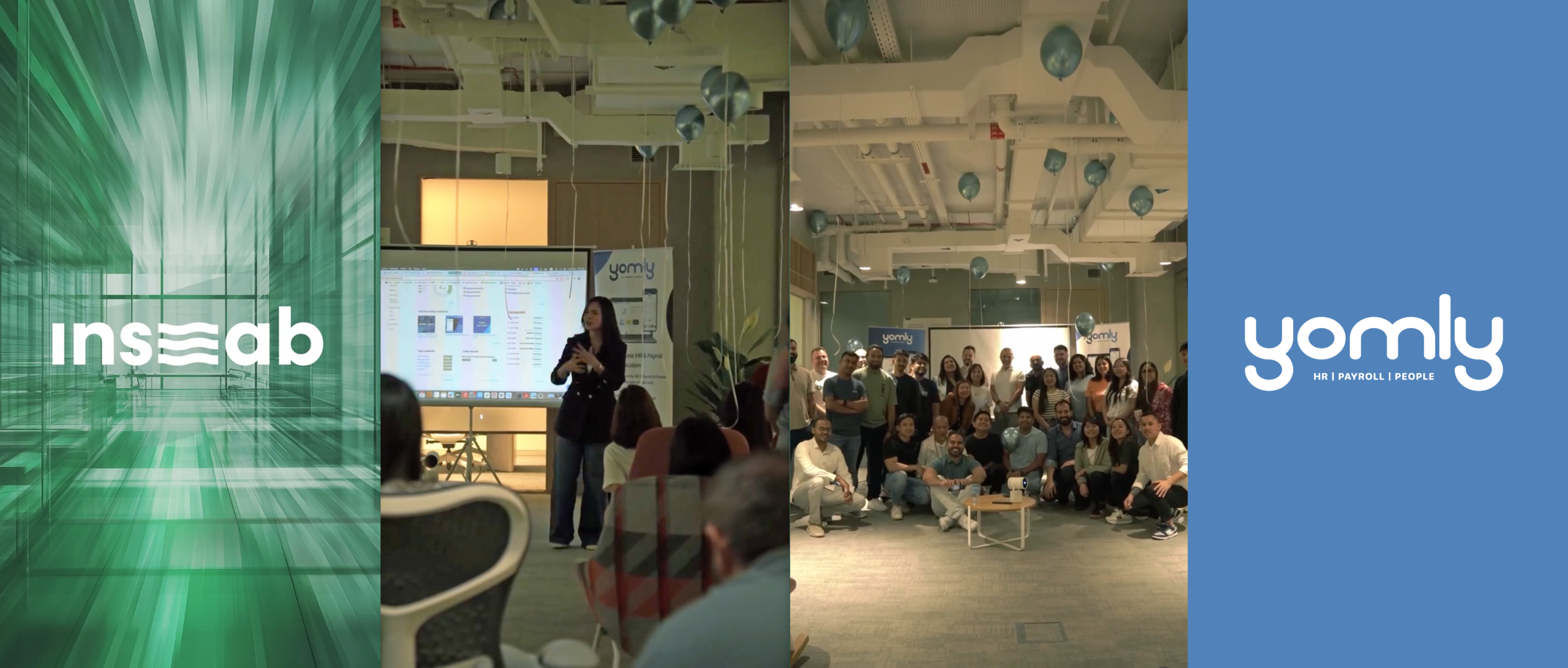
Recently, Yomly partnered with INSEAB (formerly Shamal Holding) to successfully onboard their growing team onto the Yomly platform. This journey culminated in a comprehensive Go-Live enablement program designed to guide employees through the system and support a seamless transition into daily operations. With over 70 employees across the region, INSEAB is now equipped with a unified HR and payroll solution built to support both local and regional teams.
Building a strong foundation before Go-Live
Ahead of launch, the Yomly and INSEAB teams worked closely to ensure every aspect of the rollout was aligned with real operational needs. This preparation phase included:
Defining onboarding timelines and key success milestones
Configuring the platform to reflect INSEAB’s HR and payroll workflows
Setting up role-based access for HR teams, managers, and employees
Validating employee data and approval structures
Embedding compliance requirements across processes
This collaborative approach ensured the platform was not only technically ready but fully optimized to support INSEAB’s day-to-day operations from the outset.
Tailoring Yomly to match INSEAB’s operational structure
Every organization is unique, and Yomly’s flexible configuration allows the platform to adapt accordingly. For INSEAB, this meant setting up:
Organizational structures and reporting lines
Employee records and documentation workflows
HR request processes and approval journeys
Policy-driven rules for HR actions
Payroll-related data configurations where applicable
By aligning Yomly with INSEAB’s existing structure, the platform now operates seamlessly within their business while introducing automation to drive efficiency and accuracy.
Go-Live enablement sessions: hands-on training in real scenarios
To ensure strong adoption, Yomly’s Training Consultant, Paula Gerardo, led two engaging enablement sessions: A virtual session for INSEAB’s team in Saudi Arabia and an on-site session at their Dubai office in DIFC.
Live platform walkthroughs
During the sessions, employees were guided through key areas of the Yomly platform, including:
Navigating the system interface
Accessing employee profiles and information
Submitting HR requests and tracking progress
Manager approval workflows
Key dashboards and reporting views
These walkthroughs allowed teams to experience firsthand how Yomly supports everyday HR and payroll tasks.
Practical, scenario-based training
Rather than focusing purely on features, the sessions were built around real use cases employees would encounter, such as:
Updating personal information
Uploading documents
Submitting and managing HR requests
Following approval flows
Understanding roles and responsibilities
This hands-on approach helped build confidence and accelerate adoption from day one.
Strong engagement and meaningful discussions
INSEAB’s team demonstrated high engagement throughout the sessions, asking thoughtful questions and exploring best practices for daily operations. Discussions covered:
Tips for faster platform navigation
Approval workflows across different scenarios
Efficient handling of common HR actions
Clarifying user responsibilities
Best practices for smooth processes
These interactive conversations are a key driver of long-term success, helping teams align on consistent and efficient ways of working.
Ongoing support beyond Go-Live
Yomly’s partnership with INSEAB continues well beyond launch day. Our team provides:
Regular check-ins with key stakeholders
Ongoing technical and user support
Adoption monitoring and optimization
Additional training as needed
This continuous enablement ensures INSEAB continues to unlock maximum value from the platform as their business grows.
Empowering people for long-term HR success
A successful platform launch is ultimately about empowering employees with the right tools and knowledge. INSEAB’s Go-Live journey highlights the importance of strong preparation, hands-on training, and close collaboration in achieving a smooth transition. We’re proud to welcome INSEAB to the Yomly platform and look forward to supporting their ongoing HR and payroll transformation.
Centralising Multi-Country Workforce Policies with Global HR Policy Standardisation
The global nature of many businesses has brought challenges to human resources (HR) departments in managing diverse workforces across multiple nations. Varying workplace legislation and cultural differences mean that a flexible yet cohesive global HR policy framework is essential. Achieving global HR policy standardisation might seem daunting. By remaining adaptable and utilising cutting-edge HRMS software, however, companies can easily rise to the task.
Global HR Policy Standardisation
What is Standardisation in HR?
Standardisation in HR describes the creation of uniform policies and procedures that govern how all employees are treated. Implementing these practices should ensure consistent and equitable treatment of all staff regardless of their role or location. Standardisation aims to enhance HR efficiency while maintaining compliance with legal requirements.
Multinational organisations that manage a diverse workforce should prioritise HR standardisation. It helps create a cohesive workplace environment, promote fairness, and avoid confusion or conflict between different offices, branches, or sites.
What Are Global HR Policies and Practices?
Global HR policies are the procedures and guidelines implemented by a multinational organisation to manage its workforce across different countries. They should accommodate local labour laws, cultural norms and sensitivities, and varying employee needs. Examples of global HR policies include legal compliance, anti-discrimination and harassment policies, communication strategies, and flexible benefits packages.
Why Are Centralised Workforce Policies Necessary?
Eurostat reported that, as of 2022, 146,400 multinational companies were operating within the EU/EFTA alone, employing 28% of people in the business economy. More than a quarter of these companies were based outside Europe, and of the 47 million people employed by multinationals, 17% were non-Europeans. There is such variation between labour laws and workplace regulations globally that maintaining compliance is a significant challenge for any multinational organisation.
While a multinational workforce benefits from varying viewpoints, perspectives, and diversity of thought, differences in employment laws and cultures need accommodating. When managing HR across borders, it can become difficult to track these differences manually. By adopting a standardised framework of HR policies, businesses can streamline their workforce policies while ensuring:
Regulatory Compliance: National employment laws can vary wildly and change frequently, and maintaining compliance with them is essential. Global HR policy standardisation can make certain that all legislation is properly observed while maintaining a standard corporate governance structure.
Risk Reduction: The consequences of failing to adhere to nation-specific regulations and laws can include fines, legal penalties, court dates, and shutdown of business. A well-monitored and properly structured workforce policy is the best way to ensure a business is up to date with requirements.
Efficiency of Operations: A centralised workforce policy helps to streamline the work of HR departments by reducing administrative burdens and minimising duplication of tasks.
Positive Corporate Culture and Workplace Experience: A workplace where each member of the team feels equally valued and respected is the best way to promote staff well-being. A standardised HR policy framework that accommodates everyone’s needs will ensure cohesion within the company while boosting engagement and employee retention.
While a centralised HR policy is essential, variations in local workplace requirements and labour laws demand flexibility also.
How Can You Balance Standardisation with Local Adaptability?
A successful global HR policy framework must strike the right balance between international consistency and local flexibility. This can be achieved through a combination of these elements:
Core Global Policies: A standardised core of essential HR elements will create an overarching sense of corporate cohesion. This should include non-negotiable aspects like health and safety, ethics, diversity and inclusion, company values, and performance management.
Flexible Location-Dependent Policies: Allow for adaptability around certain HR policies to accommodate the needs and requirements of employees and the laws in different regions. Country-specific regulations can include working hours, union requirements, benefits, and termination procedures.
A Hybrid Global HR Policy: A global HR policy framework with core principles consistent across regions supplemented by adaptable regional policies is an ideal approach. This allows for unified company standards and a cohesive workplace culture while adhering to local laws and observing proper cultural sensitivity.
How to Implement a Multi-Country Workforce Policy?
Any cross-border enterprise seeking to implement global HR policy standardisation should consider each of these key components:
Maintenance of Regulatory Compliance: Regular audits and consultations with legal experts can ensure that legal requirements are maintained and local labour laws adhered to.
HR Management Software: Technology is an essential ally in creating a global workforce policy. Cloud-based HR and payroll software can seamlessly centralise data, automate processes, eliminate manual errors, and reduce administrative burdens. All employees can readily access HR support through online channels, no matter where they are in the world, and inbuilt translation software further facilitates easy communication.
Governance and Oversight: An outdated policy is of no use to anyone, so a dedicated team should be assigned to ensure all procedures are up to date. They should monitor compliance, implement best practices, and swiftly address any issues or inconsistencies that arise within the HR policy.
Consistent Compensation and Benefits: Salaries, benefits, and bonuses should be in keeping with a global set of standards while allowing for flexibility to accommodate local market adjustments.
Cross-Cultural Awareness Training: Educating staff about each other’s cultures can promote better communication, increase mutual respect, and foster a cohesive workplace. Training programmes that improve cultural awareness are key, and can help ensure HR standards remain respectful and effective across all regions.
Employee Communication and Engagement: Remotely accessible HR support channels, and multilingual policy documents can be easily facilitated through HRMS software like Yomly. This can instantly help foster transparency and boost employee engagement by removing potential language and time barriers.
In fact, the leading HRMS software available today can help facilitate each of these elements, as multinational maritime logistics firm LD Ports & Logistics discovered. After implementing Yomly’s platform, full compliance with all local legal requirements was assured, and the running of regional offices streamlined within the global framework. Staff were fully trained in using the new software and employees were able to enjoy self-service of the new HR suite.
How to Overcome the Potential Challenges to Standardising Global HR Policies?
Potential challenges might include employee resistance to change, coordinating regional HR teams, and local bureaucracy issues. These can be smoothly overcome by:
Implementing Pilot Programmes: Test changes in policy in restricted locations to troubleshoot issues and ensure operational efficiency before company-wide rollout.
Creating Comprehensive Training Programmes, and Incentivising Engagement: Resistance to change is often a result of fear of the unknown. By training staff fully in all new HR systems and software implementation, and using incentives like leaderboards, accolades, or small prizes for engagement, this can be effectively overcome.
Utilising Local Stakeholders: Regional HR managers and local legal experts are perfectly positioned to offer essential insights. Collaborating with them will help ensure the smooth implementation of a new policy framework across locations.
Scheduling Regular Reviews and Updates: Continuous monitoring and assessment of the efficacy of the company’s global HR policy is the only way to maintain its value. Based on the data from regular reviews, adjustments can be made to accommodate evolving regulations, and the HR framework can be fine-tuned to best fit the needs of the business.
From enhancing efficiency and streamlining HR processes to ensuring local legal compliance across all regions, a centralised global workforce policy is a strategic necessity for any multinational organisation. By adopting a flexible hybrid policy of locally adaptable elements built around core universal HR standards, businesses can optimise workforce management while promoting workplace cohesion.
HR and payroll management software is an invaluable asset in achieving this balance, and Yomly are experts in the field. For personalised advice on how to implement a centralised multi-country workforce policy within your organisation, contact us today, and one of our team will be happy to chat.
Scaling HR Operations for Rapid Expansion with a Global HR Consultancy
Global expansion offers exciting opportunities for profit and growth, making it a strategic goal for many businesses. However, rapid development can leave human resources (HR) departments struggling to keep up. As any global HR consultancy worth their pay will tell you, effectively scaling HR operations to match company growth is essential.
According to the US Bureau of Economic Analysis, between 2021 and 2022 US multinational enterprises hired 2.2% more workers. 1 million more people were employed over the course of one year, and this trend has since been seen to continue worldwide. By implementing a cohesive and adaptable global HR infrastructure, operational efficiency can be maintained alongside seamless international expansion.
Scaling HR Operations for Rapid Expansion with a Global HR Consultancy
What is Global HR?
Global human resources describes the management of employees from multiple nations within a business or company. Local labour laws, cultural norms and sensitivities, and other location-specific differences need accommodating to achieve consistent and equitable management across the workforce.
What Are the Challenges of Multinational Expansion?
As marketing consultants Quill Communications discovered during their rapid expansion across the Arabian Gulf, with growth comes significant challenges. Beyond remaining compliant with local labour laws, communicating with staff dispersed across a wide region demands structure. They found manually keeping up with performance management and employee documentation was becoming overwhelming and increasingly inefficient.
Yomly’s all-in-one HRMS platform swiftly resolved each of these pain points with one streamlined solution. They centralised all HR operations and offered an online environment where employees could communicate in real-time, regardless of location. Paperwork was minimised, and thanks to Yomly’s comprehensive onboarding and training sessions, employees swiftly adopted the new system, immediately improving operational efficiency.
Businesses with branches in a wide range of locations can also benefit from facilitating cross-cultural training sessions for employees. Language barriers, and differences in communication styles, workplace expectations, and leadership styles can all lead to misunderstandings without proper management. Sensitivity, mutual respect, and understanding can all be promoted by prioritising open communication and cultural integration within the company.
A structured and scalable HR framework with built-in local flexibility can help companies overcome these global expansion challenges. When facilitated by cutting-edge HRMS technology, smooth upsizing of HR operations can be assured.
How to Build a Scalable HR Framework?
The perfect balance between a core universal set of policies and procedures supplemented by flexible elements to accommodate local laws and customs is ideal:
Create a Core Set of Standardised HR Policies: This should include policies around ethics, health and safety, diversity and inclusion, performance management, and the values of the business. These should apply to all employees regardless of location, and be applied consistently, company-wide, helping align the workforce.
Build in Locally Adaptable Elements: Built around the universal core HR values should be flexible policies to allow for regional laws and cultural needs. Benefits, legal compliance requirements, and restrictions on work hours are all examples where adaptability will likely be needed.
Implement HR Technology: Streamline HR processes easily with the use of HR management software (HRMS) systems. These cloud-based platforms reduce administrative burdens and minimise duplication of tasks, allowing many HR processes to be automated. Online HR reporting dashboards allow for the centralisation of employee data, so all regional teams can access the information they need. Real-time compliance tracking software is built into the software, helping minimise any risk of accidental non-compliance with changing local laws.
Strategise to Anticipate Workforce Needs Before They Arise: As a business expands, its workforce needs will increase. HR teams should plan for this ahead of time to avoid staff shortages and difficulties. Global talent acquisition strategies and analysis of regional hiring trends can help meet the growing demands of the company. By adapting HR solutions for remote work, HR departments can further widen their hiring options and maximise their adaptability during expansion.
Building a scalable and adaptable HR infrastructure is only the first step. Effectively implementing that framework is essential to reap the benefits.
How to Implement a Global HR System?
Deploying your global HR framework across a multinational organisation requires careful planning if success is to be assured. These steps should ensure a successful company-wide implementation:
Assess Business and HR Needs, and Plan to Meet Them: A comprehensive assessment of the potential challenges involved in implementation allows for plans to be made to resolve issues as they arise. Key challenges might include complexities within payroll, compliance risks, and integrating a wide variety of HR processes.
Find the Right HR Technology for the Needs of the Business: An HRMS platform like Yomly’s is ideal for a growing multinational business. It offers broad customisability, multi-national payroll options, regional compliance updates, and a user-friendly customer service portal. Multilingual support allows employees to fully engage no matter their location or language, and facilitates easy communication within the whole organisation.
Ensure Local Compliance From Launch: Consulting legal experts in each region to verify your system’s adherence to local regulations can minimise risk.
Prioritise a Centralised Employee Data Management System: Elements like workforce metrics, performance, training, and engagement can be far more efficiently tracked when using a unified database.
Fully Train Employees, and Incentivise Engagement: Resistance to change can be overcome and smooth adoption of the new system ensured by providing comprehensive training sessions for staff. Incentives like leaderboards and virtual awards, and online well-being and team-building sessions can all help boost engagement and promote open communication company-wide.
Use a Pilot Region to Troubleshoot: Implementing the new system in one region only allows for it to be thoroughly tested and processes refined. Once any issues have been resolved, you can be sure of a smooth rollout when launching across the rest of the business.
Monitor Performance, Optimising as Needed: Frequent reviews of how the new system is operating can help gauge its effectiveness and where tweaks might be required. Gathering employee feedback gives valuable insights that can help further improve HR operations as the enterprise continues to grow.
Careful planning, assisted by leading HRMS software and local expertise, and regular refinements of the system can ensure HR operations scale seamlessly as the company expands. As well as ensuring local compliance, a well-structured HR framework will help drive success by boosting employee engagement and job satisfaction. HR departments can slash administrative burdens by streamlining their tasks, centralising data, and so maximising operational efficiency.
If your business is looking to grow, or your HR department’s processes could benefit from some refinement, Yomly could hold the answer. Offering elegant HR and payroll solutions in Dubai and worldwide, contact us today, and one of our team will be happy to help.
Data-Driven Compensation Strategies for Large Enterprises
Managing compensation for large enterprises involves balancing employee satisfaction with financial sustainability. The days of static pay structures are over, and companies are now required to adapt to a rapidly shifting market. Modern enterprises use compensation management software to develop dynamic strategies that respond to real-time data. By incorporating analytics and benchmarking, these systems ensure compensation packages reflect current trends and align with the company’s goals. In this article, we will explore how enterprises can utilise data to refine compensation strategies, predict future needs, and assess the return on investment in employee compensation.
Data-Driven Compensation Strategies for Large Enterprises (3)
Analysing Market Trends and Adjusting Pay Structures
A comprehensive compensation strategy requires a clear understanding of external market trends. Large enterprises must evaluate salary data from competitors and broader industry sources to maintain their competitive edge. Regional differences in pay, industry growth, and evolving skill demands all play a crucial role in shaping compensation decisions. With payroll management software like ours, businesses can systematically gather and analyse this data. This enables companies to fine-tune pay structures, ensuring they remain both competitive and financially sustainable. Proactive adjustments, guided by these insights, help avoid potential gaps in market pay, safeguarding the company’s position in the talent market.
Benchmarking for Salary Reviews
Benchmarking is a key aspect of salary reviews. Comparing internal salary data with external benchmarks helps organisations gauge their standing in relation to industry peers. Large enterprises use HRM software to access and analyse both internal and external data seamlessly. This involves assessing job roles, performance outcomes, and compensation packages alongside similar businesses. Such benchmarking ensures that compensation structures remain competitive and up-to-date. It also helps HR departments identify where salary adjustments may be needed to retain talent or keep pace with competitors. Moreover, this approach provides ongoing insights that support refined compensation strategies.
Using Internal Data for Performance Assessment and Rewards
Data gathered internally provides essential insights for evaluating employee performance and adjusting compensation. Companies often assess both measurable outputs, like productivity, and more subjective qualities, such as teamwork and leadership. With cloud-based payroll software, organisations can streamline the collection and analysis of this information. By aligning compensation with performance outcomes, businesses create systems where rewards reflect individual contributions. This method not only boosts employee motivation but also strengthens retention by offering clear incentives for high performance. The data further aids in identifying top talent, making decisions on promotions and bonuses more transparent and data-driven.
Predictive Analytics in Compensation Planning
Predictive analytics is increasingly used in compensation planning for large organisations. These models enable businesses to anticipate future compensation requirements by analysing employee performance trends, shifts in industry demands, and broader economic factors. Many companies integrate predictive analytics with their existing HR tools, allowing them to forecast salary adjustments and design compensation packages with greater accuracy. By identifying trends such as potential talent shortages or rising salary demands in specific markets, organisations can stay ahead in their workforce planning. However, while these models provide valuable insights, human judgement remains essential to ensure decisions are fair and consistent with the company’s overall objectives.
The ROI of Employee Compensation
Employee compensation goes beyond being a simple cost; it functions as an investment that can drive overall business performance. Properly structured compensation packages can lead to increased productivity, as employees feel valued and motivated to contribute more. Calculating the return on investment (ROI) of these packages allows HR teams to make data-backed decisions when considering salary adjustments or bonuses. For instance, an employee’s measurable contribution to revenue or efficiency may justify a higher compensation level than initially planned. Tracking these outcomes through data systems provides clarity and ensures compensation aligns with performance. Additionally, well-targeted compensation strategies help reduce turnover and improve employee retention, which further enhances long-term organisational stability and growth.
Balancing Data with Human Insight
While data-driven compensation models provide many advantages, relying solely on data can present risks. Compensation decisions should also consider factors that are difficult to quantify, such as team dynamics or individual potential. A purely algorithmic approach might overlook these nuances, leading to dissatisfaction or disengagement. HR managers must combine data insights with their professional judgement to create compensation strategies that work for both the business and its employees. This balance ensures that while decisions are informed by analytics, they remain flexible enough to account for the complexities of managing people.
Contact us to find out how you can use Yomly’s tools to streamline compensation strategies in your enterprise.
Frequently Asked Questions
How can data-driven compensation strategies benefit large enterprises?
Data-driven compensation strategies allow large enterprises to make informed decisions based on market trends, employee performance, and industry benchmarks. By utilising comprehensive data, companies can fine-tune salary structures to remain competitive while ensuring fairness. This approach improves employee retention and reduces the risks associated with arbitrary compensation decisions, offering a more structured and responsive compensation plan.
What challenges come with relying on data for compensation planning?
While data can provide valuable insights, relying solely on it for compensation planning poses risks. Data may not fully capture qualitative factors such as employee potential, team dynamics, or future performance. Overdependence on analytics can lead to overly rigid compensation models that fail to account for individual circumstances. HR teams must balance data with human judgement to ensure fair and effective compensation decisions.
How does benchmarking support salary reviews in large companies?
Benchmarking allows large companies to compare their compensation packages with industry peers, ensuring they remain competitive. By gathering data on salary trends within the same sector or region, companies can identify gaps in their pay structures. This process helps align compensation with market standards, making it easier to attract and retain top talent while ensuring fairness across the organisation.
How to Seamlessly Blend Integrated HR Payroll System with Your Existing Software
By integrating payroll software into your existing HR programs, you can improve the accuracy and timeliness of payments to employees. Integrated HR payroll systems synchronise people and payroll data to guarantee timely payments and streamline operations. Ensuring data accuracy in these systems is essential for seamless payroll operations. Even better, HR staff will be relieved of the burden of repetitive administrative tasks, leaving them free to work on other projects. Staff will benefit from ready access to and understanding of their paychecks and the breakdown of each payment.
The question isn’t whether it’s worth using payroll software- rather it is how to incorporate it seamlessly into your existing HR architecture. By following these pointers, you can ensure a smooth and fluid integration.
How to Seamlessly Blend Integrated HR Payroll System with Your Existing Software
Be Clear On Your Goals When Selecting Payroll Software
There are a wealth of payroll options out there to choose from. Identifying your primary aims and priorities can help you find the application that best fits your needs. Perhaps your objective is to reduce human error and minimise time spent on payroll by HR staff. Or maybe what’s most important is enhancing and maintaining compliance with tax regulations and legal requirements. You might want something that ticks all these boxes likeYomly’s payroll software. Being clear on what it is you want will help the selection process and guide integration thereafter.
Check For Compatibility of Systems
For easy integration, any new payroll application will need to be compatible with your existing HR software. Doing thorough research before making a purchase is essential here. One easy way to ensure compatibility is by purchasing software from the same vendor, as they will usually be created to work flawlessly together. Otherwise, seek out software packages with well-designed APIs (Application Programming Interfaces) and in-built integration solutions. These will allow your different systems to communicate seamlessly.
Plan Every Detail of the Integration Process
Create a timeline of the upcoming integration process, so everyone involved understands exactly what to expect and when. Include clear outlines of each step to be taken, how long each step should take, and who is responsible for ensuring each step is completed on time. Consider the following broad categories:
Data Migration: Data will need to be transferred between systems so that both sets of software are working with the same information. Decide how and when this will be done, by whom, and who is responsible for checking it is all done accurately.
Configuration: New software needs to be configured to function properly and in line with the user’s requirements, and payroll software is no different. Following integration, it is likely that your existing HR program may also need reconfiguring to work cohesively with your new payroll suite. Designate who is responsible for this, and by when it should be completed.
Testing: As with any technology, every element of your new payroll software and existing HR infrastructure should be thoroughly tested post-integration. Designating someone from each department that will be using the software to help with testing is a good way to ensure all functions are utilised and working properly before the system goes live.
Training: Implement training sessions with the new software for all HR and payroll staff in good time. This way everyone knows how to use the updated systems. The rest of the workforce, too, should be instructed in how to access and understand their payroll records
Synchronise Data Between Systems
Once the integration process is underway, data will need to be transferred from the existing HR software to the new payroll platform. Cleaning up and standardising data before you start can help make this process pain-free. Ensure consistent formatting throughout data sets like employee details, tax information, and salary amounts, and correct any errors or duplicate entries. Doing this now will remove the risk of data loss or corruption once migration is underway.
Specialised data mapping tools are a huge help at this stage, making certain that data fields in the new software directly correspond to those in the existing HR architecture. Data migration should be carefully overseen, and checks made to ensure all information is correct between systems. Once this is ascertained, regular data synchronisations can be scheduled to keep both platforms up to date and in agreement with each other. These could be in real-time or on a set day of the week or month, depending on the company’s needs.
Configure and Reconfigure Systems, Customising them to Your Needs
Set up the new software to operate within existing company parameters, aligning with current HR processes and policies. Setting up payment schedules, inputting tax rates, specifying benefits deductions, and other such configurations should all be completed at this time. Check, too, that your original HR software’s settings are in accord with the new payroll platform for seamless operations between the two. Tailoring your new software’s dashboard and reports to display the most pertinent data and insights will help support your company’s workflow and provide an intuitive user experience.
Testing, Testing- and Test Some More
This is an essential part of the integration process and can help identify any teething issues before the new software goes live. Ensure data can move seamlessly between both platforms by simulating various scenarios and using every element of each program’s facilities. Such testing should include instances like adding new hires, adjustments to salaries, changes to benefits, accommodating flexitime hours, and contract terminations.
If any issues are identified they should be promptly resolved, and the tests repeated to ensure fluid and accurate operations. This way you can be confident that all software is functioning properly and reliably before it is officially launched.
Offer Comprehensive Training and Support
Seamlessly integrated software is only as good as the staff that are operating it, so all HR and payroll staff will need proper training on how to use the new platform. Everything from data input, synchronisation, and troubleshooting should be covered, as well as thorough instruction in using all features of the updated software. Providing ongoing support after the software goes live will allow the quick resolution of any issues that later arise.
Giving employees training in accessing their payroll information and using the software’s dashboard is also important. Not only does this afford staff insight into the breakdown of their pay, but it can also help them resolve many payroll queries themselves before they reach the HR team.
Monitor Function After Roll-Out, Optimising Performance Based on Feedback
After the new software goes live, keep a close watch on its performance and gather feedback from the staff that are using it. This information will allow you to tweak how it operates to better serve the workforce, as well as quickly identify and resolve any issues. Regular reviews and adjustments based on your findings will help maintain the software’s performance at a high level and optimise functionality. Doing so is best practice, and will help ensure your chosen software continues to best meet the needs of your company.
The benefits of payroll software are myriad, far beyond just streamlining HR procedures and being certain of accurate payments. The advantages it offers your company are well worth the trouble of blending it with existing HR technology. Integrating any new platform with existing software might seem like an overwhelming task, but a considered and streamlined approach makes the process manageable and seamless.
Just follow the steps highlighted in this article to merge payroll with existing software smoothly and flawlessly – orcontact Yomly for expert advice on all things HR and payroll.
Additional FAQs
What is payroll software?
Payroll software manages and automates every element of salaries and employee payments. This encompasses everything from tracking the precise breakdown of each paycheck to actually making the payments, and adjusting them for taxes and benefits. The dashboard for each employee’s pay can typically be accessed by both the employee as well as HR and payroll staff, giving the whole workforce a greater sense of transparency and confidence in payments.
How to choose payroll software?
When selecting new payroll software, be clear on the features you want, as well as the existing systems it will need to be compatible with for integration. Elements like robust cybersecurity, scalability, functions for pension payments, and mobile access might be absolutely essential to the proper operations of your company’s payroll. Consider, too, the level of ongoing support that comes with your new software. Reliable customer assistance services can ensure and maintain the smooth running of your software and provide timely resolution of any future issues.
Leveraging Cloud Technology for Scalable and Efficient Payroll Operations
Cloud technology has significantly reshaped various business functions, including payroll. Traditional payroll systems, often complex and error-prone, have been surpassed by more efficient alternatives. Cloud-based payroll software offers scalable solutions, streamlining payroll processes and enhancing overall efficiency. This article explores the benefits of cloud technology in payroll management and its clear advantages over traditional methods.
Leveraging Cloud Technology for Scalable and Efficient Payroll Operations (1)
The Changing Face Of Payroll Management
Traditional payroll management involved manual processes that were time-consuming and prone to errors. HR departments had to spend considerable time calculating wages, maintaining records, and ensuring compliance with tax regulations. Early payroll software automated some of these tasks but required local installations and extensive IT support. These systems often lacked the flexibility needed to adapt to changing business environments. The advent of cloud-based solutions has addressed these issues, providing more adaptable and user-friendly payroll management tools.
Advantages of Cloud Based Payroll Software
Cloud-based payroll software brings several key benefits to businesses. Scalability is a major advantage, allowing companies to adjust their payroll operations seamlessly as they grow. Accessibility is also enhanced, as cloud-based systems enable HR professionals to manage payroll from any location, which is particularly useful in remote work settings. Security is another critical benefit, with cloud providers offering advanced data encryption and regular backups to protect sensitive information. Integration with other HRM software optimises overall efficiency, making cloud-based payroll systems an ideal choice for modern businesses.
Streamlining Payroll Processes
Adopting cloud-based payroll software can significantly streamline payroll processes. Automation reduces the risk of errors and ensures compliance with various regulations. The software handles tasks such as wage calculations, tax withholdings, and report generation efficiently. This frees HR professionals to focus on more strategic activities rather than routine administrative tasks. Real-time updates ensure that payroll data is always current, minimising the chances of mistakes. Integration with time-tracking systems and other HR tools creates a seamless workflow, enhancing both accuracy and efficiency.
Yomly’s Cloud-Based Payroll Solutions
As one of the top payroll software companies in Dubai, Yomly exemplifies the practical benefits of cloud-based solutions. Our software includes comprehensive payroll management features, automating payroll processing steps for companies in the UAE. Leveraging cloud technology, Yomly provides scalable solutions that meet the needs of businesses of all sizes. The integration with other HRM software enhances functionality, offering a robust toolset for HR professionals. Prioritising security and compliance, Yomly ensures that payroll data is protected and that businesses adhere to all regulatory requirements. This case highlights the tangible advantages of using cloud-based payroll software in a competitive market.
Future of Payroll Management
The adoption of cloud technology in payroll management will continue to grow as its benefits become more widely recognised. Future advancements may include further integration with AI and machine learning, enhancing automation and predictive capabilities. As technology evolves, cloud-based payroll systems will keep providing scalable and efficient solutions for businesses. Embracing these technologies positions companies to better adapt to changing market conditions and regulatory demands. The focus remains on improving accuracy, efficiency, and compliance in payroll operations.
To explore how Yomly’s solutions can benefit your business, get in touch with us today.
Additional FAQs
How does cloud-based payroll software improve data security?
Cloud-based payroll software enhances data security through advanced encryption methods and regular backups. These measures ensure that sensitive payroll information remains protected from unauthorised access. Cloud providers also maintain strict compliance with data protection regulations, offering an additional layer of security. Regular updates and security patches are automatically applied, reducing the risk of vulnerabilities. This comprehensive approach ensures that payroll data remains secure at all times.
Can cloud-based payroll software integrate with existing HR systems?
Yes, cloud-based payroll software is designed to integrate seamlessly with existing HR systems. This integration allows for the smooth transfer of data between payroll and other HR functions, such as time tracking and employee management. It eliminates the need for manual data entry, reducing errors and saving time. Many cloud-based solutions offer APIs and other tools to facilitate easy integration with various HRM software. This interconnected approach enhances overall efficiency and simplifies HR processes.
What are the cost benefits of switching to cloud-based payroll software?
Switching to cloud-based payroll software can lead to significant cost savings for businesses. The subscription-based pricing model eliminates the need for expensive upfront investments in hardware and software. Maintenance and updates are handled by the cloud provider, reducing IT costs. Additionally, the automation of payroll tasks reduces the time and resources needed for payroll processing. These combined savings make cloud-based payroll software a cost-effective solution for businesses of all sizes.
Payroll Integration Challenges in Mergers and Acquisitions
The complexities of mergers and acquisitions (M&A) extend far beyond mere corporate negotiations, profoundly impacting internal operations, particularly in payroll systems. The integration of disparate payroll systems poses significant challenges, often overlooked in the broader M&A dialogue. Such integration is crucial for seamless employee management post-merger. Proper payroll integration during mergers and acquisitions plays a pivotal role in these scenarios, ensuring consistent and accurate employee data management. This article delves into the specific hurdles of payroll integration during M&As and outlines practical solutions for overcoming them.
Payroll Integration Challenges in Mergers and Acquisitions (1)
Understanding Payroll System Disparities in Integration of Mergers and Acquisitions
Each company involved in a merger or acquisition typically operates on a distinct payroll system, possibly supported by differing regulatory frameworks. This variance can lead to discrepancies in employee data handling and benefit allocations, causing confusion and dissatisfaction among employees. The first step in tackling these challenges is conducting a comprehensive audit of the existing systems of both the acquirer and the acquired company. Identifying overlaps and gaps in the functionalities of each system can guide the integration process effectively, minimising disruptions in payroll operations. Additionally, understanding these disparities helps in aligning the payroll systems with the merged entity’s strategic goals and operational requirements. Using Yomly’s employee performance management systems can help streamline this alignment process.
Streamlining Data Consolidation
Data consolidation is a critical step in payroll integration. It involves merging employee data from all companies involved in the M&A. This process must be handled with precision to ensure data integrity and security. Utilising robust tools from an HRM software provider can aid in automating data migration, reducing common payroll errors, and maintaining compliance with regional employment laws. It is essential to establish a unified database that serves as a single source of truth for all employee-related information. This database should be regularly updated and maintained to reflect any changes in employee status, compensation structures, and benefits, ensuring accuracy and consistency.
Addressing Legal and Compliance Issues
Mergers often bring about complex legal and compliance issues, particularly with payroll. The diligence process plays a crucial role in addressing these legal and compliance issues. Different regions may have varying legal requirements affecting payroll operations, such as tax implications and employment rights. Ensuring compliance is crucial to avoid legal penalties and protect employee rights. Companies must update their payroll systems to reflect the combined entity’s legal obligations, which might involve adapting to new payroll regulations or integrating multiple legal frameworks into a single operation. Engaging with legal experts specialising in employment law can provide valuable insights and guidance in navigating these complexities, ensuring the integrated payroll system adheres to all relevant regulations. Using payroll management software that is compliant with local laws can also aid in this process.
Implementing New Payroll Technologies
To achieve a successful payroll integration, companies may need to adopt new technologies or enhance their existing systems. Yomly’s employee performance management systems offer advanced features that can simplify the integration process. These systems are designed to handle complex data from multiple sources, ensuring accurate payroll processing and reporting. Investing in such technologies not only facilitates smoother integration but also improves the overall efficiency of the HR department. Moreover, leveraging cloud-based solutions can offer scalability and flexibility, enabling the integrated payroll system to adapt to the evolving needs of the organisation.
Strategies for Effective Integration
Effective payroll integration requires meticulous planning and execution. It involves setting clear timelines, defining key performance indicators (KPIs), and ensuring thorough training for HR staff on the new systems. Regular communication with all stakeholders is essential to address concerns and gather feedback. Additionally, it is beneficial to phase the integration, starting with consolidating critical data and functionalities before fully transitioning to a new system. Conducting regular audits and reviews of the integrated payroll system can help identify and address any issues promptly, ensuring continuous improvement and optimisation.
Managing Cultural and Operational Differences
One of the often-overlooked aspects of payroll integration in M&As is the impact of cultural and operational differences between the merging entities. These differences can manifest in various ways, such as differing pay cycles, benefit structures, and compensation philosophies. Addressing these disparities requires a deep understanding of each organisation’s culture and operational practices. Developing a unified approach that respects and incorporates the best practices from both entities can facilitate smoother integration. Engaging with employees and involving them in the integration process can also help in managing expectations and fostering a sense of ownership and acceptance of the new payroll system.
Ensuring Data Security and Privacy
Data security and privacy are paramount during payroll integration, as employee data is highly sensitive. Ensuring that the integrated payroll system complies with data protection regulations is crucial. Implementing robust security measures, such as encryption and access controls, can protect employee data from breaches and unauthorised access. Additionally, conducting regular security audits and vulnerability assessments can help identify and mitigate potential risks. Educating employees about data privacy practices and the importance of safeguarding personal information can further enhance the security posture of the integrated payroll system.
The Role of Change Management
Change management plays a critical role in the successful integration of payroll systems during M&As. Effective change management involves preparing, supporting, and guiding employees through the transition. This includes clear communication about the changes, the benefits of the new system, and the expected outcomes. Providing training and resources to help employees adapt to the new payroll processes can ease the transition and reduce resistance. Additionally, fostering a culture of openness and collaboration can encourage employees to share their concerns and suggestions, contributing to a more effective and smooth integration process. Using Yomly’s employee performance management systems can support the change management process by providing a user-friendly platform for employees.
Integrating payroll systems in M&As is a multifaceted challenge requiring strategic planning and sophisticated HR technologies. By adopting a structured approach and leveraging advanced tools, companies can overcome these obstacles, ensuring a smooth transition and maintaining payroll accuracy and compliance. For those seeking to enhance their HR capabilities, considering these strategies is a step towards more efficient and compliant HR operations. For further assistance, engaging with an expert in payroll integration can provide tailored solutions that meet specific organisational needs.
Additional FAQs
What are the common challenges faced during payroll integration in mergers and acquisitions?
The main challenges include managing disparate payroll systems, ensuring data accuracy, and maintaining compliance with varying legal requirements. Different companies often use distinct payroll software, which complicates the consolidation process. Additionally, aligning payroll practices and benefits structures can be difficult. Addressing these challenges requires careful planning and the use of advanced HR software tools.
How can companies ensure data security during payroll integration in M&As?
Implementing robust security measures such as encryption and access controls is crucial. Regular security audits and vulnerability assessments help identify and mitigate potential risks. Educating employees on data privacy practices enhances overall security. Using trusted HR software solutions ensures compliance with data protection regulations.
Why is change management important in payroll integration for M&As?
Change management helps prepare and support employees through the transition to a new payroll system. Effective change management is crucial in maximizing deal value by ensuring smooth integration and alignment of strategic objectives. Clear communication about changes and their benefits reduces resistance. Providing training and resources ensures employees adapt smoothly to new processes. Effective change management fosters a collaborative culture, aiding in successful integration.
Aligning Human Resources with Enterprise Business Goals
Integrating human resources (HR) into an enterprise’s strategic framework is crucial for success. HR departments have evolved beyond administrative functions, becoming key players in shaping company culture, driving employee engagement, and fostering innovation. The strategic alignment of HR with business goals ensures a motivated and productive workforce. This integration helps navigate modern business complexities, making HR a cornerstone in achieving organisational objectives. In this article, we discuss strategic human resource managementand its role in aligning HR with enterprise business goals.
Strategic HR Management.
The Evolving Role of HR
HR has transitioned from a support function to a strategic business partner. Traditional roles such as hiring and payroll now encompass talent management, employee development, and cultural stewardship. Modern HR practices require a deep understanding of business strategies, ensuring HR policies support these goals. By aligning HR functions with enterprise objectives, companies foster a more agile and responsive workforce. This shift necessitates HR professionals to engage in strategic planning and contribute to the company’s vision and growth.
Strategic Alignment Benefits
Integrating HR strategies into the overall business plan brings multiple benefits. HR initiatives become direct contributors to achieving business objectives. For example, if a company plans market expansion, HR facilitates this by recruiting suitable talent and providing necessary training. Aligning performance management systems with business goals helps recognise and reward employees’ contributions. This alignment not only boosts organisational performance but also enhances employee morale and retention. Effective HR alignment ensures that all departments work towards common objectives, creating a cohesive and efficient organisation.
Technology’s Role in HR Alignment
Technology is a crucial enabler of HR and business goal alignment. Cloud-based payroll software and core HR systems streamline HR processes, offering real-time data and insights for informed decision-making. These tools assist HR professionals in tracking and analysing workforce metrics, improving planning and management. Additionally, technology enhances communication and collaboration across departments, ensuring HR initiatives align with overall business strategies. Leveraging technology allows HR to adopt a more proactive and strategic approach.
Promoting Diversity and Inclusion
Increasing workplace diversity is integral to aligning HR with business goals. Diverse teams contribute varied perspectives and ideas, driving innovation and improving problem-solving. An inclusive workplace culture enhances employee engagement and satisfaction, leading to better business outcomes. HR’s role in promoting diversity and inclusion involves implementing policies, training, and initiatives that support these values. Aligning diversity goals with business strategies creates a dynamic and competitive workforce, essential for modern enterprises.
Implementing Effective HR Strategies
To achieve successful alignment, clear HR strategies and effective execution are paramount. This involves setting measurable objectives, developing comprehensive HR plans, and continuously monitoring progress. Utilising resources such as our HRM software guide provides HR professionals with tools and frameworks to align their initiatives with business goals. Best practices in talent management, employee engagement, and performance evaluation are crucial. These strategies ensure HR’s significant contribution to the enterprise’s success and growth.
Maximising Organisational Success
Aligning HR with business goals is fundamental to any company’s success. This integration ensures that HR initiatives support organisational objectives, enhancing overall performance and employee satisfaction. By leveraging technology, promoting diversity, and implementing strategic HR practices, companies can create a more agile and responsive workforce.
For businesses seeking to optimise their HR functions, exploring advanced HR solutions like those offered by Yomly can provide essential insights. Embrace strategic HR management to unlock the full potential of your workforce and achieve your business goals.
Additional FAQs
How does aligning HR with business goals impact employee performance?
Aligning HR with business goals ensures that HR initiatives such as training, development, and performance management are directly tied to the company’s objectives. This alignment helps employees understand how their roles contribute to the larger goals of the organisation, increasing motivation and engagement. When employees see a clear connection between their work and the company’s success, their performance and productivity typically improve. HR can also tailor development programs to enhance skills that are crucial for achieving business goals. Ultimately, this creates a more focused and effective workforce.
What role does technology play in enhancing strategic HR management?
Technology, particularly through cloud-based payroll software and core HR systems, provides HR professionals with the tools needed for strategic decision-making. It offers real-time data and analytics that help in monitoring and managing workforce performance effectively. These technological solutions streamline administrative tasks, freeing up HR to focus on strategic initiatives like talent acquisition and retention. Improved data accessibility and reporting capabilities also facilitate better alignment between HR activities and business goals. By leveraging technology, HR can drive more informed and impactful strategies.
How can HR promote diversity and inclusion to align with business goals?
HR can promote diversity and inclusion by implementing comprehensive policies, training programs, and initiatives that foster an inclusive workplace. This includes setting diversity goals, providing bias training, and creating employee resource groups. By ensuring that diversity and inclusion are integral parts of the business strategy, HR can enhance innovation and problem-solving within teams. Additionally, a diverse and inclusive workplace attracts top talent and improves employee satisfaction and retention. Aligning these efforts with business goals ensures that the benefits of diversity contribute directly to organisational success.
Integrating Diverse HR Practices in Global Enterprises
Managing HR in global enterprises presents unique challenges. Large organisations often operate across multiple regions, each with distinct regulations, cultures, and employee expectations. Relying on a singular HR approach can lead to inefficiencies and missed opportunities for optimising workforce potential. Addressing this complexity requires a flexible, cohesive strategy that integrates diverse HR practices. Global HR software provides a unified platform for managing diverse HR functions. In this article, we will explain why a basic or singular approach to HR may not be the best for large or global enterprises and discuss how to manage these complexities effectively.
Diverse HR Practices..
Understanding HR Complexity in Global Enterprises
Global enterprises face a multitude of HR challenges stemming from their expansive and varied operations. Diverse regulatory environments require compliance with numerous labour laws, each with its own nuances. Cultural differences further complicate standardisation, as practices that work well in one region might not translate effectively elsewhere. Moreover, language barriers can create communication hurdles, affecting everything from training programs to employee engagement initiatives. Navigating these complexities demands an adaptable HR framework that accommodates regional differences while maintaining overall organisational cohesion.
The Role of Core HR Systems
Effective management of HR complexity starts with robust core HR systems. These systems centralise HR functions, providing a unified platform for managing employee data, payroll, benefits, and compliance. By streamlining processes and ensuring consistency across all locations, these systems enable better data analysis, offering insights into workforce trends and performance metrics. This data-driven approach allows HR teams to identify and address issues promptly, enhancing overall efficiency and employee satisfaction.
Integrating Diverse HR Practices
Successful integration of diverse HR practices involves balancing standardisation with localisation. Standardisation ensures that essential HR functions are consistent across the organisation, promoting fairness and transparency. Localisation, on the other hand, allows for the adaptation of practices to meet regional needs and cultural expectations. This approach requires close collaboration between global HR leaders and local HR managers. By fostering open communication and mutual understanding, organisations can develop HR strategies that respect local customs while upholding corporate values. This balance is crucial for building a cohesive and motivated global workforce.
The Importance of Cohesion in HR Strategies
Cohesion in HR strategies is vital for ensuring that all employees feel valued and aligned with the company’s mission. A disjointed HR approach can lead to confusion, dissatisfaction, and high turnover rates. Establishing a clear and consistent HR vision helps unify employees under a common goal. This involves regular training and development programs that reinforce the organisation’s values and objectives. Additionally, effective communication channels are essential for keeping employees informed and engaged.
Managing Change in Global HR
Change management in global enterprises involves significant challenges when implementing diverse HR practices. Resistance to change from employees can occur when familiar processes are altered. To navigate these transitions, it is essential to communicate the reasons and benefits of changes clearly. Including employees in planning and implementation stages enhances their sense of ownership and acceptance. Providing continuous support and maintaining feedback mechanisms ensure prompt resolution of any issues. A collaborative approach to change management reinforces the organisation’s adaptability and resilience in dynamic environments.
Optimising HR Practices for Global Success
Successful HR practice optimisation in global enterprises requires continuous evaluation and adjustment. Regular audits of HR processes highlight areas needing improvement and ensure regulatory compliance. Focusing on employee development and wellbeing initiatives fosters a motivated and high-performing workforce. Implementing cloud-based HR and payroll software increases flexibility and accessibility, allowing HR teams to manage functions remotely in real-time. A cohesive yet adaptable HR strategy enables organisations to navigate the complexities of global operations and achieve long-term success.
A one-size-fits-all HR approach does not suffice for global enterprises. Integrating diverse HR practices with robust core HR systems and a cohesive strategy is crucial for managing international operations’ complexities. Refer to our HRM software guide for detailed insights and guidance. Seize the opportunities and address the challenges of global HR management to drive your organisation forward.
What are the benefits of using global HR software for multinational companies?
Global HR software provides a unified platform for managing diverse HR functions across multiple regions. It ensures consistency in processes, compliance with various labour laws, and centralises employee data, payroll, and benefits management. By leveraging this software, companies can streamline operations, improve data accuracy, and enhance decision-making through comprehensive analytics. Additionally, it facilitates better communication and integration among global teams, fostering a cohesive work environment. Overall, global HR software optimises HR management, reducing inefficiencies and boosting employee satisfaction.
How can core HR systems improve data-driven decision-making in large organisations?
Core HR systems centralise and organise employee data, providing a reliable source of information for analysis. This data-driven approach allows HR teams to monitor workforce trends, track performance metrics, and identify areas for improvement. Regular audits and insights from core HR systems help ensure compliance with evolving regulations and inform strategic HR decisions. By using these systems, organisations can make more informed decisions that align with their goals and enhance overall efficiency. The comprehensive data provided by core HR systems supports proactive management and better resource allocation.
Why is it important to balance standardisation and localisation in global HR practices?
Balancing standardisation and localisation ensures that essential HR functions remain consistent while accommodating regional differences. Standardisation promotes fairness and transparency, creating a uniform foundation for HR practices across the organisation. Localisation allows for the adaptation of these practices to meet specific cultural, legal, and operational needs of each region. This balance fosters a cohesive workforce, respecting local customs and maintaining corporate values. Effective integration of diverse HR practices enhances employee engagement and supports the company’s mission globally.
Navigating the intricacies of payroll management presents a substantial challenge for many organisations. Common payroll errors often result in significant financial discrepancies, undermining employee trust and potentially leading to legal complications. These mistakes range from simple computational errors to more complex issues related to tax withholdings and benefits administration. Given the complexity of payroll legislation, staying updated with the latest regulations is paramount for HR professionals. This article delves into the frequent pitfalls encountered in payroll processing and outlines effective strategies to mitigate these issues.
Common Payroll Errors And How To Avoid Them
Identifying Frequent Payroll Mistakes
Common payroll errors often revolve around a core set of issues that can significantly impact an organisation’s operations:
Mislogged employee hours leading to incorrect wage payments.
Misclassification of workers, blurring the lines between independent contractors and full-time employees.
Neglecting to update the system with the latest tax rates and employee benefits changes.
Inaccuracies in calculating overtime or holiday pay, diminishing employee morale.
Delays in processing payroll, potentially violating employment agreements.
These errors underscore the complexities involved in payroll management and highlight the need for meticulous oversight.
How To Mitigate These Errors
Addressing payroll inaccuracies effectively requires a strategic blend of HR systems and payroll software. This combination not only harnesses the distinct strengths of both tools but also creates a synergistic solution that targets payroll complexities at their core. Such an integrated approach directly aligns with the subsequent strategies – enhancing accuracy, ensuring efficiency and fostering compliance – outlined to prevent common payroll mishaps.
Leverage HR Systems for Accuracy: Modern HR systems automate essential aspects of the payroll process, including time tracking and employee classification. This automation ensures that data used for payroll is accurate from the start, reducing the chance of errors related to manual data entry or oversight.
Implement Payroll Software for Efficiency: Dedicated payroll software streamlines the payroll process further by automating tax calculations, generating payslips and managing direct deposits. This not only ensures accuracy but also helps in maintaining compliance with local and federal laws, thanks to regularly updated tax tables and regulation changes.
Regular Audits and Updates: Conduct periodic audits of your payroll processes to identify and rectify discrepancies. Ensure that your HR and payroll systems are always updated to the latest versions, incorporating new features and compliance measures.
Training and Communication: Educate your HR team on the nuances of the payroll software and HR systems. Encourage open communication channels with employees for them to report any discrepancies in their pay or hours worked promptly.
Streamlining Payroll Management for Better Outcomes
By integrating HR automation systems and payroll software, businesses can significantly reduce the incidence of payroll errors. These technologies not only streamline the payroll process but also offer scalability and flexibility to adapt to changing business needs and regulatory environments. For organisations seeking to enhance their payroll operations, Yomly stands ready with advanced, user-friendly solutions that address these challenges head-on. Our commitment to providing comprehensive HR and payroll solutions helps businesses avoid common payroll errors, ensuring a smooth and efficient payroll process that benefits both the organisation and its employees.
Yes, an employer can recover overpaid wages, but this process must be handled with care and in accordance with the legal framework. The first step involves notifying the employee of the overpayment and discussing repayment options. It is essential to document this process and agree on a repayment plan that does not impose undue financial burden on the employee.
How is payroll calculated?
Payroll calculation involves determining an employee’s gross pay, then deducting applicable taxes and contributions to arrive at the net pay. This process includes accounting for hours worked, overtime, bonuses and any deductions such as pension contributions and health insurance. The specific tax rates and contribution percentages must align with the current regulations.
What is the easiest payroll software to use?
The easiest payroll software to use typically offers a user-friendly interface, comprehensive support, and integration capabilities with other HR systems. It automates calculations, tax filings, and payments, making the payroll process more efficient. Yomly is an example of such software, designed to meet these criteria while catering specifically to the needs of users requiring minimal manual intervention.
We use essential storage to operate the site and remember your choice. With your permission, WordPress.com Stats measures visits using your IP address, the page visited, referrer, browser information, and country. Automattic retains visitor-identifying Stats logs for 28 days. Privacy Policy











 English
  العربية